ARTICLE
Jana Gana Mana is a song not a document
Kapila Vatsyayan, T.M. Krishna, and the Politics of Sanskritization
- Dr Avanthi Meduri
e-mail: avanthi@hotmail.com
September 23, 2026
Abstract:
This essay responds to T. M. Krishna's 4th Kapila Vatsyayan Memorial
Lecture, "I Sing, Therefore I Am," by examining his radical proposal to
rethink Rabindranath Tagore's Jana Gana Mana through the lens of
language, caste, and regional identity. It argues that reducing the
national anthem to a problem of caste hegemony, power and Sanskritized
language politics misses the distinction between written text and
embodied cultural performance central to Vatsyayan's thought. Drawing on
notions of rasa, unisonance, nationalism, Sanskritization, and
collective singing, the essay contends that an anthem is not merely a
linguistic artifact but a performed, socio-cultural form through which
the individual "I" is gathered into a shared national "we."
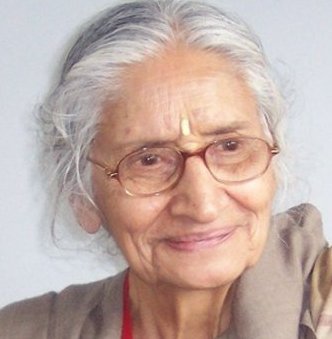
Dr. Kapila Vatsyayan
I attended Kapila Vatsyayan’s Memorial Lecture online because of my
interest in her intellectual and artistic legacy. I was curious to see
how TMK would bring Descartes’s conception of the sovereign thinking
self—"I think, therefore I am”—into conversation with Vatsyayan’s
lifelong affirmation of Indian artistic tradition and civilizational
sovereignty. Instead of examining cross-cultural differences, TMK
inverted the Cartesian framework entirely. Focusing on his own agency as
a Carnatic musician, he reframed his artistic “I” around issues of
caste hegemony, exclusion, and Islamophobia in the world of Carnatic
music and classical arts. Although TMK couched his sweeping critique in
personal reflection and anecdote, his misrepresentation of Carnatic and
Hindustani music history ultimately invites closer scrutiny.
Then, without warning, TMK moved from the personal into the political
“we,” advancing a far-reaching anti-Sanskrit proposal to reconfigure
Rabindranath Tagore’s national anthem. Composed by Tagore in 1911 and
adopted on 24 January 1950 as India’s national anthem, Jana Gana Mana remains a defining cultural and political touchstone—an expression of India’s ongoing tryst with her destiny.
Having studied Indian cultural nationalism and the arts for more than
three decades, I felt compelled to examine TMK’s rhetorical shift and to
offer a contrasting socio=cultural and political perspective on his
anthem proposal within the context of Vatsyayan’s Memorial
lecture.
The A. R. Rahman Iconic Jana Gana Mana Album (2000)
TMK proposes replacing the Sanskritized Bengali text of Jana Gana Mana,
arguing that its linguistic register fails to resonate with the
everyday speech and aspirations of many Indians. To make the anthem
linguistically inclusive, TMK suggests preserving Tagore’s melody (raga)
while allowing the different states of India to sing it in their own
regional languages.
This ‘regionalising’ proposal rests on an artificial separation between form and content, melody and text. It treats melody (raga)
as the essential formal structure and words (lyrics) as replaceable
content. Yet melody and lyrics cannot be disentangled from the national
anthem because they are fused within the nation’s spiritual register,
encapsulated in the opening invocation, Bharata Bhagya Vidhata.
These three words establish the anthem’s universal and philosophical
frame, guiding its unified lyrical and melodic structure.
Although rooted in the Rabindra Sangeet tradition, the national melody draws on deep Sanskritic musical lineages, echoing Alhaiya Bilawal in the Hindustani North and Shankarabharanam in the Carnatic South.
I became fully aware of the classical and spiritual roots of the anthem through A. R. Rahman and Bharatbala Productions’ iconic Jana Gana Mana
project, released in 2000 to mark the golden jubilee of the Indian
Republic. Featuring over 35 leading Carnatic and Hindustani artists, the
music-video brought the anthem to life across diverse vocal and
instrumental registers. The words—inseparably woven into the melody—were
renewed through a plurality of voices and sounds. In doing so, the
performance carried the anthem beyond narrow domestic walls of
linguistic purity and into that "heaven of collective breath, sound and
freedom" that Tagore envisioned in Gitanjali.
The Rahman music-video demonstrated that a national song is not a document, and a poem is not a manifesto.
In collective singing, words do not stand alone, nor do they disappear. Raga, breath, tala, memory, and bodily performance lift text beyond printed pages into lived immediacy. What emerges is rasa—a
shared affective experience through which the solitary “I” is
temporarily gathered into the national “we.” This flowing movement lies
at the heart of the rasa-oriented national ontology Vatsyayan bequeathed
to Indian performing arts historiography.
TMK’s Insight and Mistake
By interpreting the national anthem strictly as a political symbol
refracted through linguistic identity, TMK underplays two vital
distinctions Kapila Vatsyayan understood profoundly: the difference
between the cultural and the political, and between written text and
embodied performance. While the cultural and political domains
inevitably intersect in India’s national anthem—giving rise to a
collective political unconscious—each retains its own sovereignty.
The ultimate irony is that TMK’s own musicological analysis recognises
this complexity. He perceptively observes that the
anthem’s resolution departs from conventional classical resolution by
settling on the fourth note (shuddha madhyama) rather than the expected fifth (panchama).
Extending this insight, I suggest that the cadential shift in the
anthem’s resolution allows us to hear India’s "unity in diversity" in a
different key—not as a triumphalist, Sanskritized assertion, but as a
sovereign multilingual socio-cultural form that unifies the nation,
empowering it to articulate its own geo-political futures. Within its
52-second synthesis of text and melody, the anthem evokes India’s vast
geography, sacral plurality and layered multilingual civilizational
history, carrying shared memories of longing, hope, and belonging across
generations.
It is precisely here—where TMK’s musical insight outstrips his political thesis—that his claim that Indian nationalism and classical arts are inherently Sanskritic, Brahmanical, and exclusionary begins to unravel on its own terms.
TMK's critique of nationalism begins to unravel
To dismantle
what he sees as the restrictive language of India’s national anthem,
TMK implicitly relies on Benedict Anderson’s famous theory of Imagined
Communities. Anderson defined the nation as an "imagined political
community"—one that is conceived as inherently limited and sovereign,
drawing boundaries around who belongs and who does not.
To explain how these vast, diverse populations actually feel a sense of
belonging, Anderson coined the brilliant term "unisonance." Unisonance
describes the profound physical and emotional experience of people
singing the exact same words to the exact same tune at the exact same
time. When millions of strangers across a nation-space sing a national
anthem, the shared vibration of that abstract sound temporarily erases
the massive divides of class, region, religion, and language. It is
through this real-time, shared vocalization that an imagined solidarity
is forged.
In the 1990s, the renowned Indian historian Partha Chatterjee critiqued
Anderson’s political theory by demonstrating that in the anti-colonial
world—especially in India—national songs are not merely the
administrative tools of modern politics or the political modernity of
the nation. Instead, they are deeply inscribed in the spiritual memory
and cultural unconscious of the nation. For Chatterjee, these aesthetic
forms belong to an "inner domain," an autonomous space where cultural
and spiritual identity remains fiercely independent of the state.
This is where TMK’s critique begins to unravel. In his eagerness to
frame Indian nationalism as an elitist, Sanskritized structure, TMK
dismantles the foundational anti-colonial, multilingual, palimpsestic
historiography of the nation, upheld by both Chatterjee and Vatsyayan in
different ways.
TMK’s proposal that regional communities sing their own translations to
Tagore’s original tune is problematic because it undermines the very
basis of unisonance. Once singers no longer share the same words and
syllables, the interlocking forces of flow, simultaneity, and collective
cultural memory begin to fracture. A common melody set to different
words does not democratize the anthem; it breaks the spell through which
the individual is gathered into the national “we.”
TMK and the misapplication of Sanskritization
TMK's second analytical reduction follows directly from his first. Once
the national anthem is framed solely as an artifact of linguistic
hegemony and caste politics, its Sanskritized register is treated as an
ideological defect that must be corrected through replacement.
This framing allows TMK to import M. N. Srinivas's concept of
Sanskritization - wrenching it from its empirical, fieldwork-based origins
in sociological caste mobility and deploying it instead as a sweeping
critique of public culture. Under this expanded usage, any Sanskritic or
Sanskritized form is immediately condemned as inherently exclusionary.
In the process, a precise sociological concept is flattened into a blunt
ideological tool.
TMK's reliance on this framework in a Kapila Vatsyayan memorial lecture
is deeply ironic. Kapilaji spent her career resisting the reductive
application of sociology to cultural history and artistic practice. I
experienced her resistance firsthand when she served as my external
doctoral advisor in the 1990s; she repeatedly insisted that sociological
inquiry must remain grounded in deep textual, aesthetic, and
performance analysis.
Vatsyayan’s legacy - and her institutional work at the Indira Gandhi
National Centre for the Arts (IGNCA) - stands as testimony to a vision of
Indian culture that is fundamentally plural, multilingual, and
palimpsestic. She saw Indian art not as a rigid linguistic hierarchy
moving inexorably toward Brahminical hegemony, but as a dynamic
ecosystem. For Vatsyayan, "unity in diversity" was not a rhetorical
slogan; it was the living ontology of Indian performing arts, captured
in her aphorism of the "One in the Many," (ekam anekam), which I have
recently explored in Narthaki.
TMK's Memorial lecture is troubling because it displaces Vatsyayan's plural,
embodied vision with an ill-fitted theory of nationalism,
Sanskritization, and regionalism. Kapilaji would not merely have
contested TMK's region-versus-nation premise; she would have asked him
to attend more carefully to what happens when any text is actually sung:
how word dissolves into sound, sound into rhythm, rhythm into emotion
(bhava), and feeling into collectivity.
To sing is not merely to assert the sovereign self; it is to enter the
felt life of the other within the "I," and to discover, however briefly,
the national "we."
References and Further Reading
Anderson, Benedict. Imagined Communities: Reflections on the Origin and
Spread of Nationalism. Revised edition. London: Verso, 2006.
Chatterjee, Partha. The Nation and Its Fragments: Colonial and
Postcolonial Histories. Princeton: Princeton University Press, 1993.
Meduri, Avanthi. 2026. "UNESCO and the BORI Natyasastra: The Many Natyasastras in the One and the One in the Many." Narthaki, May 25.
Srinivas, M. N. Religion and Society among the Coorgs of South India. Oxford: Clarendon Press, 1952.
Vatsyayan, Kapila. 2026. “India International Centre. “4th Kapila Vatsyayan Memorial Lecture 2026: I Sing, Therefore I Am.”
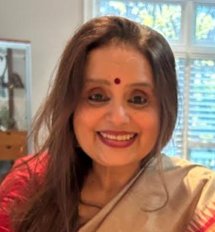
Dr Avanthi Meduri is Associate Professor, Senior Research Fellow, and
Former Convener, South Asian Dance Studies, University of Roehampton,
London; Art and Education Consultant, Bangalore.
Post your comments
Pl provide your name along with your comment. All appropriate comments
posted with name in the blog will also be featured in the site.
|




