 |
    |
|
|


PRISMUNESCO and the BORI NatyasastraThe Many Natyasastras in the One and the One in the Many- Dr. Avanthi Medurie-mail: avanthi@hotmail.com May 25, 2026 I offer here a brief meditation on UNESCO's inscription of the Natyasastra manuscript in the Memory of the World Register, cast as a staged conversation across time with the late Kapila Vatsyayan - our Kapilaji - whose life's work helped make India's Natyasastra traditions newly legible to the world. In this exchange, I reflect on the relation between world heritage and lived history, between sastra and prayoga, and between the living historical Natyasastras that helped shape the twentieth-century revival of Bharatanatyam and Indian classical dance, placing these firmly on the global stage. This staged conversation draws on my 2025 essay on the Natyasastra in The Oxford Handbook of Indian Dance, where I reflect on three historical Natyasastras through which the text entered Indian classical dance history, practice, training, pedagogy, and public performance - a question newly sharpened by UNESCO's 2025 inscription. In April 2025, UNESCO inscribed two Indian manuscripts on the Memory of the World Register as documentary heritage. One was the Bhagavad Gita; the other, the Natyasastra manuscript housed at the Bhandarkar Oriental Research Institute (BORI) in Pune. With these inscriptions, India's total entries on the Register rose to fourteen. The world applauded. I did too. But when I read the Natyasastra nomination document on UNESCO's website--I paused. Something was unclear. I felt the need for clarification. 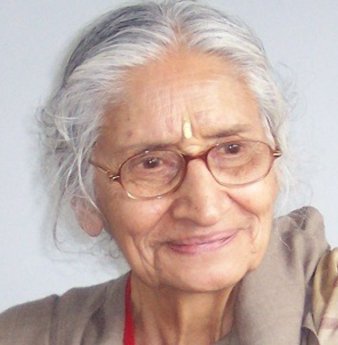 Dr. Kapila Vatsyayan So, I turned to the late Kapila Vatsyayan, our Kapilaji. I asked her why the BORI Natyasastra had been chosen for UNESCO's inscription, rather than one of the three living, historical Natyasastras through which generations of artists and scholars came to understand the sastra of the Natyasastra. I sought clarification from Kapilaji because the BORI Natyasastra was, above all, an archival artifact - not the living Natyasastra. Yet the BORI manuscript - Accession No. 68/1873-74 - rose to receive global recognition and then stepped onto the world stage. What, then, is the historical biography of the BORI Natyasastra? The journey began in 1866, when the colonial government launched a systematic search to rescue India's fading written history from decay. Some years later, between 1873 and 1874, the scholar Johann Georg Bühler found in Bikaner what he had been seeking: a rare Kashmiri recension of the Natyasastra, preserved there and acquired for the record. The decisive moment came on 1 April 1918, when the Bombay Presidency formally transferred the Government Manuscript Library - with its vast collection of nearly 18,000 historic texts - into BORI's permanent custody. With that historic change of guard, the Kashmiri Natyasastra passed into BORI's hands and into its safekeeping. Within this new sanctuary of conservation, the BORI Natyasastra was preserved as an archival manuscript for over a century. While the BORI Natyasastra stayed at home in BORI, protected within its temperature-controlled walls, the many other travelling Natyasastras, discovered in the nineteenth century, were edited, translated, regionalized, nationalized, and set into print. These texts went out into the world and helped shape the modern cultural and artistic life of an emerging Indian nation. Although the BORI Natyasastra was just like the other extant Natyasastras recovered across North and South India in the nineteenth century, it was singled out from the rest, set apart, and frozen in time like a statue. A complex symbolic interrelationship was at work: the BORI Natyasastra stood by as ancient witness, while its many textual avatars did the heavier labour out in the active cultural and social world of the performing arts. Here, then, is a contrast familiar to artists: stasis and movement, home and world, root and routes. Did UNESCO inscribe the BORI archival Natyasastra as documentary heritage on the Memory of the World Register because it saw in it the aura of origin linked to antiquity, the authority of firstness, the grave stillness of an ancient root? Or was BORI chosen because the institute had long possessed the means to preserve the manuscript and carry it forward into posterity? I put this first question to Kapilaji and waited, but there was no response. "Kapilaji," I persisted, "what is the historical status of the three living Natyasastra texts - each with its own manuscript and documentary history - through which ten generations of artists, scholars, curators, and critics came to know Bharata's Natyasastra? I refer to the 1894 Kavyamala edition of Pandit Sivadatta and Kasinath Pandurang Parab; the 1926 GOS critical edition of Manavalli Ramakrishna Kavi; and Manmohan Ghosh's English translation, published by the Asiatic Society of Bengal from 1951 onward." "Kapilaji, you yourself wrote in Bharata: The Natyasastra (1996) that Kavi's 1926 GOS critical edition was of great significance, since it drew on more than forty manuscripts collected from sites across North and South India. The edition also included Abhinavagupta's monumental commentary on the Natyasastra, the Abhinavabharati, which reaches back to around the turn of the tenth century AD." "You held that there is no civilisational Natyasastra without Abhinavagupta. Without him, the Natyasastra is a labyrinth without a path, a forest without a guide. He is to the Natyasastra what A. C. Bradley is to Shakespeare." The 1894, 1926, and 1951 editions and translations - what I call the Trinity texts - became central to Bharatanatyam and Indian classical dance. They were stitched into the seedbed of dance practice during the national revival of Indian performing arts from the 1930s to the 1950s, and from that ground helped carry Indian classical dance through the century - in India and outward into the world. The Trinity texts mingled with the sweat of dancing bodies on stage and enabled artists to stitch antiquity to modernity, and back again. Is a century-long historical memory, consolidated through these Trinity texts, displaced by the sudden prioritization of the archival BORI Natyasastra manuscript? Does this international recognition reinforce the primacy of Sanskrit and deny the double-voiced ancient-modern identity of Indian classical genres and traditions? I put this second question to Kapilaji. Something seemed to stir in the room. Still, there was no response… So, I persisted. "Dr. Manmohan Ghosh's historic English translation of the Natyasastra - the first complete translation of the treatise - transformed this ancient civilisational text into a bilingual, historical, pan-Indian living text and made it an instrument of nation-building. Ghosh broke the linguistic monopoly of Sanskrit. His translation allowed a wider English-educated Indian public, regional theatre directors, and global practitioners to bypass the language barrier and engage directly with the sastra." This, then, is my generation's living Natyasastra: a post-Independence text of practice, made available to the nation's children in English and across many languages - Sanskrit, Tamil, Telugu, and Hindi. This is India's living pan-Indian heritage: a natya text carried by plurality, translation, and cultural difference. "Kapilaji, can you shed light on my two questions: the logic of UNESCO's selection and the historical status of the three living Natyasastras?" Something quickened, and then Kapilaji spoke from across time and space: "Avanthi, listen. Your two questions are not without merit. First, it is right that the Bhandarkar Institute nominated its Natyasastra, and right too that UNESCO has recognised it. The Natyasastra is a foundational dramatic treatise that belongs not only to India but to the world, and its oldest roots must be held in institutional trust at BORI and the IGNCA." "But remember this too," she said. "There is no priority or finality among the many iterations of the one Natyasastra, which remains both a deep residual inheritance and an emergent work. More Natyasastra manuscripts, more recensions, more Bharatas - perhaps even more chapters - are yet to come." Then, more gently, she said, "Avanthi, do not worry. Manmohan Ghosh's Natyasastra - your living tradition - has already been honoured in God's time and in the long time of nation-making. The BORI Natyasastra inscription has validated the Ghosh tradition anew, renewing its historical life." "There is no opposition here. It is not a dialectic. The archival Natyasastra and the living Natyasastras are conjoined, interlinked, and interlocked: the one is not without the other. Motionlessness and motion are the breath of life and the dance. It cannot be otherwise." Kapilaji continued: "UNESCO's inscription of the Natyasastra in the Memory of the World Register is a proud and forward-looking global moment: for India, for the Indian diaspora, and for all those across the world who have been shaped, in thought and practice, by the living Natyasastra tradition." These are her words. I have carried them in my mind for the last year, and I leave them here on the page. Coda Because Kapilaji's words are prophetic, they will yield more than one interpretation. I leave her words with you, and I would be glad to hear your reflections on this staged dialogue. Selected References Meduri, Avanthi. 1996. Nation, Woman, Representation: The Sutured History of the Devadasi and Her Dance. PhD diss., New York University. Meduri, Avanthi. 2004. "Bharatanatyam as a Global Dance: Some Issues in Research, Teaching, and Practice." Dance Research Journal 36, no. 2: 11-29. Meduri, Avanthi. 2010. "Bharatanatyam as a World Historical Form." In The Bharatanatyam Reader, edited by Davesh Soneji. New Delhi: Oxford University Press. Meduri, Avanthi. 2018. "Interweaving Dance Archives: Devadasis, Bayadères, and Nautch Girls of 1838." In Movements of Interweaving: Dance and Corporeality in Times of Travel and Migration, edited by Gabriele Brandstetter, Gerko Egert, and Holger Hartung. London: Routledge. Meduri, Avanthi. 2025. "Natyasastra, British Institutionalization of Indian Classical Dance in the Imperial Society of Teachers of Dance (ISTD), and the Question of Modernity." In The Oxford Handbook of Indian Dance. Oxford: Oxford University Press. Vatsyayan, Kapila. 1996. Bharata: The Natyasastra. New Delhi: Sahitya Akademi. (Disclaimer: The views expressed in the article are solely those of the author.) 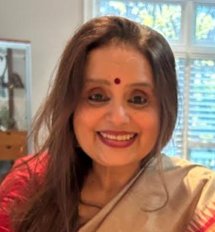 Dr Avanthi Meduri is a dancer-scholar, global Indian performing arts historian, and academic of international distinction. A specialist in Indian classical dance, women's biographies, and the relationship between sastra/prayoga and cultural translation, she has made significant contributions to dance scholarship and higher education in India, the UK, and the US. She earned her PhD in Performance Studies from Tisch School of Arts, New York University and held visiting appointments at UCLA, UC Riverside, and Northwestern University. At the University of Roehampton, London, she founded the first Master's programme in global South Asian dance in the UK and Europe. A widely published scholar and award-winning educator, she is also known for the Talking Dance Projects on women's biographies and global dance history. Over more than three decades, her choreographic and scholarly initiatives, have been presented across India, the US, and the UK. Now based in Bengaluru as an independent arts and education consultant, she continues to shape academic and public discourse through essays, talks, podcasts, media interventions, and advisory work, while also serving as Senior Fellow at the University of Roehampton, London, and Equality, Diversity and Inclusivity Officer for UK Dance in Higher Education. Post your comments Pl provide your name along with your comment. All appropriate comments posted with name in the blog will be featured in the site. |
