|     |
|
| |

REVIEW / REPORT'Naama Rupa Naada Bindu' - an immersive gathering- Chandra Anande-mail: chandra6267@yahoo.co.in September 6, 2026 Inaugural 'Naama • Rupa • Naada• Bindu Immersion', a collaborative initiative of Natyashastra Gurukulam, Navi Mumbai, and Aatmalaya Academy of Art & Culture Trust, Bangalore, was held on 11th July 2026 at the Bharatiya Vidya Bhavan, Navi Mumbai. Natyashastra Gurukulam (NG) is an institute that is based on the ideal, that arts "belongs not only to auditoriums, but to everyday corners of public life". Putting forward the precepts of Natyashastra (NS), for e.g., the rasa theory, central essence of NS that directs how all arts work in transforming consciousness of society towards goodness; and, NS's dictum "Natya will foster dharma, fame, longevity welfare and the growth of intellect and will educate the people. There is no wisdom, art, learning, device, yoga or action that is not found in Natya". NG concluded and firmly believed in education "rooted in NS and its allied disciplines" could work towards building righteous minded citizens which in turn will develop the country and make it prosperous, "leading towards Ramarajyam". Accordingly, for their first module, in their journey to re-anchor public life in rasa, rhythm and responsibility through the timeless wisdom of the NS, an immersive gathering to discuss its elements that binds all arts together was held. There was something profoundly significant about the fact that the very first educational and artistic event of the NG institute, which has run eight years since inception of the ideal, began with not a performance, but with a gathering. Mentor Dr. M.B. Athreya of NG in his "Anugraha Sandesha", pointed out that "a shared journey begins with this immersion". He also entrusted all with a profound responsibility, describing all participants as "Parivartakas", in the continuing transformation and mindful elevation of present civilization. His motivating line to each of the participants was "the Gurukulam will ultimately be shaped not by its founders, but by those who choose to walk this journey together." 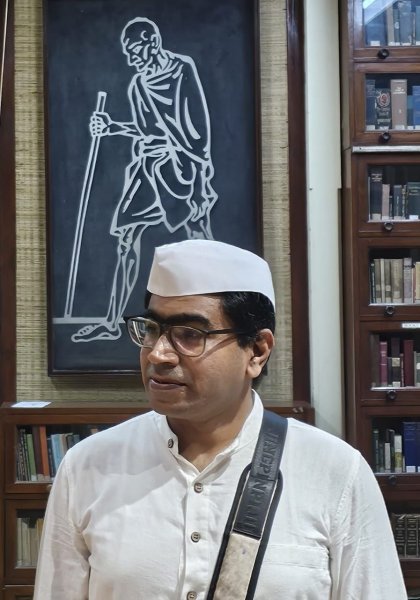 Rohit Vishwanath Rohit Vishwanath (RV), Yajamana and Yojaka of NG, gave a welcome address where he averred that one must perceive NS as a manual explaining a profound philosophy, leading towards (abhinaya) a way of life, which is enriched in ways to uplift humanity in both spiritual and material goals ensuring survival of the fittest. Drawing upon Bharata Muni's celebrated dictum, "naṭyaṃ bhinnarucer janasya bahudhaapy ekaṃ samaaraadhanam", RV reflected on "Naṭya's unique capacity to harmonise diverse temperaments without erasing their differences. While institutions, laws and policies provide the framework for society, qualities such as empathy, discernment and restraint are cultivated through culture. Naṭya educates not through instruction alone, but by enabling transmission, experience and shared aesthetic (sahrdaya) participation. Thus NS is not merely a treatise on performance, but a profound exploration of how beauty, emotion and disciplined artistic practice contribute to the refinement of the human being. In accordance with this premise, NG has anchored itself as a Centre for Civilizational Statecraft, committing itself to nurturing Parivartakas - individuals capable of contributing to the renewal of civilisation through the cultivation of character, imagination and aesthetic leadership; and seeks to bring into dialogue all disciplines for an integrated understanding of art, philosophy, architecture, ecology, education and governance. (Democracy as Naṭya: Toward civilisational renewal) RV invited participants to regard the immersion as the beginning of a lifelong journey. For, the true measure of its success would not lie in the exchange of ideas alone, but in the emergence of enduring friendships, collaborative enquiry and a renewed commitment to revitalize values embodied in the Naṭya tradition. RV humbly acknowledged that this immersion had become possible because of the vision, encouragement and wholehearted partnership of Dr. Padmaja Suresh, artistic director of Aatmalaya Academy of Art & Culture Trust, Bangalore, and enriched by the presence of eminent scholars, dedicated teachers and many performing artistes of different genres, all wanting to exchange knowledge with and equally learn from all others gathered there. The central question here was not "How shall we preserve Naṭya?" but to keep enquiring "How shall Naṭya preserve us?" And answers to this query will take us back to the times when learning was done by enquiry and seeking answers made available through experience and living right. The immersive gathering At the very first of the immersive session the group got oriented or introduced to the different arts and their inter relatedness or interconnectedness to each other leading towards the understanding in how these disciplines though vastly different from each other had the same roots and precepts sourced from NS. The immersion started early morning with a prayer sung by Shivangi Pandey, a participant training in Hindustani style of classical music. While she sang, all dancer participants, performed impromptu, showcasing the meaning of the prayer song with gestures and light movements. Rohit Vishwanath gave his welcome address and formally opened the session. 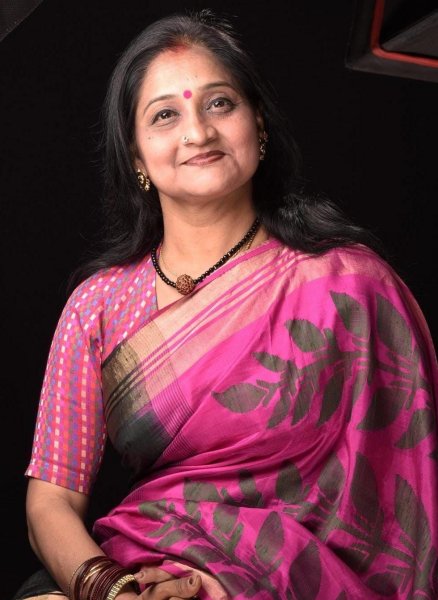 Priyamvadha Murali A pooja was held consecrating the aegis and prayers for success of the day's activities, following which the expositions began with the topic "Natya as Aradhana: The Living Temple Tradition of Dance and Music" that shone light on a tradition where "natya" is performed as an offering to God in temple premises, as a Yagna, inheriting an aura of sacred value, carrying with it devotion and community. Priyamvadha Murali, accompanied by R. Gopalakrishnan, elucidated in depth, on the Bhagavata Mela tradition of Melattur where Natyam, Vedam and Agamam confluence for Supreme bliss. Interspersing verses from Vedas in-between the lyrics of Navasandi, she presented the significance of Navasandis explaining its elements and sources. It was uncovered that Agamic scriptures give a code of principles to present the natyam for navasandhi at temple utsavams. Gopalakrishnan did research on this and meticulously brought synthesis between Natyam and Vedham choosing apt mantras for the depicted Sandhi from Vedic texts. This helped audience understand the Vedas deeply through a visual representation. 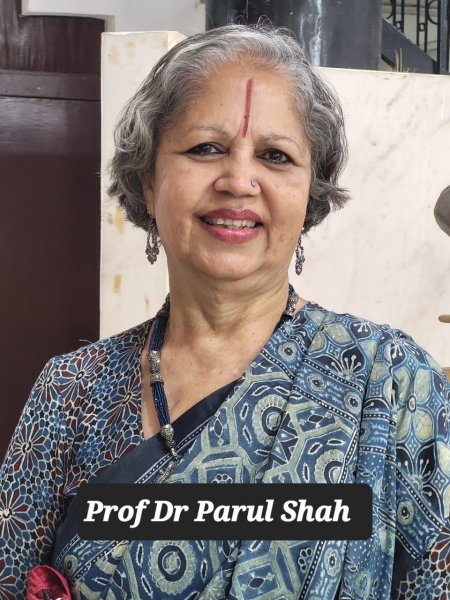 Dr. Parul Shah Dr. Parul Shah, from Baroda, exposed 'Angika abhinaya to Sattvika expression: From embodied expression to inner resonance'. She indicated the depth of thoughts with which abhinaya piece needs to be explored, influencing the intensity of emotions during performance, enabling the outward physical movement go inward to deep emotional and spiritual awareness. She also made one aware of how a classical art has to be learnt with discipline and dedication. 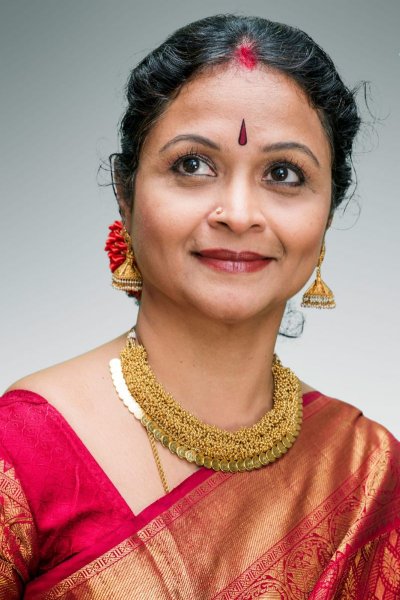 Dr. Padmaja Suresh Dr. Padmaja Suresh explored the transformative wisdom of Natya and Trika Tantra where she "explored the nature of artistic experience and spiritual realization through the non-dualistic Trika philosophy," presenting a fresh perspective on the NS. The paper emphasized that, within the Trika system, spiritual experience is both aesthetic and ascetic. It argued that "Natya becomes a transformative medium through which the spectator transcends ordinary objectivity and experiences Cit (Pure Consciousness), an experience comparable to Brahmasvada, the bliss of the Absolute. " The aesthetic journey of the spectator was described as a movement from direct cognition to a cathartic, secondary perception of universal reality, where individual consciousness is elevated to a universal plane. The presentation effectively demonstrated that the NS is not merely a foundational text on dramaturgy but also "a profound philosophical treatise that reflects the metaphysical principles of the Trika tradition." This quote is extracted from reflections by Dr. Suman Badami, Bharatanatyam practitioner and teacher who was an enthusiastic participant in the immersive gathering. 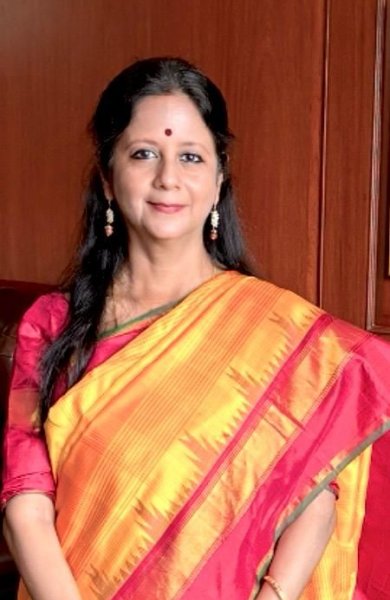 Dr Suman Badami 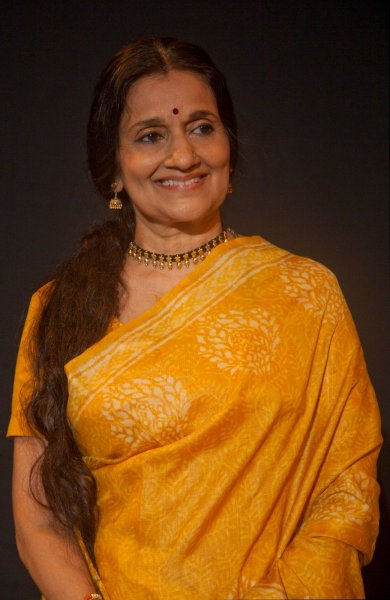 Mandakini Trivedi Guru Mandakini Trivedi presented an insightful lecture demonstration on "The Sutra of Chakra in Performing Arts", exploring the deep connection between yogic philosophy, the human body, and classical dance. She gave insights about chakras and their relationship between movement, energy, consciousness and aesthetic experience illuminating the pathway of inner transformation and practice of dance became a means of contemplation and inner exploration, a form of meditation making classical dance a spiritual discipline, where movement, consciousness, and cosmic harmony come together. 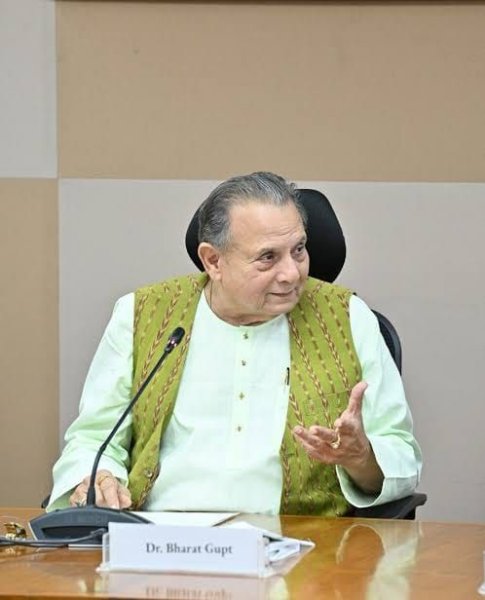 Prof. Bharat Gupt Prof. Bharat Gupt, gave a delayed keynote online address, due to internet problem. He spoke about Indian theatre having changed itself to enumerate the British theatre, losing out on its richness. Indian theatre which was multilingual, changed to Sanskrit theatre and in the process lost out on many other Indian languages. He said one must understand ancient Indian theatre, correct the mistakes and bring back our former high status of Indian theatre. He advised that considering art presentations have transformative quality, all ideas whether old, new or contemporary interpretations of old ideas should be ones that bring benefit to society. 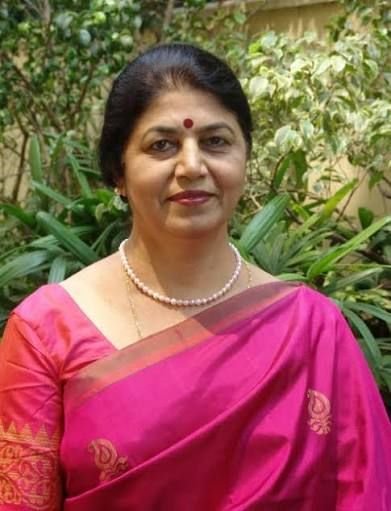 Dr. Choodamani Nandagopal Dr. Choodamani Nandagopal, spoke on the topic titled "From stone to movement: Indian sculpture shastra and prayoga". She talked about the interrelationship between arts and showed the contemporary work related to sculptures. She said sculpture was not a static art, but is the living embodiment of movements, rhythm and aesthetic knowledge, where principles of Natya are eternally preserved in stone. 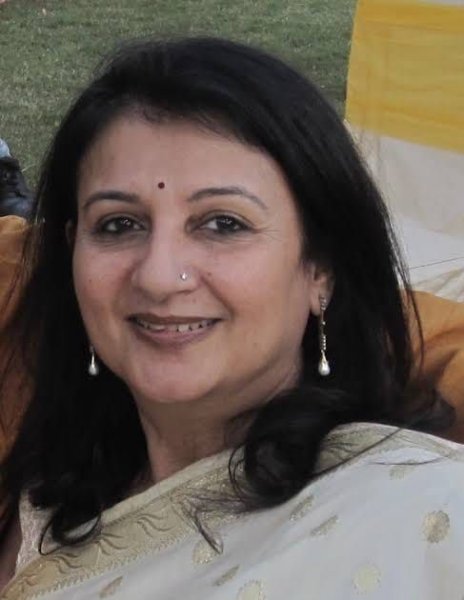 Sujata Parsai Sujata Parsai gave a talk on "Circle of Rasa Lila in Indian painting". She focused on showing a slide show of paintings depicting "Rasa Lila" of Krishna with gopis, particularly the ones that were painted in circle formation, on walls, textiles and ceilings, from all over India, that was simply exquisite. 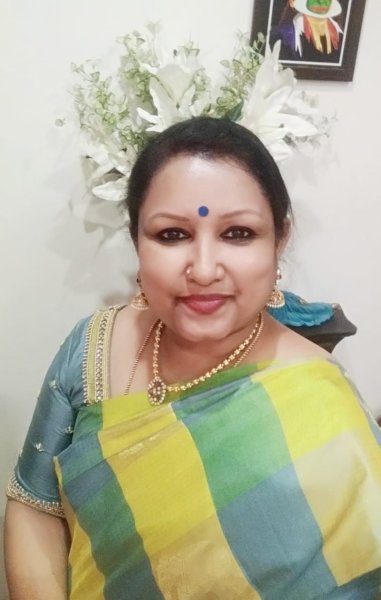 Deepa Sashindran Deepa Sashindran gave a talk titled, "Tarangam: The union of mind, body and consciousness in Natya". There are 2 aspects of the word "Tarangam" One is the Tarangams of Saint Sri Narayana Theertha's lyrical compositions "Sri Krishna Leela Tarangini" that described the "Rasa leela", and the other is the foundational piece of Kuchipudi Natyam. Rasa leela is portrayed as the supreme philosophical "union of the jivatma with the paramatma". The choreography of Tarangam delineated Krishna's playful divine sports, and balancing upon the brass plate with rhythm, music and lyrics, all integrated into invoking the union of body, mind and consciousness. She also related stories to substantiate her point. 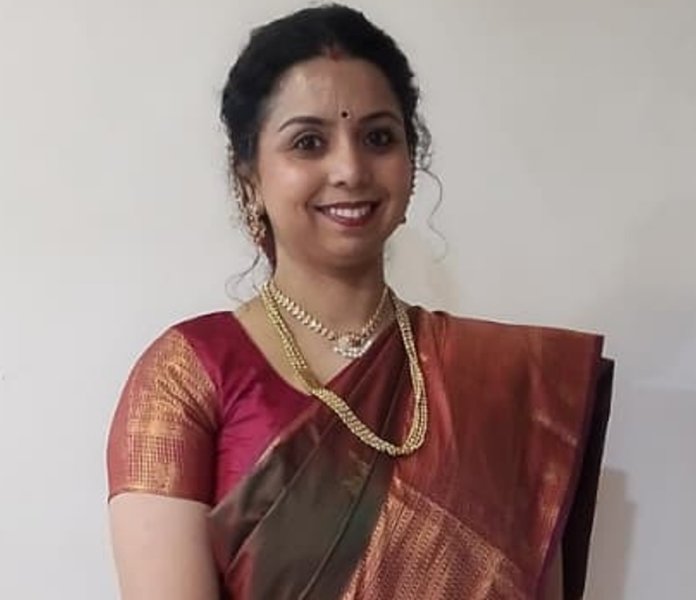 Charanya Gurusathya "Rupa as a Revelation" by Charanya Gurusathya, explored how India's sacred iconography and textual traditions may be experienced as living realities through artistic embodiment. 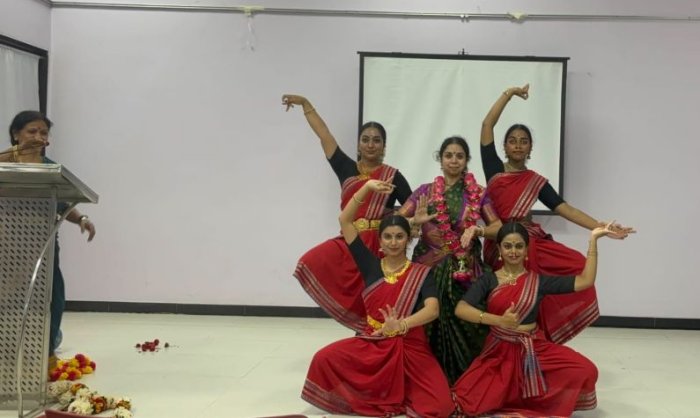 Dashamahavidya Charanya delved on the "Dasha Mahavidyas", where the ten Hindu Tantric goddesses represent distinct facets of the Divine Mother, Adi Parashakti. Each goddess embodies a unique spiritual pathway and cosmic energy, covering the entire spectrum of reality from creation to the void. Charanya and her disciples depicted the stories of how each goddess came into existence through the expressive power of Natya. 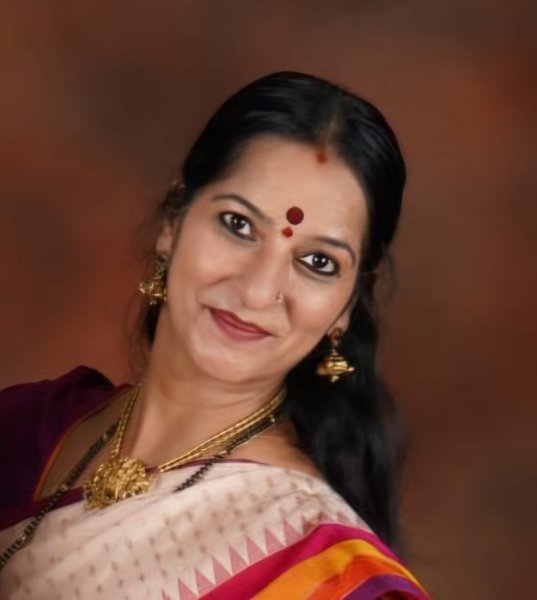 Veena C Seshadri Veena Chikkanahalli Seshadri spoke on "Guru - Shishya Parampara where Tattva becomes Prayoga". Elucidating on the etymological meaning of each of the words, Veena explained the sacred bond between guru and shishya, where tattva is realised by the guru, through the discipline of yoga, and Prayoga is its living expression in the life and practice of the disciple. 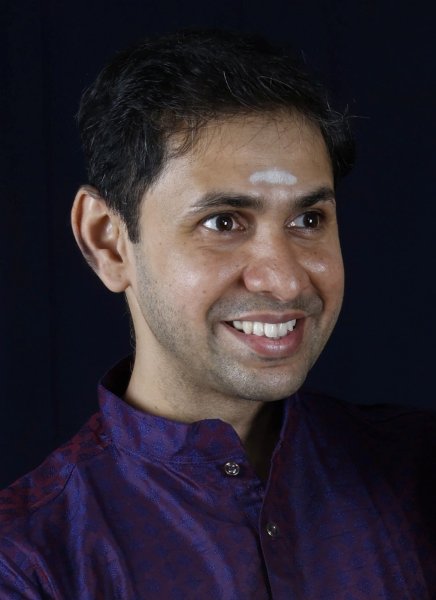 Ujwal Jagdeesh Ujwal Jagdeesh spoke on topic "Bindu: Silence as the source of Natya", exploring the contemplative foundations of artistic practice and the role of silence in the cultivation of the artiste. Accordingly artistic expressions can become means of returning attention to its sources where silence, awareness and authentic presence converge. Goes on to say, if gesture, rhythm, expressions and rasa constitute the visible language of Natya; behind movement lies stillness and behind expression lies awareness. Yours truly spoke of "Art as inner experience". Based on her experiences as an educator, she said that all-round education gets completed only with understanding of rasa sutra in its entirety. Along with this, it is required that the interconnectedness of all arts and the value of generalisation of art presentation is made common knowledge to all. Then the annual day functions of educational institutions will have more seriousness and develop depth in their presentations making time spent in preparing for artistic presentations more valuable. This activities also give opportunities for the teachers to transform and elevate the minds of the students. Also when the lesson plans follow the methodology of the rasa sutra (Rasa theory facilitates holistic approach to school education) the class room experiences helped in education with mindful experience as well as becoming individuals with awareness. 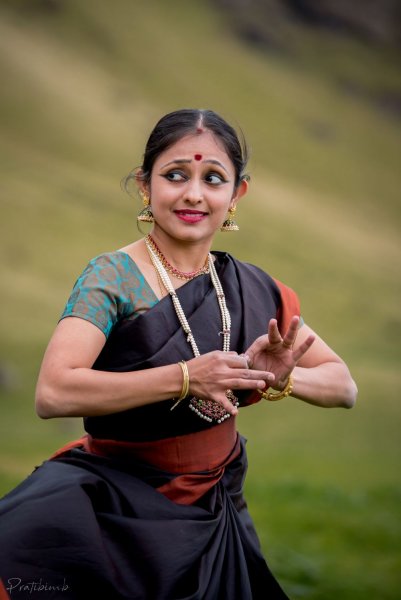 Aparna Doddamular Aparna Doddamular is an engineer and an entrepreneur in the field of Zero Waste Management. She presented "Prakruti as Guru", where she gave a talk on how shastras have always included a frame work for sustainable living with an analogy using concepts of Natya. She examined the need to employ sustainable techniques for everyday activities and how best to include this as a routine practice. 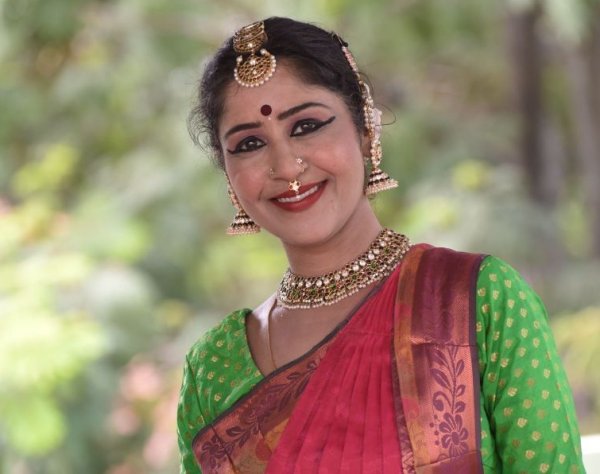 Sujatha Ramanathan Sujatha Ramanathan spoke about the vital importance of "Navarasa as a Sadhana". An integral part of teaching abhinaya is always to help internalize emotions and express them. Sujatha detailed a structure that invigorated the practice of abhinaya. She spoke and demonstrated about the power of expression and the power of the eye. Sujatha detailed the vibhavas for Sringara, the raja rasa and made the participants experience the rasa in a structured way. Conclusion Across all presentations exhibiting diversity of approaches, there was a revelation that Natya is a broad field in which consciousness, beauty, devotion and disciplined practice were seen to be perennial in all arts. The explorations opened many new windows contributing to the knowledge of interconnectedness between all arts. For NG, the inaugural immersion was the opening of a shared journey. According to Rohit Vishwanath, its success will ultimately be measured by enduring friendships, new collaborations, deeper study, renewed sadhana, and the willingness of participants to carry something of the experience into their own lives and communities. In fact, the conversations are continuing through further enquiry, writing, collaboration and the proposed journal Nāṭyāloka. And by organising of another immersive gathering, titled 'Samvad' on 27th December 2026 at Chennai. If the idealisation of NS by NG is true, and art can be seen as a pathway to education and elevation of human minds, then it is prerequisite that the precepts of NS be introduced in the core curriculum of educational institutions, at all levels, concentric mode, with the intention of inculcating life skills in nation's future citizens.  Chandra Anand is a Bharatanatyam artiste and teacher. She has an MA in Bharatanatyam from Tilak Maharashtra Vidyapeeth, and her series on 'Education in spiritual values through Bharatanatyam' is featured in narthaki.com. |
