
|     |
|
| |

 Madras Music Academy Dance FestivalTradition: Reinforcement and Reimagination - Part 2- V. Kaladharane-mail: vkdamaru.eda@gmail.com Photos courtesy: Madras Music Academy January 25, 2026 Link to part 1 After almost a three year interlude, Shweta Prachande, a disciple of Priyadarsini Govind, returned to the stage with a bang. With the verses from Saundaryalahari sung by the ace vocalist Deepu Nair, Shweta identified herself with the multifaceted Devi. The Prekshakas could witness the formidable presence of the Devi as Karthyayani, Sreerajarajeswari, Prathyakshamaheswari, Kasipuradheswari, Annapurneswari and as Maharudrakali. She did concretize on stage the Ardhanareeswara too. The dancer embodied acute anger, immeasurable benevolence and an infinite serenity to pinpoint the varying moods of the Goddess. The shift in the Nadais made racy by Sivaprasad on the mridangam and Eswar Ramakrishnan on the violin enhanced the intensity of Shweta's performance. 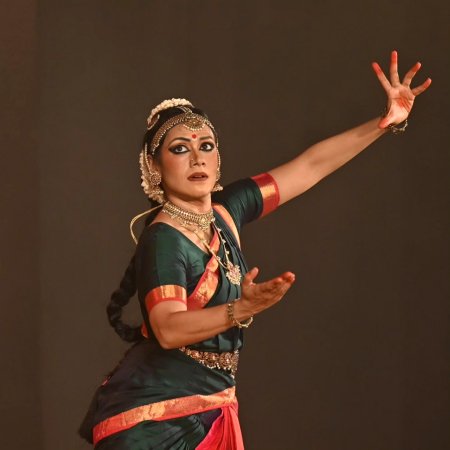 Shweta Prachande The way Shweta unraveled the different layers of the Tanjore Quartet Varnam, Sami Ninne Kori in Ragamalika set to rupaka tala, was simply stunning. Right from the thrikala jathi, Shweta upheld the grandeur of discipline, certitude, sturdiness, lucidity and precision in the execution of a wide variety of adavus including the theermana adavus energized by the jathis and the swaras. In the abhinaya segment, she delved into the Nayika's irresistible longing towards Lord Siva. It was a journey the dancer representing the Nayika set out for from the terrestrial to the extra-terrestrial or from the ephemeral to the eternal. By integrating her technical virtuosity with the emotional content of the Varnam, Shweta attained on stage an extraordinary altitude. Evocative jathis from Jayashree Ramanathan and the melodious notes from the flute of Hariprasad Subramanian illumined the non-textual and textual dance of Shweta respectively. Following the Varnam, Shweta presented Pillai Tamizh, a brief yet beautiful composition in which the Nayika conceives the Goddess as a child and longs for its intimate presence. The ways and means by which the Nayika cajoled the child to realize her ambition was an amusing spectacle. Deepu Nair sang the piece in raga Abheri followed by Neelambari soulfully. Shweta concluded her recital with Sruti Laya, a composition of Karaikudi R Mani impressively tuned by Rithvik Raja, in raga Bahudari. The Nottuswaram of Dikshitar in raga Shankarabharanam in praise of Durga, towards the very end proved to be an unanticipated moment of delight to the Prekshakas. 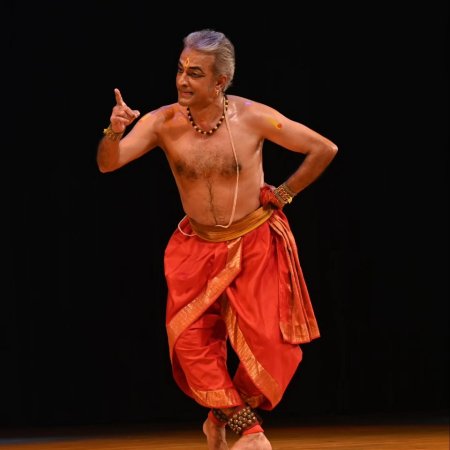 G. Narendra In the evening, G. Narendra, a proud product of Kalakshetra, presented a 90 minute production in Bharatanatyam titled Bhandavya - Suyodhana's Reminiscence (Ekaharya Laasyam). It appealed to me as a liberal adaptation from the Karnaspadham Kathakali play of the late Mali Madhavan Nair. In Kerala, this play won incredible appreciation and recognition within the Kathakali circle and outside as it dramatizes an absolutely unexpected meeting between Karna and his mother Kunthi in the backdrop of the ensuing Kurukshetra battle. S. Raghuraman's version of the play in Tamil does have several slight deviations which Narendra faithfully portrayed. As a performer, Narendra, more often than not, creates on stage an impact equivalent to that of a group recital. In the present production, Narendra through the technique of Pakarnnaattam (one and the same dancer/actor switching from one character to several others) began with the conversation between King Suyodhana and his consort, Bhanumathi. While the King is in a romantic mood, his wife is apprehensive of the fate of her husband in the face of the imminent Kurukshetra battle. Karna comes in at the right moment, consoles Bhanumathi and then takes leave. He goes to the banks of the river Ganges, sits there and is lost in thoughts about his true parents. Narendra poignantly presented the dramatic monologue of Karna and his subsequent meeting with Kunthi from whom he hears whom his parents are. A shocked and grief-stricken Karna however refuses to part with the Kauaravas headed by Suyodhana. But he assures his mother that he will not kill any of the Pandavas except Arjuna. Kunthi returns disheartened. Dussasana chances upon the meeting between Karna and Kunthi. This causes a misunderstanding in the mind of Suyodhana. With Karna pledging his allegiance to the Kauravas till his last breath, the clouds vanish. The sky becomes crystal clear. Backed by a set of highly talented artistes comprising of nattuvangam, vocal and instrumental music, Narendra captured the attention of the audience through and through. Unmatched is his perseverance and admirable is his endeavor. 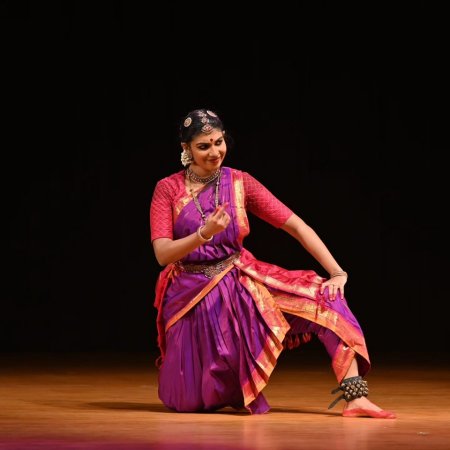 K.R. Manasvini On the penultimate day of the dance festival, K.R. Manasvini presented Bharatanatyam in the morning. Her performance started with the traditional Mahalinga Kauthuvam in Ragamalika and adi tala. A piece in praise of Lord Panchaksharasiva, the Kauthuvam punctuated her involvement in and commitment to what she does on stage. Daru Varnam, Mathe Malayadhwaja, an acclaimed composition of Harikesanallur Muthaiah Bhagavathar is quite often performed by noted dancers of the day. Manasvini chose the same Varnam as the principal item of her concert but was keen to make it different in many respects. Endowed with a flair for rasabhinaya and an instinct for deciphering the meaning of the lyrics, she could translate the metaphors into vivid visual phrases. Hence, each line of the composition concerned awakened her imagination. Shathodari, Shankari, Chamundeswari, Chandrakaladharini et al are similes that stimulated her thought process and expressions. The adavus she executed had a telling effect partly on account of the jathis rendered by Vijay Kumar. Her adavus especially during the charana swarams and footworks had an unusual texture. Manasvini then moved on to the Javali, Nee Matale, of Pattabhi Ramaiah. The protagonist in this piece is a lady who is desperately waiting for union with her lover. The dancer deftly depicted the sweet reminiscences of the lady who is now anxious about her lover's suspected detachment. Next was a lullaby, Krishnar Thalattu, in which Manasvini closed in on to the childhood pranks of Krishna and Yashoda's maternal affection. The finale of her recital was a well-executed pure dance. Seasoned musicians - vocalists and instrumentalists - ignited the craft and content of her performance throughout. 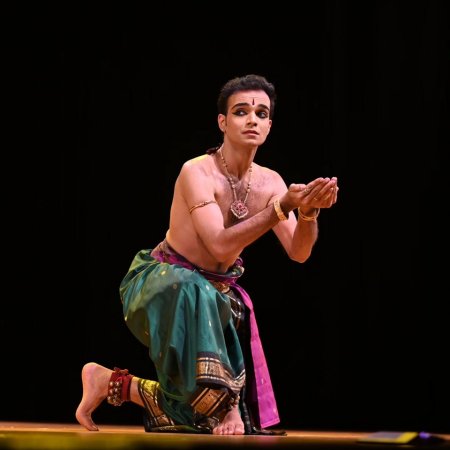 Bhavajan Kumar If a dancer begins his/her concert with a well-known, time-tested, Kriti/Kirtana, it would enrapture the eyes and ears of the initiated spectators. Bhavajan Kumar started his recital with the explication of the famed Kriti, Sri Ganapathini of Thyagaraja in raga Saurashtram set to adi tala. The selection was appropriate in the sense that it is in praise of the Nartana Ganapathi, the Vighna vinashaka. The musicality of the Kriti was visible in the movement vocabulary of the dancer. Bhavajan then proceeded to the central piece, the Varnam, Sami ninne nammithi ra, a composition of Vadivelu in raga Yadukula Kambodhi set to adi tala. While the emotive content of the Varnam is the all too familiar romantic feelings of the Nayika for the loving glance of the lotus-eyed Nayaka, Lord Padmanabha and more, Bhavajan's treatment of the sringara bhavas was moderate, yet appealing to a considerable extent. Uncluttered was his movement dynamics as was evident right from the thrikala jathi. His theermana adavus invariably bore an alluring lucidity while his footworks displayed an astounding fluency. Aditya Madhavan's singing of the Varnam was an exhaustive navigation of all the contours of the raga. Simultaneously, he highlighted each and every pertinent word that intensified the sringara rasa. Girish Madhu's rendering of the jathis was a grand aural treat. The tempting flow of the charana swaras was in perfect harmony with the texture and timbre of Bhavajan's angikabhinaya. Karthikeyan Ramanathan's fingerings on the mridangam were an enduring stimulation to the dancer's artistry. Bhavajan comfortably presented two more items viz. a Kshetrayya Padam, Ini Vidamula Pujinchera in raga Mukhari set to mishra chapu tala and a Thillana of the Tanjore Quartet in raga Mandari. 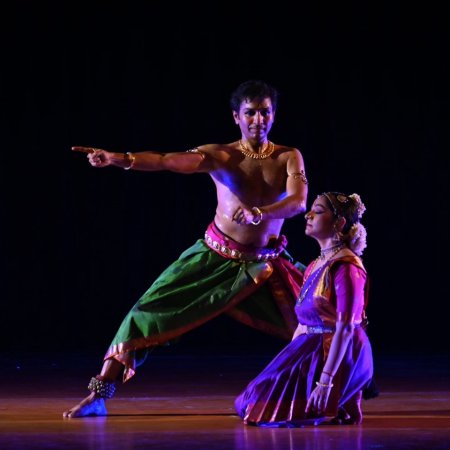 Shijith Nambiar and Parvathy Menon Uniformity need not always be tasteless. Similarly, diversity need not always stand for beauty. The prime time recital of the day was that of Shijith Nambiar and Parvathy Menon, the duo symbolizing the dignity and discipline associated with uniformity. The Dikshitar composition, Ananda natana prakasam, in raga Kedaram set to tala mishra chapu, encompasses the multiple splendors of the invincible Nataraja of Chidambaram. Although the visual interpretation of many of the images dealt with in the lyrics poses a huge challenge to the dancer, Shijith and Parvathy portrayed its key characteristics remarkably. They then stepped into the traditional Varnam, Mohamana En meethil of the Tanjore Quartet in raga Bhairavi set to tala rupakam. The choreographic adroitness made the Varnam an experiential delight. As a prologue to this solid Varnam which focuses on a devotee's deep yearning for union with the Lord Thyagesha of Thiruvarur, the duo did an improvisation involving the lotus flower as its central image. I couldn't unfortunately pick up its implications. Of the vinyasas they did subsequently, I found the one attached to the line, marakoti sundarakara, precise and poignant. Apart from the impeccability of the adavus they executed, the formations both dancers came up with independently and together were persuasive. Uday Sankar Lal on the nattuvangam, Binu V Gopal on the vocal, Sivaprasad on the mridangam and Eswar Ramakrishnan on the violin accentuated the gravity and grace of the dancers' prowess. Embracing an excerpt from the Kathakali play, Duryodhanavadham of Vayaskara Aryan Narayanan Mooss, Parvathy portrayed the plight of Panchali who apprises Lord Krishna of the atrocities meted out to her by the evil Dussasana in the court thirteen years ago. The Padam in an indigenous raga Navarasa set to tala adi, is immersed in Shoka rasa (anguish). Parvathy successfully attributed the language of Bharatanatyam to it. Shijith performed Annamacharya's Bhavayami Gopala Balam in a vibrant tone interspersed with a brief thanam during the vinyasam. The finale was the Thillana of Lalgudi Jayaraman in raga Desh set to adi tala. Its depiction by the couple was crisp yet absolutely irresistible. 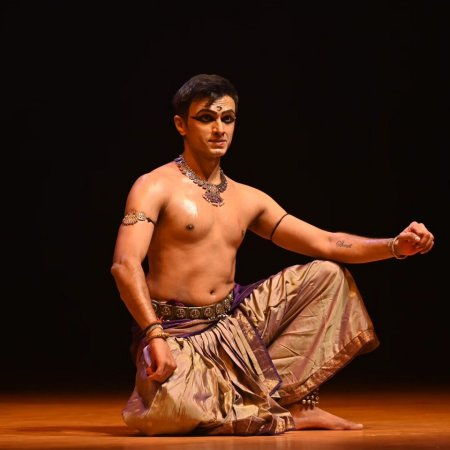 Parshwanath Upadhye For a dancer, onstage charisma is an inborn gift. It gives him/her an edge over other dancers who woefully lack it. Parshwanath Upadhye does have an incredible charisma. His winning appearance endears him to the masses. He lives on stage another life with an almost similar spontaneity, articulacy, mannerisms and majesty. On the final day of the festival, in the afternoon, Parshwanath came on stage and without wasting a moment started his performance with a Virutham followed by the Jathiswaram of Veena Sheshanna in raga Kharaharapriya set to adi tala. True to his words at the very outset, the poses he carved out with his body and limbs gathering inspiration from the sculptures of the Belur temple engendered a unique aesthetic tone that seamlessly blended with each unit of the adavus. Terrific were his theermana adavus and the fast-paced footworks. Penned by none other than the dancer himself, the Varnam, Smarami Te Chittam in Ragamalika and adi tala composed and sung by the veteran vocalist Srikanth Gopalakrishnan, began with the Utharadham (the latter segment) postponing the Purvardham (former segment). A shloka from the Geeta Govinda preceded the Pada varnam to establish Lord Krishna as one unable to bear the pangs of separation from Radha. While the parrot is singing and the peacock is dancing, Krishna is seen grieving over Radha whose absence has become conspicuous. Smarami me chittam snehasmitham sahasra is one of the poetically charged lines in this lyric. While Adithya P.V. rendered the jathis eloquently, Srikanth kindled the lyrics with his poignant singing. Harsha Samaga, the gifted instrumentalist, on the mridangam, Vishwesh Swaminadhan on the violin and Hariprasad Subramanian on the flute aurally enriched the entire actions of Parshwanath on stage. With his innate flair for humor, Parshwanath's handling of the Javali or any Padam having a similar tone is awesome. Remember the hilarious elucidation of the verses from Amarushatakam he did in the previous year. The Javali he did this time was centered on a lady who is leading a settled life. Parshwanath amusingly picturized how cleverly she tackled a wee bit bizarre situation in which her former lover turned up all of a sudden. He concluded his recital with the Lalgudi Thillana in raga Yaman Kalyan set to tala misra chapu. From the beginning till the very end, the audience watched him with an unabated excitement. 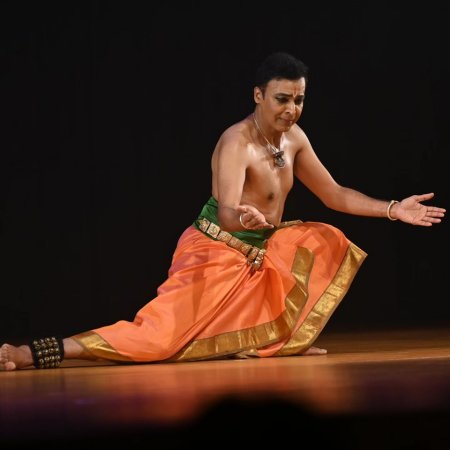 Vaibhav Arekar I had opportunities to enjoy the group choreographies of Vaibhav Arekar. For the first time, I could watch at the Music Academy his solo Bharatanatyam recital. In the very first item, Ardhanarishwaram, the renowned composition of Dikshitar in raga Kumudakriya set to tala rupakam, Vaibhav delineated the luminosity of Lord Siva. His angikabhinaya interlaced with moments of silence had geometric grace and exactitude. Swathy Thirunal's celebrated Padavarnam, Sumasayaka, has been an oft performed piece both in Mohiniyattam and Bharatanatyam by female dancers. I didn't have a chance to see a male dancer performing it. Hence, I watched with curiosity Vaibhav unfurling the tormented state of mind of the Khandita nayika. He did it with seriousness and commitment. In the anupallavi, Samayam bahubadhaya Sakhi, the dancer went into stillness for a moment implying the Nayika's profound agony of separation from her Lord. Kalishwaran Pillai on the nattuvangam revitalized the expressions of the dancer with the powerful rendition of the jathis while Raghuram Rajagopal's bhava laden music broadened the emotional contexts. Satish Krishnamurthy on the mridangam, Vishwesh Swaminathan on the violin and Mahesh Swamy on the flute deepened the textual and non-textual dance. Vaibhav dealt with the next item in a rather humorous tone. When a devotee comes to Lord Siva to let him know that he's tired of life which he loved once, Lord Siva ponders over his own life. A moment of self-revelation for the omnipotent Lord! Ganesha's mouse is afraid of the snake adorning the Lord. The snake, in turn, is afraid of Karthikeya's peacock. The Lord destined to live with those mutually opposed beings find it too difficult to contain them and therefore resorts to halahalam (snake poison). Reminding us of Neelakanta, Vaibhav turned it into a memorable anecdote. He later depicted the Padam, Theruvil varano of Muttuthandavar, in raga Kamas set to tala rupakam. The Kabir Bhajan, Yeh tan that, in ragas Hamirkalyani, Kedar and Desh, set to Talamalika, was the concluding item of his concert in which the poet's plea to all of us to look inward for self-realization was duly emphasized. I watched all the solo and group recitals held at the Music Academy on all the days from the morning till the late evening. Each and every dancer, I noticed, has his/her strength and weakness. As a Prekshaka, I certainly do have my prejudices and hangover inherited from the immediate past. Yet I made an earnest attempt to read every performance with a positive bent of mind. I didn't allow the author of the treatise, Natankusha (the Sanskrit text that comes down heavily on the Chakyars performing Kuttu and Kutiyattam) to color my reviews. All the performances held at the Academy have sustained a certain flow. At the same time, there were a few who rose above the flow. Of all the concerts I was engrossed in, the one that continues to haunt me even after a fortnight is that of Shweta Prachande for reasons within and beyond my comprehension. 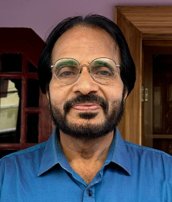 Former Deputy Registrar of Kerala Kalamandalam, V Kaladharan is also an art critic. He has published several articles at the academic level. 'From Meditative Learning to Impersonal Pedagogy' was published in an anthology 'Qui Parley' initiated and released by scholars and writers from the University of California, Berkeley. His articles on Indian performing arts and literature regularly appear in magazines and journals, and in the Friday Page of The Hindu. |
