
|     |
|
| |

 Madras Music Academy Dance FestivalTradition: Reinforcement and Reimagination - Part 1- V. Kaladharane-mail: vkdamaru.eda@gmail.com Photos courtesy: Madras Music Academy January 25, 2026 The idea of "genius" and "imagination" certainly refers to the qualities of those who invent or produce beautiful thing, while the idea of "taste" denotes more clearly the qualities capable of appreciating it. - Umberto Eco 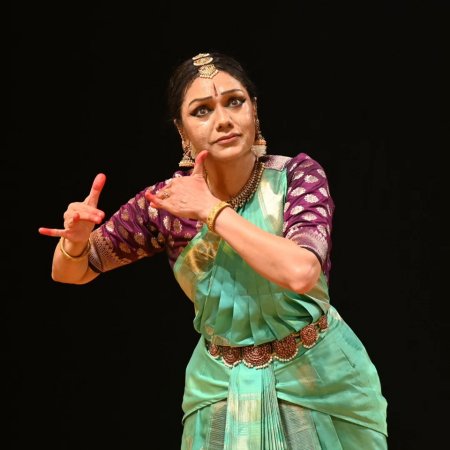 Rama Vaidyanathan The well-established dancers of the day are understandably drawn towards compositions that are least known to the dance-loving public. Such attempts might create an instant impression in the minds of the rasikas. In Bharatanatyam, this propensity is much more pronounced. The eminent dancer, Rama Vaidyanathan, is one who comes up with fresh thematic threads year after year in order to invigorate the audience. But this year, on the opening day of the Dance Festival (Jan 3 - 9, 2026) at the Madras Music Academy, she, contrary to her penchant for the unusual, began her concert with the Sabdam, Thillayambalam thannil, of Thanjavur Arunachalam Pillai, in Ragamalika set to tala mishra chapu. Rama was in her essentials while portraying the Nayika's intense longing towards Lord Nataraja. Her imaginative depiction of the cosmic dance of Siva and the fervent plea of the Nayika for union with him were striking to say the least. The bhava oriented singing augmented the impact of the vinyasa segments. Rama then moved on to the central piece of her recital, the Varnam, Saraguna Gavumu, a composition of Dr. M. Balamuralikrishna, in raga Thodi set to adi talam. Apart from the lucidity and splendor of angikabhinaya, the dancer remarkably portrayed the multifaceted Parvathi Devi, with brief vinyasas contrasting between the terrifying goddess hell bent on annihilating the evil forces and as the incarnation of benevolence showering blessings on her ardent devotees. Devi as one well-conversant with the musical instruments like veena and mridangam and as the muralee gana sudha rasapriya was a delightful visual treat. Dr. S. Vasudevan's persuasive rendering of the jathis, Sumod Sreedharan's impressive fingerings on the mridangam and Raghavendra Prasad's notes on the violin inspired the dancer's movement dynamics in no small measure. The third and the last item was the explication of the Shlokam, Kasya Kandarpa Bana of Banabhatta, followed by the delineation of select verses from Kalidasa's Rithusamhara. The content was the anguish of separation experienced by the hero and the heroine. The hero, a lonely traveler, comes across a mango tree in full bloom which makes him imagine that it is none other than his darling. Similarly, the heroine, targeted by Lord Kamadeva, with his sugarcane bow and the arrows made of tender mango leaves, is burning with the desire for union with her lover. Rama gorgeously depicted the sensuousness encircling the scene through the images of bloom and the lovelorn birds. Dr. S. Vasudevan deftly composed its music. Several bewitching ragas right from Vasanthi to Bahar illuminated the supreme poetry. 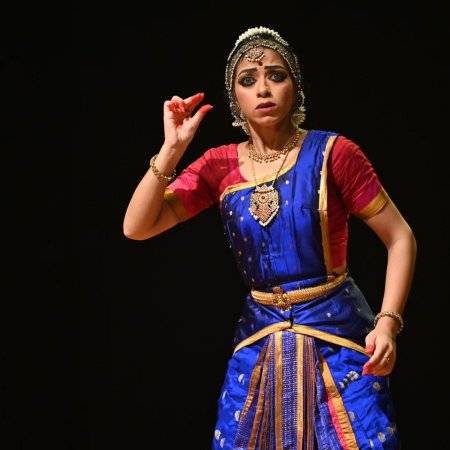 Apoorva Jayaraman On the next day morning, Apoorva Jayaraman commenced her recital with Alarippu overlaid with verses from Siddar Paattu, Aadu Pambey. With serpent as refrain, her body movements carried a distinct flavor. The Alarippu set in Panchajati too had a discrete charm. The Pada Varnam she selected for the day was the famed Ma Moha Lahiri of Namasivaya Pulavar in raga Kamas set to Rupaka tala. The lyrical structure of this Varnam gives any good dancer an increment. With a high degree of involvement, Apoorva portrayed the romantic sentiments of the separated Nayika whose longing for Lord Muruga is inexplicably intense. Vivek Ramanan's rendition of the jathis was evocative. Both the textual and non-textual dance carried clarity, poise and beauty. The sculpturesque poses that appeared once in a while were seldom distasteful. In the segment of the charanaswaram, the vocal and instrumental music considerably contributed to the fluency of Apoorva's movements and expressions. Following the Varnam, she presented a Kshetrayya Padam in Ragamalika set to tala mishra chapu. As its prelude, Nandini Sai Giridhar played the alluring notes of raga Hussaini on the violin. Apoorva movingly elucidated the Nayika's pangs of separation from Muvva Gopala, the Nayaka. With admirable restraint, the dancer unfolded the Nayika's reminiscences of her union with the Nayaka in the past contrasting it with the agony of solitude caused by his current detachment. Even without any fresh images or metaphors, Apoorva could convey the sentiments involved. The concluding item was a vivacious Thillana of Oothukadu Venkatakavi in Ragamalika set to Talamalika. That too gave the dancer enough room for unfurling the images of Lord Krishna. 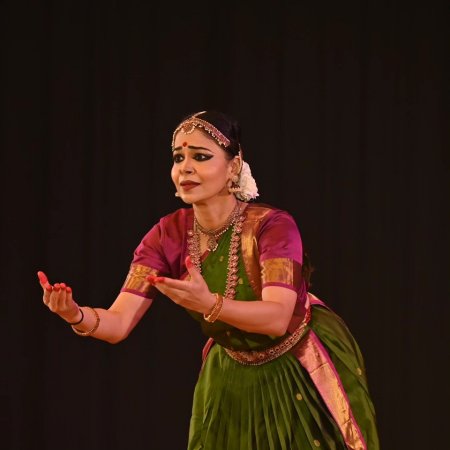 Navia Natarajan The prime-time recital of the day was that of Navia Natarajan who set off with a Virutham in praise of Lord Ganesha. Aho Purushika - verses from the Saundaryalahari of Adi Sankaracharya followed in which Navia wove striking images of Siva and Sakthi underpinning their inseparableness. There were glimpses of both lasya and thandava fueled by the rendition of jathis by D.V. Prasanna Kumar. The dancer then proceeded to the Varnam, Kamalakshi ninne koriyunnadira, a composition of Kundrakudi Krishna Iyer in raga Kamboji set to tala mishra jhampa. The Nayika in this Thana varnam is extremely fond of the king Muthuramalinga Chandrabhupathi, the Nayaka. Navia fluently portrayed the gross and subtle realms of the Nayika's rathi bhava through her angopanga prathyangas. The self-embellishment of the Nayika was one among them. In the slow, medium and fast tempos, the adavus and the footworks of the dancer were mind-blowing. Navia almost always does have an eye for details in her performance. Raghuram Rajagopalan's emotive singing coupled with the garland of gamakas emanating from Harsha Samaga's mridangam accentuated the expressions of the dancer. Janardhan Srinath on the violin and Mahesh Swamy on the flute further beautified the lyrics and its exposition. Yet there was only a lukewarm response from the audience. I am wondering what exactly is the chemistry behind the rapport between the performer and the beholder. The third and the last item was Bhishma, a composition of S. Raghuraman set to Ragamalika and adi tala by Raghuram Rajagopalan. Set against the backdrop of the Kurukshetra battle, the protagonist is Bhishma. Lying on the bed of arrows, the mortally wounded Bhishmacharya recollects his past, reflects on choice, responsibility and moral ineptitude. The dancer here brought in Goddess Ganga, Amba and Draupadi and movingly cited their association with Bhishma. The brief vinyasas included the dice game between the Kauravas and the Pandavas and the disrobing of Draupadi. Sushant Jadhav's excellent lighting created the desired effect. The piece was legitimate as a theatrical production. 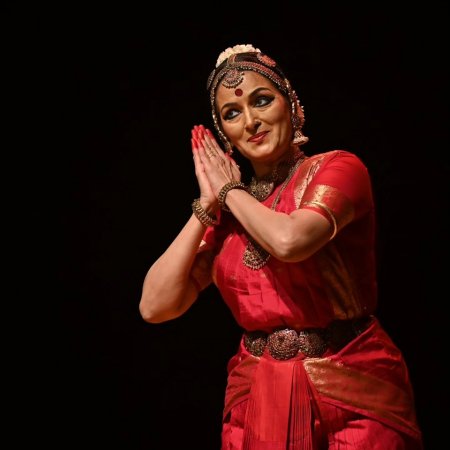 Vidhya Subramanian Vidhya Subramanian, one of the distinguished disciples of S.K. Rajarathnam Pillai, on the following day, started her concert with a Virutham immediately preceding Pushpanjali. Her performance of this pure dance piece carried a distinct taste and tenor. The highlight of Vidhya's recital was the eminently known Varnam, Samiyai Azhaithodi Va of K.N. Dandayudhapani Pillai, in Ragamalika and adi tala. Viraha of the Nayika being the sthai bhava (enduring expression) of this Varnam, Vidhya established the mood at the very outset before moving on to the thrikala jathi. The triangular discourse involving the Nayika unable to resist her longing towards Lord Nataraja and the season of spring denoted by the lush green nature, the dancing peacock and the singing of the cuckoo was a delectable visual treat. The clarity of her hasta mudras and the body movements gleamed further with Vijay Kumar's emotional rendition of the jathis, Janani Hamsini's sweet and solid singing, Sivaprasad's unerring fingerings on the mridangam, Sukanya's alluring notes on the violin and Sujith S Nayik's melody on the flute. Even the minute movements and expressions of Vidhya do have a meditative quality that compel the Prekshakas to watch her with an uncommon seriousness. Like the seasonal transitions, shifting from one raga to the other engendered appropriate sanchari bhavas (transitory expressions) thanks to the dancer's prathibha (genius). Vidhya depicted the Kshetrayya Padam Ninnu Joochi in the sitting posture all throughout. The Nayika in distress seeking reunion with her Lord Krishna forms the content of it. Its presentation was pithy and poignant. Janani's soulful singing of this Padam in raga Punnagavarali, heightened its visual effect. Vidhya did a Javali afterwards and concluded her recital with a Thillana of Lalgudi Vijyalakshmi in raga Suddha Sarang set to tala mishra chapu. While the Thillana sounded majestic, a slice of Abhang, its suffix, was a bit too spicy. 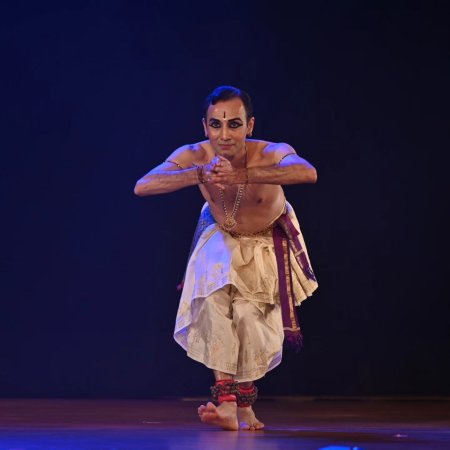 P. Praveen Kumar In the evening, Eswar Iyer sang the famed Gajavadana in praise of Lord Ganesha followed by Virutham from the Thirupukazh of Arunagirinadhar in Ragamalika praising Lord Muruga. Against this befitting backdrop, P. Praveen Kumar danced the glorious Keerthanam, Ka Va Va in raga Varali set to adi tala. He sculpted the immortal images of Lord Muruga and the dancing peacock. In fact, the lyrics offer lots of space for the dancer to reveal his/her creative energy. Praveen imaginatively made use of it. His movement vocabulary was punctuated with moments of silence that added to the luster of his performance. Being a prudent Bharatanatyam dancer, even the Kavadiyaattam he did was within the parameters of Natyadharmi. Praveen Kumar then moved on to the Varnam, Ye maguva bodinchera in raga Dhanyasi set to adi tala. Beginning with thara sthayi shadjam, the rendition of the lyrics gave tremendous scope to the dancer for detailing his artistry. Jagadishwar Sukumar's solid rendition of the jathis and N. Vidyashankar's profound beats on the mridangam revitalized the adavus and poses executed by Praveen Kumar. He employed his entire faculties to describe the plight of the Nayika who pleads Sarasa sreekrishna rajendra to shed his indifference and materialize her longing for union with him. The vertical and horizontal movements of the dancer and the intricate patterns he wove in his footworks were an aesthetically vibrant spectacle. The charanam, Kshanam Adhuna Narayanam with which Praveen began exploring the feelings of Lord Krishna as a tormented soul and as the embodiment of sensuousness was generously supported by the vocalist's modulations of the lines from the Gita Govinda in raga Dwijavanthi. I should mention here about the music on the flute by Vivek V Krishna and on the veena by Rudrapatna Prashanth. Both of them intensified the romantic outpourings of Lord Krishna which the dancer identified with. The final item was Papanasa Muthaliyar's Mugathai katiya in raga Bhairavi set to adi tala. Its culmination was the dancing of Lord Siva which the devotee could watch with awe and adoration. 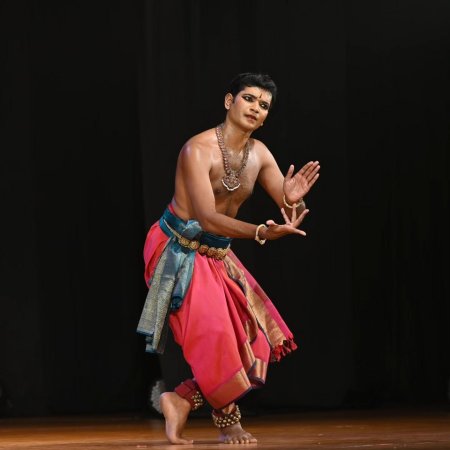 K.P. Rakesh On the fourth day afternoon, the seasoned dancer K.P. Rakesh's Bharatanatyam recital started with a Virutham in raga Kharaharapriya, worshipping Lord Vinayaka. The Daru that followed was in raga Begada set to adi tala. I didn't have a chance to see this item before. Hence it was a novel experience for me. Rakesh never goes overboard. This quality was evident in his presentation of the Daru. The Varnam he performed in raga Charukesi set to adi tala, was that of the Tanjore Quartet, Swami inda modi. Rakesh facilitated an easy communication with the audience while unfolding the theme of the Varnam. Let's look at an instance. Nayika writing a letter addressing the Nayaka and gives it to her Sakhi for delivery. The hero, the king, reads it, folds it and returns it to the Sakhi. A distressed Nayika throws it off and laments her separation with her lover. Rakesh also fluently portrayed the hero in the dreams of the heroine. All the adavus the dancer executed including the theermana adavus were never overwhelming. Rakesh then performed a Kshetrayya Padam in raga Bhairavi choreographed by Bragha Bessel zeroing in on to Sri Rama's separation from Sitadevi. He concluded his recital with a vibrant Thillana of Oothukad Venkata Kavi in raga Surutti and in thisra gathi. Vocalist Binu V Gopal and mridangist Sivaprasad besides Sujith and Ananthanarayanan on the flute and the veena spared no efforts to galvanize the textual and non-textual dance of Rakesh. 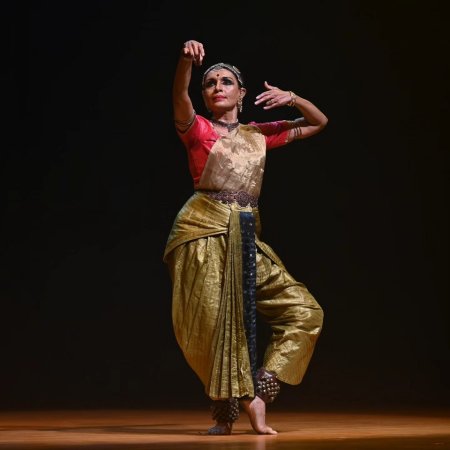 Priyadarsini Govind The highlight of the day was the Bharatanatyam recital of Priyadarsini Govind. She commenced her concert with a Keerthanam extoling the glory of Lord Ganesha followed by the traditional invocation marked by an immaculate execution of movements and expressions. Priyadarsini then proceeded to the piece de resistance of her recital. She substituted the theme of the traditional Varnam with the rise and fall of the invincible demon king of Lanka, Ravana, thereby establishing Veera rasa as the sthai bhava (enduring expression). While Ravana is an indomitable character in some of the key plays enacted in Kutiyattam and Kathakali, placing him as the protagonist within the organic structure of a dance form like Bharatanatyam is no mean task. Priyadarsini re-envisioned the eventful life of Ravana in the language of Bharatanatyam, more precisely, in the chathurvidha abhinaya. In choreographing this production, the influence of Thapass attam (Ravana's penance for boons from Lord Brahma standing amidst a cluster of five sacred fires) from the play Ravanodbhavam in Kathakali and Kailasodharanam (lifting up of the mountain Kailasa by Ravana) from the Kudiyattam play Thoranayudham, was conspicuous. Yet the way the dancer portrayed these and other excerpts was distinctive in tone and texture. Priyadarsini articulated with her angopanga prathyangas, especially, with the upangas the vyabhichari bhavas such as sringara, hasya and shoka convincingly. Admittedly, the new "Varnam" was drawn excessively towards theatre. The element of dance was few and far between. Jayasree Ramanathan on the nattuvangam, Murali Sangeeth on the vocal, Sakthivel Muruganandan on the mridangam, Natarajan Sigamani on the violin and Ananthanarayanan on the veena were instrumental in augmenting the density and range of expressions of the dancer. From the weighty "Varnam", she shifted to an enthralling elucidation of the acclaimed Bhajan of Thulasidas, Thumak chalak Ramachandra, in which the childhood of Rama in all its playfulness complemented by the maternal affection came to the fore. The next one was a select verse from Muthollayiram with its music composition by Dr. Rajkumar Bharati. It centered round a mighty elephant with broken tusk, clipped nails and dust over the body who shies away from meeting his mate. Priyadarsini performed it fluently adding a thin layer of humor. The concluding item of her recital was Adum Chidambaramo of Gopalakrishna Bharati in raga Behag set to adi tala. It was a seamless blend of thandava and rhythmic richness with Lord Siva, the cosmic dancer, emerging as an immortal image. 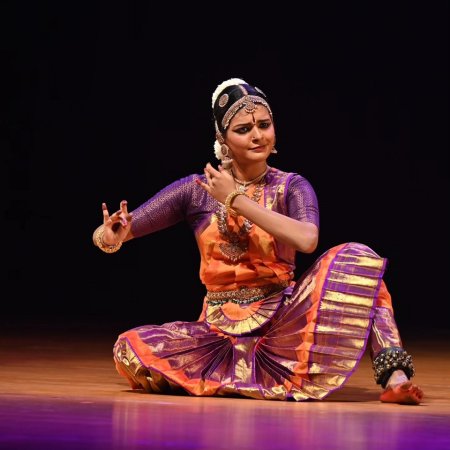 Lekha Prasad On the fifth day of the festival, Lekha Prasad began her recital with a portion from the Thevaram of Thirugnanasambandhar worshipping Lord Siva. She did a beautifully choreographed Jathiswaram soon afterwards. The Vayu Kauthuvam, one of the components of the Navasandhi Kauthuvam of the Tanjore Quartet, again a pure dance piece, Lekha did carried a distinct grace. She then proceeded to E manda yaanara, a significant Swarajathi of the Tanjore Quartet in raga Huseni set to rupaka tala. As the hero, the King is in royal regalia whom the heroine longs for. Lekha dexterously portrayed the rathi rasabhavas in the textual dance and transformed the nritta segments into a compelling experience. The adavus she executed had an indefinable delicacy. The crooning the vocalist, Nandini Anand, got involved in once in a while, especially during the charana swarams, was befitting to the contexts. Priya Murle on the nattuvangam, Nagai Sriram on the mridangam, Nandini Saigiridhar on the violin and E. Devaraj on the flute substantially contributed to the aesthetic impact of Lekha's performance. Next, she presented a familiar Padam, Yarukkakilum Bayama of Subbarama Iyer in raga Begada set to mishra chapu tala. Lekha drove home the confidence and boldness of the Nayika whose relationship with her Lord is no more a secret. Her actions and expressions were characterized by a rare spontaneity. The Tanjore Quartet Thillana in rag, Behag and tala mishra chapu with which Lekha concluded her concert was slightly slackened. Link to part 2  Former Deputy Registrar of Kerala Kalamandalam, V Kaladharan is also an art critic. He has published several articles at the academic level. 'From Meditative Learning to Impersonal Pedagogy' was published in an anthology 'Qui Parley' initiated and released by scholars and writers from the University of California, Berkeley. His articles on Indian performing arts and literature regularly appear in magazines and journals, and in the Friday Page of The Hindu. |
