 |
    |
|
|

 The Pinnacle of Kathak - Pandit Kundan Lal Gangani- Dr Chitra Sharmae-mail: sharmachitra8@gmail.com July 13, 2026 Pandit Kundan Lal Gangani was one of the most eminent exponents of the Jaipur Gharana, whose creative vision shaped the very form in which this illustrious tradition is known today. Drawing upon the priceless legacy inherited from his forefathers, he enriched and expanded the art of Kathak through his profound knowledge, imagination, and experience, creating a legacy that has itself become a part of history. 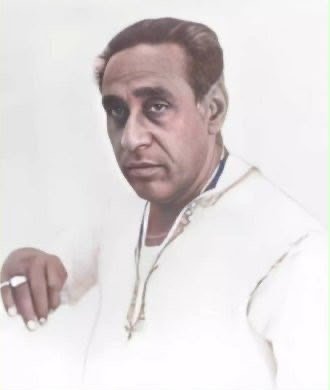 Born on 16 July 1926 into the distinguished Gangani family as the son of Pandit Ganeshi Lal, he represented the seventh generation of this celebrated lineage. His training in Kathak began under the loving guidance of his father at the tender age of four or five. Through him, Pandit Kundan Lal inherited not merely a tradition, but the complete artistic heritage of his ancestors in all its dimensions. Later, under the tutelage of his maternal uncle, Nrityacharya Pandit Narayan Prasad, his education in Kathak flourished remarkably. By the age of nine, his mastery had already earned him the opportunity to perform before the Raigarh Royal Court, marking the beginning of an extraordinary artistic journey. His home was a vibrant meeting place for distinguished musicians and Kathak maestros, giving him constant exposure to new compositions and artistic ideas. Alongside Kathak, he also mastered the art of tabla playing, a tradition that continued in the succeeding generations of his family and became one of the defining characteristics of the Jaipur Gharana. Blessed with an insatiable thirst for learning, he moved to Bombay at a young age, where he found abundant opportunities to perform. At the age of eighteen, he was invited to Baroda, where he was appointed Kathak teacher at Sayajirao University. It was here that his illustrious lineage of disciples began. After four to five years, he returned to his native village and travelled extensively, presenting Kathak performances across the country while expanding the reach and influence of the Jaipur Gharana. During his years of teaching in Jodhpur, he introduced new dimensions to choreography and stage presentation. As his accomplished disciples, including Shashi Sankhla and Urmila Nagar, began performing on prestigious stages throughout India, the reputation of Guru Kundan Lal Gangani continued to grow. Recognising his exceptional contribution, he was invited to the Kathak Kendra, New Delhi, where he found the ideal platform to elevate his artistic vision to its highest expression. He introduced numerous innovations into Kathak. He incorporated intricate Lamchad Parans and sophisticated fractional rhythmic structures such as Aadi, Pauni, Savai, Tigun, Chaugun, and Chhaigun, which eventually became hallmarks of the Jaipur Gharana. His command over rhythmic intricacies, complex pirouettes, and performances in rare and unconventional talas remains unparalleled. His repertoire included celebrated compositions such as Ganesh Paran, Durga Paran, Gaj Paran, Pakshi Paran, Prakrit Paran, and kavitts inspired by stories from the Puranas, all of which lent his dance a distinctive identity. 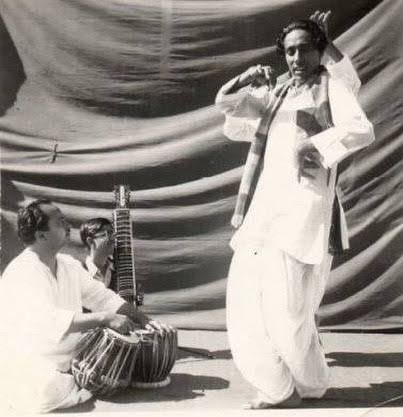 He pioneered the presentation of Gat in Vilambit Laya (slow tempo). Whether performing in common or uncommon talas, he created countless spontaneous rhythmic improvisations in vilambit laya. His extraction of rhythmic syllables through intricate footwork was both remarkably diverse and aesthetically captivating. It was also Pandit Gangani who initiated the practice of introducing a metrical verse (Chhand) before presenting a Thumri. There are countless instances that illustrate his spirit of experimentation and innovation. Within the framework of tradition, his creativity blossomed naturally, as though one living tree gave birth to another. Improvisation (Upaj) is one of Kathak's defining characteristics, and Pandit Gangani transformed its pedagogy by devising a systematic method of teaching Kaidas, Chalas, and Chalan in a sequential manner. Indeed, the very term Chala was coined by him. His contribution to the beauty of Gat-Nikas and Chala in vilambit laya will forever remain one of his enduring gifts to Kathak. Alongside rigorous footwork, he placed equal emphasis on the grace and aesthetics of body movement. His mother was an accomplished Dhol player, and it was from her that he learnt the instrument. He elevated Ganth Chautal and several other folk rhythms into the realm of classical performance. Folk compositions rooted in Rajasthani ragas were seamlessly woven into Kathak, enriching its expressive dimension. His work bears a profound imprint of Rajasthan's folk traditions, evident in compositions such as the Rajput sword gait (Talwar ki Gat) and Bajuband ki Gat. Inspired by Rajasthan's beloved Gangaur Festival, he created exquisite choreographic works. By integrating folk dances into Kathak, he composed remarkable dance productions such as Rangeela Shambhu, Nath Mhari, Raghunath Kunwar, and Kai Marzi, creations that distinguish him from many other eminent gurus of the Jaipur Gharana. Pandit Gangani always encouraged his disciples to contribute their own creative improvisations rather than merely imitate what had been taught. In his Kathak, a Thumri would generally begin with a Chhand or poetic verse instead of a Gat. He made minimal use of conventional Gat-Bhav, preferring instead a training methodology in which the coordinated movement of both feet and the complete rotation of the body in all directions created a uniquely captivating visual appeal. His ability to weave graceful movement into the interpretation of a Thumri was one of his artistic signatures. Equally remarkable was his capacity to present the same composition, idea, or creative element in multiple distinct ways. His Thaat possessed a magnificence rarely equalled, while the elegance of his Hastaks (hand movements) was unmatched. A passionate advocate of beauty in dance, he would remind his students that whether they performed a Thaat, a Tukda, or a Tihai, the spirit of joy must always radiate through the performance. He discouraged the maintenance of a fixed smile throughout a recital; instead, he believed that the emotions inherent in each composition should naturally manifest on the dancer's face with refinement and authenticity. He was never in favour of mechanical repetition or rote presentation. A devoted believer in improvisation, Pandit Gangani was an innovative, creative guru and performer who wished his disciples to discover and internalise emotional expression on their own. This philosophy is clearly reflected in the experimental spirit that characterises his disciples. Today, internationally acclaimed artists such as Pandit Rajendra Gangani, Prerana Shrimali, Harish Gangani, and Shobha Koser continue to uphold their guru's tradition while preserving their own individual artistic identities. Their rich lineage of disciples-including Swati Sinha, Dhirendra Tiwari, Sanjeet Gangani and many others-has carried this legacy to audiences across the world. This year marks the Centenary Year of Pandit Kundan Lal Gangani. Significantly, both his birth and his passing occurred on 16 July. It is indeed ironic that while many of his disciples have been honoured with the Sangeet Natak Akademi Award, Pandit Kundan Lal Gangani himself never received this prestigious recognition. It was through his extraordinary presence, unwavering dedication, and lifelong spiritual pursuit of art that the Jaipur Gharana of Kathak attained such exalted heights. Today, his disciples continue that journey, carrying his legacy ever forward. We offer our heartfelt homage and deepest reverence to this legendary Guru. 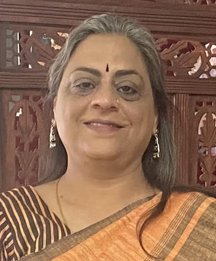 Dr Chitra Sharma is an art critic. She has her own YouTube Channel and a page on Face Book named "Kathak ka soundarya." She is working with CBC, information and broadcasting ministry as an assistant director (programmes). Post your comments Please provide your name along with your comment. All appropriate comments posted with name in the blog will also be featured in the site. |
