 |
    |
|
|

 Dr. Subas Pani: Rare bureaucrat art lover of Orissa- Leela Venkataramane-mail: leelakaverivenkat@gmail.com August 17, 2025 Dr. Subas Pani will always be remembered as one of those rare scholarly bureaucrats, deeply concerned about preserving both history and growth of arts in his state of Odisha. My association with him, despite my long stay in Odisha with my husband serving the State as an IAS officer for over thirty years, was strangely enough, only after my husband's retirement in 1984 - at which time we were located in Delhi. My occasional visits to the State were thereafter, more as a dance writer invited to the State's many performing art events. 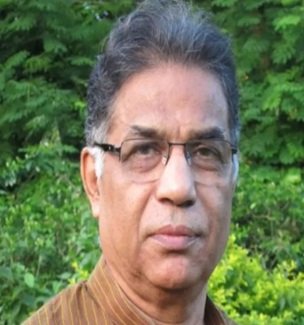 Dr.Subas Pani As Chief Secretary of Odisha, Dr Pani's special concern was for State- controlled art institutions like the Odissi Research Centre, and the Utkal Sangeet Mahavidyalaya. The Kelucharan Mohapatra Odissi Research Centre, in particular, started in 1986, with dancer /bureaucrat Kumkum Mohanty heading it for years, had reached, in Dr Pani's opinion, a state of aimless drift, with dance and music stalwarts of the likes of Guru Kelucharan Mohapatra and Bhubaneswar Misra no more, and with its longtime head Kumkum Mohanty too having retired. I was pleasantly surprised to find my name included in the Special Committee he set up for discussing ways of alleviating drawbacks, putting the institution on a more sound footing. Directly dealing with government controlled art institutions, as Chief Secretary, the starting point of discussion was in seeking suggestions of names of the right kind of person for heading the Research Centre. And I could sympathize with the dilemma Dr.Subas Pani faced. Art loving or knowledgeable State bureaucrats were not many. One had also to contend with a general feeling that being put in charge of an institution dealing with Arts, (considered away from the main line), could relegate the concerned person to the sidelines of promotion options coming up in the main Ministries. Choosing from amongst the State's performing artists themselves, had the risk, no matter how capable the person, of the person's inevitable art allegiances, further muddling Art Politics. Tempting, deserving choices from outside Odisha had to be set aside -for such a candidate could ultimately be subjected to the inevitable alienation of not belonging to sons of the soil. Some of the whispers in the State that there was 'no need for a Chief Secretary to concern himself with an Arts institution' showed how little idea one had of what was involved. An ardent devotee of Lord Jagannath, Dr Pani's research in literature, paintings, Temple Art and Sculpture, music and dance revolved round his intense concern for the presiding deity of Odisha. His talk on the 'Jagannath Consciousness' saw the Lord as the embodiment of the collective faith of the Oriya people. While the Puri temple with all its cultural events connected with the worship of the Lord was central to Subas Pani's thinking, his research tracing the origins of Jagannath, referred to how ancient the Jagannath concept was - starting from the sloka in the Rig Veda about the floating log of wood - Ado yaddaru plabate sindohpare apurusheyam ada rabbaswa durbano tena gachhaparastaram (concerning the well-known lore of Queen Gundicha, during the time of King Indradhyumna, entering the forbidden premises, with the divine sculptor Vishwakarma vanishing, leaving half-finished icons of Jagannath, Balabhadra and Subadra). Apart from the well substantiated talks of Subas Pani on the history of Jagannath from the time of Anantavarma Choda Ganga, what struck one was not just the historical details but also Dr.Pani's deep involvement with the poetry of the Gita Govind, which he could recite back to front. 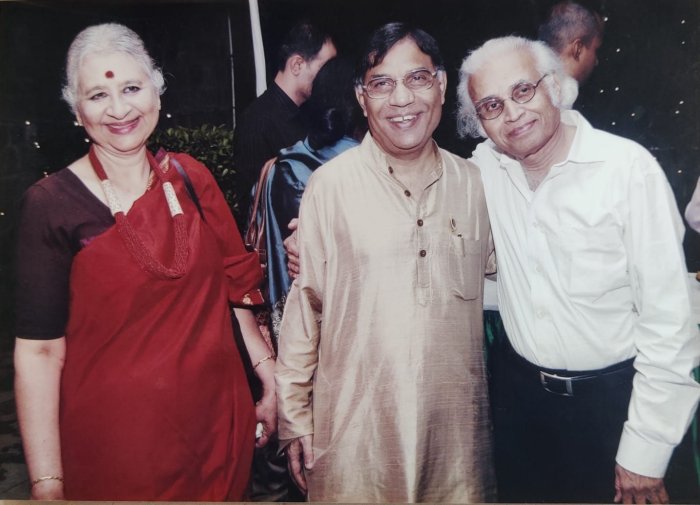 With Dr. Subas Pani & Dr. Sunil Kothari Erudite lectures on this one text, and on the Ashtapadis, and also other compositions like the Bhajanas, Jananas, Padavalis, Prarthanas built round the Dark Darling by Salabeg, Balarama Das, Saria Bhika, Upendra Bhanja, Chandi Dasa, Nityananda, Banamali, Birakesari and several others, were all grist for his scholarship mill. He was the only scholar who brought out, for me, the difference between Prarthana as prayer asking for the Lord's blessings, and Janana wherein the devotee singing the Lord's praises, asks for nothing for himself. How many times one heard him recite Salabeg's Jaganntha ho mokichi magu nahi tote, and lines from Upendra Bhanjo, or Kabi Surya Baladev Rath, with deep feeling! His English translations, in his neat book 'Blue Hill' and several of his writings make for easy reading, with information passed on without pedantry. The writings apart, Subas Pani's music direction in the entire gamut of Jayadeva Ashtapadis, set in different ragas and rendered by musicians attached to the Kelucharan Mohapatra Odissi Research Centre, is a treasure trove, used constantly by dancers too, for abhinaya. I often came upon him sitting, surrounded by musicians of all ilk, in the drawing room of his home, discussing the music for each Ashtapadi which he always maintained occurred to him, "from a divine inner source." Elaborating on Dr. Pani's raga suggestion, with details of accommodating the same for the particular Ashtapadi, with grammatical finesse in singing and orchestration, contributed by the trained musicians, the entire volume of published tapes make for a delightful musical enterprise. While I am not aware of the technical credentials, or depth of his musical knowhow, he had something of greater importance to music/dance lovers. That was, from what one perceived right from the start, how powerful his emotional response to music was. That inner throb is what made him decide on how the particular sentiment and mood in each Ashtapadi could be brought out by a raga. Acclaimed Hindustani musician Madhup Mudgal himself remarked to me in a conversation, that Dr Pani's musical enterprise with the Gita Govind Ashtapadis, was not just melodious but highly evocative of the mood in the poetry. Though amidst us no longer, Dr. Pani will live on through his work and for his contribution to and pride in Oriya Asmita!  Writing on the dance scene for the last forty years, Leela Venkataraman's incisive comments on performances of all dance forms, participation in dance discussions both in India and abroad, and as a regular contributor to Hindu Friday Review, journals like Sruti and Nartanam, makes her voice respected for its balanced critiquing. She is the author of several books like Indian Classical dance: Tradition in Transition, Classical Dance in India and Indian Classical dance: The Renaissance and Beyond. Post your comments Please provide your name and email id along with your comment. All appropriate comments posted with name and email id in the blog will also be featured in the site. |
