
|
    |
|
|
|

ARTICLETwo Traditions, Similar Rhythms: Mishra Chapu Taala and Poritaal- Ayush Duttae-mail: ayushdutta712ofc@gmail.com November 17, 2026 It's a known factor that each of the Indian classical dance forms are set to an intricate and sophisticated rhythm system. The metric time measurement of this rhythm system is called taala or taalam. No classical dance could ever exist in a proper executable manner without taala. In the Carnatic music system, there is a comprehensive framework of seven fundamental rhythm specifications, which is called the Sapta Taala. These seven core rhythmic structures are further categorized into five standard syllable divisions, collectively known as the Pancha Jathis. These jathis actually show the matra structure of the taala system: 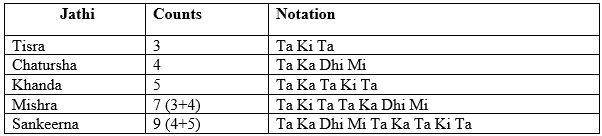 Following this basic overview, the article focuses on Bharatanatyam and Sattriya -- two of the eight Indian classical dance forms, to show close comparative analysis between Mishra Chapu Taala of Bharatanatyam and Poritaal of Sattriya. This comparison reveals the profound structural similarity between two dance forms that follow distinct musical systems. Mishra Chapu Taalam of Bharatanatyam: Bharatanatyam dance follows the Carnatic music system, utilising an intricate application of Jathis within its rhythmic framework. The Mishra Chapu taala comprises of 7 matras (beats), structured through a syncopated pattern of three and four counts, traditionally recited as: 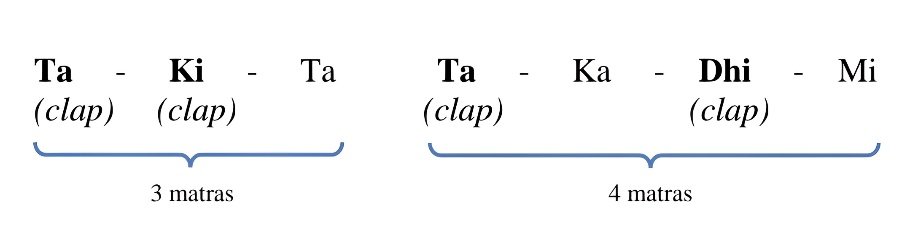 This shows there will be two fast claps and two slow claps. These two fast beats and two slow beats form a good pace of rhythm, being popular and important in many dance numbers; including Shabdam, Jathiswaram and Alarippu type dance pieces. • Shabdam Most commonly, the shabdams are set to Mishra Chapu Taalam, a taala segment of it is as follows: 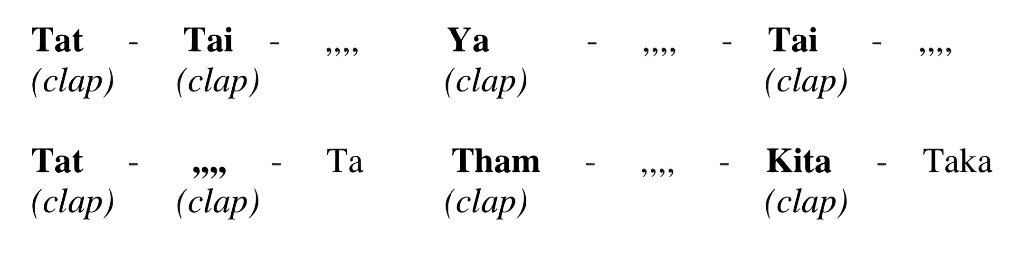 This is the taala segment played at the very first of Shabdam set of Mishra Chapu taalam. Eg: Sarasi Jakshulu, Thillai Ambalam, Aayar Sheriyar, etc. • Jathiswaram Under the Raagam Ragamalika, Jathiswaram is set to Mishra Chapu Taalam. 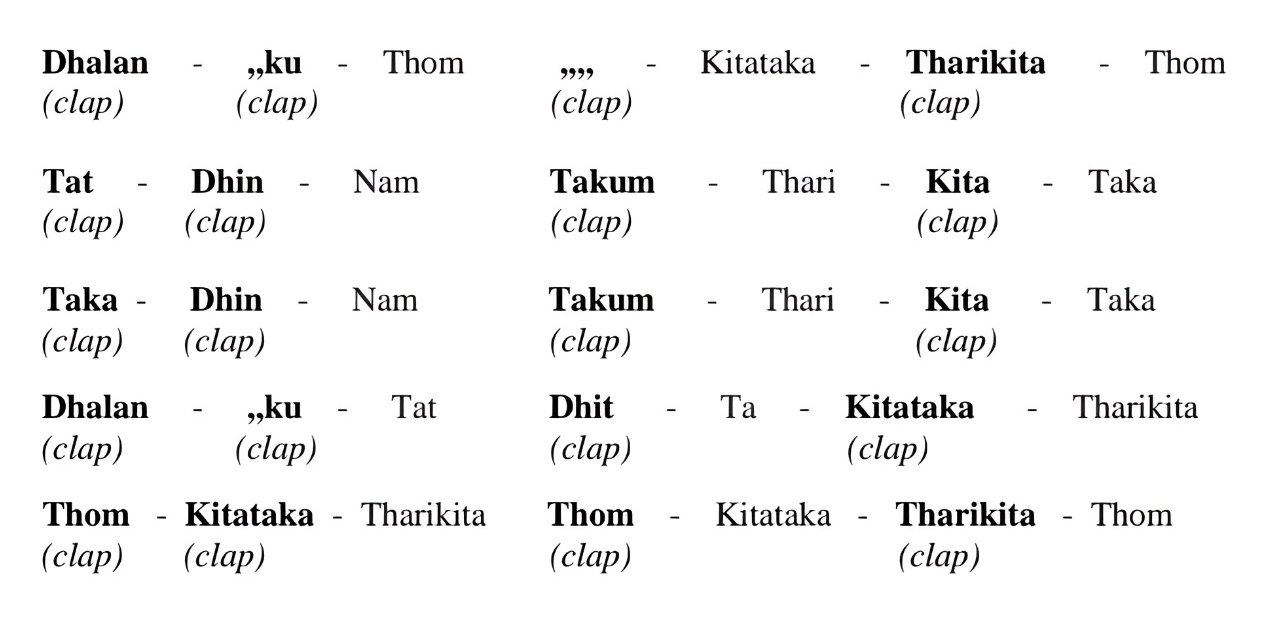 This is the Jathi segment of the Raagamalika Jathiswaram under Mishra Chapu taalam, which is performed in the very beginning of the dance piece. • Alarippu There are five different types of Alarippu based on the Pancha Jathis. The Alarippu based on Mishra Jathi is actually performed on Mishra Chapu Taala. 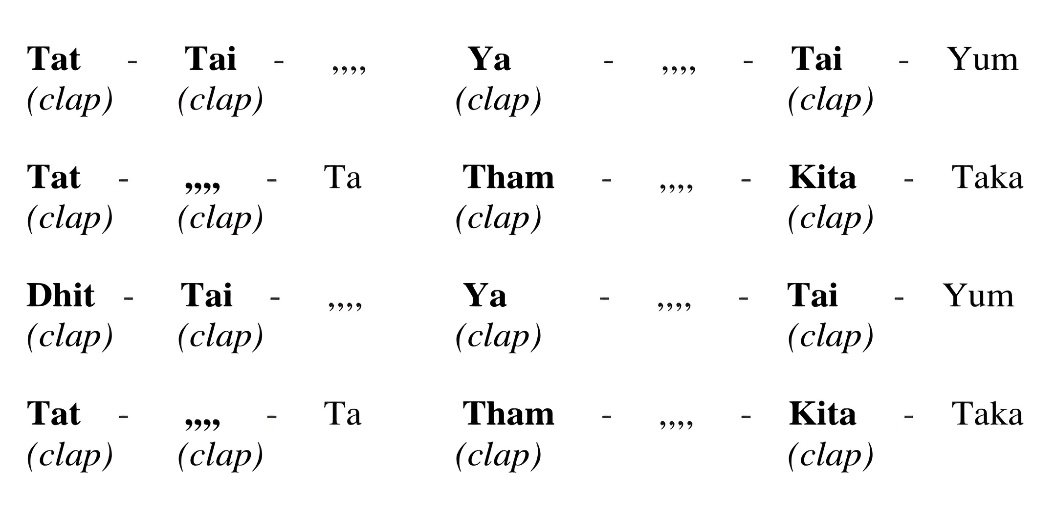 All of these three dance bol segments from different dance numbers of Bharatanatyam follow 7-beat cycle of Mishra Chapu taalam. Poritaal of Sattriya: Sattriya dance follows a distinct music system, which can be said as Sattriya Sangeet. There are several talas used in this form of dance. The most common tala used in Sattriya is Cuta taal (pronounced as suta taal). Among the various dance taalas, there is a taala named Poritaal which is of 7 matras, which can be further extended to 14 matras and 21 matras also. 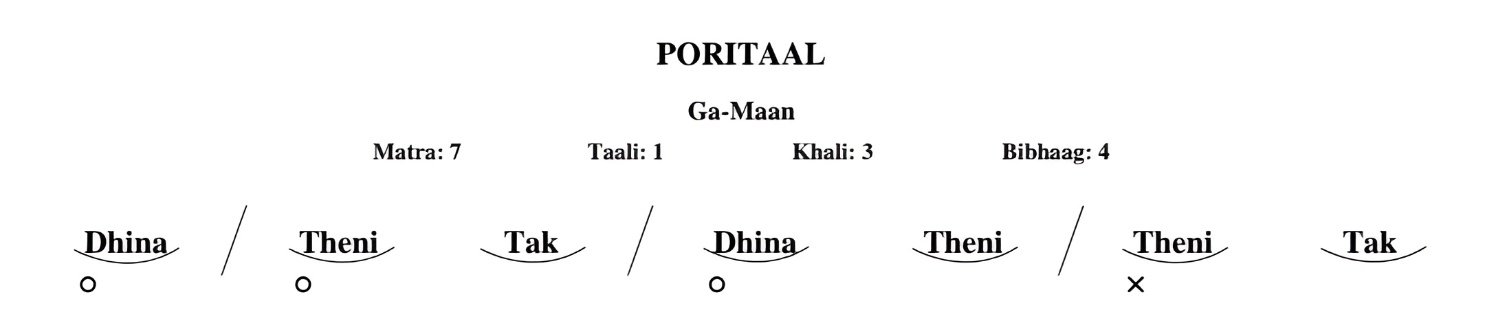 ✕ = Taali ○ = Khali / = Bibhaag This taala is used in various Sattriya dance numbers including; Rajaghariya Chali Ramdani, Cali Geetor Nac (Poritaal), Nadubhangi Geetor Nac, Bahar Geetor Nac. While reciting this taala, two hand waves are done fast, then the 3rd wave, following a clap. Basically, the first two khalis are consecutive, so the rhythm feels accelerated; there is a matra (here, Tak) between 2nd and 3rd wave, and again there is a matra (here, Theni) between the 3rd wave and the taali on the 6th matra (here, Theni). So, while reciting, we can notice that there are 2 fast and 2 slow beats in this taala. • Suddha Cali Nac (Geetor Nac): Among the three parts of a Suddha Cali Nac; Ramdanir Nac, Geetor Nac and Mela Nac. Geetor Nac comes in second in the chronology, which are further segregated into fundamental 2 types based on taalas, Ektaal and Poritaal. Here, the 7-matra Poritaal is used.  This is one of the six ghaats of the Suddha Cali Nac; Geetor Nac (Poritaal). • Rajaghariya Cali Nac (Ramdani Number - 3): The 3rd ramdani of the Rajaghariya Cali Nac has the use of poritaal in the very first Ga-Maan of the dance number.  This bol segment is structured like the 14 - matra and 21 - matra Poritaal, hence the writing style of this taala is a bit different from the 7-matra Poritaal, however while reciting, the basic rhythm of the Poritaal remains the same, i.e., the two fast beats resemble [Khiti Tini Khiti], and the two slow beats resemble [Tak Jidhe] and [Tini Khiti]. • Bahar Nac (Geetor Nac): The Bahar Nac has two parts; Ramdanir Nac and Geetor Nac. The Geetor Nac here, is incorporated with various taalas, including; Poritaal, Pori-Jaman Taal, Cuta Taal, Jaman Taal, Jyoti Taal, etc. 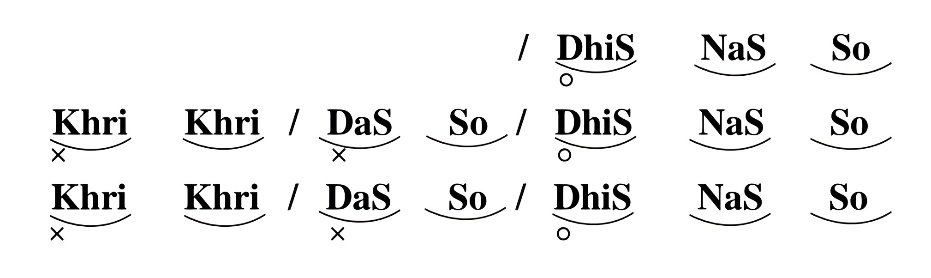 Here, S = Avagraha, which represents blank space in a matra, thus if it is placed under ⌣ alone or with other akshara (like, DhiS) would represent a blank spot in a matra. It actually guides the flow of reciting the bol. This segment is played as the ending of the Poritaal section of the Bahar Geetor Nac. The Poritaal section comes in the very first of the dance piece. This segment is recited with two claps on (DhiS NaS) part and one clap on (Khri) and the other clap on (DaS). Therefore, the taala structure while reciting becomes 2 fast claps and 2 slow claps. Interestingly, we can observe that, the Mishra Chapu Taala of Bharatanatyam and the Poritaal of Sattriya, both are structured with 2 fast beats and 2 slow beats. However, it is a point to be noted that in the aforementioned taala discussion, the rhythm structure of Poritaal is similar to the Mishra Chapu Taala. But the Mishra Chapu Taala can include waves and claps simultaneously, whereas, the Poritaal (7-matras) include 3 waves and 1 clap. On the other hand, 14-matra and 21-matra Poritaal is structured with one wave in place of 2 fast claps. Moreover, the Mishra Chapu Taala is recited in the 3 speeds, however in case of Poritaal, same speed is maintained in the Ga-Maan, and Ghaat. However the Cuk section is recited twice as the speed of its Ga-Maan. One more beautiful similarity can be observed if we observe Mishra Chapu Alarippu with Cuk section of Cali Geetor Nac. COMPARISON ANALYSIS 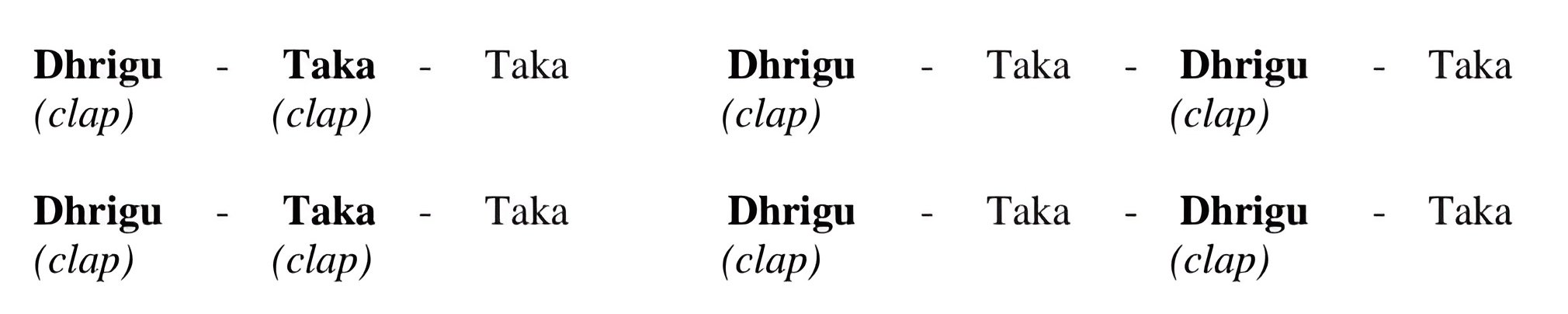 This segment is from the last section of the Mishra Chapu Alarippu. This segment of taala is significantly similar to the Cuk section of Geetor Nac under 7-matra Poritaal.  This segment is from the Cuk section of the (Poritaal) Cali Geetor Nac, which is generally recited by replacing the waves with claps. Thus, it resembles the structure of Mishra Chapu Taalam: 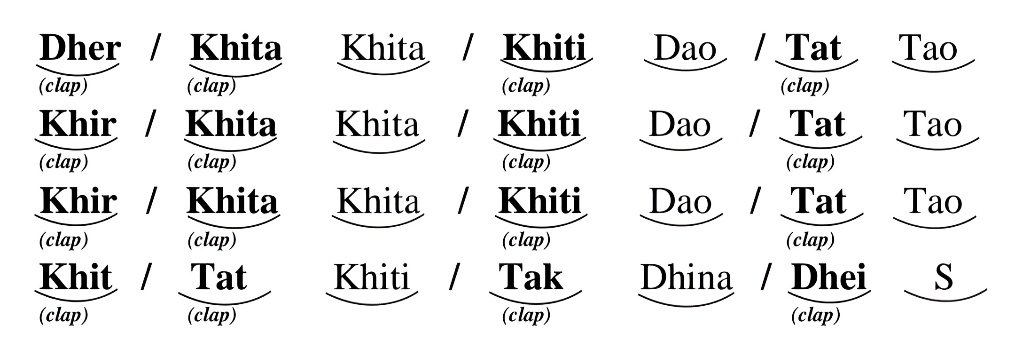 Through this, it can be observed that both the taalas have a lot of similarities. Moreover, the Cuk section of 14 - matra and 21 - matra Poritaal have almost similar bols with the same rhythm structure. 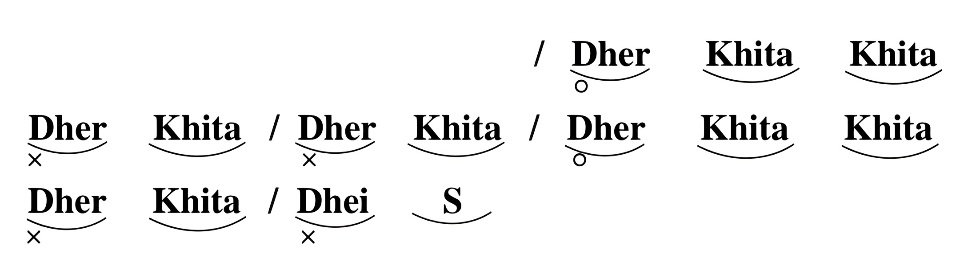 This is the Cuk section of 14 - matra Poritaal, which is similar to the segment of Mishra Alarippu bol as mentioned before. CONCLUSION From the forgoing discussion, it becomes evident that although Indian classical dance forms are originated under different pravritti, Bharatanatyam from Dakshinatya and Sattriya from Odra-Magadhi (as taken in current discussion), the Bharatanatyam following a Carnatic music system can have such beautiful similarity to the rhythm structure of Sattriya. However, we cannot deny that 7 matra taala structure is not confined to these two dance forms exclusively. 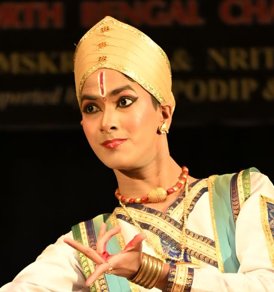 Ayush Dutta is a young Indian classical dancer and practitioner from Dibrugarh, Assam, specialising in Sattriya and Bharatanatyam. He is the recipient of the Nritya Bhushan 2025 (WFAC) and a graded artiste in Sattriya at Prasar Bharati, Doordarshan Kendra. Post your comments Pl provide your name along with your comment. All appropriate comments posted with name in the blog will also be featured in the site. |
