
|
    |
|
|
|

 Seeing the world through a Bharatanatyam body- Samyuktha Gopi RajJuly 4, 2026 Reflections from The Buckley School's World Dance Workshop and Flip the Script 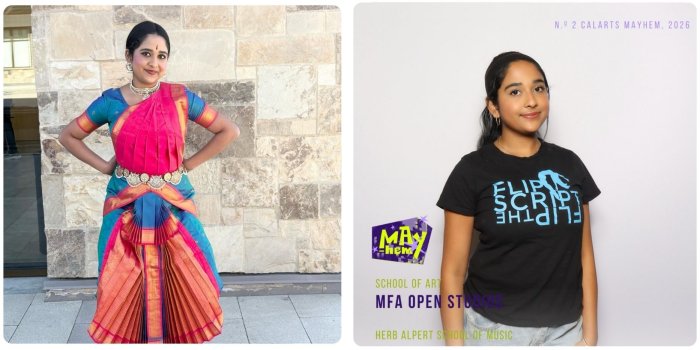 At The Buckley School, Sherman Oaks, CA, dance education extends beyond learning choreography. It encourages students to explore movement as culture, storytelling, and identity. During the Fall 2025 semester of World Dance, culminating in the October 2025 World Dance Workshop, and later through participation in the April 2026 spring dance concert in Flip the Script, I began to understand how deeply my Bharatanatyam training shaped the way I approached unfamiliar dance forms. Rather than feeling separate from my classical background, each experience reinforced how Bharatanatyam provides a foundation that allows a dancer to move thoughtfully across traditions. The World Dance Workshop introduced students to forms including Reggaeton, Afro Fusion, Salsa, and Ballroom Jazz. What made the experience meaningful was the emphasis instructors placed on the origins and cultural significance of movement. This immediately resonated with me because Bharatanatyam, too, is rooted in meaning. In classical Indian dance, movement is never abstract, every gesture, expression, and rhythmic phrase carries emotional and narrative intention. Throughout the workshop, I found myself constantly comparing how different traditions communicate through the body. Rhythm, Precision, and Confidence in Reggaeton The Reggaeton class with choreographer Laroye Ana revealed unexpected similarities between a contemporary street style and classical Indian dance. While Reggaeton outwardly appeared free and less structured than Bharatanatyam, the movement demanded strong rhythmic awareness, precision, and body control. In Bharatanatyam, rhythm is internalized through tala and repetition; in Reggaeton, rhythm emerges through grounded isolations and musical responsiveness. Both forms require complete commitment to movement. I realized that confidence itself functions almost like choreography-much in the way abhinaya requires emotional conviction to fully communicate rasa. Afro Fusion and Storytelling through the body Afro Fusion with choreographer Kosi Williams created one of the strongest contrasts to Bharatanatyam physically, while simultaneously revealing profound philosophical similarities. The movement emphasized grounding, fluidity, and drawing energy upward from the earth, which differed from the lifted posture and geometric structure central to Bharatanatyam. Yet both forms rely deeply on storytelling. Bharatanatyam communicates mythology, devotion, and emotional nuance; Afro Fusion carries cultural memory, resilience, and identity through movement. Experiencing these parallels reminded me that dance traditions across the world often share the same purpose: transforming human experience into physical expression. Salsa and Adaptability The Salsa class with choreographer Desi Jevon pushed me outside my comfort zone because of its pace, partner work, and constant responsiveness. Unlike Bharatanatyam, which is often centered on solo presentation and inward concentration, Salsa required external awareness and immediate connection with another dancer. Still, I noticed how much my Bharatanatyam training helped me adapt. Years of rhythmic discipline and coordination made it easier to navigate intricate timing patterns and quick transitions. The experience reinforced that classical dance training does not restrict versatility; instead, it develops the focus and musicality necessary to approach new forms with openness and discipline. Ballroom Jazz and the familiarity of abhinaya Ballroom Jazz with choreographer Crystal Chin felt surprisingly familiar because of its emphasis on posture, intentional movement, and expressive performance quality. Crystal encouraged dancers not merely to perform choreography mechanically, but to embody character and emotion fully. This immediately reminded me of abhinaya in Bharatanatyam, where expression transforms technique into communication. In both forms, audiences connect most deeply when movement carries emotional honesty rather than technical perfection alone. "Flip the Script" and the expanding identity of a classical dancer These ideas carried into Flip the Script, Buckley's annual spring dance concert in April 2026 featuring choreography across multiple genres and performance styles. The production became a continuation of everything explored during the World Dance semester. Performing and watching dancers move fluidly between styles highlighted how dance training today increasingly values both versatility and artistic individuality. For me, Flip the Script symbolized something larger than experimenting with different genres. It challenged the assumption that classical dancers must remain confined to a single movement vocabulary. Instead, the concert demonstrated how Bharatanatyam can function as a strong artistic foundation while still allowing space for exploration, collaboration, and contemporary interpretation. Many of the qualities emphasized throughout the concert - musicality, stage presence, discipline, emotional commitment, and storytelling - are values deeply embedded within Bharatanatyam training. Moving between global forms during the semester ultimately strengthened my appreciation for my classical background because I began to recognize its influence everywhere. 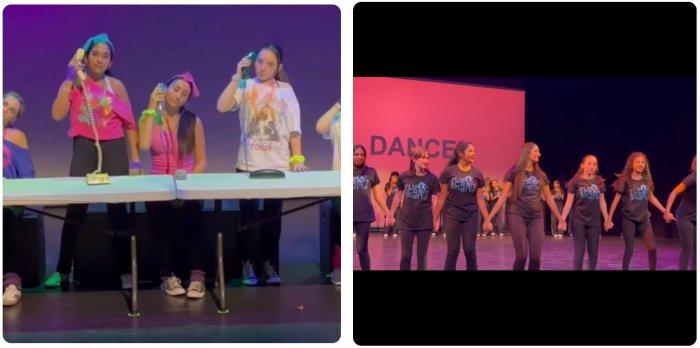 A Bharatanatyam lens on global dance Looking back on both the World Dance Workshop and Flip the Script, I realized that Bharatanatyam is not simply one dance form among many. It is a way of understanding movement itself. Whether encountering the grounded pulse of Afro Fusion, the confidence of Reggaeton, the rhythmic responsiveness of Salsa, or the theatricality of Ballroom Jazz, I continually returned to lessons Bharatanatyam has always taught me: move with intention, listen deeply to rhythm, and allow every gesture to communicate something truthful. Through these experiences at Buckley, I learned that engaging with global dance traditions does not weaken classical identity. Instead, it expands it.  Samyuktha is a 16-year-old sophomore from Los Angeles, growing up at the intersection of her Indian heritage and American upbringing. Navigating these two cultural worlds, she has found in Bharatanatyam a powerful form of identity and expression. Her 9 year training under Guru Malathi Iyengar gave her a strong foundation in the art, and she is currently training with Guru Vilasini Sundaram. She continues to explore how Bharatanatyam connects her to tradition while giving her the freedom to develop her own voice as a young artist. (@samu.g0piraj) Response * So well articulated! Finding the similarities between different dance forms and seeing how classical dance form helps build strong foundations. - Lavanya Iyer (July 7, 2026) Post your comments Pl provide your name along with your comment. All appropriate comments posted with name in the blog will also be featured in the site. |
