
|
    |
|
|
|

 The future of the Sabha lies in differentiation- Rohit Viswanathe-mail: natyashastra.gurukulam@gmail.com February 25, 2026 Why artistes must rediscover their svadharma and build their own assemblies. 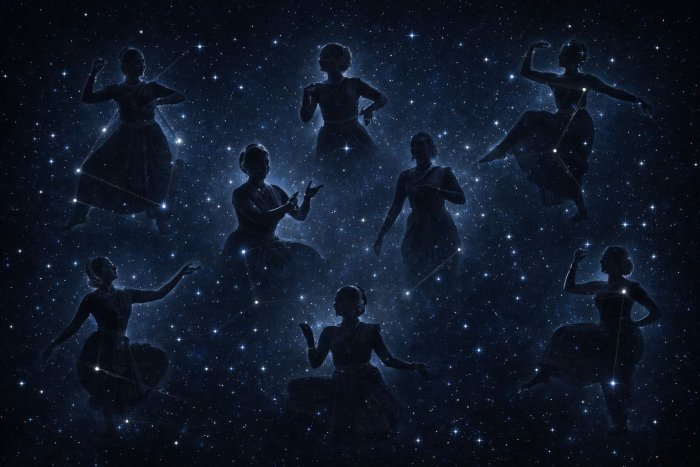 Each December, as the Margazhi season gathers force across Chennai, an old argument returns with predictable intensity: should dancers pay to perform? For some, the very notion undermines the dignity of art. For others, it is a practical exchange: a fee for infrastructure, visibility, and documentation in an increasingly crowded field. The debate often hardens into a moral binary. Either one defends artistic purity, or one capitulates to commodification. Yet this framing obscures a deeper structural issue. The real crisis is not 'pay to perform.' It is that we no longer have clarity about what a Sabha is, nor about what it is meant to do. The Sabha as Assembly, not Rental Historically, the Chennai Sabha was more than a performance venue. It was an assembly; a gathering shaped by shared aesthetic literacy, discernment, and accountability. A performance under a respected banner signaled not merely stage access but entry into a cultural conversation. Today, many Sabhas operate under real constraints: funding pressures, donor expectations, audience unpredictability, rising costs. Their programming has expanded to accommodate maestros, emerging professionals, diaspora aspirants, student showcases, thematic productions, and experimental work. This inclusiveness has its own logic and generosity. Yet when these varied artistic intentions converge within the same symbolic framework, distinctions blur. To the outside observer, all appear to participate in a single prestige economy, even though their motivations, dependencies, and financial arrangements differ significantly. Some depend on performance income for livelihood. Others view performance as one dimension of a broader professional life. Some build research-based or community-centred practices; others seek seasonal visibility. When structurally different artistic pathways occupy an undifferentiated platform, tensions are inevitable. Payment becomes contentious because categories are unclear. Expectations clash because purposes differ. The problem, then, is not overcrowding. It is structural sameness. Clarifying without dismissing To say this is not to diminish the depth of the traditional margam or to suggest that every artiste must reinvent format or address a contemporary social issue. Tradition itself can define a profound Sabha when approached with intellectual rigour and aesthetic conviction. Nor does differentiation absolve institutions of responsibility. Professional circuits require transparent norms and fair remuneration. Full-time artistes cannot subsist on seasonal ambiguity. Institutional reform, viz. clearer categories, minimum standards, explicit expectations, remains necessary. But institutional reform alone will not resolve the anxiety surrounding payment. For that, a parallel inward turn is required. The turn inward: Svadharma as compass The idea of svadharma (one's distinctive orientation and responsibility) offers a useful lens. In economic terms, it resembles comparative advantage. In artistic terms, it is voice. When dancers train in similar repertoires, pursue identical validation pathways, and measure success by proximity to the same banners, competition intensifies in ways that are often artificial. Scarcity appears structural even when it is not. Platforms become battlegrounds. The unease is therefore misdiagnosed as a numbers problem: too many dancers, too few slots. Congestion arises not from abundance alone, but from convergence. When diverse artistic temperaments compress into a narrow corridor of prestige, the field begins to resemble a queue rather than a constellation. By contrast, when artistes clarify what their art feels responsible for exploring, rivalry gives way to complementarity. Distinct orientations - philosophical interpretation, pedagogy, civic engagement, repertoire refinement, interdisciplinary exploration - distribute effort across domains. Pressure diffuses. Vitality spreads beyond the season. In this sense, svadharma is not merely personal fulfilment. It is ecosystem design. The critical shift occurs when the question changes from "Which Sabha will host me?" to "Whom does my art convene?" A Sabha is defined not only by its stage, but by its assembly. Cultivating one's own Sabha To cultivate one's own Sabha does not mean rejecting Margazhi. It means ceasing to outsource legitimacy to it. Cultivation begins with clarity of offering. What transformation does one's art facilitate? Who leaves changed, and how? When this is articulated, audiences become identifiable rather than abstract. A dancer may build leadership workshops rooted in movement. A scholar-performer may convene thematic lecture-demonstration series. A tradition-centred practitioner may create intimate chambers dedicated to repertoire depth. A community-oriented artiste may embed practice in schools, libraries, or neighbourhoods. Such initiatives generate continuity. Revenue diversifies. Sustainability emerges not from a single annual slot but from ongoing relationship. This is not market reductionism. It is structural coherence. Reframing Margazhi: Summit, not sole marketplace Margazhi remains a powerful cultural summit - a moment of confluence. But a summit is not an ecosystem. Reimagined this way, the December season becomes an exhibition window. Artistes present distilled expressions of specialised work, signal orientation, and invite deeper engagement. Those drawn to that orientation sustain the artiste throughout the year. Unity at the summit need not preclude diversity in the streams. Livelihood, Patronage, and Limits Not every svadharma aligns neatly with market demand. Certain forms of excellence will always require patronage and institutional support. Professional artistes still require fair compensation within designated circuits. Transparency about categories reduces resentment. Differentiation clarifies expectations; it does not eliminate responsibility. From Spectators to Stakeholders When artistes act from clarity of calling, audiences evolve from spectators into stakeholders. The contemplative rasika, the educator, the professional seeking renewal, the diaspora participant navigating identity - each finds resonance in a clearly articulated Sabha. Such rasikas do not attend seasonally; they participate continuously. The Sabha reverts to its original meaning: a community bound by shared inquiry. Beyond the Binary The future of Naṭya will not be secured by abolishing pay-to-perform alone, nor by moral denunciation of institutions. It will be secured when artistes and institutions alike embrace differentiation: when professional circuits are transparently remunerated, participatory platforms clearly structured, and artistic callings honestly articulated. Differentiated Sabhas emerge when differentiated artistes do. Before asking whether Sabhas should pay you, another question may be equally urgent: What is the Sabha only you can convene? What question does your art feel responsible for exploring? Who is already seeking that exploration? When those questions are confronted honestly, anxiety recedes. Competition gives way to coherence. Coherence fosters sustainability. The Sabha was never meant to be a generic platform. It was meant to be a living assembly of meaning. Reclaiming it begins not only with institutional reform, but with the courage of artistes to build the assemblies their svadharma calls forth.  Rohit Viswanath works at the intersection of classical arts, institutional design, and civilisational thought. He is associated with the Nāṭyaśāstra Gurukulam and engages with questions of cultural sustainability and governance within the performing arts ecosystem. Post your comments Pl provide your name along with your comment. All appropriate comments posted with name in the blog will also be featured in the site. |
