
|
    |
|
|
|

 The Myth of the "Either/Or"- Dr Lata Surendrae-mail: kalashrilata29@gmail.com February 20, 2026 Abstract: A committed dancer does not choose between the stage and the hearth because for her life is not a dichotomy, but a deliberate choreography. To say she must pick is to ask her to breathe only on the inhale; instead, she understands that art is the soul's inhalation, and life - with its messy, beautiful, quotidian demands - is the exhale. Her feet are rooted in the earth, anchoring her to the mundane, while her arms reach toward the ethereal, crafting stories in the air. She is not a creature of either/or; she is the living embodiment of both. Each pirouette is fed by the lessons of the day; each quiet moment with family lends depth to her performance. She is not fragmented; she is unified in motion, finding in the tension between duty and desire not a struggle, but a rhythm. Her art and her life do not compete; they dance together. We have been taught that life is a series of subtractions - that to grow up, we must shed our "hobbies" like old skin. As a mentor in the field of dance for over six decades, I do have dialogues with parents who look at dance as a hobby or an expense; who believe that the rhythm in ankles and the mudras flowing as meanings from one's fingertips are echoes of a childhood phase, luxuries that the "real world" cannot afford in the long run. But look closely at the light. Does the sun stop shining because it must also pull the tides? Stepping away for a while and incubating, in the life of a classical dancer can be a silent tragedy. In fact, it is not merely a pause; it is a temporary death of the moving spirit. The body, which was once a consecrated instrument of abhinaya (expression), becomes a silent, yearning vessel. The dancer's life is anchored in a holy communication between body, mind, and feeling where every mudra (hand gesture) is a word and every adavu (step) is a punctuation mark of devotion. When this sacred whirling joyless energy is interrupted, the artist is plunged into an inner silence or a 'nameless malaise' where the mind, still ablaze with artistic passion, cannot translate its thoughts into physical form. Incubating - a term often used to describe this hiatus is perceived from the outside as a quiet, thoughtful, or creative waiting period. Yet for the dancer, it is the painful ‘first death' of her artistic soul, a cold and lonely separation from the sacred, wind inside her body. The tragedy is silent because it happens without applause or witness. Muscles, once trained to defy gravity, start to forget the precise geometry and mathematical precision of the form. The dancer hears the music of within, but her limbs are muted. She watches others in the limelight, feeling a sense of inadequacy, while grappling with the untranslated energy within her. It is the sorrow of a devotee who has lost her connection to the Divine, a sculptor whose chisel has been taken away, the profound emptiness of a temple bell that has ceased to ring. This silent, intimate, and often ignored departure is a darkness, which only the dancer understands as a deep, haunting, and cold silence. It is a template of a broken dream, and a slowed heartbeat. I have watched these tender buds enter the sanctum that is my class, eyes alight, guided by parents eager to showcase a glimpse of paradise - the intricate world of classical dance. The young bodies, once awkward, transform through hours, weeks, years of inculcating into living temples, sculpted by rhythmic agony and the rigorous grace of sadhana. I have seen those small faces transform, finding in the painful ache of a movement or the strained hold of a mudra not suffering, but ecstasy - a divine, painful perfection that brings them closer to the divinity they have nurtured to house in their tender hearts! A divinity according unto them the heaven within that great yogis have strived through rigorous penance and austerities! Even as they learn to breathe to the count of talas, their veins humming with the melody of old, sacred narratives - the inevitable shadows descend. The age old tussle between aesthetics of the arts and academic pressures! With a sudden, cold stroke, the paradise is sealed away. The same hands that applauded the first, tentative thattadavu now withdraw the child from the class, deeming art a frivolous detour from the "real" path of life. Once again, I transform to a witness – watching another talent waste its sweetness in the desert air! The bells around one's ankles - the ghungroo - do not just carry sound; they carry the weight of an ancient lineage that breathes only through one's movement. In the classical arts, mastery is not a destination to reach and then vacate; it is a living, breathing dialogue between one's body and the divine. To walk away when the form is sharp, the abhinaya (expression) is deepening, and the rhythm is flawless - is not just an exit - it is an interruption of a conversation that was just becoming profound. We often tell ourselves that the art will wait. We foolishly believe that we can set the dance on a shelf like a bronze idol, to be dusted off later. But classical dance demands the suppleness of the sinew and the immediate spark of the spirit. When we impulsively leave a growing career, we are not just losing bookings; we are losing the neural pathways of grace. A career in the arts is like a spinning top. The energy required to keep it upright while it's already moving is minimal, but the effort required to restart it from a dead stop is monumental. If you can do both - if your life allows for the mundane and the celestial to coexist - why choose the void? To sacrifice the "and" for an "or" is a hollow bargain. Let us understand that the stage does not stay warm for long. There is always a new generation, their feet eager to strike the floor where you once stood. To stop the dance while the soul is still singing is to invite a silence that no amount of 'rest' can ever fill. You do not have to be a ‘starving artist,' nor do you have to be a ‘soulless corporate.' There is a middle ground - a bridge built of discipline and imagination. You need to hold fast to the memory of that first, trembling class - the pristine joy of beginnings, the humble acceptance of correction, and the dizzying, heady thrill of that maiden performance. Carry these not just as memories, but as the enduring spirit accorded by art. Remain, always suspended in the beautiful, humbling quest of learning. For in the truest artistry, the conclusion is never yours to claim, and the final result is never truly in your hands. As my father aptly taught, to truly make a way, we must find that way ourselves, crafting our own path through the unknown. Yet, to break away in frustration, or to stay removed, is never the answer. Embrace the journey with all its imperfections, for life is a rushing, unyielding flow - a river comprised of every scar, every triumph, and every vulnerability that makes you who you are. The beauty is not at the end of the road; the beauty is the road. Your career can be the patron of your art. Let your 9-to-5 fund your costumes, your hall rentals, and your performances. Your choice of the right career that could have survival walk hand in hand with you as you dance the sublime can have you revel in the stability that allows the dance to be free from the pressure of needing to be profitable. Opting for focused careers can provide the capital to sustain a life in the fine arts. In the quiet exchange between necessity and passion, the structured, focused career acts as a silent patron to the artist's soul. It is a calculated alchemy - trading hours in the boardroom, the laboratory, or the digital studio to purchase the freedom of the easel, the camera, or the stage. This duality is not a betrayal of art, but a strategic alliance, where the steady, reliable paycheck becomes the canvas upon which the true masterpiece of a life is painted. By day, the mind embraces logic and precision; by night, it breathes life into sculpture or poetry. This split existence allows for a ‘portfolio career' where diverse professional skills fund the delicate, often unprofitable, labor of artistic creation. I remember the echo chamber (what I used to call it then) - a child's voice seeking its pitch in dubbing studios, followed by the hurried dash to the AIR Yuv Vani, where, between the microphone and the script, I earned my first applause and the quiet pride of independence. The air was electric; a mosaic of sound and ambition. Then came the balancing act - the bank's morning hours, a sanctuary of figures, quickly exchanged for the rushed, intense energy of the University of Mumbai in the afternoons. I chose the ledger and the lecture hall in equal measure, navigating the city's pulse to return to the bank's evening rhythm, before finally, the quiet, focused solace of taking classes. I soon learned the alchemy of time. From the mundane twenty-four-hour package, I learned to seize the timeless, squeezing ninety-six hours into a day, allowing myself the sheer, breathless bliss of inhabiting an eternity between 'then' and 'now'. All I possess today - this vibrant tapestry of life - is sieved from those stolen, suspended moments. Even now, I am the weaver. I gather the time to give to the student who arrives late from college, to the one who misses a class and needs a bridge, or to the artist reaching for perfection. I balance a home with no maid, transforming the act of cooking into a quiet, meditative therapy. My days are a mosaic of new projects with fellow artists, performances that set the soul alight, the sacred, leisurely cup of tea shared with my husband, the golden, fleeting pause between our respective journeying into those parallel tracks of aesthetics and survival, the long, cherished conversation as my son drives homewards in a city miles away. I am still, and always, the master of moments. It is a striking paradox of our modern age that we have saved so much time through high-speed travel and instant communication, yet we seem to have less of it than ever before. I have come to realize that this delicate equilibrium - this quiet balancing act - demands not just time, but a profound, deliberate effort. Yet, within the turbulent, shifting tides of life's challenging flux, I know we are not helpless. Armed with our innate, burning passion and an unwavering, single-minded focus, we possess the power to distill purpose from chaos. We can, with steady hands, sieve a cosmos for ourselves - a vast, shimmering universe of meaning, forged from the very elements that sought to divide us. A blossoming performing career is therefore not a distraction; it is the heartbeat that keeps the career from becoming a hollow shell. Sometimes the parent is with the disciple all the away until the disciple herself becomes the wall! As a mentor, I have seen this script too enacted again and again in the transformative years of the cycle of inculcating and imbibing. When once the disciple was the eager clay, craving the potter's hand, finding grace in the sharp, stinging correction that honed her craft, the master's voice was melody, the mentor's correction a sacred, nourishing light. But with the passage of time, the mirror reflects a different frame of mind. The same correction, once cherished by a disciple as valuable for growth, is now a thorn, perceived as a bitter intrusion upon a ‘self-made artist'. She watches the seasoned hands that taught her, seeing no longer the origin of her skill, but a roadblock. The performances she once longed to be a part of are now deemed necessary only for the teacher's survival, ignoring the truth that the applause she craves was first nurtured by the teacher's guidance and every accorded platform was to facilitate her own independence by being a name to reckon with! She has forgotten the silent, stoic walls of the institution, which held up the roof long before she learned the alpha and omega of her dance form. She overlooks that the temple existed, glowing in its own sanctity, before she walked in, demanding space. In the cold, grey light of the modern dawn, every disciple begins to feel the weight of the silver coin, measuring the soul's dedication against the world's indifference. The fine arts - those delicate, breathing expressions - now become worthless investments! In a fast paced digital world that has lost the patience to gather words or sit through a margam (unless a buffet awaits at its end, she seeks overnight returns. She feels the heavy, agonizing pressure of wanting to shatter the silence of anonymity not willing to wait until the slow, tedious promise of a parallel, mundane income at last supports her trembling artistic wings. The curtain falls, not on a crescendo, but on a fractured rhythm born of doubts, impatience - a disciple's hasty step disrupting the sacred, shared quest. Where once only devotion lived, sudden dark clouds of doubt descend, demanding immediate yields. The dancer, trapped, must perform to survive, dancing a desperate dance until a parallel income can finally secure her breath. The anxious parents who recognized the god given spark and nurtured its growth, now as helpless as the mentor watch in silence as a meaningful career, envied by all for its integrity, is prematurely closed - a masterpiece abandoned. There is no sensitivity at all in going down that memory lane of moments gone by; when a cell phone is but a touch away but remains a silent witness to a thousand potential messages of delay, yet it rarely carries the weight of consideration on the part of a disciple. Instead, it brings the comfortable presumption that the Guru is a timeless entity, an eternal fixture available at whim, rather than a human heart holding a life - a home, a family, and a world of personal obligations. There is no pause for empathy; no flicker of realization that the wisdom being shared is nurtured by a life similarly lived, with joys and anxieties of its own. We stand upon the summit, breathing in the thin air, and conveniently forget the sharp rocks that cut our knees to get here. It is a seductive, gilded untruth to paint over the sweat stained canvas with the shimmering, ethereal paint of 'intuition' and effortlessly watch the scaffolding fall, to see the months of grinding, silent toil turn into smoke, and whisper, ‘It was simply meant to be.' We are told, through the fearful whisperings of convention, that we must choose - either the roaring fire of ambition or the steady glow of security - yet this is a fiction designed by those who forget that human beings are meant to walk, run, and fly all at once. One career does not come in the way of another; rather, it is the sturdy trunk from which a new, unexpected branch grows. When we hold our lives with equanimity, we realize that the skills of the boardroom can fuel the artistry of the studio, and the discipline of the lab can sharpen the intuition of the writer. Equanimity is not a flat, emotionless state; it is the serene center of the hurricane, where all chaos is accepted, and everything finds its rightful place. Why fear the collision of passions, when they can be woven into a singular tapestry of purpose? The architect of a balanced life knows that the structure requires both the rigid iron of necessity and the flexible wood of desire. To balance it all is to stop trying to force one passion to dominate another. Instead, we let them coexist in a dance of grace, allowing the silence of one endeavor to nourish the noise of the next. Life is not a series of losses, but an unfolding of potential, where a calm heart and a balanced mind turn all apparent contradictions into a harmonious, beautiful whole. There is a subtle tragedy in treating our own existence like a closed book. We often clutch the memories of who we were in the past so tightly that our arms are too full to embrace who we are. But the "I" of five years ago and the "I" of now are the same continuity - one unbroken bridge of experience. At the end of it all it's one life and we need not bury ourselves when alive because life is not a collection of achievements to be filed away; it is a succession of "nows," an ongoing performance that only ends when the final breath does. The past may have given us the steps, but only the present can provide the dance! As long as there is life yet, it is sacrilege to speak of ourselves as a ghost of our former glory. We need to awaken to the truth that we are the living, breathing result of it, still center-stage, still capable of the next step provided we can balance the odds and evens with faith! In this one life, we are not a collection of things we used to be. We are the living bridge that connects every version of our self into a single, ongoing symphony. For the dancer who has mastered the alchemy of existence, there is no chasm between the studio and the street, no fractured choice between breath and art. The myth of either/or - that one must sacrifice life to feed the stage - dissolves into a seamless flow, a breathtaking pirouette where the mundane and the magnificent hold hands. Art is not a quiet refuge from reality; it is the very soul of it, made visible. In the early morning, as coffee brews and muscles awaken, the dancer in me does not leave life behind to enter the world of art. Instead, I carry the rhythm of the city, the weight of a conversation, and the warmth of a smile into every extension and contraction. The rigid line of the leg becomes a sentence in a poem; the soft release of breath becomes a thought. The body is both the instrument and the artisan, turning the raw material of my daily experience into a fleeting sculpture of emotion. Dancers do not live to dance; they dance to live. The struggle is not against the demands of the world, but rather a harmony found within them. The discipline required for the art form brings a focus to the rest of one's life - a conscious, graceful movement through chaos akin to a graceful move across a crowded stage. The "either" is not sacrificed to the "or." Instead, they blend into a third entity: a life in motion, where duty and desire, technique and passion, are but two sides of the same unfolding story. No, there is no duality for the dancer who balances life and art. There is only the continuous, beautiful, and indivisible dance of existence. 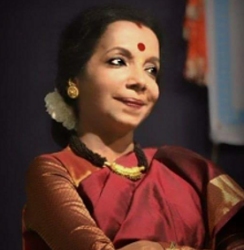 Dr. Lata Surendra is a performer, mentor, an imaginative choreographer, a sought after curator, a dance journalist, a committed independent researcher, a sensitive poet and in the field of dance for over six decades. Responses * Enlightening article. - Sahana (Feb 21, 2026) * Beautiful article, Ma'am. It really makes you reflect. I'm still thinking about what you shared. I hope my daughter is able to receive and carry it forward under your guidance. Thank you for always blessing us. - Aditi Nagarhalli (Feb 21, 2026) Post your comments Pl provide your name along with your comment. All appropriate comments posted with name in the blog will also be featured in the site. |
