
|     |
|
| |

 e-mail: leelakaverivenkat@gmail.com Exemplary in concept and executionNatya Vriksha's 19th consecutive World Dance Day celebrationPhotos: Sarabjit Singh DhillonMay 13, 2026 With its judicious mix of tradition and contemporaneity, Natya Vriksha's nineteenth consecutive celebration of World Dance Day, in conjunction with the India International Centre, deserved the highest accolades - in all aspects of conceptualization, execution and audience participation. The celebratory mood was set off with an informal evening before, at the brand new Natya Vriksha premises, with a small group of invitees watching three of Geeta Chandran's students presenting an item each, in the newly appointed, aesthetically designed studio - the performance space with wooden floor, equipped with sophisticated fittings in light and sound. 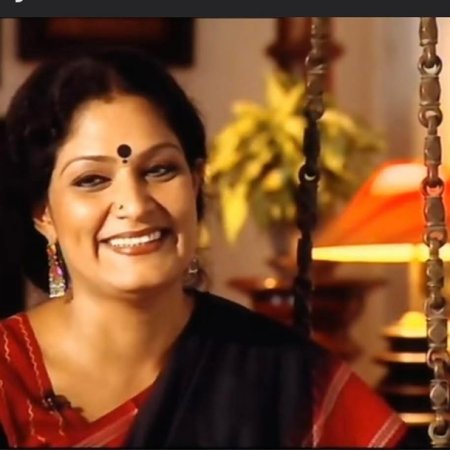 Geeta Chandran In terms of dance technique, Natya Vriksha dancers trained under Geeta Chandran present a high standard, her unique teaching style, in an informal exchange of ideas, making the student an involved part of the classroom process. What this critic was struck by, was the sense of joy and involvement in the dance, visible in all three dancers. The programme began with dancer Madhura Bhrushundi's presentation of the well-known "Natanam Adinar" in raga Vasantha. The unique aspect lay in revisiting a composition (almost a must in the repertoire of every Bharatanatyam dancer), and viewing it, from the enlarged perspective, resulting from years of engagement with the dance. Madhura's proud carriage along with a well-balanced body, so confident and sure of what the theme entailed, seemed to be just the right blend for an item, which is recapturing in mind the image of the celestial dancer Nataraja. The accompaniment with Geeta Chandran's nattuvangam and K. Venkateshwaran's vocal support, was common for all the items. The rhythmic support for "Natanam Adinar" was provided by Sriganesh on the mridangam with C.S. Anuroop on the violin completing the team. The next item, a Jatiswaram in Poorvikalyani with its demanding adi tala Sankeerna Nadai metrical cycle, was performed by Yadavi Shakdher Menon, her grasp over laya tight, with Manohar Balatchandirane on mridangam with R. Varun's ghatam providing the all-important rhythmic support. The finale was a Tillana in Yamunakalyani rendered with a sense of joy by Sowmya Lakshmi Narayanan, with Raghavendra Prasad on flute, and the percussionists. The World Dance formal proceedings at the India International Centre, began on the afternoon of April 25 with Pravahita, an illustrated lecture by Dr. Sucheta Bhide Chapekar, with grand-daughter Sagarika Patwardhan helping her in the demonstrations. Daughter Arundhati Patwardhan, the other participant, due to unforeseen circumstances, had unfortunately, to return home before the program. A Master of Fine Arts from Bombay University, Sucheta, who studied Bharatanatyam under Acharya Parvatti Kumar from the age of ten, later came under the baton of Guru K.P. Kittappa Pillai. Known for her original work in Bharatanatyam based on Marathi and Hindi songs, leading to Nritya Ganga comprising about eighty compositions, all set to Hindustani classical music, Sucheta is the founder of Kalavardhini, a charitable trust based on propagating activities based on classical dance. Looking back at 77 years of dance, Sucheta's lecture/demonstration, given her modest bearing and an integrity totally untouched by fame, enveloped the entire session with a ring of sincerity, endearing her to one and all in the auditorium. 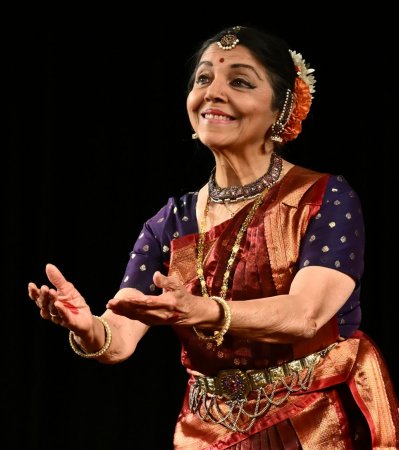 Sucheta Bhide Chapekar Acharya Parvati Kumar, overjoyed by his discovery, in the Saraswati Mahal Library of the musical text Korvaiyanche Sahityanche Jinnas by Maratha ruler of Tanjore, Serfoji ii, had inspired Sucheta's already research-inclined mind, though, even while the text, though set in Carnatic ragas - in the absence of notations, made reconstruction of the items problematic. A believer in Advaita Vedanta and believed to be the first to compose Yakshaganas in Hindi, Maratha ruler Shahaji's (1671-1711) compositions, and later work authored by Serfoji II (1793-1832), historically constitute a significant evolutionary link, in understanding what later became Bharatanatyam as we know it, under the Tanjore Quartet. The Maratha period had items like Jakkini Daru, Swarajati, Padams expressing viraha, and the Nirupanas comprising theme based suite of compositions based and set in a single raga and tala - the opening with JayaJaya going on to 17 other items like Geeti, Alaru, Sabda, Varna, Swarajati, Pada, Prabandha, Alaru and so on to conclude with Jakkini. Scholar Dr. Raghavan, Sucheta said, in appreciation of her love for research into the history of Bharatanatyam, had been very supportive of her efforts and seconded her presenting a full suite worked out with Guru Kittappa Pillai and presented at the Madras Music Academy Sadas in 1975. Guru bhakti was apparent in her references to Guru Kittappa Pillai who with his command over Carnatic music, was willing to work on Shahaji's compositions, Sucheta had hit upon in the Saraswati Mahal Library. A classicist in every sense of the term, on being asked months later about his thoughts regarding the Panchajati Alarippu set by Guru Parvati Kumar, Guru Kittappa expressed his very traditional view - that each of the tisram, chatusram, khandam, misram and sankeernam combinations had to be put into a proper movement format and not just treated superficially. Sucheta warmly spoke of Guru Kittappa Pillai's invaluable help and guidance in notating music and helping express the same through the idiom of Bharatanatyam. Though he never taught her abhinaya as such, which was left to her manodharma, the way he rendered the music, which he believed had to be without needless frills of ornamentation, was so suggestive of the movement, that she had no problems in translating them. 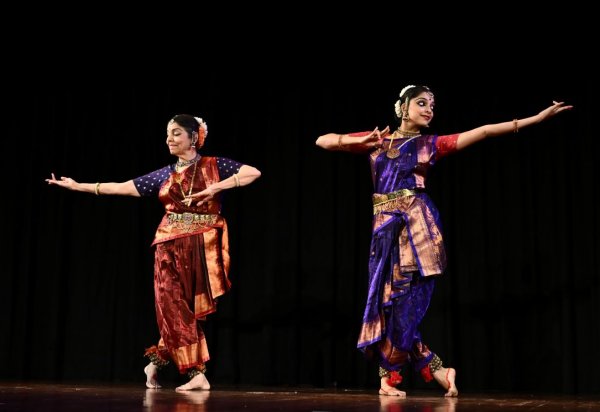 Sucheta Bhide Chapekar & Sagarika Patwardhan Later, Sucheta settling in Pune, in an effort to increase the clientele for Bharatanatyam, started choreographing items based on Hindustani music. The demonstrations, to the point, and never self-indulgent, showed glimpses of Bharatanatyam set to Hindustani words and music, with Sagarika presenting some parts and both guru and student together joining in others. Set to ragas like Behag and Malkauns was the item visualizing the Nayika in pangs of separation - "Suno sakhi piyoo mor kahan." "Kitta gaye piyoomora? Kitta dhoondu, ham kaheko poochun," cries the sakhi, suffering like fish without water, pining for the Lord. With pakhawaj percussion instead of mridangam in 1982, Sucheta Bhide had to overcome set minds, for 'the approach in Hindustani music is very different.' "Sargam sikhaya jata hai," she was told. She worked with Prabha Atre's composition "Nahi bolat natha" from Natyageet, which in the 19th century, had males doing female characters. "Baje Damaru," a Shivastuti in Natabhairav, started with a Kavit to end with "Mahadeva Shiva Shankar" repeated thrice, with the tabla beat. This was rendered by both Sucheta and Sagarika. Abhang in Bhairavi was built round Gyaneshwar's Saguna/Nirguna, non-dualistic Advaita. Altogether a session out of the ordinary and appreciated by the audience. EXCEPTIONAL BHARATANATYAM The evening Bharatanatyam recital by Karuna Sagari, this writer would consider to be one of its kind. A Kalakshetra graduate who further trained for almost a decade, under Sheejith Krishna, before working for some years with Malavika Sarukkai, Karuna Sagari's art has that rare combination of shining conviction clothed in aesthetic subtlety. Right from the start with Subbaraya Dikshitar's pada varnam in Kamas set to taal tisra ekam, "Enta nee delupudura" portraying the Nayika suffused with love for Tyagesa, addressing the celebrated Lord praised by one and all, who has conquered desire, while expressing her inability to bear the pangs of separation anymore (elagu taludura). 'In how many ways can I show how I am drowning in this sea of love? Do not be angry and have mercy on my plight, for this is the time for love (dayayuncutaku samayanidira).' The dancer's abhinaya had a deeply introspective quality in the description of Tyagesa with his lotus eyes, as the conqueror of desire - for hadn't he with one look of the third eye destroyed Manmatha? She from the time of childhood had had only one love - and that is for Tyagesa. And what a singer she had in the vocalist Subhiksha Rangarajan! Dancer and singer having worked in tandem together, ensured that music and dance were on the same journey, in utter togetherness, along with an enthused team comprising Vijaya Kumar's wielding of the cymbals and K.P Nandini on the violin, with the inspired matching mridangam play of Sarvesh Karthick (who joined the group only in Delhi), altogether making for a very memorable concert. 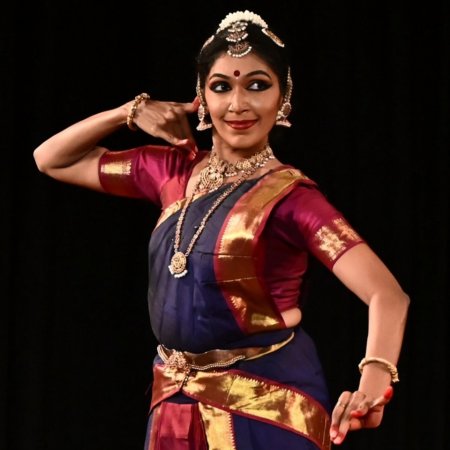 Karuna Sagari Karuna Sagari's next item, further establishing the dancer's exceptional feel for mood buildup, with the music in score and rendition in perfect accord with the dance, was woven round lines taken from Sangam poetry Nakkinai-Daughter of the Blue Sea. The episode visualizes a scene on the beach near the sea, wherein the sprightly maiden, daughter of a fisherman, shows that though from a humble background, she is more than able to defend herself, on being waylaid by a brash, affluent young city bred man - strutting around aimlessly, like the world was his oyster to do as he pleased. Firmly turning down his invitation, she introduces herself as the daughter of one with 'strong arms' thanks to his profession of constantly pulling in the net heavy with fish - obliquely indicating that should physicality be called for to protect a daughter, the father would prove to be more than an equal for the young man. Firmly referring to their vastly different, unbridgeable backgrounds, her refusal is full of double meanings. "I live in a tiny hut, while dealing constantly with the vast expanse of the sea, while you live secluded in luxury, away from the madding crowd." The dancer's expressional skills made clear all the double entendre - like the breath of vision she has acquired from being constantly exposed to the amplitude of the seas, against the stunted outlook of one cocooned in isolated prosperity. "The twain shall never meet. Away with you," says the young maiden, walking away in nonchalance. The concluding item of a Tarana in Charukesi, with music by Subhiksha Rangarajan, concluded on a poignant note based on verses from Kabir's "Uda jayegaa hans akela." "Na jaane kidhar firoge, Jaise path hare, Jab hoye umar poori, tab chootega" - the swan here is a reference to the transient nature of life and the solitary nature of the soul's journey in death. On the ultimate journey one is always alone. The metaphor of the swan flying away on the last journey was so powerfully brought out, and the creative imagination catching both visual and emotive images of the swan flying away to its last abode was so moving that I had tears in my eyes. With not a seat to be had and people squatting in the aisles too, the non-stop applause which followed was fully deserved. Strange that such a dancer has not yet caught the eye of an institution like the Madras Music Academy for being featured in their main festival! KATHAK BY AMEERA PATANKAR 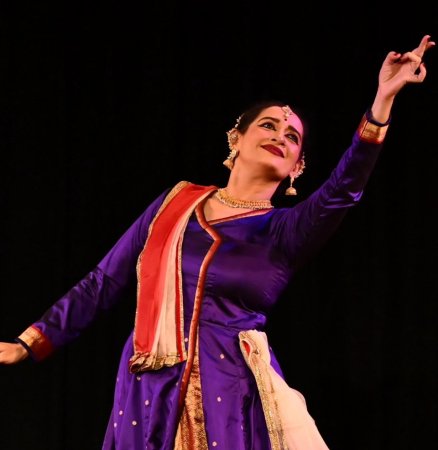 Ameera Patankar The next artiste was Kathak dancer Ameera Patankar, a disciple of Shama Bhate, trained in her organization Nadroop. With the Guru seated in the first row, Ameera showed her fine grasp over laya and taal. Starting with Mangalam set to raga Megh in praise of Rama, she went on what she referred to as Story of laya and taal based on teental. After starting with Thaat, the nritta section showed the same emphatic grip over tala with clarity of footwork - features in all students of Shama Bhate. Ang and laya in the Dha Ta Ka Thunga ad-form along with the Parmelu with the patterns of laya explained as going through various lanes, with the concluding footwork in five speeds, were all of the highest standard. The abhinaya aspect comprised a scene from Gokul with Krishna having left the place for Mathura. The dancer captured images depicting the emotionally bruised Gopis (aasha doobi jaye) unable to accept the emptiness in Gokul. One waits faithfully for the loved one, saying 'Shyam abtak nahi aaye' in a state of delusion. The empty swing 'Ghar ghar sakhi dole jhoole' and one calls out dreaming that she is dancing with him ("mein ro aur tum muskare?" she asks). 'Is it fair that I cry while you smile?' She imagines that at dusk, even as the cows turn homeward, the cowherd is not to be found amongst them. Tarana in raga Basanth was the finale. The dancer had a fine singer with harmonium in Brijesh Misra. On the tabla was Charudatta Phadke and padhant was by Krupa Tendulkar. On the flute was Dhaval Joshi. AI AND DANCE - CHALLENGES AND OPPORTUNITIES 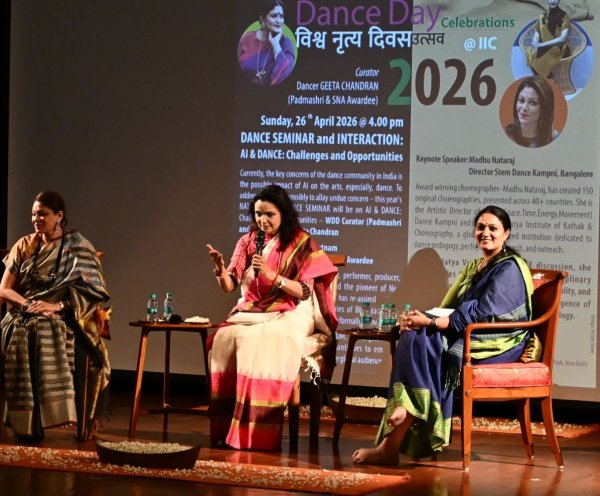 Madhu Nataraj, Anita Ratnam, Sharanya Chandran Whoever thought of our traditional dance forms, which have travelled through generations of Guru /Shishya interactions before coming down to us, to be having to confront something like AI! And yet an artiste like Anita Ratnam who moderated the session on AI and Dance- Challenges and Opportunities, spoke of how she felt a sense of deep violation when she saw a lookalike of her doing and saying things she had nothing to do with. The real danger is when the AI substitute masquerading as the real you, reaches a stage when the virtual seems to be taking over the real, with you having to keep running to assert your real identity. She herself had to go to court to establish her real identity. "AI or AYYO," she queried, saying that the revolution had arrived, for this was an age beyond the alien, Google or Apple - all threatening body memory and connectivity, and the memory bank we store. She gave the example of the film where the Creator had to destroy the robot he created, because it threatened to take over his world. Time can change a lot of attitudes and one had to accept that AI had come to stay and we had to find out in what ways it could help, instead of being imperiled by it. For instance, even great dance choreographers in the West used certain computer generated choreographic patterns in their productions. Sharanya introducing the session spoke of how she had used AI for Test and Scale of Anti-Poverty roles. The personalized element in the Guru/shishya system cannot be had with AI, which can however be a useful tool for personal practice of technique - for it will provide perfect images and while in-person connections get lost, in a mechanistic, impersonal fashion, AI provides you with cold but correct technique. It will show you patterns of movement and can be a great help for logistical management. Ultimately it depends, as Sharanya affirmed, on data fed to it, for it to suggest new jati patterns, visual motifs, and even interpretative pathways. For example, for correcting and mastering the Talapushpaputa or any other Karana, AI will give the perfect outline - but without the presence of a Guru, this cold feedback of pure dance, while perfect in outline, will lack the distinctiveness of a gharana. One needs to make a choice - does one want to enhance the art or reshape it? Madhu Nataraj, the keynote speaker, referred to the codification abilities and many clerical chores which AI can help in. 'AI takes away a lot of gatekeeping,' she said. It can be a collaborator for defined activities. For the Kathak dancer, the world can shift from the rhythmic to Algorythmic. For her works like Vastu Purush, Mandala, Nirnaya, AI had suggested points worth considering. While AI can help in creating codification for Pedagogy, it does not understand the Nazaqat and elements of Kathak that one can only perceive through direct interaction for months under a Guru. And there will always be spaces in the Guru/shishya interaction which AI does not understand. But as Geeta Chandran ultimately said in her thanksgiving, "If some agency can lessen the burden of teaching the Taiya Thai chores, I would welcome it". What surprised one was the sizeable audience which the subject under discussion had attracted. ODISSI BY VRINDA CHADHA The Delhi artiste for the festival was Odissi dancer Vrinda Chadha, one of Ranjana Gauhar's best students. Vrinda began with the Angikam Bhuvanam sloka devoted to cosmic dancer Shiva, with music scored by famed Odissi singer Bankim Sethi in raga Darbari set to Khem taal. Pushpavatika Prasang based on lines from Tulssi Das' Ramayana is woven round the first accidental glimpse Sita and Rama have of each other in the palace at Mithila. Like the Chakor bird to the Moon, he is drawn to this beautiful maiden with feet clad in anklets, and she is totally smitten by his handsome presence. Underlining the Mugdha Nayika or maiden untried in love, which the incident highlights, the dance interpretation by Ranjana's late Guru Mayadhar Raut is set to music in raag Basant set to Triputa and Ektali. The dancer performed the item with involvement. One particularly liked the sitar touches of Yaar Mohammad and the softly lyrical mardal of Prafulla Kumar Mangaraj. Ranjana herself led with tala keeping on the cymbals. 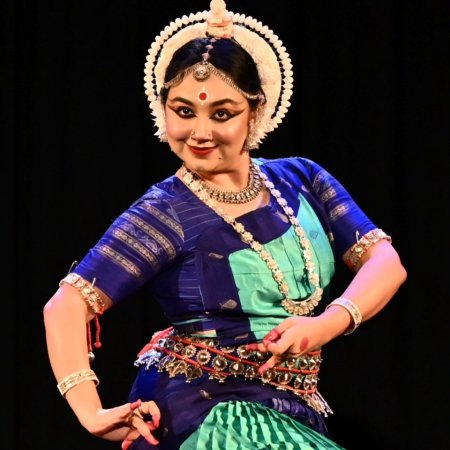 Vrinda Chadha The nritta highlight of Pallavi in raga Kalyani, a talamalika again set by Guru Mayadhar Raut, was rendered with rhythmic grasp by the dancer. The finale, with dance interpretation by Ranjana Gauhar, "Beetilata Jamini, maulila Kamini," was based on Odiya poetry woven round the agony of separation in Radha and the inmates of Gokul, on the impending departure of Krishna for Mathura. The state of Gokul where all of Nature grieves, with even the plants and creepers wilting in the agony of separation and the open lotus closing its petals. Saroj Mahanti, the vocalist, joyously greeting Odiya poetry set in the same meter as the song he nursed a deep passion for, viz "Ka karun Sajani, aayena Baalam" used the same score for music. While I know and sympathize with the fact that Odissi dancers in Delhi face problems in being able to procure good singers, I have to mention that Saroj Mahanti, qualified, and with a reputation for being a composer, surprisingly fell short in the singing - the sudden flat notes and inability to sustain sur-filled singing was a little surprising. AVIJIT DAS' KUCHIPUDI PROVIDES THE PERFECT FINALE FOR A MEMORABLE WORLD DANCE DAY CELEBRATION It seems only the other day, when two months ago, I had reasons to state that Avijit Das' dancing body, still in the Bharatanatyam mould, needed to adapt to the lyricism and typicality of Kuchipudi, in which he was pursuing a career. Nothing could give a dance writer greater satisfaction than being witness to an artiste taking criticism seriously, and working on it. Avijit must have put in very hard work to present a recital that apart from lusty audience appreciation, elicited whole hearted praise from Kuchipudi gurus present on the occasion. After the Vani paraku start, in the typical Vempati Chinna Satyam mode came the description of Shiva in Shivastuti, "Shivudu Tandavamadenu," with the dancer portraying the dancing Lord Nataraja with all his attributes- of trinetram, chaturbhujam, Shantam, Rakta varnam, etc with a foot planted on the Apasmara. Unlike the earlier occasion, in Chennai, the dancer, for this occasion had R. Raghuram providing tuneful vocal support and his performance radiated passion. While his dance has all the merits needed, along with an excellently balanced body, what it would do well to acquire is for the high vaulting fiery performance, to be counter pointed with periods of quietude and silence - which stems from an inner relaxation between periods of frenetic movement. 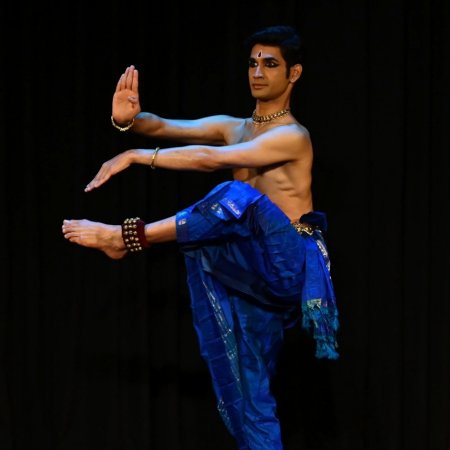 Avijit Das The next item based on passages from Narayana Tirtha's Krishna Leela Tarangini had music in Ragamalika composed by Rajkumar Bharati, a much sought after and prolific composer for dancers whose music, given all its graces and brilliance, for this critic, does not reflect the typical meter and gait, which original Kuchipudi music has. Based on the childhood feats of Krishna, performed with involvement by Avijit, the "Kalya Yashoda tawa balam, Navaneeta chora balaka charitam" lines formed the refrain for Tarangam, with the dancer's rhythmic prowess while performing with feet planted on the rim of a brass plate. The accented rhythmic syllables emerged clearly in the footwork. With D.V. Prasanna Kumar for nattuvangam, flute played by Raghu Simha A.N. and mridangam support provided by Vidya Shankar N, the dancer had well combined musical support. 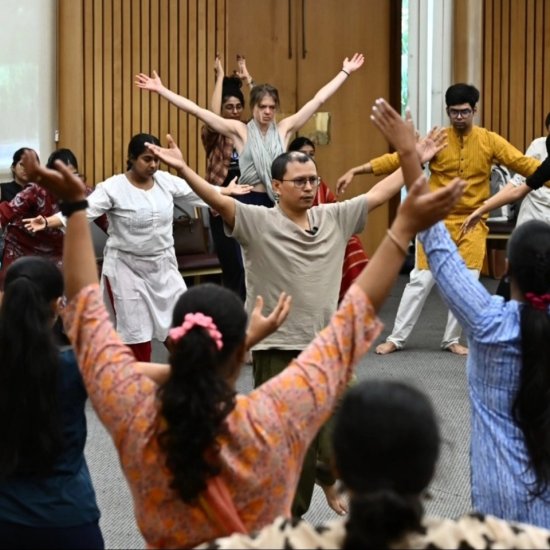 Workshop by Surjit Nongmeikapam Though I was unable to attend the early morning workshop on Yangshak Movement by Imphal based contemporary choreographer and dancer Surjit Nongmeikapam, one hears it went off very well on both mornings (April 25 and 26) with over 80 students attending. It was very heartening to note such enthusiasm. A big thank you for the unfailing efforts and diligence of the Natya Vriksha crew. 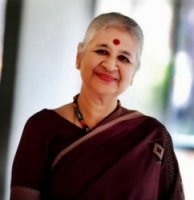 Writing on the dance scene for the last forty years, Leela Venkataraman's incisive comments on performances of all dance forms, participation in dance discussions both in India and abroad, and as a regular contributor to Hindu Friday Review, journals like Sruti and Nartanam, makes her voice respected for its balanced critiquing. She is the author of several books like Indian Classical dance: Tradition in Transition, Classical Dance in India and Indian Classical dance: The Renaissance and Beyond. Post your comments Please provide your name along with your comment. All appropriate comments posted with name in the blog will also be featured in the site. |
