
|     |
|
| |

 e-mail: leelakaverivenkat@gmail.com Dhauli-Kalinga - Where man of war converted to messenger of peacePhotos courtesy: Orissa Dance AcademyFebruary 24, 2026 Envisioned by late Odissi Guru Gangadhar Pradhan over a couple of decades ago, and mounted by his institution Orissa Dance Academy, at Shanti Vihar, the foothills of Dhauli, the Dhauli-Kalinga Mahotsav, now held under the auspices of the Department of Odia Language, Literature and Culture, government of Odisha, is one of its kind - combining in its fare, dance of various genres along with martial art forms. A very fitting twosome one would think, to be presented on the historic grounds where the epoch making Kalinga war was fought, with river Daya flowing in the region earning the sobriquet of Nirdaya, its waters running red with the blood of fallen heroes! Overnight, the scale of slaughter turned Emperor Ashoka, the conqueror in innumerable wars, into a messenger of peace. And even now, when dignitaries during the lamp lighting ceremony for the festival at the foot of the hill, stand with backs to the audience, facing the Peace Pagoda on top on the right, flanked by the Shiva temple on the left side, holding aloft burning torches in a solemn oath-taking gesture, saluting peace, it is a moving moment, for in the strife ridden world, peace is a pre-eminent need. 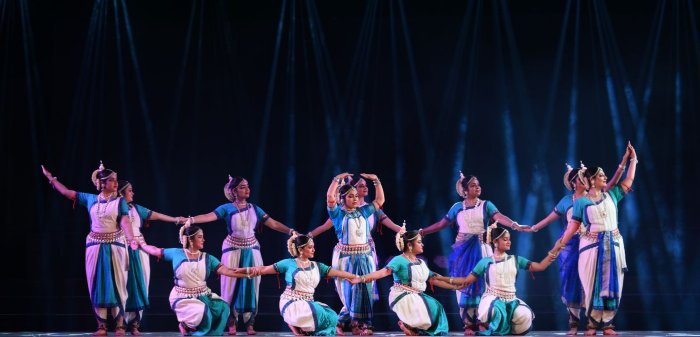 Debamitra Sengupta and group Ushering a start was the Odissi dance presentation Snehamayee Ganga, woven as an ecological statement, choreographed by Debamitra Sengupta and group of Kolkata Mayur Lalit Dance Academy. Based on the Sanskrit script written by Dr. Sakti Roy Chowdhury expanding on Sri Nityananda Misra's overview, the work traced the story of the Ganga - beginning with the river's descent to Earth, as expressed in Valmiki Ramayana and the Brahma Purana - its waters nourishing civilizations growing and flourishing on its banks. But man in his selfishness, filled with the inbuilt insensitivities of so-called modernization, misused the river, poisoning its waters. The backlash with scarcity and pollution nurtured diseases, makes man finally sit up and think of measures to clean the Ganga - which hopefully is now being slowly restored to a measure of its original strength. Sukanta Kundu's music had the rhythmic element composed by Dhaneswar Swain. For a burning theme like this involving a mighty river, one found the usual lasya oriented saccharine dance treatment, inadequate. In a personalization of the river and its relationship with man, neither the uncontrolled flow and enormity of the force of Ganga's descent from the heavens, her impetuosity having to be contained in the matted locks of Shiva (a disciplining method, contrary to the sringar orientation of Shiva and Ganga coming together, as more often perceived), nor the later polluted waters, in anger, turning back on man for the maltreatment, came out emphatically in the treatment. Ganga was shown coming down introducing herself "Aham Akasha Ganga." Her course as Prayagamilita Ganga (Allahabad where Ganga joins Yamuna and mythical Saraswati), and later her flow through Kashi, the home of Lord Viswanath till she joins the sea were points in the choreography with dancers showing the spirited flowing river full of life and grace, with artificial lotuses held in the hand of the dancers -- followed by symbolism representing man's adhunika jeevan with its suicidal dependence on plastic, its waste material choking the Ganga. But in all this, the urgency of the theme got lost. It flowed away in the tepid treatment, with the anger of a river, deprived of her life bestowing energies, not finding stronger representation in the dance. 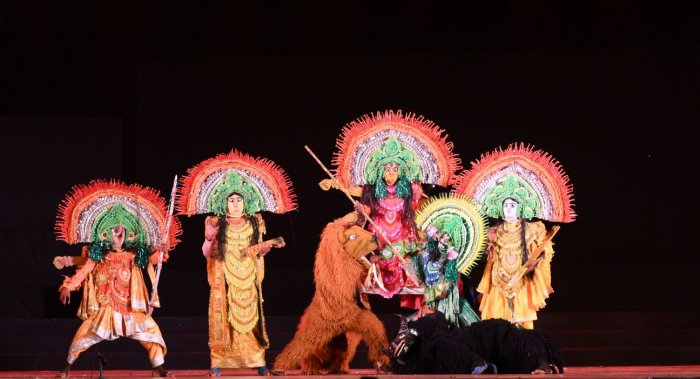 Purulia Chhau by Susanta Mahato and group Retaining authenticity without needless contemporizing, Purulia Chhau by performers of Kalipada Chhau Nritya Samity, West Bengal, led by Susanta Mahato, in their presentation of Mahishasura Mardini, were a spirited delight in their uninhibited, loose-limbed acrobatic vitality, with constant somersaulting. This very vigorous martial art form, particularly rendered during the Chaitra period, is executed by dancers donning stylized masks and enormous headgear forming a halo round the head, representing characters of demons, gods and animals. An art form recognized by UNO as intangible cultural heritage, it is rendered to the accompaniment of the kettle drum (Dhumsa), Dhol, and piped music on mohuri or shehnai. The animal characters in particular, benign and evil, are very skillfully turned out, with excellent facial masks, and movements imitative of the tread and walk of these creatures in nature - and in this case the demon was the Mahisha. Themes built round the Ramayana, Mahabharata and epics, are enacted with zest, and the group presented Mahishasura Badha with infectious zest, the story of demon Mahisha exterminated in a battle against Devi, symbolizing the victory of good over evil. 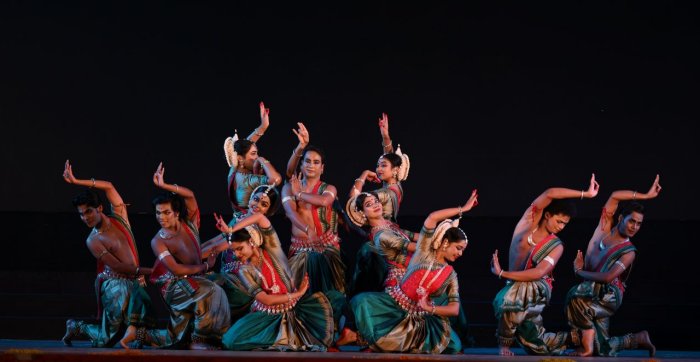 Utkal Sangeet Mahavidyalaya The second day's fare had the traditional Odissi start with Shri Jagannatha Ashtakam, presented by the State's Utkal Sangeet Mahavidyalaya, established by the State of Odisha, as the first institution of its kind, in the year 1964, to propagate Odissi music, dance and theatre with late Minati Misra as the first Principal. It was heartening to see the well trained, beautifully turned out, dancers start with Sri Shankaracharya's hymn of eight stanzas, glorifying Jagannath. It was traditional Odissi, with no new-fangled attempts at innovating, and above all rendered with technical finesse, with lilting grace and group discipline. This invocatory presentation was followed by Shakti, a female personification of sheer energy representing forces, both good and evil. As the left half of Shiva, Shakti represents the Brahman in ultimate form and as Mahakali, she is a devourer of Time. Dark as the night with pitch black complexion as Shyamangi, she sports round her neck, the hyama ghatitaa skull garland (mundamala vibhooshitam) as Shyamaghatitam. As Goddess Durga, she is Durgati Nashini. But on the positive side, she is also unmanifest energy, the Eternal Mother who has the cosmos as her body, worshiped by Brahma, Vishnu and Shiva. Guru Bijay Kumar Jena's musical composition had Bijay Kumar Barik providing rhythmic support with the dance choreography by Lingaraj Pradhan and Guru Pankaj Kumar Pradhan. 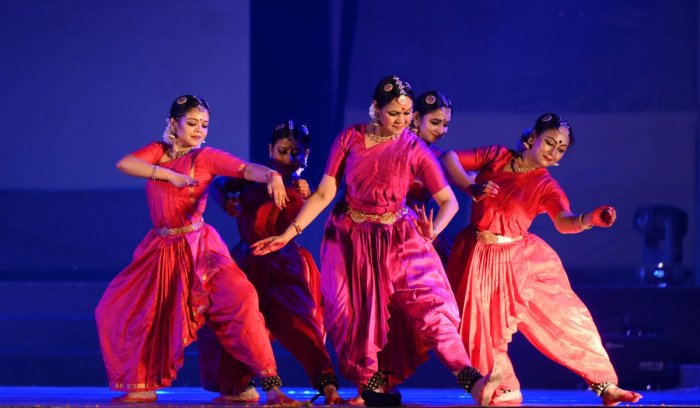 Arupa Lahiry and group Following the Odissi start, was group Bharatanatyam by Arupa Lahiry, currently serving as Regional Director, IGNCA Vadodara, trained under Guru Chitra Visweswaran, at Chennai's Chidambaram Academy. The group's last minute exchange with the announcers, regarding what was being presented, led to a totally inadequate, wordy compering about female divinity, which would seem to have caught the imagination of more than one group in this festival. The thrust of the work Pravaha presented by the group (which became clear in details only after the writer's exchange with the choreographer), was actually an exploration of the concept of flow - viewed in its kinetic dynamism - in both physical and spiritual dimensions. As an invocatory start was the prayer Anjali, comprising a Kavutvam on the Ganga, the country's gigantic source of flowing water which has shaped our history, nourishing innumerable civilizations through dynamic movement of its flowing waters. Set to raga Hamsadhwani and adi talam, the energetic dance was based on a music composition of R. Visweswaran with dance choreography by Chitra Visweswaran. After this joyous salutation offered to Ganga, the eternal mother, Pravaha in a spiritual dimension, comprised dance based on Meenakshi Pancharatnam, a composition of Shankaracharya, extolling the Goddess visualized in various roles, the verses set to a ragamalika score by Sudha Raghuraman. The composition starts with a description of the female deity Meenakshi (meaning eyes like the fish), enshrined in the famous temple in Madurai, one eye bestowing flowing grace with the other destroying negative energies. The Goddess is next extolled for the dynamism of her dancing feet, clad in tinkling bells. As Shiva vama bhage, she is the left half of Shiva, the Ardhanariswari. Then came the highly esoteric part, visualizing female divinity as Binduswarupini (indivisible Bindu in the Sri yantra representing unmanifested consciousness). Arupa's interpretation further revolved round Devi as the rising Kundalini shakti, ultimately uniting with Shiva. Devi as Maya constantly varying in forms as Bhavani, Dakshineswari, Simhasaneshwari, Kamakshi, Kali also manifests as primordial sound, with or without the contact of two objects (Ahat and Anahat). In the final analysis, this flow represents an inner process, culminating in the devotee's realization that divinity is not a separate outward identity, but an awareness within one's body. Such highly inward-looking ideas, requiring a kind of meditative quiet, are difficult to evoke and maintain in group form - in this case comprising female artistes with one male dancer. Such themes are best in a smaller, closed space. 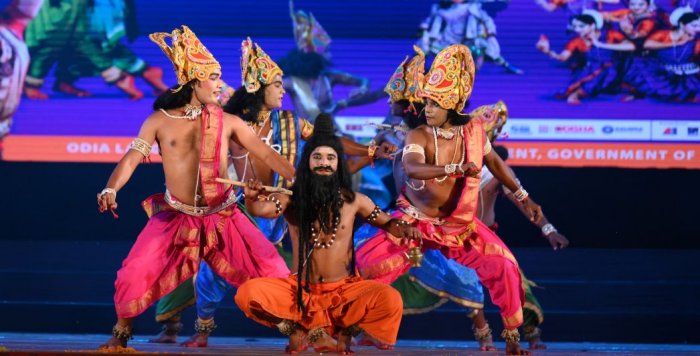 Haripada Mahanta and group After this, Manamanthan, a presentation in Mayurbhanj Chhau dance by Haripada Mahanta and group of Nichuapada Uttar Sahi Chhau Nrutya Pratisthan was a damp squib. From an institution situated in the home of Mayurbhanj Chhau, and known for its annual Swar Taal Mahotsav, much more was expected. Supposed to revolve round the Shadaripu, the sixfold enemy poisoning the mind - Kama (desire), Krodha (anger), Lobha (greed), Mada (attachment) and Matsarya (jealousy), the dancers in colourful dhotis and crowns, could convey nothing through the highly repetitive dance. A great pity, for in cities like Delhi for instance, with institutions like the Bharatiya Kala Kendra who have presented the finest of themes through dance drama productions in Mayurbhanj Chhau, it would seem that the home of the dance form has only mediocrity left to show for itself. The chamak torso movement, so typical of the dance was nowhere to be seen. 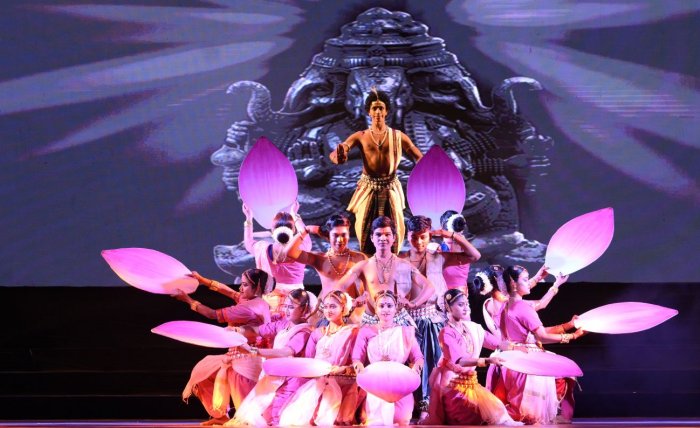 Orissa Dance Academy The culminating evening presented fine fare starting with Patha Rajapatha by Orissa Dance Academy in a fusion of classical, folk and contemporary styles. An extravaganza, paying homage to the ceaseless creative urge of artistes and artisans, who have contributed generations of superb examples of timeless art edifices, the dance was a salutation to the rich creativity of a people. The contents in a superb overview traced some of the rich legacy left behind by sensitive chiseling hands of sculptors shaping the contours of innumerable temples in the Dravida, Nagara and Kalinga styles. From the tribal origins of Neelamadhav to the aristocratic royal patronage meted out to the Puri Jagannath cult, whether in the plethora of its religious monuments, its tasteful handloom creations or in the engineering genius of a Hirakud Dam, here is a State, whose riverine civilizations nurtured by its plentiful river water carries the treasures fashioned by the creative imagination of its people. Founded in 1975 by Guru Gangadhar Pradhan, known for his unique dance creations, Orissa Dance Academy has built on the legacy of its founder under the Guru's leading student Dr. Aruna Mohanty, who has visualized presentations built round a variety of concepts - and Vividha Varna (Many Colours) in this work reflecting a panoramic view of the culture which has fed and adorned the State is one such. With so many different dance forms, presentation covered the entire stage arena including the wings at an elevated level, what stood out, for this critic, was the admirable organization bringing all together under one presentation. With excellent video material to act as supplements, and with disciplined, well-trained dancers, the sheer variety and colour, made the effort a delight, particularly for the sizeable student numbers in the audience. 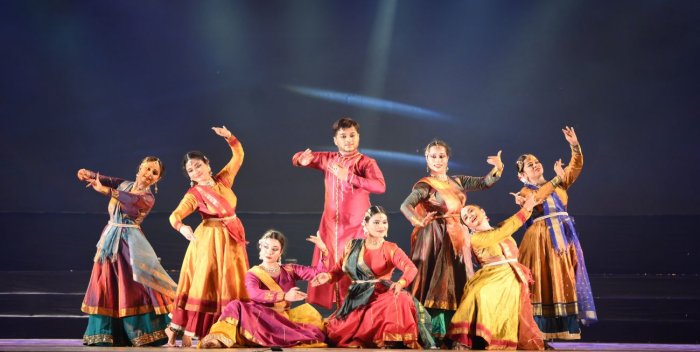 Souvik Chakraborty and group This was followed by a delightful Kathak recital by Souvik Chakraborty and group of Nrityadisha Kolkata. Souvik is a student of Pandit Birju Maharaj trained in the Padatik Dance Centre of Kolkata. The group started with Durbari rendered in Teental, to lehra (repetitive musical refrain) set in the same raga, wherein ad-forms of tihai, toda, paran and ladhi were rendered in perfect ang. Tastefully attired girls and male dancers performing in fine control over rhythm maintaining perfect movement profile were a pleasure to watch. Interpretative dance featured in the second half of the recital, was based on a ghazal, "Raat yuin dil mein teri khoyi huyi yaad aayi, Jaise virane ein chupkese bahar aajaye," a composition of Agnibha Bandopadhyay, sung by Sreeradha Bandopadhyay, with the abhinaya format, the work of Souvik Chakraborty. The idea of now forgotten thoughts of a past of shared moments, suddenly assailing one at night, was suggested delicately in the interpretation. The finale was "Raag Sang Ragini" based on the moods evoked by melodic modes, which in their flow and character can suggest majesty of the male in some modes, and sensual grace and vitality of the female in some other modes. Here the two opposite qualities come together, complementing each other and not in opposition. They are like Shiva/Shakti representing two ends of the spectrum in a harmonious blend. It is Purusha and Shakti acting as a foil for each other. Altogether a well planned and executed program. The group comprised Sayeri Ghosh, Poulami Basak, Aadita Sinha, Priyanka Paul, Tiyasha Dey, Sucharita Pal with Souvik Chakraborty. 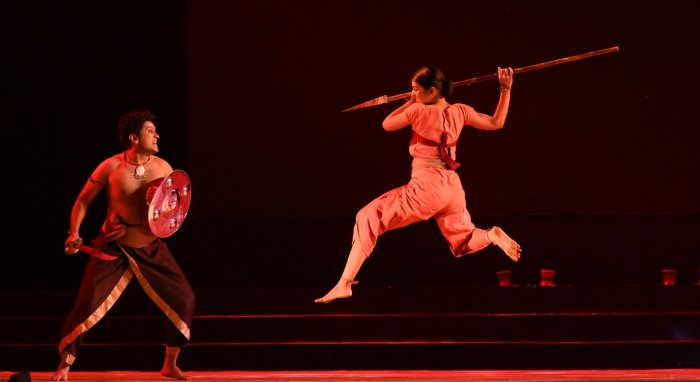 Belraj Soni and group Bringing down the curtain on this three-day fare, was Kalaripayattu by Belraj Soni and group of Navaneetham Cultural Trust, Thrissur, Kerala. Watching the superb presentation of Sita, one felt that it would have been helpful for students seated in the audience (with whom I had a short exchange after the program to realize that they had not caught the central idea of what was being shown), if groups using traditional movement languages for highly contemporary work, would come armed with cyclostyled copies of explanation (in a program telecast by Doordarshan, comperes in the final analysis cannot indulge in over verbalising), realizing after an interaction that young people were not getting the proper perspective on what was presented, one could not avoid the feeling of regret, that a few introductory words by the producer of the work would have gone a long way towards opening the minds of youth to the kind of thinking prompting a work. They should be appraised of the approach of the choreographer, before arriving at their own judgement about a work. Sita represents a character very different from how she is portrayed in the Ramayana. Queen Sunaina, yearning for a baby discovers baby Sita, born of the earth, sheltered, within the wings of a vulture. Radiant Sita grows into a fierce warrior, befriending Samichi from the slums, who becomes confidant and closest companion. Trained in martial arts by Guru Jatayu and with Samichi appointed as army commander, Mithila under Sita's rule flourishes. Rama breaks the sacred bow Thrayambakam and weds Sita, while Ravana, adopting Samichi as daughter, manages to enter the wedding festivities and confront Sita. In a moment of threat, Rama from a distance intervenes, breaking the code of Dharmayuddha and disillusioned Sita decides on Vanavasa along with her husband. Shoorphanaka desiring Rama makes overtures but is defeated and severely wounded by Sita in a fierce encounter. She appeals to Ravana, who entering the forest, defeats and kills Jatayu. While Sita and Samichi are conducting Jatayu's funeral, Ravana's forces attack, and Sita is captured. In Lanka, Sita's anger turns her into an even more fierce warrior defeating Ravana, stripping him of his arms. As she raises her spear to kill him, Samichi intervenes and in a state of fury, Sita turns on her lifelong friend and kills her. Warrior, protector and force of resistance, Sita marches on. There is no rest for her. Using classical dance, martial arts, and theatre, the cast has Ratuja Marne, the Bharatanatyam artiste, Sujit K.S and Kalamandalam Asik, the Kathakali specialists, Prajeeth Kumar and Dina Sridhar as the Kalaripayattu experts, and Kalamandalam Krishna as the Mohiniattam artiste. Directed by Belraj Soni, the manner in which different movement languages, martial arts and theatre combine into a smooth narrative, is nothing short of spectacular. Sita here is reimagined, not as the damsel in distress praying for Rama to come to her rescue, but as a force more than capable of fending for herself. This obvious statement is on how the woman of today needs to be strong and resourceful, able to fend for herself rather than be Lydia Languish waiting for and depending on Man or Hanuman to save her. 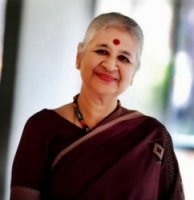 Writing on the dance scene for the last forty years, Leela Venkataraman's incisive comments on performances of all dance forms, participation in dance discussions both in India and abroad, and as a regular contributor to Hindu Friday Review, journals like Sruti and Nartanam, makes her voice respected for its balanced critiquing. She is the author of several books like Indian Classical dance: Tradition in Transition, Classical Dance in India and Indian Classical dance: The Renaissance and Beyond. Post your comments Please provide your name along with your comment. All appropriate comments posted with name in the blog will also be featured in the site. |
