
|     |
|
| |

 e-mail: leelakaverivenkat@gmail.com Mind boggling excellence all the way in the 43rd Natya Kala ConferencePhotos courtesy: NKCJanuary 21, 2026 Conceived and curated by the Kathak and Bharatanrithyam couple Nirupama and Rajendra, Chennai's Krishna Gana Sabha's forty third consecutive annual Natya Kala Conference titled Navonmesha (quest for creative excellence), was an eloquent testimony to sheer excellence in every aspect of planning. Textured and insightful in the programming and selection of participants, alongside uncluttered eloquence and neatness in execution of every event (with Aalap helping), the three-day event was a feather in the cap of the organizers. The opening saw the curators refer to how this year's conference, with its searchlight on present day creativity, viewed from the long road of India's ancient wisdom, mentioned in texts like the Natya Sastra to the contemporary times of Artificial intelligence, was looking for, and putting the searchlight on, Artistic intelligence. 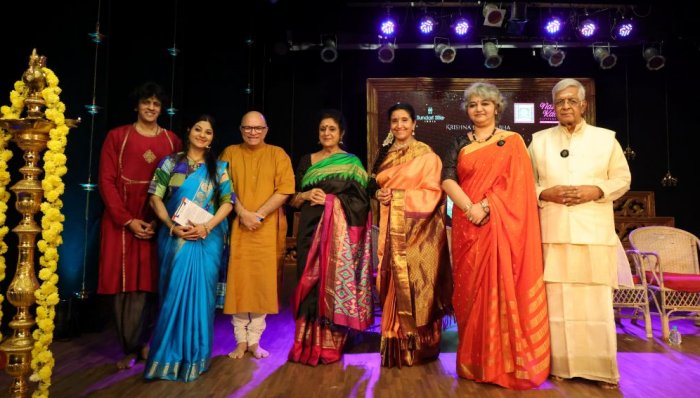 Inauguration Opening the conference, after the lamp lighting, the CEO of Krishna Gana Sabha, Sashwathi Prabhu, with a fitting curtain raiser, in a melodiously sung "Maitreem Bhajatha," mentioned how the Natya Kala Conference was pioneered during her grandfather late R Yagyaraman's time for 'wellness, goodness and prosperity of the Arts' as an effort at bringing the scattered art fraternity together, to focus on matters of art in a friendly spirit - with scholar Padma Subrahmanyam curating the first Natya Kala Conference on Bharatiya Sanskriti. Chief guest Chitra Visweswaran, in her eloquent inaugural talk spoke of how curated and convened, with varying spirits of enquiry, the Natya Kala Conference effort over the years of unravelling subterranean rivers of art development had, with Gurus sharing knowledge, helped in creating rasikas who could discern between knowledge and information. Over the years, yeoman service through the conference effort had helped to assess and reassess, look and relook, search and research dance. The search is never ending and quoting the famous words, Miles to go before I sleep, she concluded with the statement that Modernity of today, standing the test of time, becomes the tradition of tomorrow. 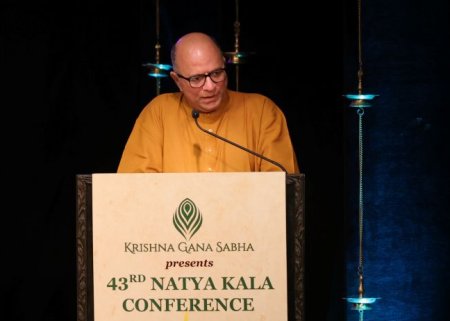 Chandraprakash Dwivedi Art is the highest level of human intelligence, said Chandraprakash Dwivedi in his opening remarks. Oneness with the arts signifies oneness with creation. No wonder the Vishnu Dharmottara Purana prescribes starting with literature and poetry and going on to learning all art forms from Painting, Sculpture, Music, et al before going on to Dance. Kautilya's Arthasastra was also mentioned for its statement on acquiring knowledge which is not acquired, preserving it and finally propagating it. He also stated that where there is violence, there can be no art - not surprising for Art springs from wellsprings of creativity which represents the finer, more sensitive aspect of an individual. 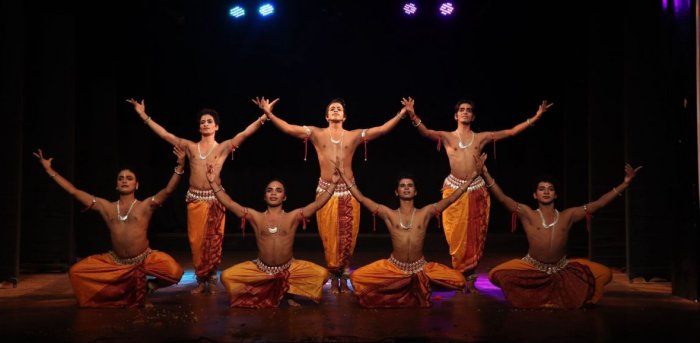 Rudrakshya ensemble The opening dance event Purushang: Odissi Beyond Boundaries presented by male dancers of Guru Bichitrananda Swain's Rudrakshya Foundation, showed in a performance characterized by different chhandas and layakari, the grace and delicacy of the male body in Odissi - a dance popularly regarded as being designed for the female body. As a matter of fact, the entire conference presented several examples of how the dancer's body as an instrument of communication, is not determined by his or her gender. The sinuous tribhangi formed through the most delicate sideway glides of the torso (which is the hallmark of the Odissi technique), was all there. True that while male dancers are included in ensemble productions and in dance drama presentations in various character roles, it is the female dancers in Odissi who seem to merit more solo dance encouragement. How can one argue about the Odissi form on the male body when the greatest dancer of all, late Guru Kelucharan Mohapatra, was a male! Having been witness to Rudraksha dancers performing in Malaysia, bringing down the house in applause, I am fully aware of how beguiling the male body in Odissi can be! Chandraprakash Dwivedi who again took the stage in his session entitled Ujjeevan touched on the challenges of recreating classical themes for popular Media - for one is constantly having to work against long established perceptions which have little to do with 'Truth' as mentioned in the original texts. For example, what one gleans from the original epic versions is of Rama being married as a fifteen year old, of Kaikeyi giving Valkal Vastra (multiple dirty clothes) to Rama for wearing in the forest, of the real kakapaksha hairstyle being a whole shaven head with just a show of locks on either side, of Sita leaving for the forest with a whole chest of jewellery and clothes to last fourteen years, of Ravana appearing at the cottage when Sita is alone, not as Sanyasi but as a Brahmin with kamandal stuck on to the top of his stick and with no rudrakshamala which is for the tapaswi and not a brahman, and the fact that the jewellery of the times had nothing like a nose ring - which makes its first appearance (about 400 B.C.) in Indian sculpture in Nagarjunakonda. As the film maker, Chandraprakash Dwivedi has taken to going to old texts, and arriving at his own versions, maneuvering between what is mentioned there, and commonly held beliefs. UDAY SHANKAR - THE REAL DANCE PIONEER 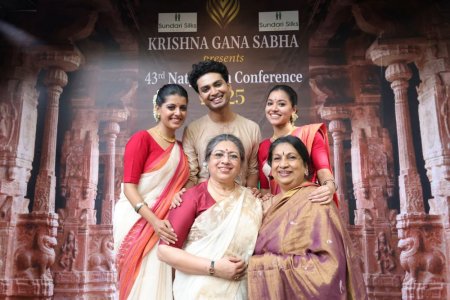 Navodaya team 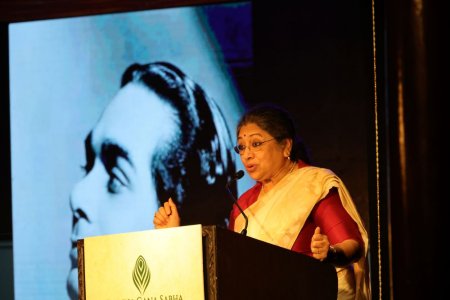 Tanusree Shankar Navodaya on pioneering novelty in Indian Dance, without adhering to, or learning any of the traditional movement systems still in practice, but cutting across all of them, along with western theatre techniques, had its greatest example in Uday Shankar - the true Father of Modern Dance in India. Tanusree Shankar, trained under Amala Shankar and wife of late Ananda Shankar (son of Uday Shankar and Amala Shankar), spoke of how very original Uday Shankar was in conceiving of this form, which took ideas from all styles but belonged to none. The man was a genius and his group work like for instance, Man and Machine shown in his film Kalpana, underlining how the machine age is making an automaton of man himself, underlines the imaginative power for devising dance movement that Uday Shankar had. Padma Subrahmanyam, during the proceedings, referred to her meeting him in hospital when he was ill, and how, when she mentioned the quote from the Natya Sastra which defines his famous movement of the hands from the shoulder joints moving in snake-like curves, Uday Shankar's face brightened with enthusiasm. Without any training, the open stance in this pioneer's dance movements, not crimping any part of the body, Padma observed, instinctively never deviated from the saushtavam. This genius, according to her surmise, must have been a dancer in his previous birth! 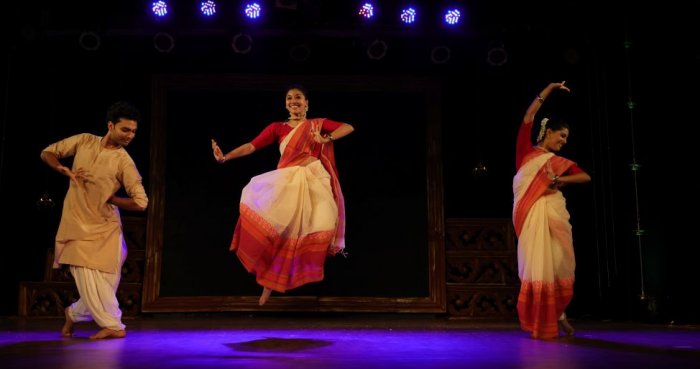 Navodaya demo Tanusree described how followers of Uday Shankar's style soon realized that they had to create some sort of a grammar - without which the style would perish. Exercises concentrating on just walking or clapping and some basic movements were shown. Tanusree called Uday Shankar a ' magician who knew the tricks' of what would succeed. The important part is that the Shankar style lives on, and it has its followers even today. ANVESHANA 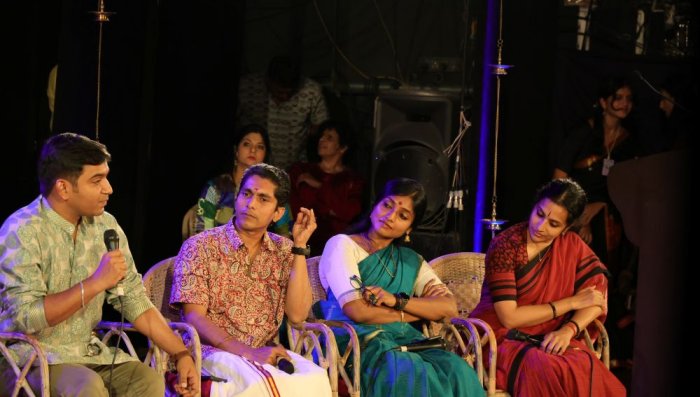 Anveshana panelists: Dr Himanshu Srivastava, Renjith & Vijna, Divya Nayar The concluding session on the opening day, Anveshana, on creative freedom for Interpreting the Classics, with Dr.Arathi VB as moderator, had young dancers answering questions. Dr. Himanshu Srivastava when asked on how he interpreted the character of Shikandi, observing that though dance had left the temple, the temple had not left dance - mentioned that deeply ingrained tradition placed great responsibility on the creator - which, freedom to convey the core message, had to keep in mind. Finally, after cogitating for days, his depiction was influenced by the film The Inner Quest, conveying the message of the Soul having no gender - Stree or Purush. Renjith and Vijna mentioned the importance of content and intent citing an abstract work on Bhagavati, called Viswagandha, where the idea of being possessed was sought to be conveyed. The method used, with the Bhagavati sloka playing at the back to evoke this feel, had a person in the audience voicing reservations about the diagrammatic representation on the screen, for in Kerala, known for its Bhagavati cult following, any anthropomorphic representation of the Goddess would not be accepted. Divya Nayar, speaking of poetic interpretation, referred to understanding the difference between structure and imagination. A line of poetry for instance, could be viewed through an inner landscape - like a painter responding to a piece of music. A lullaby which is intimate, playful and deeply human can be suggested through just backdrop music in Neelambari without any other image. Deep research helps. While one may believe that what is an inheritance has to be retained in its original construct, what is done with full reverence for inheritance should not be considered an insult. Recontextualizing a character to relocate, keeping in mind modern sensibility, she feels, is not wrong. She mentioned the example of Ekalavya's story where cutting off the thumb, for her was too extreme. Even the Sastras say Ekalavya swayam sidhaha. No matter how one looks at it, ideas have to be left to marinate in the mind, sometimes for days, before creativity, which is not a run away impulse, gets triggered. One recollects the case of Kelucharan Mohapatra, who after months of saying 'no inspiration yet' (despite Raghunath Panigrahi having composed the music), for the Ardhanarishwara item for Sanjukta Panigrahi (who was fast giving up the idea as a lost cause) suddenly, after months had lapsed, called the dancer in the middle of the night, "Sanju asso" (come), and Sanjukta, at an unearthly hour, travelled from Bhubaneswar to Cuttack, with the Guru, like one possessed, imparting to her in one uninterrupted session, the composition destined to become Sanjukta's signature item! VRITTIS Vrittis or styles of theatrical presentation, which Abhinavagupta's commentary on the Natya Sastra, Abhinavabharati, deals with in such detail, refers to modes of theatrical expression. The Bharati Vritti, believed to be influenced by the Rig Veda is characterized by speech and a grandeloquent style, considered more purushaprayojya. The succinct introductory talk by Dr. 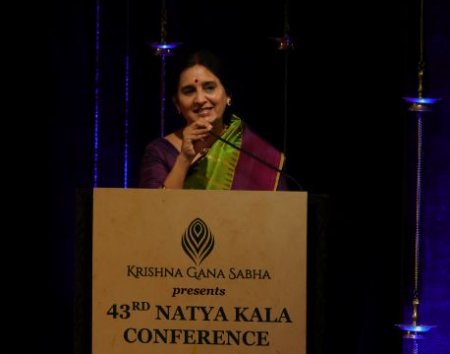 Dr. Anuradha Tadakamalla 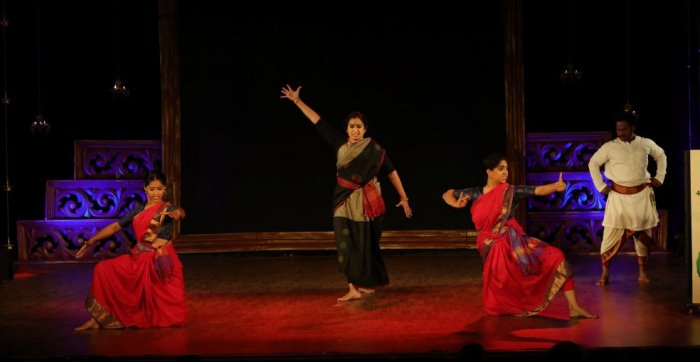 Dr. Anuradha Tadakamalla's team Dr. Anuradha Tadakamalla, making it clear that shades of different vrittis could occur in the same character in Kuchipudi Yakshagana, the presentation part with short vivid snippets from known works provided exemplary examples of Bharati Vritti. Most impressive was the multi sided prowess required in the Sutradhar who conducts the proceedings. Conducting the scenes with his nattuvangam along with delightfully sur-filled singing, Dandibhoti Srinivasa Venkata Sastry (trained under Pasumarthy Venugopala Krishna Sarma) as Sutradhar, also revealed exceptional histrionic ability in the parts with spoken dialogue (he is Kuchipudi Yakshagana trained under V. Radhe Shyam and V. Rattiah Sarma). After an excerpt from Prahlada Natakam exemplifying a very different mood, from an excerpt from the well-known Kuchipudi Bhamakalapam, saw Anuradha taking on the role of Satyabhama. On being asked about the identity of her husband, Satyabhama describes his iconographic representation as the One with the shankhu, chakra, gadha, padma. Punning on each of the symbols to convey a very different meaning, the Sutradhar as Madhavi finally asks for a more explicit answer with the person made known, with a bashful Satyabhama answering that mentioning the husband by name is unseemly for a spouse. The last scene from a Kuchipudi play utilizing all the Yakshagana potential saw Kathyayani Kanak in the Hiranyakashipu role, proving that artistic potential rises above the artiste's gender. In the very next scene built round the killing of Raktabeeja, in the role of Mahakali was Seenaiyya with Vaisnavi and Anusha in the role of the other goddesses appealing for protection from Raktabeeja. 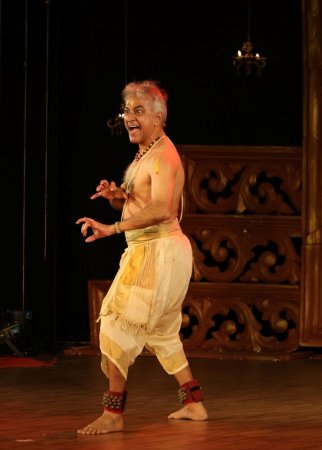 G.Narendra - Arabhati Vritti For the loud, Veera rasa and Raudra energy of Arabhati Vritti, Bharatanatyam dancer G. Narendra's excerpt from his one man ekaharya lasyanga Dashavataram production, was ideal - and the prolonged ovation following his involved rendition depicting Prahlada with Hiranyakashipu, and finally Narasimha emerging from the pillar, told its own story of complete conviction in the portrayal. 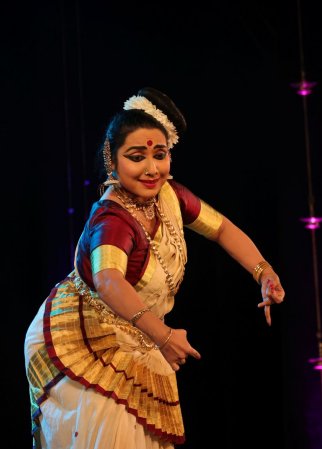 Dr.Neena Prasad - Kaisiki Vritti For Kaisiki Vritti emphasizing lasyanga with its graceful elegance, particularly suited for sringara rasa, what better than Mohiniyattam performed by a dancer like Dr. Neena Prasad, who chose to present an excerpt from the varnam in Shuddha Dhanyasi Kandarpa Vijitha Mohini which describes a woman so beautiful that she has won over even the weapons of Kamadev, the God of love. The live musical support with the famous vocalist Changanasseri Madhavan Namboothiri , alongside Prithvi Krishna on the mridangam and nattuvangam by Jaikishore Mosalikanti, the Kuchipudi veteran, enhanced Neena's performance, replete with feminine charm and allure. That femininity is not confined to the artiste's gender, was again shown by Neena's longtime student Thomas Vo Van Tao whose presentation of Irayiman Thampi's composition in Asaveri, "Indaho Vallabha" in its persuasive tone of pleading - winning over the beloved by making him shed his indifference, rang with conviction, despite the dancer in his dhoti, making no aharya concessions proclaiming female identity. 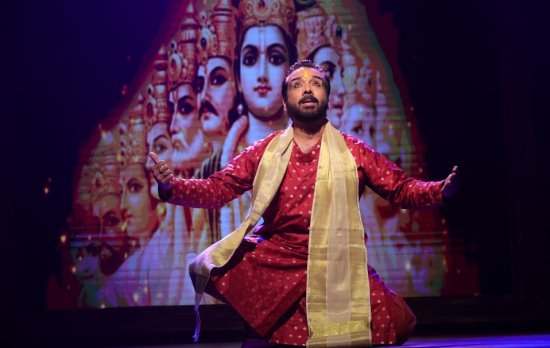 Vineeth Radhakrishnan - Saathvati Vritti Texts, while important, can be guides and not limits and contradictions as mentioned, prove the vitality of a tradition. With the searchlight on the Saathvati Vritti characterizing vigour, mental strength and resolution of a conflict - where inner spiritual and emotional energy is also involved - the scene shifted to examples from films presented by Vineeth Radhakrishnan who combines careers as a dancer with film acting - a medium where both restraint and authenticity are called for. He expanded on how he dealt with certain emotive situations - the first on a great bhakta of Guruvayurappan Poonthanam, who, after years of prayer was finally blessed with a child, which however does not survive. Assuaging the bhakta's deep agony, the conflict resolution, was through a temple visit when the Lord opens his mind to the fact that with child Guruvayurappan constantly dancing in his heart and mind, why does he need another child? With clips from films, he demonstrated Sattva in various states like Utthapaka - wherein a challenge is posed - with the starting stages of a conflict, Parivartaka where action changes with the whole energy of presentation undergoing a shift, Samlapaka showing harsh, heated discussion and Sanghataka where there is a complete break in the conflict, with the narrative so far. MESMERISING SESSION ON RHYTHM 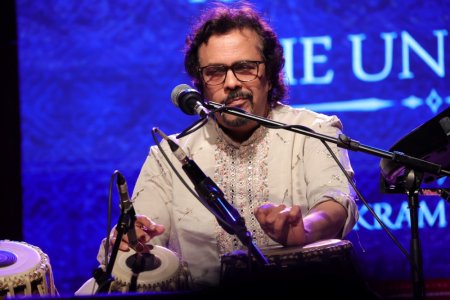 Bickram Ghosh For this writer, as for many others attending the conference, Bickram Ghosh's session on Rhythm marked the high point of the entire three day event. With his command over the artistic language of percussion and spoken language of English, his eloquent session with references to and examples from acts in daily life, made for a most riveting presentation. Describing the circular rather than linear measurement of rhythm in the Indian classical tradition, in cycles of 3, Ghosh referred to how rhythm was intrinsic to every action in the Universe and to life activities. The lion's tread for instance and that of a rabbit would be different. Rhythm draws people together for it communicates through a language of syllables which have meaning, without any agenda. In his own case, he mentioned how after studies in an Anglicised school where little that was really Indian was taught, his daily walk to Munawar Khan Sahib's home (from where one would often hear the song Kinare kinare ayena Balam which seemed from a different world) to learn percussion (his father Pandit Shankar Ghosh insisted upon), seemed to bring together two entirely different worlds - and the tabla with its Dayan played with the right hand (high pitched treble) and Bayan played with the left hand (low pitched bass) is a unity of two instruments - different in tone and pitch. Bickram Ghosh defined it as Yin and Yang together. He maintained (with an intention of not criticizing but making an observation) that in the Carnatic classical system (one can experience this in passages of nattuvangam), tala delights in virtuosity and the mathematics of rhythm, while in the Hindustani classical system, taal acquires a poetic quality - for here rhythm, given the tonal inflexions, does not move in a monotone. Residing in holistic grandeur in each micro unit of time, with the modulation with accentuated parts, and dips, a pattern emerges, which tells a story and suggests emotion too. He recited a couple of small bandishes in varying tones contrasting baritone with squeakily uttered syllables to show this. He also mentioned that Shakespeare's plays in the English language were all written in iambic pentameter - and he recited from a few. (Actually, spoken languages, and even intonated chanting of mantras, have a gait, which involves a pattern of rhythm). He ended the brief but brilliant introduction by playing a nine matra taal on the tabla. COSTUME DESIGNING 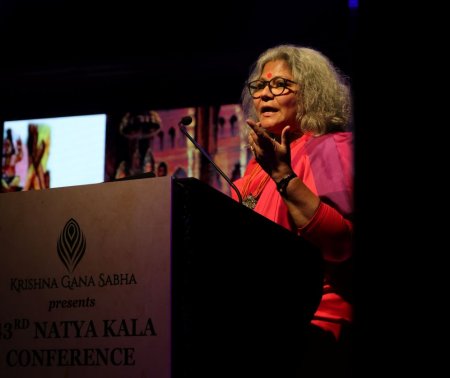 Sandhya Raman A well-known name today, Sandhya Raman, along with visuals supplementing her observations, spoke on Dance Costuming, referring to carrying the weight of tradition and heritage along with the immediacy of the present - an aspect needed in designing costumes for Indian dance - which, when perceptive, along with movements, adds to the value of the dance. In the presentation of mythological themes which foster our faith, one keeps in mind our fabrics and our festivities and one must remember that at the subconscious level, costumes add an important quotient to the theme being presented. One learns from Nature, our first teacher - seeing flower decoration in temples, weavers and how they mix colours, drapes in our old sculpture - all adding to our ideas of how to design costumes, which should add to the message of the dance without being overpowering. She gave examples of fabrics and costumes - from Khadi for example, which she harnessed for a Kathak presentation, and also for a work on Gandhi (by Geeta Chandran) where changing had to be done on stage. Above all, referring to the dancer's ease in a particular getup, she made the statement that after getting into a costume, one should be able to forget about it. Sandhya referred to her interest in bridging cultural narratives by creating archives for future, which could provide valuable information to other costume designers and she gave the example of Balinese and Bharatanatyam dancers performing in a concert for which she designed costumes. CREATING SAHRIDAYAS 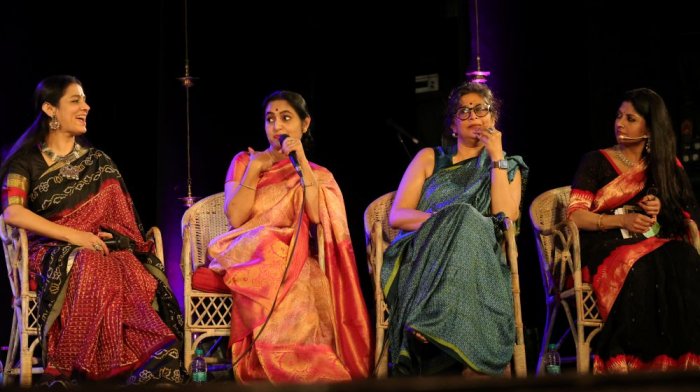 Sahrudaya Sambhashana: Anuradha Vikranth, Swapnokalpa Dasgupta, Akhila Krishnamurthy with convener Nirupama Rajendra One expected something more from the panel discussion on how to create sahridayas or real kala rasikas. Supriti who has worked for several years for Spic Macay began by mentioning the fact of this organization's yeoman service in helping to create an art- conscious group of youngsters - and one cannot but agree that the work done by this organization is by far the most praise worthy. The aim of this organization working with schools and colleges throughout the country, has been to create a love for, and sensitivity to the arts. "We work to create kaansens and not Tansens", said the main organizer of this all-India effort, Dr.Kiran Seth, Professor Emeritus from the Department of Mechanical Engineering at IIT Delhi. He started this movement in 1970's, fired by listening to a Drupadh concert in New York - when he truly felt that he went in as one man and came out as another - so moved was he. Working in an area for niche audiences which involves taking art to them is easier than spreading goodwill for the arts in general so that people are enthused to go to places where art is being presented. All of us know about the handful of persons seated in a sabha for a dance event. Dr. Anuradha Vikranth with a doctorate in dance, based in Bangalore, and Dr.Swapnokalpa Dasgupta spoke about their efforts in festivals conducted in Bangalore and Bombay. Akhila Krishnamurthy spoke of Aalap and what this organization was achieving through the print media. Saashwati of Krishna Gana Sabha intervened from the audience to say that dance and music were competing with so many other forms of entertainment available today, and what with youngsters trying to fit in so many things into one day, and with travel and other complications, for people after schools or work to get to places where programs are to be presented, to ensure good audiences for dance recitals, is far more challenging. Music is better placed. This subject needs a more in-depth exchange on ways of reaching out to audiences. Given the ever increasing number of artistes with lessening audiences, the video facility with filmed and with recorded versions of performances so easily available, has made the effort involved in going to far off auditoria, where dance is being presented, a losing choice. Simultaneously a bane and a boon, this facility of art reaching every home, the throb of watching a live program is an experience which is being unfortunately substituted. AUTHORITY ON SASTRA 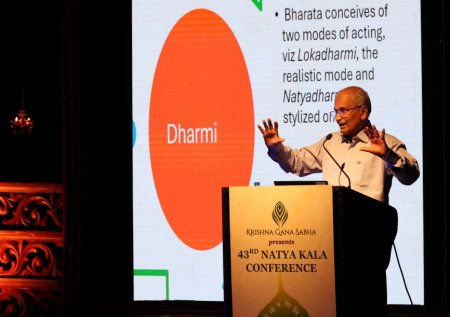 Dr. C Rajendran The last day's proceedings began with an erudite session titled Sastramoolam, with the Sastric roots of South India's many theatrical traditions touched upon by Dr. C Rajendran from Kerala, an authority on the Natya Sastra, a musicologist, linguist and author of countless books. The speaker referred to the Natya Sastra as a 'seminal text and a reference point,' in its comprehensiveness, aesthetic vision and more than anything else its interdisciplinary approach providing an encyclopedic outlook, with the Rasa theory, a most original concept of communication, binding all art forms. This is what distinguishes art in India. To establish direct links between art forms as they exist today, with what the text says would be difficult, for performances through time have changed. But what the text underlines is to understand how 'human beings programmed with emotions and rhythm' can enjoy Natya, without any personal involvement. The speaker referred to how Sanskrit theatre, which in whatever form has survived, exists only in Kerala today - and he mentioned works like Matta Vilasam (a work, considered as marking a revival of Hinduism after the Buddhist period) attributed to King Mahendra Varman, the Pallava ruler (571-630), Sakti Bhadra's Ascharya Choodamani, and Bhagavat Adjugam, a satirical play on the transmigration of souls between an ascetic and a courtesan. In dance, the speaker gave the example of Krishnanattam, which exists only in Kerala and is performed in the Guruvayur temple Koothambalam even today. Koodiyattam in Kerala has its direct link with the old times. As for music, he mentioned the difference between sangeetam for abhinaya and Kutcheri sangeetam. He touched upon sensuality and spirituality and how the Indian knowledge system looked at both as two sides of the same coin. Thus, ancient wisdom of the Natya Sastra contains the core wisdom and approach to our art forms, existing with all the changes wrought by time. ILLUMINATION FOR DANCE - GYAN DEV SINGH 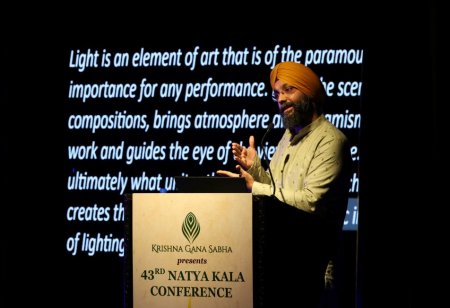 Gyan Dev Singh An undergraduate from the NSD, Gyan Dev Singh, after working with several dancers, dwelt on how to engage as a co-player with lighting, for a dance performance. The synergy of light and dance, producing an emotional effect by stirring up emotions, the lights adding a magical effect, giving an atmosphere and guiding viewers, should make for a human experience going beyond the usual idea of spot, which is very limiting. Lighting is like sculpting, making the image stand out, emphasizing the geometry and lines of dance. He spoke of working with Leela Samson for Spanda, and how distilled use of light can with clarity show the Bharatanatyam lines. Through some visuals, he also referred to Malavika Sarukkai's Tari and Mythii Pakash's Mara, to show how lights used creatively with a moving body, can add to the narrative, highlighting the dancer's statement, without interference. SHASTRA AND PRAYOGA - A SYMBIOTIC CONNECTION Following this lecture was the Shastra/Prayoga symbiosis underlined in a precise, lucid fashion with a brief introduction by Vasantalakshmi Narasimhachari. She began with the statement that Shastra provides the understanding while Prayoga relates to the practical side and since one is knowing, while the other is doing, there is no contradiction here. Prayoga was defined as the more conscious part, out of which rasa is evoked from Dhwani. Substantiating the practical part of her lecture was provided by Lasya, her graceful daughter, demonstrating in quick flashes, aspects of sringar and veera, gatis with fleeting examples of pancha jatis and how the movement gati can relate to the rasa. For instance, emotion evoked in sringar and veera have a rhythmic content where laya and tempo are involved - though creativity is not bound by rules, which provides guidelines and not diktats. The speaker referred to rhythm in khandam, generally connected with aggressive and warlike situations, being also used for a lullaby. Examples of sankeerna rhythm (units of 9 counts) were provided and with all our Sastras in Sanskrit, how could she have not concluded, as she did, without reference to Phalasruti or the advantages flowing from understanding this umbilical cord between practice and the Sastras? PRAYUKTHA - RESPONDING WITH RESPONSIBILITY 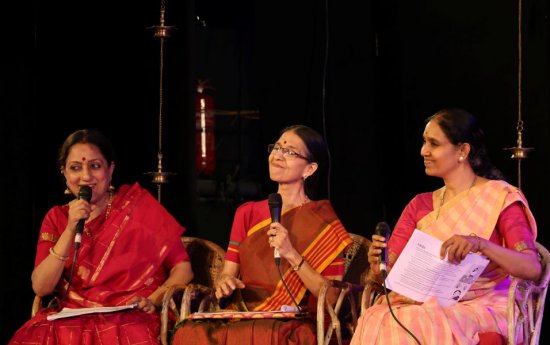 Prayukta panel: Priya Murle, S Janaki, Ramya Ramnarayan As three speakers Priya Murle (President), S. Janaki (Vice President ) and Ramya Ramnarayan (coordinator of East Coast Chapter - US) participated in the short session devoted to ABHAI, this writer's first reaction was that every dance form needs to have an organization like ABHAI, to bring dancers of a particular tradition together, and more, to cast a glance at the less affluent sections of people pursuing a career in dance. And in this area, ABHAI's work not just in providing sustenance to teachers during the terrible Covid period, but in looking at other areas of importance to dance, needs in-depth discussion involving the entire community of Bharatanatyam artistes. Securing government permission to teach (with ABHAI remunerating the teachers) not in mainstream schools, but other institutions run by the State corporation and other bodies under the government, was a big first step, helping in taking dance to sections who would have no means of learning from any teacher. Since the organization depends on donations, funding determines to a large extent on how far the organization can reach out. And with government restrictions on funds from abroad, ABHAI has somehow managed with endowments, supporting a whole gamut of recognitions like Natya Kalanidhi, Nritya Perumjothi ( for seniors who have devoted a whole lifetime to dance), Gandharva Nipuna (for best accompanists for dance), Nartaka Nipuna (male dancers only), Sangeeta Nritya Nipuna (for dancers who specialize in singing too) and for specialty in folk dance (Naatar Kalai Kon) too, and for encouraging young talent is Sadhanai Thalir. ABHAI has also not forgotten to recognize talent among Indians living abroad, who are a great factor in the overall Bharatanatyam effort and for this is the Pravasi Natya Kalanidhi endowment. Organizing workshops in places like Mahabalipuram, following the idea of workshops (Abhivriddhi Shala) begun by Adyar K. Lakshman, the part played by eminent dancers like Padma Subrahmanyam (who oganized1000 years of Rajarajeswaram) and Chitra Visweswaran has been a great factor in the ABHAI activities. TARANA - EXPANDING THE HORIZON 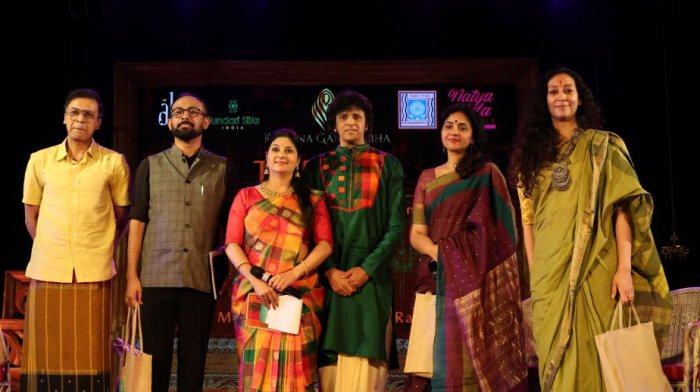 Tarana panel: Vaibhav Arekar, Dr. Aneish Rajan, convenors Nirupama & Rajendra, Dr. Methil Devika, Mayuri Upadhya The concluding session for the three day intense Natya Kala Conference proceedings with its accent on Navonmesha or new initiatives, was Tarana (or expanding Horizons), and interestingly the moderator was a bureaucrat, a Masters from JNU, Aneish Rajan who has been involved with administration of cultural institutions. In his opening remarks, he touched on what the terms, classical, Modern and Contemporary could mean in the field of classical dance with its expanding horizons. How do we define the terms Modernity and Classicism in the context of India itself where respect for tradition does not negate respect for modern sensibilities? The temple eco system, from which we trace our classical dances, was different. There was also a reference to provocative themes which can discomfort an audience. Our classical dances have not remained unchanged through time. And dancers who have had the urge to introduce changes have done so, come what may. When sringar in its myriad forms, along with bhakti, has found representation, not just in ancient poetry but even on the walls of ancient temples, it shows that life in all its facets, found expression in all art forms. Highest of bhakti went with sringar in all forms. When the contradictions of life were treated as two sides of but the same coin, like male and female existing together in the Siva/Shakti concept, why should the classical, as it travels through time, not have a modern sensibility? Artistes with the urge to express the present in their art, have done so, irrespective of the consequences. As Dr. Methil Devika firmly remarked, she has not been subdued by nay sayers to whatever she has introduced in her Mohiniattam by way of themes. Mayuri Upadhya, choreographer, dancer and entreprenour, who is the Artistic Director of Nritarutya in Bangalore, and whose work in musical Mughal-E-Azam won her the Broadway award as World's Best Choreographer in 2018, still runs to packed halls, speaks of dance as an industry. Make in India presented in Germany won her wide acclaim. She referred to mixing Kathak and Bharatanatyam classical dancers with folk elements, martial arts, films and what have you, to create unique narratives. Above all, dance for her as art, should fetch fine returns. Her Great Indian Musical which attracted large audiences, showed how creativity when shaped by musical compositions, makes for great accessibility. Many of the youngsters present wanted to know if she would accept assistants to work with her, to understand her approach! Vaibhav Arekar raised a very pertinent point on creating intentions in a movement. While dealing with new themes, one needs to use movement, always used in classical forms decoratively and for embellishment, in a different setting. Viniyoga or adaptation of a movement system is required for expressing a very varied urbanized world. Even when one expresses a Kabir Doha, for instance, the appropriate use and adaptation of a movement, in a very different space, needs thought and work - and the classical movement system founded on the 'one size fits all' idea, may not work. How does one harness movements with rhythm used in a Tillana or even a teermanam? Even as we respect time honoured practices, we need to reimagine them for contemporary expression. The moderator referred to collapse of traditional forms with modernity taking over. When the great Abhinava Gupta in Abhinayachandrika has himself referred to innate talent embodying innovation and renewal, traditional forms rather than collapsing should be strengthened by developing the capacity to absorb changes flowing from socio-political, historical, artistic implications. The deep roots will have branches spreading in different directions. One feels that barring Mayuri Upadhya, the other two - Methil Devika and Vaibhav Arekar - should have had more time to discuss their individual points of view. 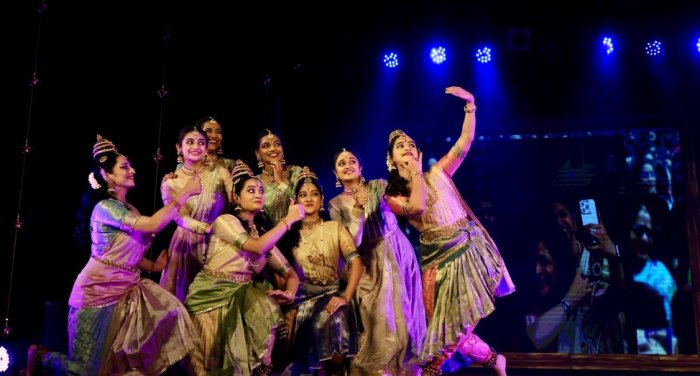 Bharata Vakyam - finale by disciples of Nirupama & Rajendra With a reference to Navonmesha, and a Kathak finale involving students of Nirupama and Rajendra, interspersed with visuals of all the participants, the Natya Kala Conference came to an end. Workshops were also held as part of the conference. The workshops were sold out sessions with each session having over 150 participants and special content created for NKC 2025. On day1, Rangadharmi workshop on Rangageethe and lokadharmi abhinaya by Anil Iyer and Prof. Deepak Paramashivan was impressive. On day 2, the first half was a brilliant workshop by Tanusree Shankar on the Uday Shankar style and the second half was a workshop on creative costuming by Sandhya Raman, the first ever of its kind. On the morning of day 3 was Bickram Ghosh's workshop on the aesthetics of Musical Math, another runaway success! 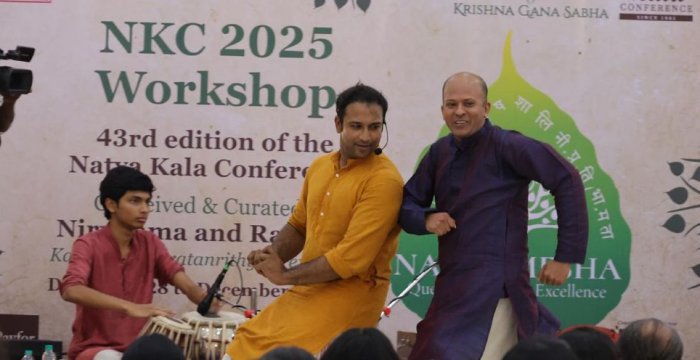 Rangadharmi workshop 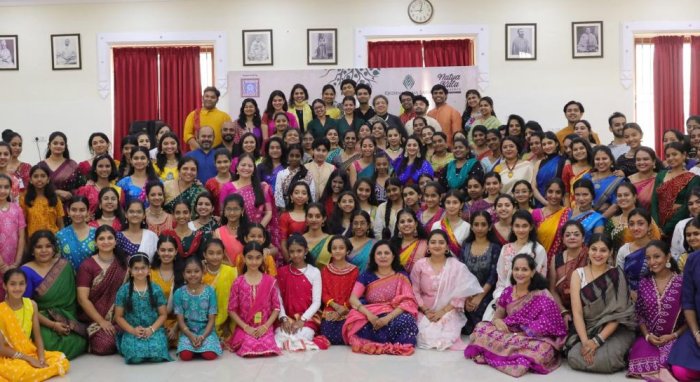 Tanusree Shankar's workshop 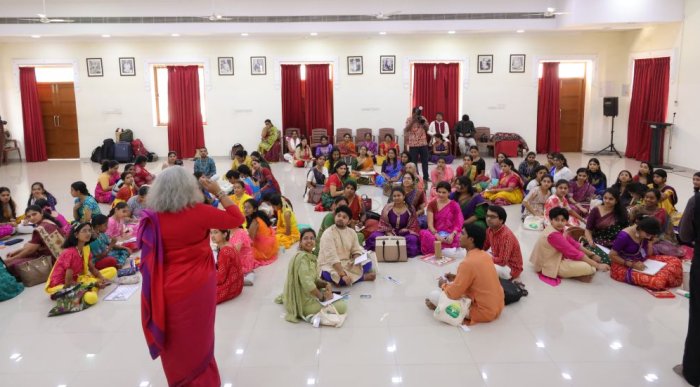 Sandhya Raman's workshop 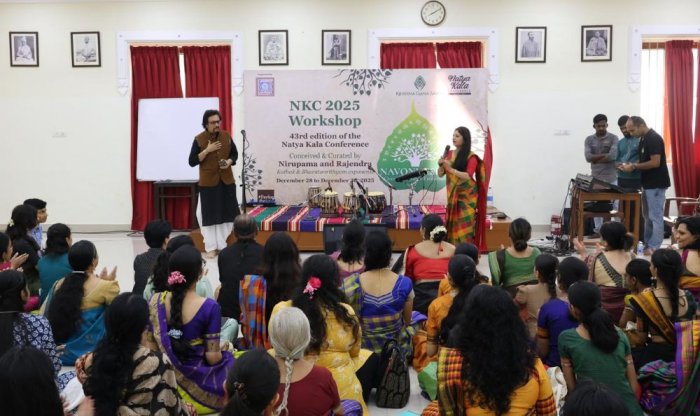 Bickram Ghosh's workshop A fine effort indeed! Nirupama compared the 400 delegates this year with the 800 of last year. To have had 400 people attending an event which used to have a pitiful few for years, is in itself a very encouraging development and both convenors and Krishna Gana Sabha can feel justly proud of the event. 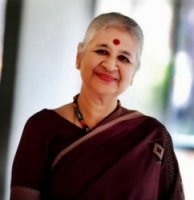 Writing on the dance scene for the last forty years, Leela Venkataraman's incisive comments on performances of all dance forms, participation in dance discussions both in India and abroad, and as a regular contributor to Hindu Friday Review, journals like Sruti and Nartanam, makes her voice respected for its balanced critiquing. She is the author of several books like Indian Classical dance: Tradition in Transition, Classical Dance in India and Indian Classical dance: The Renaissance and Beyond. Post your comments Please provide your name along with your comment. All appropriate comments posted with name in the blog will also be featured in the site. |
