e-mail: srjan.bbsr@gmail.com
A theatre that speaks to our times:
A bold story of power, betrayal, and truth
October 7, 2025
The history of Odisha's cultural traditions tells us that theatre has
always held a profound influence on the growth of Odissi dance. The two
art forms, though distinct in structure and presentation, are deeply
interconnected in spirit. The earliest pioneers of Odissi - those
visionaries who shaped the art into its classical form - first discovered
their artistic voices through theatre. Their journeys began on the
proscenium stage, where expressions, characterisation, and dramatic
storytelling became the foundation of their artistic practice. From this
theatrical grounding, they carved pathways that led to the evolution of
Odissi as a refined classical dance, now practiced and admired in
nearly 150 countries across the globe.
This is no small achievement. For a regional art form from Odisha to
travel across continents and touch audiences worldwide is nothing short
of monumental. It is a source of pride not only for the state but for
every Odia who reveres Odissi as a cultural identity and a spiritual
offering. I count myself among them. I am an Odissi dancer, but I also
carry within me the experiences of a theatre artist. This duality shapes
my understanding of how theatre breathes life into dance, and how dance
in turn enriches the vocabulary of theatre. With this perspective, I
walked into the Rabindra Mandap, Bhubaneswar, on the 1st of October 2025
to witness Last Train, a theatrical production presented by the
Abhinaya Jagruti Institution of Theatre (AJIT).
Founded on January 20, 2001, AJIT has emerged as one of the most
respected platforms for theatre practitioners and enthusiasts in Odisha.
The institution was established by a group of theatre artists,
primarily students of Utkal Sangeet Mahavidyalaya, Bhubaneswar, who were
inspired by the vision of Ajit Das, a celebrated alumnus of the
National School of Drama (1975 batch). Ajit Das, an eminent theatre and
cine personality of Odisha, envisioned an institution where modern
theatre could coexist with social responsibility, tradition, and
cultural richness.

Ajit Das
AJIT's mission has always been to bring theatre closer to the masses,
not simply as entertainment but as a medium to communicate social
messages in a realistic and relatable manner. Over the past two decades,
AJIT has celebrated talent, nurtured creativity, and upheld Odisha's
folk and literary traditions while also experimenting with modern
theatrical idioms. The formation of AJIT itself is rooted in a unique
tradition - the celebration of Ajit Das's birthday, which marked the
beginning of the institution's journey. Today, after 21 successful
years, AJIT continues to groom students into professionals and has
carved a permanent place in Odisha's cultural landscape.
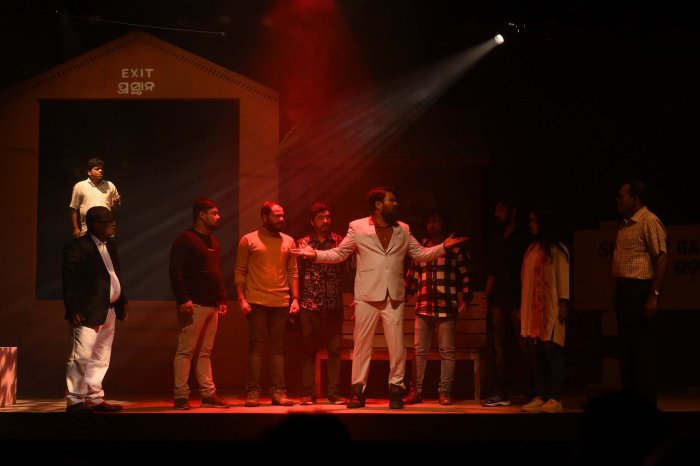
The play Last Train carries this legacy forward. It has been
metamorphosed by Ajit Das and directed with great care and precision by
the young and dynamic Deepak Ranjan Pati (Aman). Written by Dr. Bijoy
Mishra, Last Train explores a theme that resonates deeply with
contemporary society - the exploitation of disillusioned youth. The
narrative follows a group of downtrodden young men who, caught in the
hands of a manipulative leader, are transformed into looters and
killers. The leader, Comrade Raghu Patra, driven by his own ambitions
and investments, manipulates them with revolutionary rhetoric, invoking
Lenin and other ideologues. To the outside world, he positions himself
as a benefactor, distributing looted money to the marginalized and
economically backward. But beneath the surface, he is a schemer,
exploiting their vulnerability for his gain.
Into this world of chaos and false promises enters an innocent young
woman, a cadet whose presence shifts the dynamics of the group. She
becomes the focal point of attraction for the men, and jealousy soon
festers within the ranks. What begins as comradeship unravels into
betrayal and destruction.
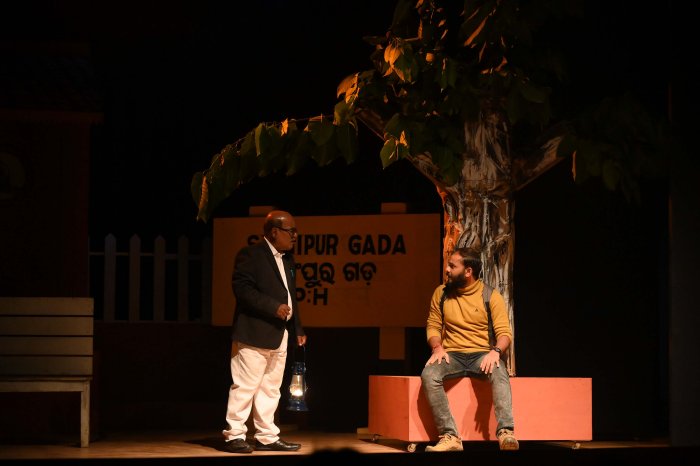
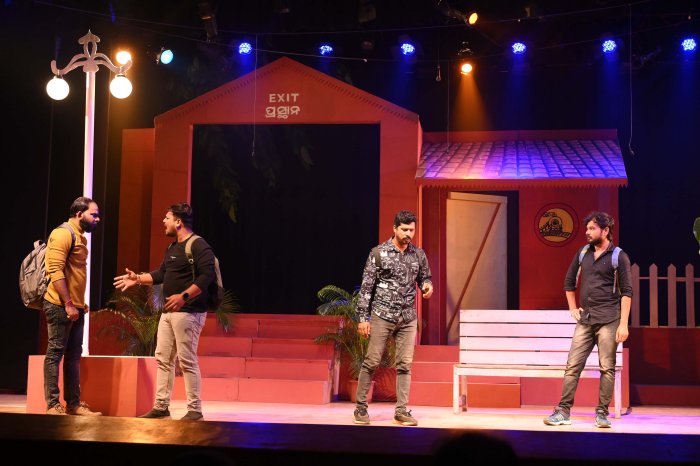
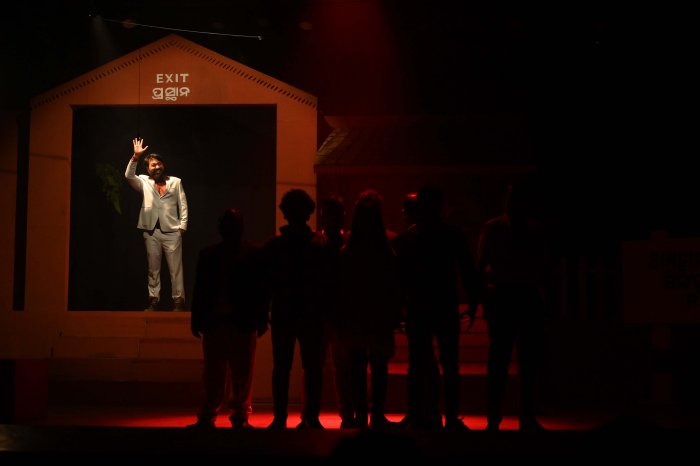
The climax unfolds a decade later, when the group reunites with their
leader at a railway platform. The harsh reality of his true intentions
comes to light in a bold and gripping final scene. It is a moment that
strikes the audience with its poignancy and relevance, reminding us of
how power and pragmatism often overshadow ideals in the real world.
The brilliance of Last Train lies not only in its writing but also in
its direction. Deepak Ranjan Pati (Aman) deserves special appreciation
for his meticulous attention to detail. His work with the actors ensured
that each character bore a distinct personality, layered with
authenticity. The pacing of the play was carefully crafted, with scenes
flowing seamlessly from one to the next, creating an immersive rhythm
that held the audience spellbound. The rasānubhūti - emotional
experience - was palpable, as spectators found themselves connecting with
the struggles and motivations of the characters on stage.
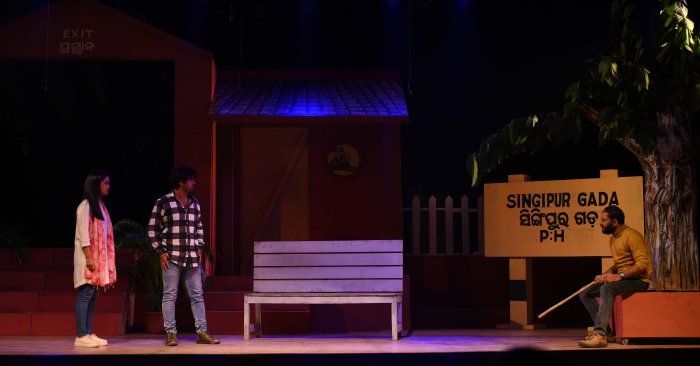
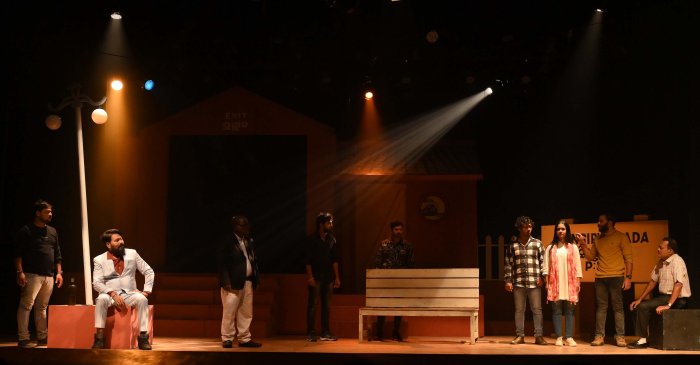
The ensemble cast delivered commendable performances. Sagar Pattanaik,
Upendra Pati, Chintamani Biswal, Niranjan Acharya, Biplab, Uma,
Siddharth, Bijay, Jagannath, and Priyambada each brought life to their
roles. Among them, Chintamani Biswal's portrayal of Comrade Raghu Patra
was particularly striking. With flawless acting and nuanced dialogue
modulation, he commanded the audience's attention, embodying both the
charisma and the manipulative edge of the character.
The technical aspects of the play complemented the narrative
beautifully. Kailash's music underscored the emotions of the story,
while Samaresh Pal's makeup and Mama's costumes created characters that
looked real and convincing. The stage management by Sagar Pattanaik,
Himanshu, and Ayushman ensured smooth transitions and kept the play's
momentum intact. The anchoring by K.P. lent a professional touch,
guiding the audience into the world of Last Train.
It would be incomplete not to mention the efforts of Dr. Maya Das,
President of AJIT and the wife of Guru Ajit Das. Her dedication to the
management and organization of the production was evident in every
detail of the evening. Beyond her role in AJIT, Dr. Das has made
remarkable contributions as a scholar and Sanskrit litterateur. As a
former lecturer in Sanskrit at Utkal Sangeet Mahavidyalaya, she has
enriched both theatre and dance with her intellectual pursuits. Notably,
her research and publication of Abhinaya Chandrika, one of the seminal
treatises of Odissi dance, has been a boon for the Odissi community,
bridging academic scholarship with performance practice.
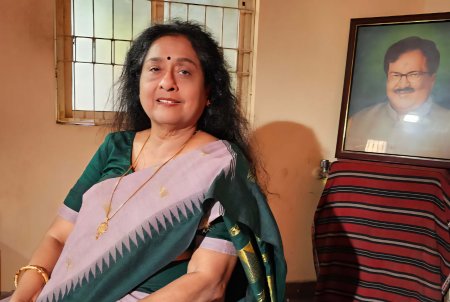
Dr. Maya Das
As an Odissi dancer and theatre practitioner, witnessing Last Train was
more than just experiencing a play - it was a journey that reaffirmed the
interwoven legacies of theatre and dance in Odisha. The evening at
Rabindra Mandap was a reminder of how theatre continues to evolve while
staying rooted in social commentary, and how institutions like AJIT
sustain this balance of tradition and modernity.
Theatre has always been the mirror in which society sees its truth, and
dance has been the language that elevates those truths into timeless
expression. Together, they have shaped Odisha's cultural identity and
carried it to the global stage. Last Train is one such effort, reminding
us that stories of ambition, betrayal, and human frailty are as
relevant today as they were in the past.
The views expressed here by this writer remain a personal response, touched and transformed by the depth of the production.
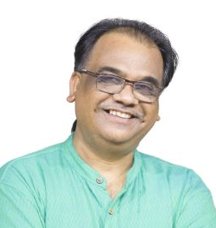
Ratikant Mohapatra, as Director of Srjan and Dean of the Faculty of
Arts, Communication, and Indic Studies at Sri Sri University, stands as
a distinguished figure in Indian classical dance. With a career
spanning over 40 years, his artistry as a dancer, choreographer, and
educator has profoundly shaped Odissi's journey. Under his guidance,
Srjan has earned national and global acclaim, merging neo-classical
innovation with traditional grace. Honoured with the Central and State
Sangeet Natak Akademi Awards and a Guinness World Record for
orchestrating 555 Odissi dancers, his legacy reflects a steadfast
dedication to the evolution and timeless beauty of Odissi.
Post
your comments
Please provide your name and email id along with your comment. All
appropriate comments posted with name and email id in the blog will also
be featured in the site.
|