
|     |
|
| |

REVIEW / REPORTDevotion, Legacy and Parampara- Satish Surie-mail: satishism@yahoo.co.in November 12, 2026 SADHIKAPhotos: Prof K.S. KrishnamurthyOn the evening of 18th September, at the Shoonya Auditorium, Bangalore, the programme brought together two distinct classical traditions in thoughtful juxtaposition. Karishma Ahuja's Odissi exploration of the Kashmiri mystic Lal Ded was followed by Bhavana Kanthi's Bharatanatyam presentation of Andal, creating a dialogue between two women saints separated by time, region and language yet united by an intense, personal devotion. 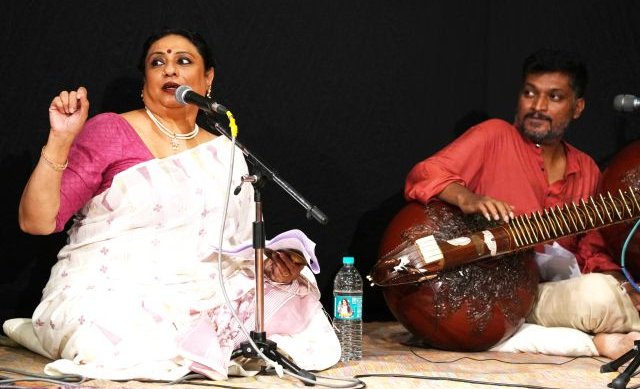 Bornalee Sarkar & Murali Mohan Gowda Ahuja traced Lal Ded's journey through the sculptural lyricism of Odissi, supported by the austere resonance of the Rudra Veena by Murali Mohan Gowda and the measured poetry of Bornalee Sarkar. The performance remained minimalist in costume and staging, allowing the dancer's precise footwork, sustained tribhanga and restrained abhinaya to convey the mystic's renunciation, her rejection of empty ritual, and her final realisation of non-duality. The vakhs found expression not through dramatic excess but through an inward, contemplative intensity that suited the form. 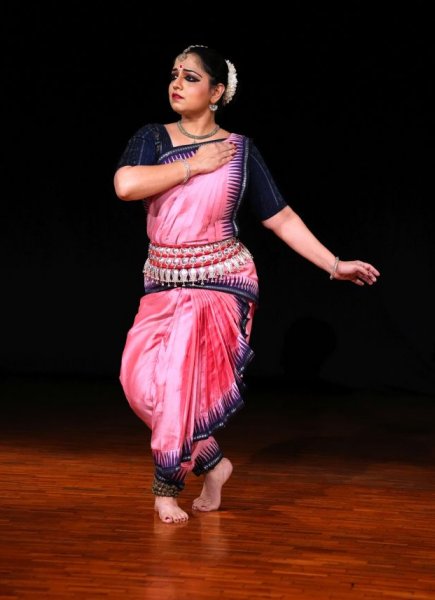 Karishma Ahuja 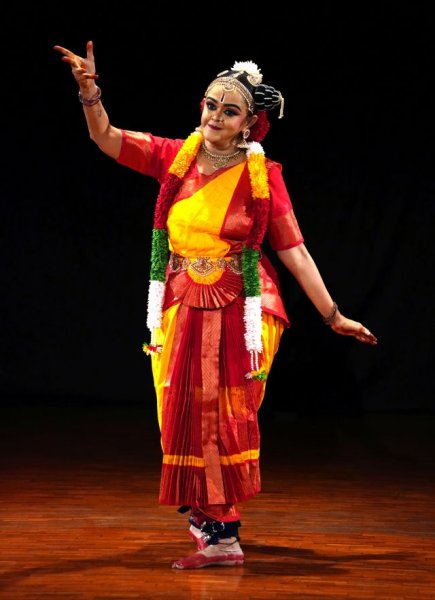 Bhavana Kanthi In contrast, Bhavana Kanthi's Bharatanatyam presentation explored Andal in her entirety through selected pasurams. Her birth, the act of wearing the garland meant for the Lord, and the dream of her marriage to Lord Ranganatha were rendered with emotional intensity tempered by restrained abhinaya. Kanthi drew upon the narrative and expressive richness of the Bharatanatyam idiom to evoke Andal's passionate, almost possessive love for the divine, allowing the emotional arc of the pasurams to unfold with clarity and depth. What proved most compelling was the manner in which the two traditions seemed to speak to one another. The work did not attempt to merge Odissi and Bharatanatyam into a single vocabulary. Instead, each retained its own movement language, while the dancers found points of connection without losing their individual identities. Ahuja's meditative restraint and Kanthi's more expansive emotional range created a complementary conversation across forms - one rooted in the non-dual realisation of Kashmir Shaivism, the other in the intimate, bridal mysticism of the Alvar tradition. The evening thus offered not a fusion but a resonant parallel, allowing audiences to experience two classical vocabularies in fruitful proximity while honouring the distinct spiritual temperaments of Lal Ded and Andal. KALA BHANUPhotos: SrikanthThe third edition of "Kala Bhanu" presented by Bharatanjali/Nrityakalamandiram at the Indian Institute of World Culture on the 25th of September, offered a thoughtful tribute to the living tradition of the Guru-Shishya Parampara. The evening featured two distinct classical streams - Bharatanatyam and Kathak - and opened with a compelling Bharatanatyam recital by Dr Seshadri Iyengar. Celebration of the Vazhuvoor Bani A Bangalore-based dancer, choreographer and teacher, Seshadri Iyengar traces his artistic lineage to the Vazhuvoor bani through his long association with Guru Padmini Ravi. Padmini Ravi herself belonged to this tradition as a disciple of the late K.J. Sarasa, who in turn trained under the legendary Vazhuvoor Ramaiah Pillai. This clear parampara formed the foundation of the evening's first presentation. 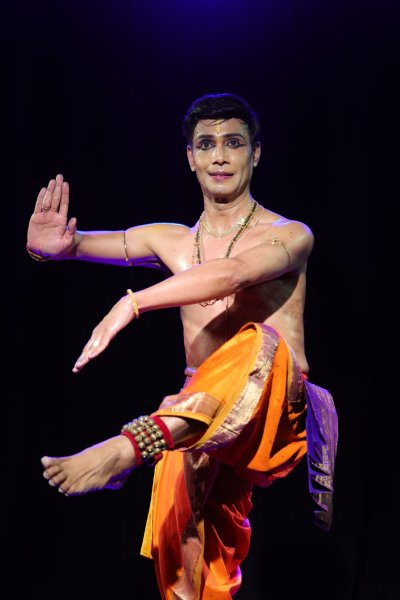 Seshadri Iyengar Seshadri Iyengar began with a Pushpanjali in Charukesi that seamlessly unfolded into a description of the attributes and physical features of Lord Ganapathi, establishing a reverent and auspicious tone. The jatiswaram that followed, set in Rasikapriya, immediately showcased the dancer's strengths: clean angular extensions, precise adavus and controlled nritta that held the audience's attention through its clarity and geometric beauty. The centrepiece of the recital was the varnam "Mohamaginen inda velayil," a classic composition of Dandayudapani Pillai. Here, a lovestruck nayika confides in her sakhi, pouring out her deep yearning for Lord Shiva in his form as Nataraja, the cosmic dancer. Seshadri Iyengar navigated the emotional arc with sincerity and intelligence. In the first half, the traditional blend of bhakti and sringara highlighted the nayika's inner passion and quiet engagement. The mood shifted markedly in the charanam: her longing transformed into bold assertiveness as she fearlessly declared her love, discarding societal hesitation. This progression was portrayed with nuance, reflecting both vulnerability and feminine strength. The vibrant jathis enhanced the interpretive choreography, blending seamlessly with the dancer's movements. The adavus throughout carried clarity and punch. Particular lines received sensitive elaboration - the nayika's anxious question "Will he come?" and her demand to the sakhi, "Mathe innum yochanai enadi," as she is swept by tides of longing under a full moon. The effects of Manmatha's arrows were rendered with dramatic intensity. The nearly forty-minute presentation remained immaculate in rhythm and body technique, demonstrating Iyengar's ability to weave narrative, intricate pure-dance passages and moments of stillness into a coherent whole. He concluded with "Jagadodharana," a piece that offered wide scope for abhinaya. Moving fluidly between the tenderness of vatsalya bhava and the sudden, grand flashes of Krishna's cosmic divinity, Iyengar captured the Karunya rasa with grace, allowing the compassionate, loving emotion to pass from Yashoda to the Supreme One. Seshadri Iyengar's recital stood as a confident affirmation of the Vazhuvoor tradition filtered through his own artistic sensibility - technically assured, emotionally articulate, and rooted in the living guru-shishya continuum that Kala Bhanu seeks to celebrate. Kathak's poetic power: A tribute to Guru Maya Rao The second presentation of the evening featured the immensely talented Kathak exponent Mysore B. Nagaraj, whose performance was as much a celebration of the art form as it was a heartfelt tribute to his late guru, the pioneering Maya Rao. Speaking with warmth and sincerity about his association with the legendary guru, Nagaraj recalled how she had been surprised when he insisted on joining her beginners' class, despite already possessing considerable proficiency in Kathak and holding a diploma in the form. The anecdote offered a glimpse into his humility as a student and the enduring significance of his guru's influence on his artistic journey. His opening Namaskar carried a deeper resonance, becoming an offering of gratitude not merely to the stage and the audience, but also to his guru and the entire parampara that had shaped his artistic sensibility. Nagaraj's recollections celebrated Maya Rao's pioneering vision and her willingness to move beyond the rigid conventions of traditional Kathak. By exploring the possibilities inherent in taal, she developed a repertoire that could engage contemporary rasikas without compromising the classical integrity of the form. Though Kathak is predominantly associated with Hindustani music, Maya Rao also ventured into the Carnatic tradition, expanding its expressive possibilities. Her close interactions with musicians enabled her to translate the distinctive nuances of both musical systems into an articulate and compelling vocabulary of Kathak movement. Accompanied by a fine ensemble comprising Dr Lakshminarayan Jena, Sowmya, Poojashree, Sushmita and Kshama Bharadwaj, Nagaraj and his fellow artistes set a vibrant tone for the second half of the evening with an evocative offering to Mata Kalika. 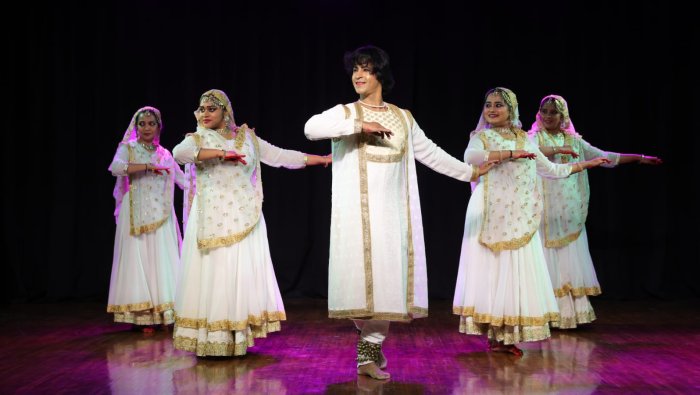 Mysore B. Nagaraj's ensemble "Mata Kalika" reaffirmed the ensemble's command of choreography, precision and expressive detail. Drawing upon the rich mythology and symbolism associated with Kali, the composition explored the apparent paradoxes of the goddess: her fearsome aspect as the destroyer of evil, and her embodiment of the primal feminine energy from which creation itself emerges. Through incisive movements, compelling expressions and carefully conceived choreographic patterns, the dancers brought alive the deity's formidable power and profound spiritual significance. The result was an invocation that balanced intensity with grace, conveying the dual forces of destruction and creation that define the goddess's cosmic presence. The ensemble next presented "Trivat", structured in two distinct segments. The first, Sargam, explored the melodic possibilities of the swaras of Hindustani music, while the second delved into the intricate kaydas of the tabla. Set to music associated with the Dagar brothers, the presentation demonstrated Maya Rao's distinctive approach to translating musical structures into the kinetic vocabulary of Kathak. Melody found expression in fluid, nuanced movements, while rhythmic patterns were articulated through intricate footwork and finely calibrated physical accents. The result was a stimulating interplay between musical architecture and dance, revealing how sound could be transformed into movement without losing its essential character. 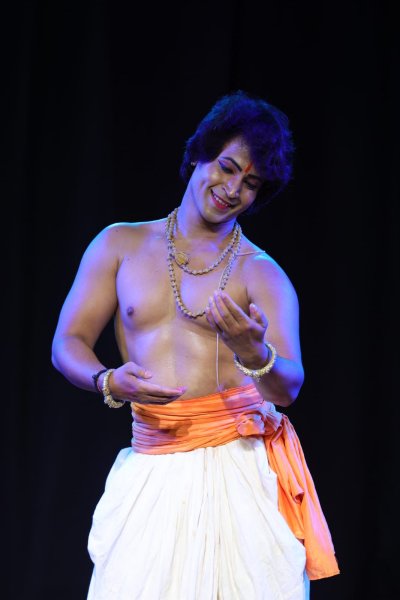 Lakshminarayan Jena A particularly engaging moment in the Kathak segment was Dr Lakshminarayan Jena's solo interpretation of the Purandara Dasa composition 'Aluvudyatako Rangayya'. The devotional lyric unfolds as a tender conversation between a saint and a crying child whom he recognises as Lord Krishna. Jena brought out the affectionate concern underlying the saint's questions: Is the child aching from battling the asuras? Are his legs sore from dancing upon the hood of Kaliya? Is he crying because he slew Poothana, or because he lifted the mighty Govardhana mountain on his little finger? The composition offers the dancer a remarkable opportunity to negotiate the delicate interplay between the familiar world of childhood and the extraordinary mythology of the divine. Its success depends not simply on technical proficiency, but on emotional maturity and the ability to move seamlessly between maternal tenderness, gentle humour and devotional wonder. Jena rose admirably to this challenge. His mukhabhinaya was particularly effective, capturing the pathos of the crying toddler before gradually revealing the irony of the saint's affectionate questioning: the apparently vulnerable child is none other than the supreme protector of the universe. His interpretation lent the narrative both immediacy and devotional depth. 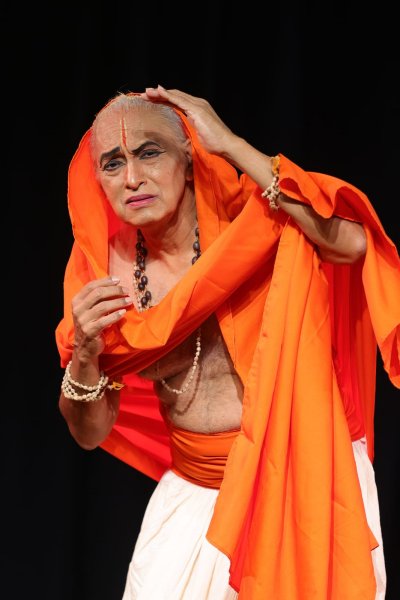 Mysore B. Nagaraj The evening reached another high point when Mysore B. Nagaraj himself took the stage with "Shabari Moksha". Drawing upon the devotional tradition of Kathavachan, the solo presentation was an exemplary exercise in narrative abhinaya and symbolic transformation. In a deft theatrical transition, a simple turn of his saffron cloth transformed the poet into Shabari, the forest-dwelling devotee who had waited patiently for Sri Rama's arrival. With remarkable economy of gesture and fluidity of expression, Nagaraj brought Shabari's devotion to life. Her humble offering of fruits, tasted beforehand to ensure their sweetness, was portrayed with touching simplicity, as was her sense of unworthiness in the presence of the Lord. The presentation was a masterclass in narrative abhinaya, theatrical economy and spiritual intensity. Nagaraj moved effortlessly between characters, allowing shifts in gesture, expression and body language to establish the narrative without recourse to elaborate stage devices. More significantly, he communicated the philosophical essence of the episode with disarming clarity. The ensemble brought the evening to a spirited close with a sprightly Tarana in raga Darbari, displaying its collective virtuosity through crisp footwork, rhythmic interplay and energetic coordination. The concluding salutation to Goddess Durga culminated in a striking tableau, with the dancers holding a powerful final pose that brought the performance to a fitting close. In honouring his guru, Nagaraj offered more than a nostalgic tribute: he reaffirmed the vitality of a creative legacy that continues to enrich Kathak and speak meaningfully to contemporary audiences. BHADRACHALA RAMDAS: A JOURNEY OF DEVOTION, ANGUISH AND DIVINE GRACEPhotos: Madhukar Universal RasikasPresented at Seva Sadan, Bangalore, on September 28, 2026, under the aegis of Aharnishi-2026, Dr Raksha Karthik's thematic solo presentation on Bhadrachala Ramdas offered a spiritually evocative portrayal of the life and tribulations of the celebrated saint-poet and ardent devotee of Lord Rama. Through a carefully chosen sequence of fifteen compositions, she traced Ramdas's journey of unwavering faith, profound devotion, anguish and ultimate redemption, bringing alive a story in which human suffering was constantly measured against the sustaining power of divine grace. The live music ensemble played an integral role in shaping the production, providing both its musical foundation and emotional impetus. Rajeev Rajagopalan's vocals brought depth and fervour to the compositions, while Bharadwaj Dayanidhi, who handled the nattuvangam, also provided the voice inputs and narration, guiding the audience through the unfolding narrative. Jayaram Kikkeri's flute lent a lyrical grace to the presentation, while Gopal Venkataramana's veena added warmth and melodic richness. Their collective contribution anchored the choreography, enhancing its emotional nuances and reinforcing the transitions from devotional bliss to anguish and despair, and finally to the spiritual triumph of Ramdas's release. The narrative unfolded through compositions including Sri Rama Nee Nama, Taaraka Mantramu, Adigo Bhadri, Anta Rama Mayam, Kodanda Rama, Takkuvemi Manaku, Rama Jogi Mandukonare, Etu Pothivo Rama, Ikshvaku Kula Tilaka, Paluke Bangaramayena, Ayyayyo Neevanti, Ramachandrulu Naapai, Nannu Brovamani Cheppave, Rama Naamame Jeevanamu and Yetiruga Nannu. Together, these compositions provided the musical and emotional framework for the presentation, illuminating the different stages of Ramdas's life and the changing shades of his devotion. 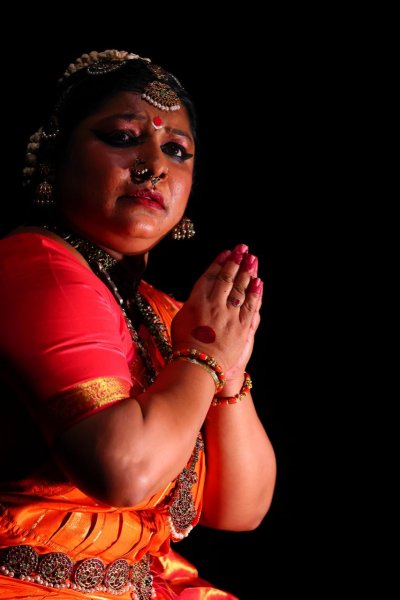 Raksha Karthik Dr Raksha employed the classical vocabulary of Bharatanatyam with sensitivity to the dramatic demands of the narrative. The early portions conveyed the bliss of surrender to Rama, with the compositions celebrating the sanctity of the divine name and the omnipresence of the Lord. Her interpretative approach sought to bring out the intimacy of Ramdas's relationship with his chosen deity, portraying a devotion that was not merely ritualistic but deeply personal and experiential. The expressive possibilities of abhinaya became particularly significant as the narrative moved from spiritual fulfilment to adversity. The turning point came with Ramdas's imprisonment under Tana Shah, following accusations of misappropriating royal funds for the construction and embellishment of Rama's temple at Bhadrachalam. Stripped of his freedom and subjected to suffering, the saint-poet turned repeatedly to his beloved Lord, pouring out his anguish through impassioned appeals. Yet, as one plea followed another without any apparent response, his faith was tested by the cruel uncertainty of his circumstances. Dr Raksha brought out this emotional transition, allowing the devotional fervour of the earlier sequences to give way to the pain, helplessness and yearning of a man who had surrendered his very existence to Rama. The poignancy of the episode lay in the contrast between Ramdas's unshakeable faith and the apparent silence of the deity he worshipped. His appeals acquired an increasingly desperate intensity, culminating in his beseeching Sita to intervene and release him from his torment. This invocation introduced another dimension to the narrative, transforming his personal suffering into a moving testament to the intimacy of the devotee's relationship with the divine. The dramatic resolution arrived when Rama and Lakshmana appeared in disguise before Tana Shah and repaid the amount owed by Ramdas. The ruler received the payment and issued a receipt, traditionally associated with the miraculous intervention of the divine brothers. With the dues settled, Ramdas was released from his chains, and the long ordeal that had tested his devotion came to an end. The episode brought the presentation to a spiritually satisfying conclusion, affirming the central message of the saint's life: that sincere devotion ultimately transcended worldly injustice and suffering. The strength of Dr Raksha's presentation lay in her attempt to integrate music, movement and abhinaya into a coherent biographical narrative. Rather than treating the compositions as isolated devotional offerings, she connected them to the successive emotional and dramatic developments in Ramdas's life. The live ensemble supported this continuity, lending musical cohesion to the varied episodes and heightening the devotional intensity of the performance. The presentation ultimately reaffirmed the enduring appeal of the Bhakti tradition, in which music and dance became vehicles for expressing the deepest human emotions and exploring the mysterious bond between the devotee and the divine. 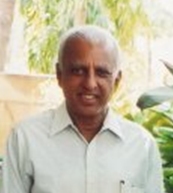 Bangalore based Satish Suri is an avid dance rasika besides being a life member of the Music and Arts Society. |
