|     |
|
| |

REVIEW / REPORTSamarpan 2026- Kate Macdonalde-mail: katetmacd@gmail.com October 24, 2026 On October 3rd, a beautiful day in early fall, parents, students, and supporters of Prashanti School of Dance joyfully gathered for the third edition of Samarpan. Radhika Pillai's desire to preserve and promote the rich heritage of Indian classical arts has created a nurturing space for students to discover and deepen their understanding of the timeless traditions of Bharatanatyam and Carnatic music. Prashanti, meaning "peace and tranquillity", points to the school's vision of art as a spiritual journey. Radhika Pillai began her training in Bharatanatyam at the tender age of three under Guru Rajalakshmi and then pursued her training in traditional Kalamandalam style under dancer duo Kalamandalam Venkit and Preetha Venkit. With years of training under renowned Gurus and numerous performances across Canada and India, she brings deep knowledge and devotion to her art. At present she continues to study Bharatanatyam with the Upadhye School of Dance, and Carnatic music with Pusthakam Ramaa. Samarpan can be translated as "surrender to the Divine". The aptly chosen title for the afternoon's showcase expresses the core mission of Prashanti School of Dance. Samarpan 2026 opened with a melodic invocation of Sri Rama through the Nottuswaram of Muthuswami Deekshitar (raga Sankarabharanam), followed by a well-known Devarnama praising Lord Krishna (raga Kalyani, adi talam), composed by Purandara Dasa. The students then offered two popular bhajans: "Sri Ramachandra kripalu bhajamann" and "Mangala muruti maruta nandana" composed by Goswami Tulasidas. The music recital concluded with a Behag Thillana, written by Veena Seshanna. During this lovely musical offering, I witnessed an unscripted moment on stage that truly warmed my heart. A young student sitting beside Radhika, had become visibly upset, tears streaming down her face. She tapped her teacher's knee and Radhika immediately leaned towards her to listen, placing a comforting arm around the young student's shoulders. This guru's utterly natural maternal instinct took over: she was completely unphased by the fact that this was transpiring on stage in front of an audience. After their tête à tête, Radhika smiled and told the audience that the little one had been experiencing a painful cramp in her leg, but that she was now feeling better and wanted to continue the performance. The guru then encouragingly repositioned the microphone so that it was more directly in front of the student. This incident spoke volumes about the nurturing relationship between Radhika and her students. It is in a nurturing environment like this that a deep dedication to the arts can be fostered. The musical recital set an inspiring and devotional tone for the dance that was to follow. The afternoon's Bharatanatyam showcase began with the pure dance blossoming of Alarippu, followed by two devotional offerings composed by Maharaja Swathi Thirunal and choreographed by Radhika. The first, "Sreesha Padmanabha," recounted the tale of the elephant king Gajendra, who, in his moment of deepest distress, surrendered completely to the Lord, thereby receiving his divine grace. The second, "Pahi Parvata," celebrated Goddess Parvati as a compassionate protector of her devotees while also portraying her fierce form as the destroyer of demons. Through expressive abhinaya and dance, the students of Prashanti brought these moving stories of devotion, surrender, and divine compassion, to life. 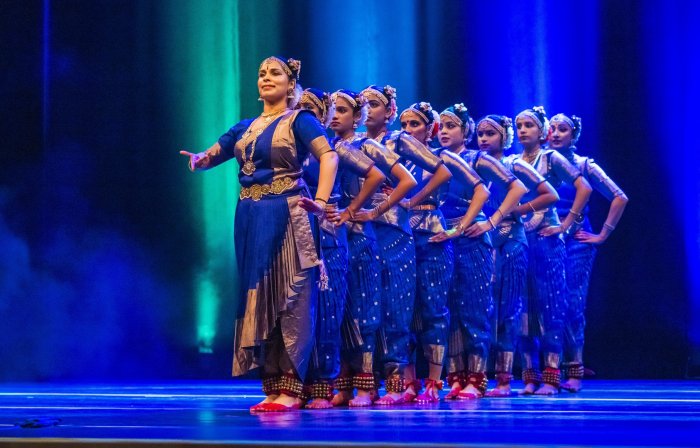 Devarnama, a devotional composition from the Kannada tradition celebrating the playful and enchanting form of Sri Krishna, followed (choreography by Radhika). Through rhythmic syllables, graceful movement, and expressive storytelling, the devotees delighted in Krishna's divine dance, with glimpses of the powerful Kaliya Mardana woven into the swarams. Radhika joined her students on stage in this choreography. Her next choreographic creation, on the powerful devotional hymn Ganesha Pancharatnam, was composed by Adi Shankaracharya in the 8th century (Ragamalika, Tishra Ekam). This beautiful offering was followed by "Sri Rama nee namamu", a celebration of the divine name. The expressive dancers communicated the joy, peace, and strength found in surrender and devotion, uplifting the spirits of those of us who were blessed to be in the audience. At this point in the afternoon's proceedings, we were introduced to two of the Ottawa arts community's cherished supporters and Samarpan's guests of honour, Dr. Jayadev Raju, and Jeffrey Richstone. Dr. Raju is a scientist and Bharatanatyam artiste whose practice has deepened through his association with Dr. Narthaki Nataraj, an award-winning exponent, trans-artist, LGBTQ activist, and childhood friend. As queer artistes, their mentorship is committed to using dance to promote inclusivity, equity, diversity, accessibility, and self-realization. In Canada, Jayadev serves as a "dwarapalaka" or "gatekeeper", preserving the authenticity of Indian classical dance while helping diaspora communities sustain their heritage. Jeffrey Richstone retired from his law practice in 2021 with over 40 years of service. He helped lay the foundation for recognizing discrimination based on sexual orientation under Canadian law, and is widely respected for his work to promote inclusivity, equity, and diversity in Canada. He is currently a member of three arts and culture organizations and serves on the boards of the Poetry Society of Canada and Arts Ottawa. 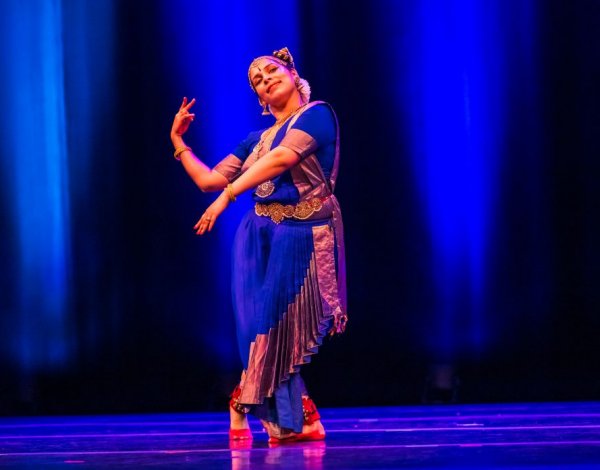 Radhika Pillai Next, we were treated to a moving solo performance by Radhika Pillai: Abhayambikayaḥ is a kriti by Muthuswami Dikshitar, dedicated to Goddess Abhayambika of Mayiladuthurai. Radhika herself provided us with an introduction to the piece: "My solo brings to life two beautiful stories of the Goddess's divine grace. The first sanchari brings alive the beautiful legend of Abhirami Bhattar, a devoted worshipper of Goddess Abhirami. When King Serfoji asks him to name the day's tithi. Bhattar, completely immersed in the Goddess, declares it to be Pournami, though it is in fact Amavasya. When his life is placed in danger, he surrenders completely to the Goddess and sings the Abhirami Andhadhi. In answer to his unwavering devotion, the Goddess throws her radiant earring into the sky, where it shines like the full moon. The second sanchari portrays Yogamaya: when Vasudeva brings the infant daughter of Yashoda to Mathura, Kamsa attempts to kill her. She slips from his grasp, rises into the sky, and reveals her magnificent divine form, proclaiming that the one destined to destroy him has already been born." Radhika's performance was extraordinary. I recall a collective gasp from the audience when the diabolical Kamsa grabbed Yashoda's baby with the intent to kill her. Radhika's powerful abhinaya brought the story to life before our eyes. 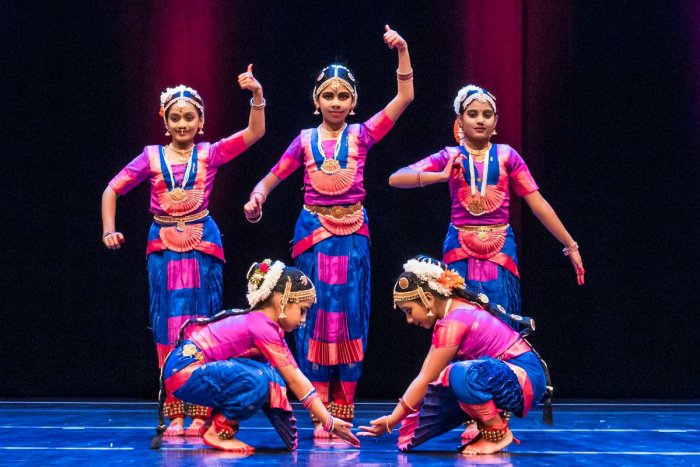 After this exceptional performance, the talented students of Prashanti took the stage to perform Devi Stuti, a celebration of art and devotion dedicated to Goddess Varalakshmi. Composed by Muthuswami Dikshitar, and set in ragam Gaurimanohari and roopaka talam, this piece describes the beauty, linguistic prowess and divine qualities of the Goddess. The next composition, a lively thillana showcasing intricate footwork, graceful movements, and expressive patterns, was beautifully interpreted by the students. Dedicated to Kanchi Varadaraajar, the thillana was set to the captivating ragam Hamir Kalyani. The final offering in Samarpan 2026 was the Mangalam. It indeed provided an auspicious ending to an inspiring afternoon of music and dance!  Kate Macdonald is a retired English teacher who discovered the joy of Bharatanatyam at age 62. Her Guru, Supratim Talukder of Kolkata, believes that learning can happen at any age. She loves to investigate and report on Indian classical dance in Ottawa, Ontario, Canada, where this exquisite art is flourishing. |
