
|     |
|
| |

REVIEW / REPORTCentenary celebrations of Guru Kelucharan Mohapatra- Tapati Chowdhuriee-mail: tapatichow@yahoo.co.in Photos: Sudhakar Creations October 12, 2026 Although the revival and codification of Odissi were achieved through the collective efforts of several gurus and scholars, Guru Kelucharan Mohapatra remains the single most influential figure in the systematization of its technique. He was the form's stylistic architect - the master who gave Odissi a modern identity, created a repertoire suited to the modern proscenium stage, and carried the dance beyond Odisha to audiences across India and abroad. He left behind generations of trained dancers and an extraordinary lineage of disciples, among them Sanjukta Panigrahi, Kumkum Mohanty, Madhavi Mudgal, Sujata Mohapatra, and many others. Through them, Odissi has continued to expand while remaining rooted in the vocabulary and aesthetic principles he shaped. As part of the celebrations marking his birth centenary, Dona Ganguly paid homage to her guru by curating and presenting Guru Smaran, a two-day festival held on the grounds of the historic Indian Museum in Kolkata on 13 and 14 September 2026. The festival was organized through Diksha Manjari, the classical dance institution founded by Dona Ganguly. It brought together several of Guru Kelucharan Mohapatra's prominent disciples, senior exponents of Odissi, and artistes representing other Indian classical traditions. In this gathering, dancers celebrated not only the memory of a legendary guru but also the living continuity of his artistic legacy. Some performers, particularly the Odissi dancers, took pride in presenting the repertoire they had learnt from him. Others offered their own creative works, while artistes from different genres paid homage to the guru of the century through their presentations. The grounds of the Indian Museum were aesthetically decorated for the occasion. Bedecked and bejewelled dancers moving through the historic space added to its beauty. On the first-floor veranda, Dona Ganguly's disciples stood resplendent in their costumes, their tahias crowning their judas as they assumed dance poses. The scene created an atmosphere of rare magnificence - one that only those fortunate enough to be present could fully savour. The programme featured around thirty performers, including Dona Ganguly herself, her daughter Sana Ganguly, and several senior dancers who were direct disciples or close associates of Guru Kelucharan Mohapatra. Approximately one hundred children also participated in the wider centenary tribute, giving the festival a strong pedagogical dimension. The event was not confined to Odissi. Presentations in Kathak, Manipuri, and Bharatanatyam widened the frame of the tribute and positioned Mohapatra's centenary within the larger landscape of Indian classical dance. 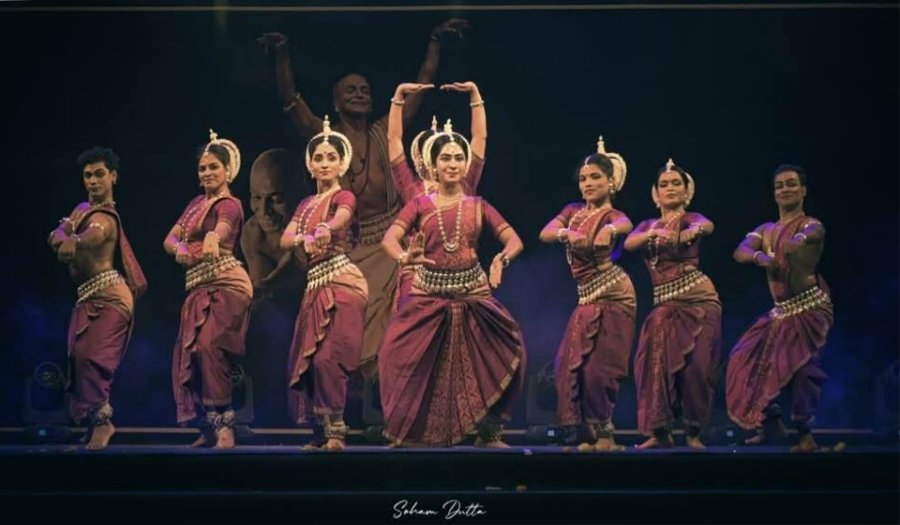 Srjan repertory 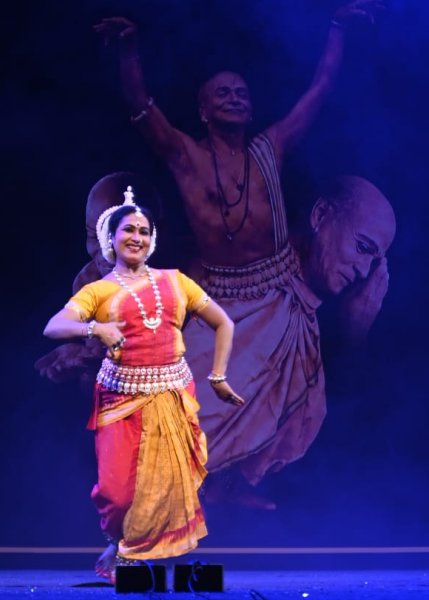 Sujata Mohapatra 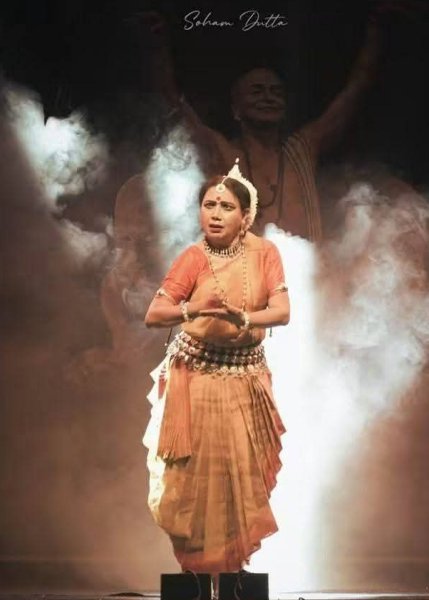 Aruna Mohanty 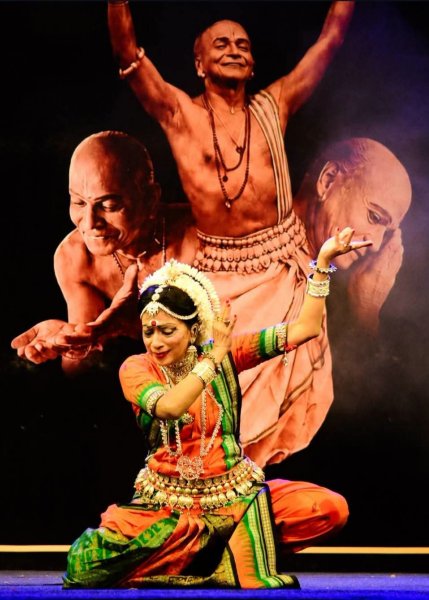 Dipanwita Roy From the house of Srjan, Guru Ratikant Mohapatra presented Mati, his choreographic production performed by members of his repertory. Sujata Mohapatra, one of Mohapatra's most celebrated disciples, performed Kede Chanda, a composition by her guru. Aruna Mohanty, the senior-most disciple of Guru Gangadhar Pradhan, presented her work Amba and Dipanwita Roy performed an ashtapadi abhinaya from Jayadeva's Gita Govinda. Tanushree Shankar's presence added to the festival's multi-form and pan-Indian character. A special highlight of the festival was the reunion of Dona Ganguly and her daughter Sana Ganguly on stage after nine years. Together, they performed Sita Haran, a dance-drama based on an episode from the Ramayana. Sana portrayed Sita, while Dona performed the role of Jatayu. The piece is one of Guru Kelucharan Mohapatra's most celebrated dance compositions. In its climactic encounter with Ravana, the aged bird Jatayu receives salvation at the hands of Rama. The performance thus became both a devotional and mythological presentation and an intimate act of familial artistic transmission. Through the mother-daughter reunion, the festival connected personal memory with the continuity of dance tradition. 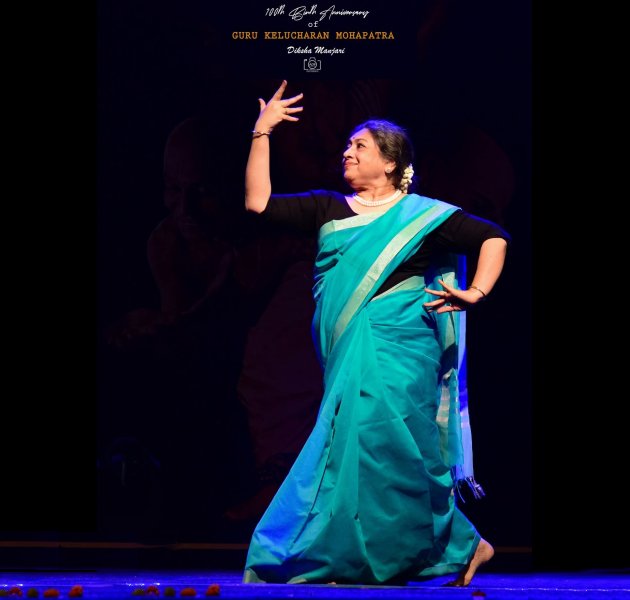 Tanushree Shankar 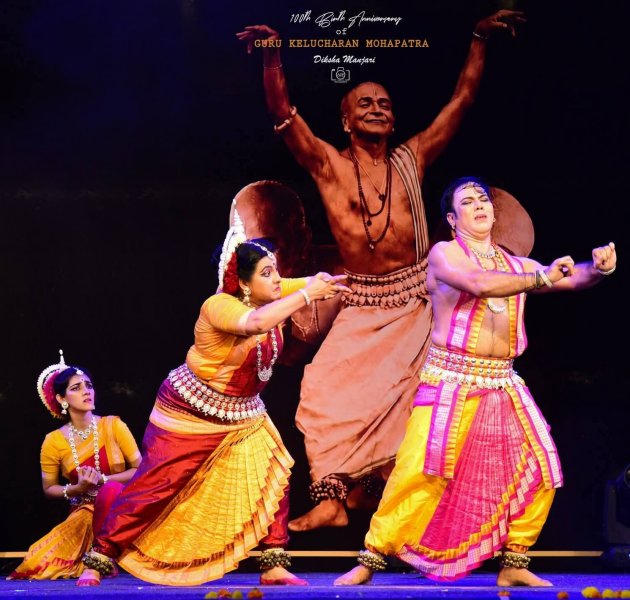 Sita Haran The performance of Om Kaar Swarupa by the students of Diksha Manjari - a meditation on spiritual liberation through surrender to the guru - was a thoughtful selection. The work presented the guru as the ultimate guide, leading the disciple beyond the illusions of the material world and the limitations of the ego. This was followed by Mangalacharan, the opening item of the program. Since the occasion coincided with Ganesh Chaturthi, the presentation began with a Ganesh Vandana dedicated to Lord Ganesha. Guru Brahma, the guru vandana, expressed unconditional reverence, gratitude, and surrender to the spiritual and intellectual teacher. Together, these opening works established the devotional and commemorative spirit of the festival. 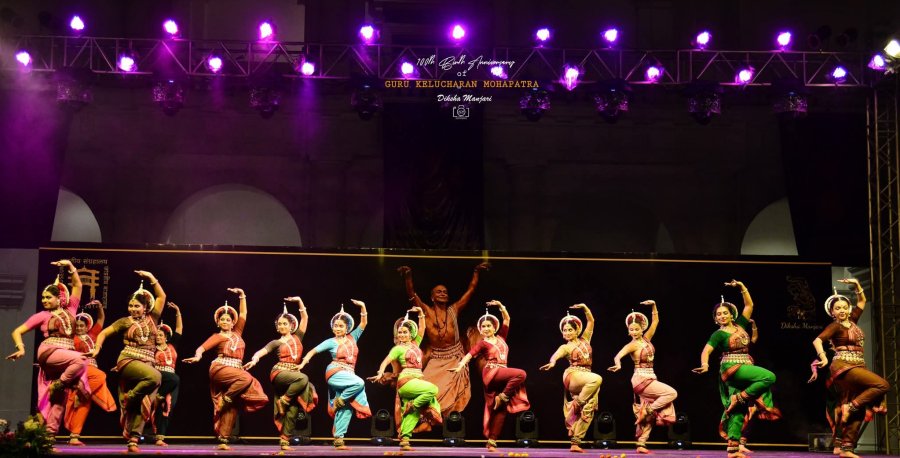 Diksha Manjari ensemble The festival included technical and expressive works choreographed by or inspired by Guru Kelucharan Mohapatra. Among them was Batu, a technically demanding Odissi item created by the guru and performed by students of Diksha Manjari. The presentation of Batu across the museum galleries transformed a familiar repertoire item into a spatially expansive experience. The architectural spaces became part of the choreography, allowing the dancers and the movement vocabulary of Odissi to engage directly with the museum environment. 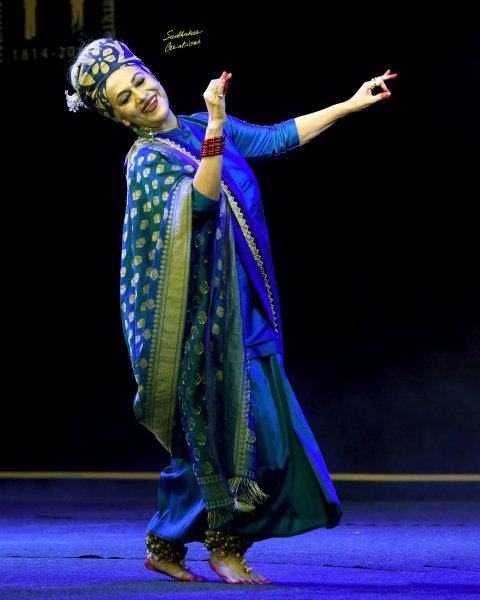 Alokananda Roy 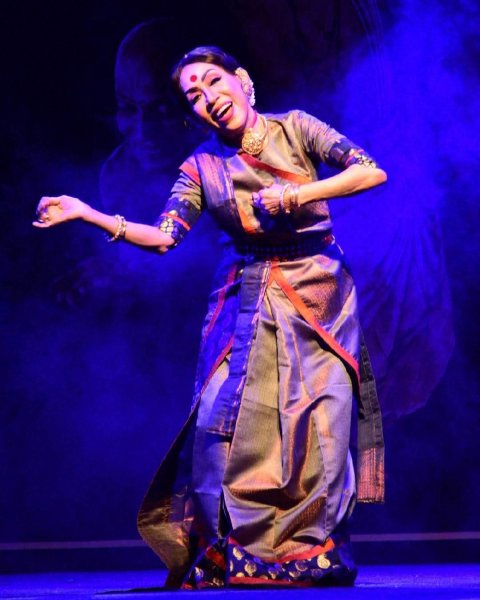 Purnima Ghosh 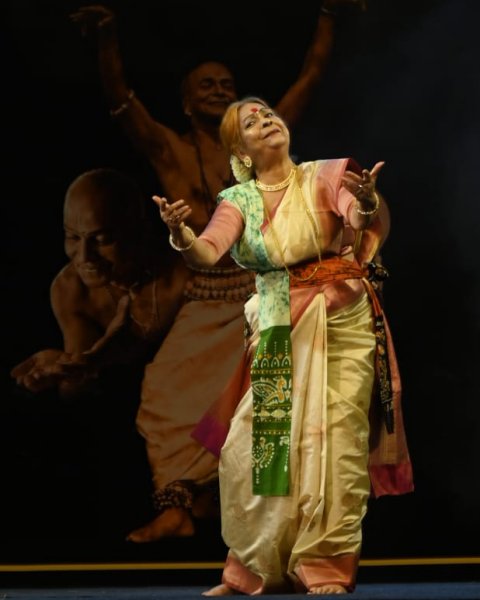 Poly Guha Other works presented during the program included Alokananda Roy's lyrical presentation based on a Tagore song. Octogenarian Purnima Ghosh's Majhe majhe tabo dekha pai, a dance based on Rabindra Sangeet, was graceful. The veteran exponent of Rabindra Nritya, Poly Guha, danced to the tune of Sarthak Janam Amar. Odissi performer and guru Rajib Bhattacharya and his students presented Kalyan Pallavi, choreographed by Guru Kelucharan Mohapatra and composed by Bhubaneswar Misra. 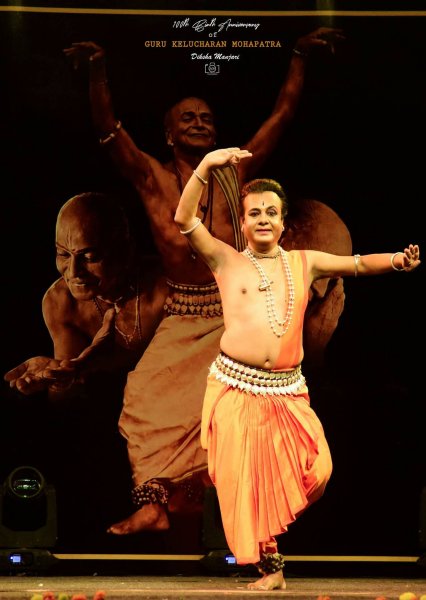 Rajib Bhattacharya 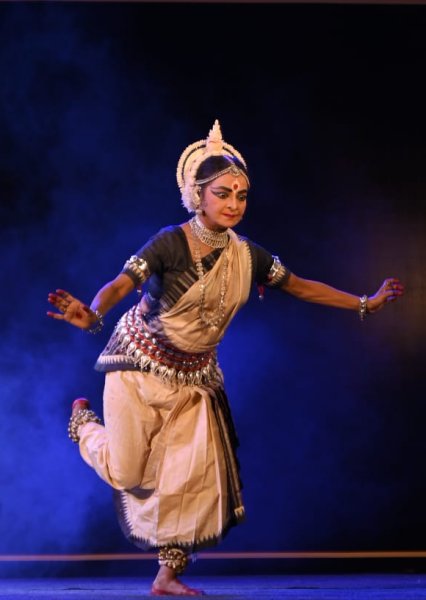 Rina Jana 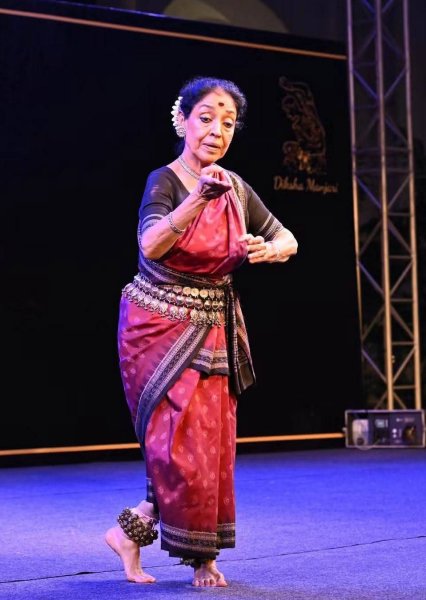 Madhavi Mudgal Rina Jana excelled in her performance of Brojoku choro. Nandini Ghosal presented Simhendra Pallavi, Pronoty Mohanty performed Tolagi Gopadando, and Aloka Kanungo offered Patha chhari de. Madhavi Mudgal performed the champu Kharap tu helu re, an iconic eighteenth-century Odia song by Kavisurya Baladeva Ratha. The work explores a sakhi teasing Radha about her love for Krishna, thereby deepening the expressive possibilities of Odissi through the interplay of gesture, emotion, and poetic suggestion. 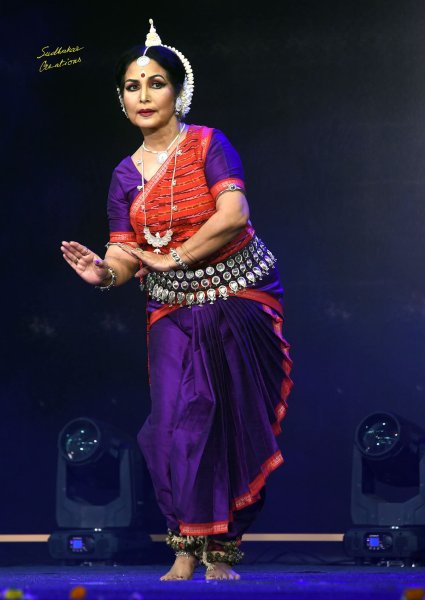 Pronoty Mohanty 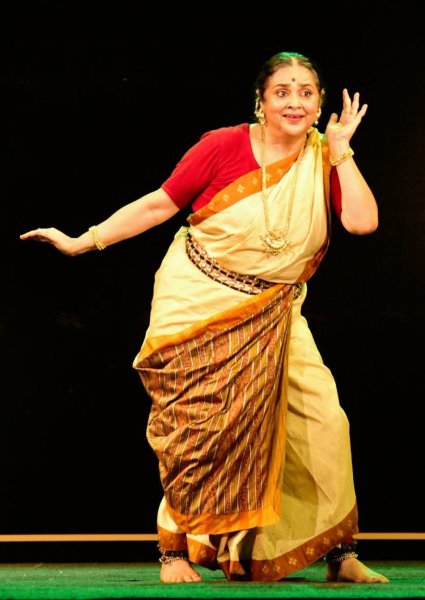 Sharmila Biswas 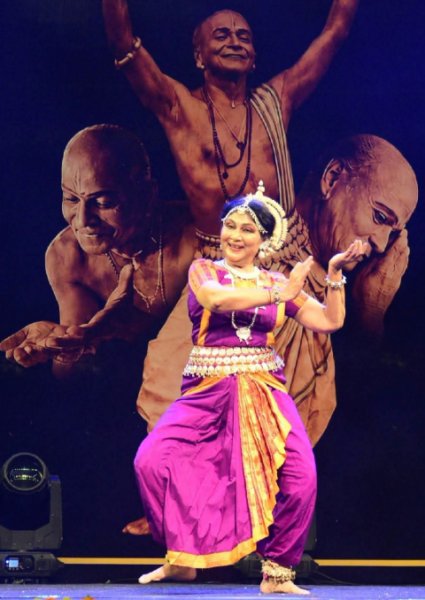 Aloka Kanungo Sharmila Biswas presented Vilasini, a meditation on a woman's romance with life. The work drew upon the memories of the last two Mahari devadasis, Shashimani and Parashmani. Through Vilasini, the historical roots of Odissi entered directly into the centenary frame. The work recalled the world of the Maharis, whose artistic legacy forms part of the cultural memory of Odisha and of the tradition that Mohapatra helped revive. The participation of dancers from Kathak, Manipuri, and Bharatanatyam expanded the festival beyond a single dance form. It demonstrated how the memory of a great guru could inspire a larger artistic community. The tribute also included a Bharatanatyam presentation by Sujata Ramalingam, rooted in the Guru–Shishya Parampara. It began with Nandi Chol, choreographed by Adyar K. Lakshman, whose work brought forth the rhythmic vitality, aesthetic beauty, and expressive possibilities of Bharatanatyam jati and sollukattu. This was followed by Bhramari Alarippu, a composition of Rukmini Devi Arundale, performed by the dancer with members of her repertory. The ever imaginative Manipuri exponent Bimbavati Devi's Purna Purushottam regaled the audience. 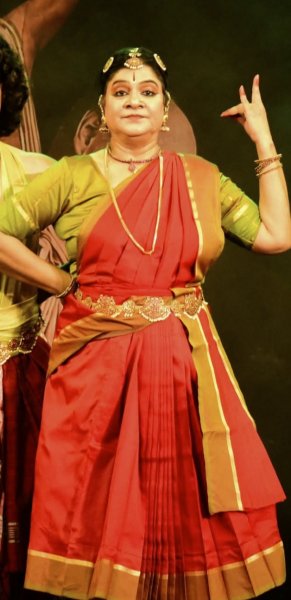 Sujata Ramalingam It was a collective act of remembrance and renewal. The senior disciples embodied the artistic inheritance of Guru Kelucharan Mohapatra; the students of Diksha Manjari and Srjan represented its continuing future; and the presence of artistes from other classical traditions affirmed the wider cultural significance of his contribution. Through Batu, Kalyan Pallavi, Sita Haran, Vilasini, Gita Govinda abhinaya, champu, and the offerings of other dance traditions, the festival presented the many dimensions of Mohapatra's legacy: technique and emotion, structure and freedom, devotion and creativity, memory and transmission. Guru Kelucharan Mohapatra gave Odissi a modern identity. His disciples carried it forward, his repertoire gave it a place on the contemporary stage, and his artistic vision enabled it to reach audiences far beyond Odisha. In his centenary year, the dancers who gathered at the Indian Museum did not merely recall the past. They made his legacy visible, vibrant, and alive.  Tapati Chowdhurie trained under Guru Gopinath in Madras and was briefly with International Centre for Kathakali in New Delhi. Presently, she is a freelance writer on the performing arts. She is the author of 'Guru Gopinath: The Making of a Legend.' Tapati received the Sangeet Natak Akademi Award for 2024 for Art Critique in Performing Arts. |
