
|     |
|
| |

REVIEW / REPORTJava to Javali- Shobha Subramaniane-mail: shobhasubra@gmail.com October 9, 2026 We are going through a time when classical dance schools are mushrooming and the obsession for perfect Bharatanatyam (araimandi, complex jathis, long varnams, Arangetrams churned out like a factory) is driving the Bay Area to become another Chennai. While keeping Indian traditions alive on foreign soil is great, occasionally audiences welcome a change. It was therefore, refreshing to see a novel contemporary approach in "Java to Javali" on Sunday September 20, 2026, in Cupertino, California which the dancers (Aishwarya Venkat and Janani Narayanan) called a "playful conversation through timeless Javalis". I asked them - why Java? They replied - since we live with spouses who are in IT, most conversations are engineered to their language eg. using Java code construct. And Java symbolizes coffee meetups where many creative discussions brew! The script began with coding and coffee. Javalis as we know them, are Carnatic compositions that are light, witty and quick paced and find a place amidst heavier and more serious compositions in full length music cutcheris and Natyam performances. This show which went from Java to Javali was an hour long and featured selected lines from 11 Javalis/Padams touching upon topics relating to the human heart. 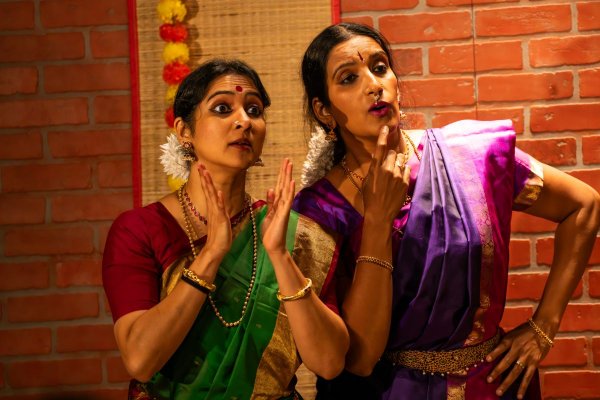 Seldom do we see a Bharatanatyam show that is hilarious and entertaining on the surface, yet deep down addresses serious societal norms and concerns about relationships from a woman's perspective. Java to Javali was cleverly scripted by Aishwarya Venkat as a standup comedy-meets-Bharatanatyam showcase with narrations (in Tanglish) to connect traditional Javali (and padam) excerpts in episodic segments woven into a contemporary context. Janani Narayanan was in charge of the technical details and logistical arrangements for the performance. Re-envisioning age-old popular songs such as Ni matale, Era ra ra and Aduvum solluvaal and putting them in today's world requires a lot of thinking and creativity. These young ladies really put their heart and soul into doing it. If Dharmapuri Subbarayar, Kshetrayya, Ghanam Krishna Aiyyar and Pattanam Subramanya Aiyer's timeless compositions were placed in the 21st century (specifically in the Bay area of California), what would the Nayikas look like? They would know how to set space and boundaries while managing IT jobs and relationships, maintain work-life balance while speeding across the highway I-680, be unapologetically outspoken, and honestly express their innermost emotions. The protagonists Rangamani and Thangamani took the audience on a rollercoaster journey where we all laughed, cried, applauded and sighed at their stories. All of the above happened in an "almost therapy session" where the two friends came together to pour out their woes and wows in life, and to balance each other's emotional quotients. The nayikas spoke in English laced with a Tamil accent (and a sprinkling of Tamil words) which placed them comfortably in South Indian households. They started with Pattnam Subramanya Iyer's Samayamide ra ra in Behag with original interpretation and circled back to end the recital with the same lines this time signifying that this is the right time - whether for practicing your Natyam, or living your life the way you want to. In Ethanai sonnalum (Subbaraya Iyer, Saveri) a mother is frustrated with her teenage daughter's tantrums and in Meragadu (Pattabhi Ramaiah, Atana), she urges her son to take a break from nonstop video gaming. In Era ra ra (Khamas), a woman's heart yearns for a deeper connection over a coffee date with her husband who is constantly busy at work. While portraying Kshetrayya's Choodare (Sahana ragam), the original idea of abhinaya exponent Kalanidhi Narayanan portraying a group of women gossiping over another successful lady was depicted - in this case an Insta influencer was the subject of discussion. 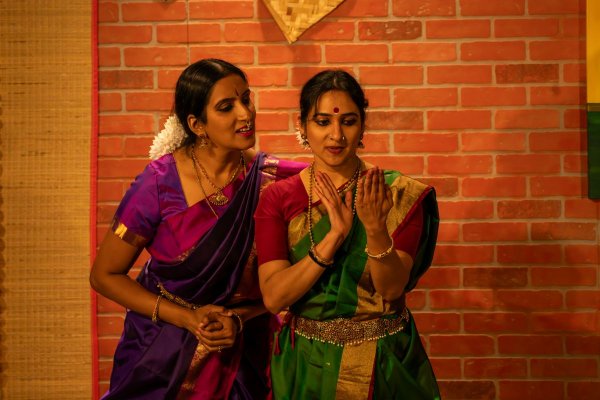 The narrative while incorporating social media, Instagram reels, and Facetime flirting was able to retain the timeless tradition that Javalis were originally meant to showcase. Smart choices were made (upon the advice of Asha Ramesh who sang for the first iteration of Java to Javali) and they only took phrases (rather than entire songs) to keep it relevant and meaningful for today's theme. The young orchestra, Nandita Sriram on vocals and Apoorva Anand on violin added the right amount of support, melody and reflective pauses, without taking away from the essence of the tradition and theme. Held in an intimate studio setting best suited for subtle abhinaya, the dancers who spoke the dialogs in between the dances, did not need a microphone and were heard clearly across the space. After filling the first show, a second one was opened up later the same day, which also sold out quickly. From the applause and the Q&A, it was evident that the audience (made up of dance Gurus, knowledgeable rasikas, ardent dance fans, students and senior citizens) loved and appreciated the 60-minute performance. A long debated topic among Bharatanatyam artists is the Male Gaze. Predominantly written by men in the 17th - 19th centuries, a nayika's feelings and emotions (whether real or imagined) remain a man's point of view. From a spiritual standpoint, this dilemma is easily solved since Ishwara is male and Jeevas are all female. However, from a social perspective, when Bharatanatyam dancers like Janani and Aishwarya choose and re-contextualize the pieces into a current place and time, it opens up a whole new thought-provoking discussion among dancers. It no longer remains 17th century male voice. Now it becomes 21st century female voice which is bold and progressive!  Shobha Subramanian belongs to the illustrious musical Jayamangala family and is a senior award-winning dancer-singer with three decades of teaching and performing experience in Maryland who currently lives in California. |
