|     |
|
| |

REVIEW / REPORTAdyabadhi - Guṇanidhi: Portraying the life of a trailblazer- Dr. Jintu Sarmae-mail: drjintusarma@gmail.com Photos: Arup Jyoti Kalita September 27, 2026 Sattrayana, an organization dedicated to promoting the rich heritage of Sattriya dance, was established by two dynamic young artistes, Khirud Borah and Tina Medhi. Both are disciples of Ustad Bismillah Khan Yuva Puraskar awardees Dipjyoti Das and Dipankar Arandhara, and hold the prestigious recognition of Gunin in Sattriya dance from the Sangeet Sattra Board. Academically accomplished, Khirud earned his M.A. in Performing Arts from Dibrugarh University, while Tina completed hers at Bharati Vidyapeeth University, Pune. Furthermore, both artistes are graded 'B-High' performers with Prasar Bharati, Doordarshan Kendra. On September 20th, under the banner of Sattrayana, the duo organized a special event titled Adyabadhi - Guṇanidhi Raseswaror Kothare to celebrate and portray the illustrious life of legendary maestro Guru Raseswar Saikia Barbayan at Sri Sri Madhavdev International Auditorium, Srimanta Sankardev Kalakshetra, Guwahati. The inaugural ceremony was graced by an array of distinguished personalities. The auditorium was filled to capacity with venerable Sattriya gurus, scholars, and veteran artistes from across the state. 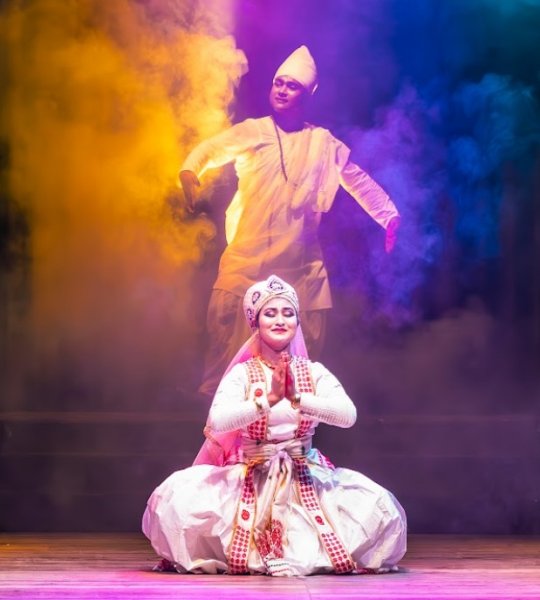 Khirud Borah and Tina Medhi The evening started with a Sattriya based on a Ghoṣa. Drawn from the immortal verses of the revered text 'Namghoṣa', penned by the medieval saint-reformer Sri Sri Madhavadeva, comes this devotional dance composition. It is a humble endeavor to translate the nectarous essence of 'Namghoṣa', the profound glory of Krishna Bhakti, and the deep, sacred echoes of spiritual surrender into the expressive idiom of Sattriya dance. Through intricate movement, gesture, and abhinaya, this presentation brings alive the spirit of complete refuge at the lotus feet of the Divine and the eternal glory of chanting the Lord's name. This item was supported in concept and choreography by Deepjyoti Deepankar, music direction and vocals by Dr. Goutam Saikia, accompanied by: khol: Debajit Dutta, violin: Dipendra Sarma, flute: Nabajit Saikia, doba: Gyanen, vocals: Dr. Goutam Saikia, taal: Deepjyoti Deepankar. Following this offering, the artistes presented the traditional 'Hazowoliya Suddha Chali Nach', a timeless Sattriya dance steeped in graceful lasya, rhythmic purity, and classical elegance. Notably, this pure form originated from the Hajo region of Assam. This was a splendid performance by Tina and Khirud. The composition titled Govinda Govardhana-dhari performed by Tina and Khirud was rooted in the timeless magnum opus 'Kirtan Ghoṣa', crafted by the supreme saint-polymath Srimanta Sankaradeva. This composition explores the divine legend and spiritual significance behind Lord Krishna's sacred epithet, 'Govinda' - the celestial protector. Through rhythmic footwork, evocative mime, and devotional fervor, the performance dramatizes the cosmic tale of lifting the Govardhan Mountain and portrays the profound shades of unconditional surrender. The item was backed by concept and choreography of Deepjyoti Deepankar, music direction by Bhaskar Jyoti Ojha, music arrangement by Bishnu Sarma, accompanied by: khol and cymbal: Bhaskar Jyoti Ojha, vocals: Bhupen Nath, violin: Dipendra Sarma, flute: Nabajit Saikia, sitar: Munna. The third item was a pure dance of Hajowalia Chali Nach, beautifully portrayed by the students of Manikanchan Kala Manjari - Hemlata Kakati, Harshita Baruah, Aayana Mahanta, Kanishka Chetri and Hiya Basumatary. 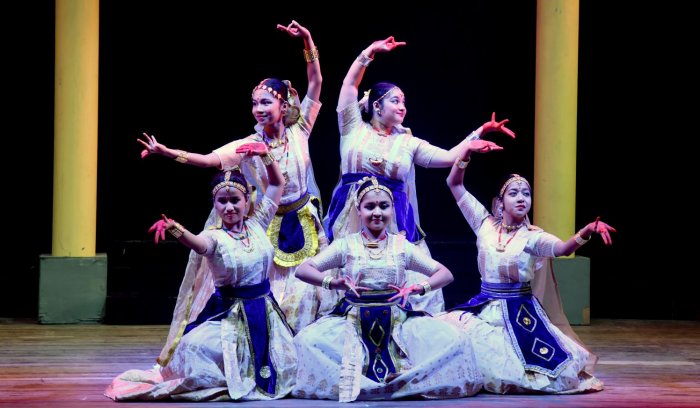 'Hajowalia Chali Nach' by Manikanchan Kala Manjari The centerpiece of the evening was a dance-drama portraying the visionary life of Guru Raseswar Saikia Barbayan. Born on August 8, 1928, in the river island of Majuli, Guru Raseswar Saikia entered the celibate monastic fold of the venerated Uttar Kamalabari Sattra at an early age. Under stalwarts like Maniram Dutta Muktiyar Barbayan, he mastered Mati-Akhara, Khol, Borgeet, and Ankiya Nat, eventually receiving the monastic title of Barbayan for his technical mastery. Recognizing that an art form confined purely within monastery walls risk stagnation, Guru Saikia took the bold step to bring Sattriya to the public proscenium. In an era of strict orthodoxy, his mission to teach female dancers met with intense social criticism, financial hardship, and resistance from traditionalists. Relocating to Guwahati in 1966 without institutional backing, he persevered, adapting feminine roles (Gopi Nach, Chali) for female performers while preserving the art form's sacred core. In 1968, alongside cultural doyens like Dr. Maheswar Neog, he co-founded Sangeet Sattra in Guwahati, developing standardized curricula and academic syllabi for Sattriya. He brought Sattriya to national and international stages, paving the way for its broader classical recognition. Honored with the Sangeet Natak Akademi Award in 1980, he passed away on October 14, 2000 - just weeks before Sattriya received official recognition by the Sangeet Natak Akademi in November 2000. That milestone stood directly upon the bedrock he had spent a lifetime carving. Today, through his disciples and his enduring institution, he is remembered as the reformer whose courage and devotion brought Sattriya from the temple altar to the world stage. 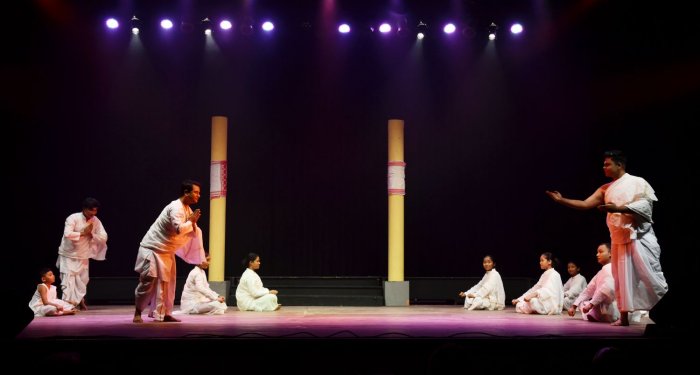 Dance drama 'Adyabadhi - Guṇanidhi Raseswaror Kothare' Anchored by the commanding stage presence and expressive artistry of Tina Medhi and Khirud Borah, this monumental dance-drama unfolds as a triumph of collaborative performing arts. Under the shared conceptual vision and dynamic choreography of Medhi and Borah, the production seamlessly weaves rhythm, narrative, and movement into a rich theatrical tapestry. The production's emotional and dramatic depth is guided by an evocative script and authoritative musical direction from Naren Chandra Baruah. The auditory landscape is masterfully composed and arranged by Nabajit Saikia. Soaring vocal performances led by Prashanta Rajkhowa, alongside supporting vocals from Nysa Sarma, Lakhya Jyoti Boruah, and Krishna Kanta Das, elevate the central drama. This vocal foundation is propelled by an intricate percussion ensemble featuring Biswajit Bordoloi, Arunabh Jyoti Malakar, and Manjit Saikia on khol, with Bordoloi additionally providing driving rhythm on taal, mridanga, and nagara. Melody weaves through the work with poetic elegance via Saikia's flute and Dwipendra Sarma's soulful violin. Dramatic coherence is fortified through compelling spoken narration by Jhunakankan Bhuyan (who also served as anchor) and clear English commentary by Tanaya Patra. The visual atmosphere was brilliantly sculpted by Tapan Kumar Baruah's light design, which accentuated every subtle contour of movement, complemented by the striking, character-defining costume design by KB Aharya and vibrant makeup execution by Kamal Krishna Thakuria. Breathing life into the ensemble choreography is a remarkably synchronized corps of dancers - including Tirtha Kumar Nath, Kaustav Jyoti Kalita, Manash Protim Borah, Jatindra Kakoti, Soumit Das, Himakhi Borah, Priyanka Chutia, Smriti Rekha Borah, Lipi Chutia, Rimpi Borah, Lija Dutta, Tulip Boruah, Dharitri Nath, Brishtisha Boruah, Pallabi Hazarika, Manannya Mayurika, Tanmoyuri Chutia, Brishmita Deka, Krishtilina Chutia, Kakoli Das, Kavyashree Handique, Denish Hazarika, Riya Raj Nandini, and Pragyan Jyoti Nath. The visual legacy of this grand production was captured through the lens of photographers and videographers Arup Jyoti Kalita and Sasanka Dip Gogoi, preserving a remarkable achievement in contemporary dance theater. 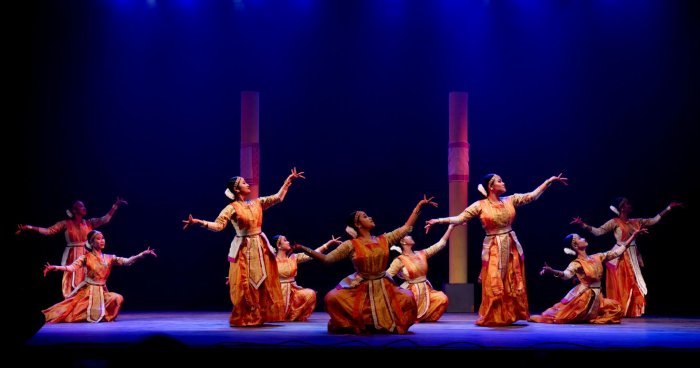 Adyabadhi - Guṇanidhi Raseswaror Kothare stands not only as a brilliant artistic success but as a profound tribute to a pioneer whose courage transformed Sattriya from a cloistered monastic ritual into a celebrated global art form. Through Sattrayana's meticulous production, Khirud Borah and Tina Medhi demonstrated that the living tradition of Sattriya remains vibrant, dynamic, and deeply reverence filled in the hands of its newest generation of torchbearers. 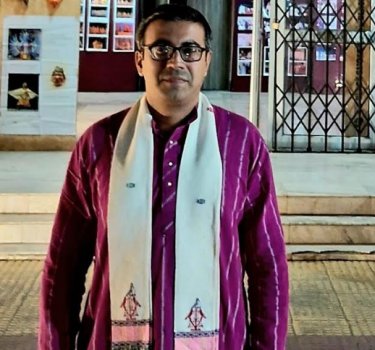 Dr. Jintu Sarma is an Asst. Prof. at Guwahati College and a dance critic. |
