
|     |
|
| |

REVIEW / REPORT11th edition of Mulam- Satish Surie-mail: satishism@yahoo.co.in Photos: Simha's Photos August 24, 2026 The 11th edition of 'Mulam' curated by Vyjayanthi Kashi at the Basava Bhavan on the 2nd of August, emphasised the Guru Shishya Parampara and featured four thematic presentations by seasoned artistes. 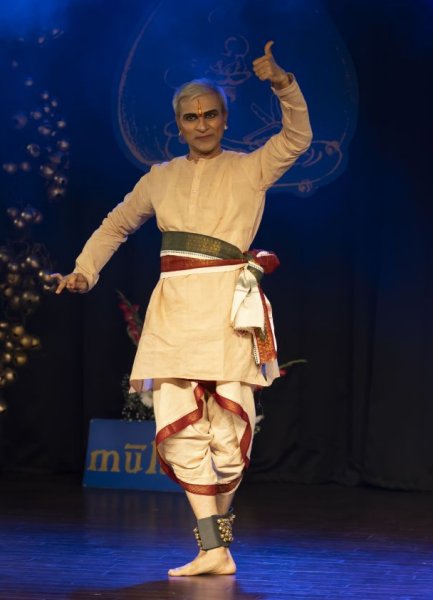 Pasumarti Seshu Babu Kuchipudi Guru Pasumarti Seshu Babu opened the evening with an invocation of the traditional "Amba Paraku" in Mohana ragam, sung by him with classic authority. He followed this with an exposition that eulogised Lord Rama in all his glory, verve and vitality defining the vigorous Kuchipudi idiom. The second thematic presentation, 'Antaranveshanam - The Search Within' was by Roja Kannan and her disciples. The artistes, Vaishnavi Srinivasan, Swetha Sankaran, and L. Bhuvaneswari, opened the proceedings with a lively Alarippu in Khandam, seamlessly interspersed with verses from Ramalinga Adigalar's Thiruvarutpa, "Arul Jyothi Deivam," praising Lord Nataraja, set to raga Saranga. 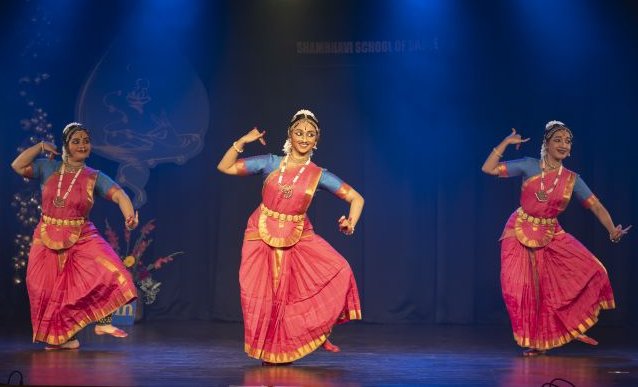 Vaishnavi Srinivasan, Swetha Sankaran and L. Bhuvaneswari This was followed by a solo by Roja Kannan of the classical Varnam in Bhairavi by Ponniah Pillai, "Mohamana En Meedhil." Rooted in the nuanced idiom of sringara bhakti, the varnam unfolded the inner landscape of the nayika, her yearning for communion with the divine beloved, envisioned here as Tyagesha of Tiruvarur, interlacing tender reproach, aching viraha, and eventual surrender. From the opening pallavi, "Mohamana en meedhil nee inda velaiyil modi seyyalamo en saami," Roja Kannan established an intimate emotional register. The nayika's voice emerged as one of gentle complaint suffused with devotion, questioning the beloved's delay even as she stood prepared for union. Her abhinaya was marked by restraint and clarity, glances carrying a delicate interplay of accusation and longing, facial transitions moving seamlessly between separation and anticipation. She avoided overt dramatisation, allowing the emotional content to unfold with quiet, inward intensity. Her nritta was defined by clean lines, precise geometry, and measured control. The varnam's intricate jatis and teermanams in Rupaka tala demanded rhythmic accuracy, which she met with assured clarity. Her footwork was crisp and well articulated, sustaining steady kinetic energy without compromising aesthetic refinement. Hasta usage was equally articulate, particularly in passages depicting the Lord's procession or the playful torment of Manmatha's arrows. 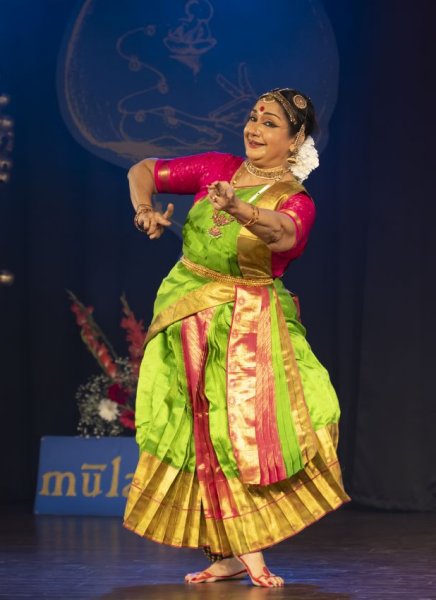 Roja Kannan A notable strength lay in her calibrated negotiation between nritta and nritya. The muktayi swara sahityam and subsequent charanams, especially lines such as "Maran kanaigal toovuran... ini en seiguven?" were rendered with deepening emotional resonance. She evoked the nayika's restlessness through understated yet telling detail: the suggestion of a breeze, the call of the cuckoo, the elongation of time itself, poignantly captured in the line "oru nimisham yugamaaghude." These moments were not merely illustrative but experiential, drawing the audience into the temporal and emotional stretch of longing. Her interpretative approach remained anchored in simplicity and aesthetic restraint. The sanchari bhavas unfolded organically, never appearing superimposed or excessive. In delineating both the allure of the divine and the devotee's yearning for union, "anubhogam seyya va," she balanced humility with assured stage presence, embodying the inwardness of the bhakti idiom. The musical accompaniment, presented on a recorded track, provided a supportive and well-textured aural frame. The orchestral layering, though pre-recorded, retained cohesion and sensitivity, allowing the dancer sufficient space to inhabit both the lyrical and rhythmic dimensions of the varnam. The presentation concluded with a Thillana that explored the joy of realisation of truth, weaving in lines from the Periya Puranam extolling the Lord of Dance. 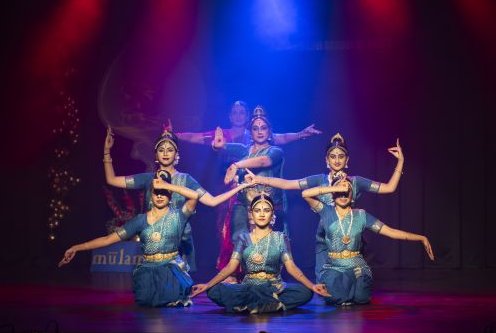 Shambhavi ensemble The third thematic presentation, 'Satyam Shivam Sundaram' by the Shambhavi School of Dance, opened with a group ensemble featuring Hima Vaishnavi, Aditya Jayram, Sharvya Sharavana, Ananya, Kushala, and Prateeksha Kashi. The piece began with a Basavana Vachana, an ode to Lord Shiva, interspersed with rhythmic syllables that set the tone for what followed. The solo presentation by Vyjayanthi Kashi explored the story of Madhura, a divine damsel and ardent devotee of Lord Shiva, who decides to visit the Lord at Kailash. On seeing him, she becomes infatuated, her devotion gradually turning into sringara. Parvati, noticing this, curses Madhura to become a frog; after prolonged penance, she finally attains redemption, transformed into Mandodari, who goes on to marry Ravana. This narrative sabdam, with its playful echoism, rhythmic complexity, and dramatic transformation, offers a rare blend of humour, beauty, and mythological depth, and when performed with clarity and conviction, becomes a highlight of any recital. 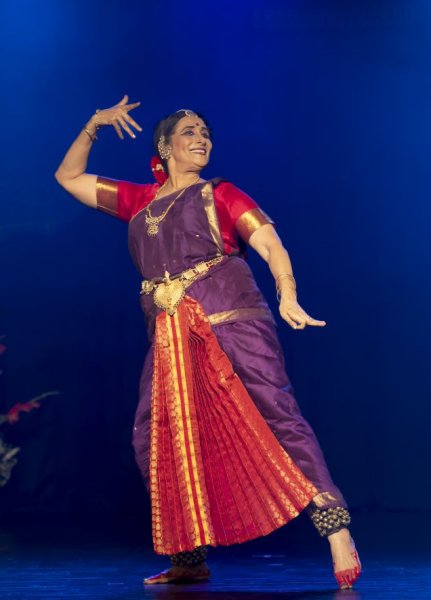 Vyjayanthi Kashi Vyjayanthi Kashi's footwork remained crisp and buoyant, never heavy, while her torso and arms suggested the alert, amphibious quality of the creature. The jatis were clean and well articulated, the teermanams landing with satisfying finality. As the narrative unfolded, the transformation from frog to the radiant princess Mandodari was achieved with convincing theatricality. The gradual unfolding of the body, the softening of the movements, and the flowering of the abhinaya created a clear visual and emotional arc. The dancer captured both the wonder of the metamorphosis and the innate dignity of the newly revealed beauty who would later become Ravana's queen. Mandodari's grace, her soft gait, and her captivating presence were rendered with refined sringara and restrained elegance, never tipping into excess. Particularly noteworthy was the interplay between nritta and nritya. The pure dance sequences retained the characteristic Kuchipudi bounce and geometric clarity, while the expressive portions allowed the face and hastas to carry the story forward. The moment of Ravana's arrival and the subsequent courtship was suggested with economy and taste, the dancer shifting fluidly between roles through subtle changes in stance, gaze, and energy. The musical accompaniment supported the choreography admirably. The expressive passages, with their rapid syllabic patterns, were delivered with clarity, while the melodic sections allowed the abhinaya to breathe. The mridangam and cymbals provided a lively rhythmic foundation without overpowering the subtler moments of expression. The piece retained its traditional flavour while feeling fresh and alive, reminding the audience why this seemingly light-hearted sabdam continues to hold a special place in the Kuchipudi canon: beneath its playful surface lies a story of transformation, beauty, and destiny. The Shambhavi ensemble brought their presentation to a close with a vibrant rendering of "Adi Deva Shiv Shankar," a composition by Prabha Atre, its buoyant energy and collective precision offering a fitting culmination to this segment of the evening. 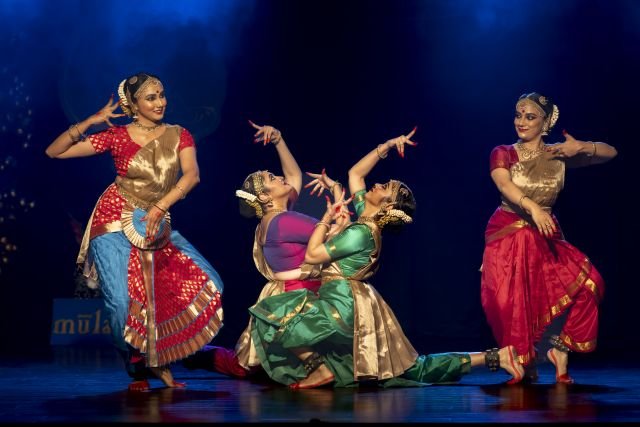 Preethi, Neethi, Nisha and Gauri The fourth and final thematic presentation, 'Prem Bhakthi Mukthi' was by Guru Poornima Ashok and her ensemble of dancers, namely Preethi, Neethi, Nisha, and Gauri. The proceedings opened with a Guru Vandana, honouring Brahma as the Adi Guru. The presentation, titled Brahmaarpanam, outlined the birth of the fifth Veda, the Natya Veda. Punctuated with rhythmic syllables, Brahmaarpanam unfolded as a vibrant exposition by the ensemble, marked by collective synergy and delightful coordination. The solo presentation that followed, framed around the theme of Bhakti, saw Poornima Ashok choose a garland of Meera bhajans, including "Hari awan ki awaaz aaj suni main," "Pag ghunghroo bandh meera naache re," "Mere tho Giridhar Gopal," and "Savara Giridhar," to validate and deepen the evening's exploration of devotion. It was an endearing exposition, marked by histrionic eloquence and meaningful expressions characterised by an intrinsic depth of devotion and surrender, touching many high points of evocative expression and finely balanced nritta, each bhajan giving voice to the saint poetess's unwavering surrender to Krishna. 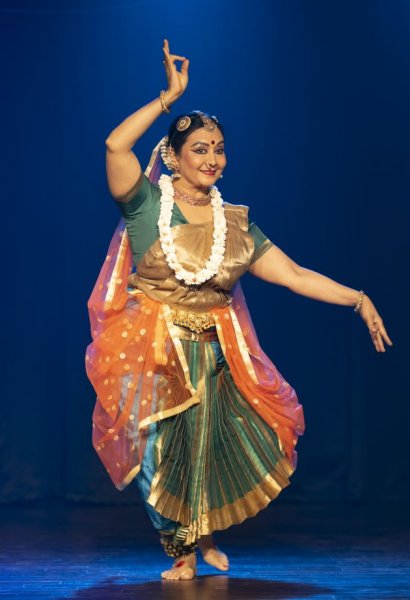 Poornima Ashok The ensemble, together with their Guru Poornima Ashok, brought the presentation and the evening to a close with "Krishnashtakam," Adi Shankaracharya's composition showcasing the myriad facets of Krishna, his childhood pranks and his grace, laced with sancharis describing his exploits. Poornima Ashok acknowledged the contribution of Sridhar Akki Hebbalu in providing the audio recording for this piece. Graceful movements synced with adavus transitioned seamlessly into abhinaya as the lyrics unfolded, testifying to the skill and agility of the dancers, and bringing this edition of Mulam and its meditation on Guru Shishya Parampara to a resonant close.  Bangalore based Satish Suri is an avid dance rasika besides being a life member of the Music and Arts Society. |
