
|     |
|
| |

REVIEW / REPORTMulam 2026: Wisdom of the Gurus, Path of the disciple- Ashwini Naike-mail: ashwini.naik.gad@gmail.com August 22, 2026 Mulam, an online series, was conceived and curated by Guru Vyjayanthi Kashi under the banner of Shambhavi School of Dance. The 11th edition of the festival was dedicated to understanding the impact, the Guru-Shishya Parampara system of learning has had on some of the eminent dancers of these times. Every year, the seminars would be conducted as part of the main event of Mulam. But then recognizing the impact of digital media, Vyjayanthi Kashi utilized the hybrid/webinar format to allow talks, seminars, and wisdom from legendary Gurus and senior performers to reach every corner of the world by presenting them as a series of interviews on social media platforms. The sessions highlighted the depth of Indian classical arts, the inviolable bond between master and disciple, and the eternal values passed through generations. Across the interviews, the intention to bring forth to the younger generation the value system and deep, life-altering learnings that the Guru-Shishya Parampara brought about was quite visible. Vyjayanthi Kashi's questions explored not just the interviewees' personal art journeys, but also their relationships with their Gurus and the values and lessons they received through their artistic training. The conversations also focused on the Gurus' teaching methods, artistic contributions, and the interviewees' reflections on Guru-Shishya Parampara, lineage, discipline, humility, and the meaning of Mulam and its roots. While this report provides a high-level overview of the discussions, watching the video recordings is highly recommended to truly imbibe the essence of what these eminent artistes communicated. Session 1: Rathna Papa (Rathna Kumar) - The roots that make the art grow Kuchipudi exponent & pioneer The series featured an insightful exchange between Guru Vyjayanthi Kashi and "Rathna Papa" (Guru Rathna Kumar), the legendary Kuchipudi exponent who first took Kuchipudi to the United States and continues to propagate the art form globally. 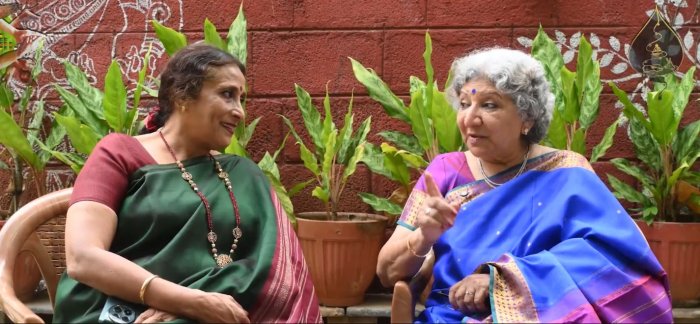 Vyjayanthi Kashi & Rathna Kumar For Rathna Papa, Guru-Shishya Parampara is much more than a method of learning. It is a continuity of tradition, a sacred responsibility in which what is received from one's Guru is carried forward to the next generation. Her own journey reflects this deep sense of continuity, as she continues the Vempati Chinna Satyam Parampara and hopes that her students and their students will keep the tradition alive. One of the most enduring lessons her Guru gave her was the importance of completing every movement. A movement had to begin and end perfectly, with grace in the body. For Rathna Papa, an incomplete movement is like an incomplete sentence: the thought remains unfinished. This lesson became so deeply ingrained in her that she continues to pass the same principle on to her own students. Her relationship with her Guru went far beyond dance training. Even after she moved to the United States, she made it a point to return to India, meet her Guru and remain connected with the artistic world. One of her most treasured memories was the rare occasion when her Guru praised her after a performance. At another, more poignant stage of his life, she continued visiting him regularly when he could no longer walk or speak much. His longing to go to his dance hall, when he heard the dancers practicing downstairs, reminded her of how dance in fact, was his life. For Rathna Papa, this continuing bond is the true essence of Guru-Shishya Parampara. Respect for the Guru, the art, elders, culture and the values received through tradition must be carried forward consistently, especially when living away from one's homeland. She believes these values are eternal and need to be reinforced from one generation to the next. An especially meaningful lesson came from the humanity of her Guru. Though he was strict and uncompromising about the quality of teaching, he was also kind and considerate towards his students. When she was injured shortly before an important performance, he was deeply concerned about her wellbeing. From him, she learnt that a Guru can be both loving and strict. That excellence in teaching need not come at the cost of kindness. Teaching itself became another turning point in Rathna Papa's journey. Initially unsure whether she was qualified to teach, she followed her Guru's advice that knowledge must be shared. She soon discovered that teaching not only gave her the joy of watching a student blossom, but also made her a better dancer because she had to demonstrate every movement correctly. Giving back what she had received became one of the most fulfilling dimensions of her life. Her message to artistes and art lovers is simple: embrace art. She sees classical art as something that has survived across centuries because of its enduring value. For her, roots provide the grounding from which growth becomes possible. Humility is essential because the more one learns, the more one realizes how much remains to be learnt. As she beautifully sees it, without roots there can be no shoots, flowers or fruits. SSoD Mūlam 2026: In Conversation with Guru Rathna Kumar Video credit: Anup Chowdary Session 2: Guru Rajendra Gangani - When dance becomes life Kathak doyen (Jaipur gharana) The festival continued with a discourse featuring Guru Rajendra Gangani, who spoke on the occasion of the birth centenary of his father and Guru, the legendary Guru Kundan Lal Gangani of the Jaipur gharana. Guru Vyjayanthi Kashi guided a fluid conversation that drew out profound life learnings from the legendary guru. 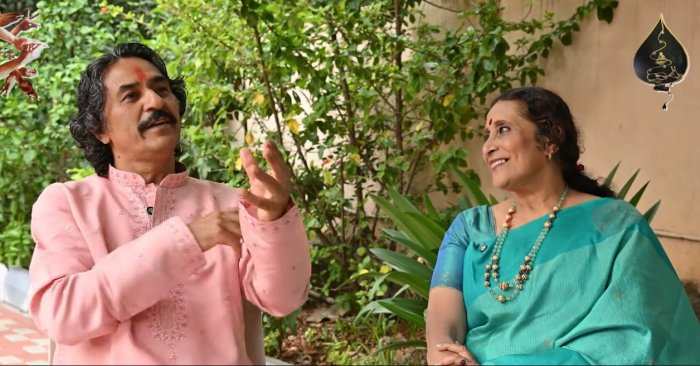 Rajendra Gangani & Vyjayanthi Kashi Guru Rajendra Gangani emphasized that without Mulam (roots) and the Guru-Shishya Parampara, recognizing one's core values or artistic direction is impossible. He addressed a common misconception about the Jaipur gharana, explaining that his father proved the gharana was not merely about speed and technical virtuosity (taiyari), but deeply enriched with emotional expression (Ang Bhava) and literature rooted in Rajasthani culture. The greatest life lesson Pt Rajendra Gangani received from his father was the value of time: one must respect time, otherwise time will not respect you. Punctuality was not merely a practical habit but part of the discipline of dance itself. His father's insistence on reaching on time became a lifelong lesson in responsibility. He reflected on how his father never offered instant praise on stage, using strictness to instill humility and remind his disciples that artistic growth requires constant work. A deeper turning point came when Guru Kundan Lal Gangani passed away. It was then that Pt Rajendra had an awakening that dance could no longer remain merely a profession, but his life. He began to understand that dance was a twenty-four hour commitment, a way of living rather than simply a physical activity. For him, Guru Dakshina in the present age is not something that can simply be purchased and offered. The greatest offering to a Guru is to prepare oneself, make a life decision and dedicate one's life meaningfully to the path shown by the Guru. Dance also taught him patience, tolerance and balance, bringing the physical and mental dimensions of life together. His daily discipline begins with abhyasa or sadhana. He believes that a dancer must practise every day and rise above excuses. At the same time, he cautions parents against putting pressure on young dancers. Art takes time, and children should be allowed to grow naturally, practise consistently and listen to their Guru rather than constantly comparing themselves with others. For Rajendra Gangani, Kathak is not separate from life. It is life itself - something through which he travels, works, laughs and cries. His three words for his Guru capture the foundation of his journey: discipline, abhyasa and niyat - discipline, practice and intent. SSoD Mūlam 2026: In Conversation with Pandit Rajendra Gangani Video credit: Anup Chowdary Session 3: Guru Pasumarthi Seshu Babu - Learning through memory, tradition and manodharma Kuchipudi & Yakshagana scholar Guru Vyjayanthi Kashi also hosted Yakshagana and Kuchipudi exponent Guru Pasumarthi Seshu Babu, son of the legendary Acharya Pasumarthi Venugopala Krishna Sarma, known famously as Guru PVG Krishna Sarma. 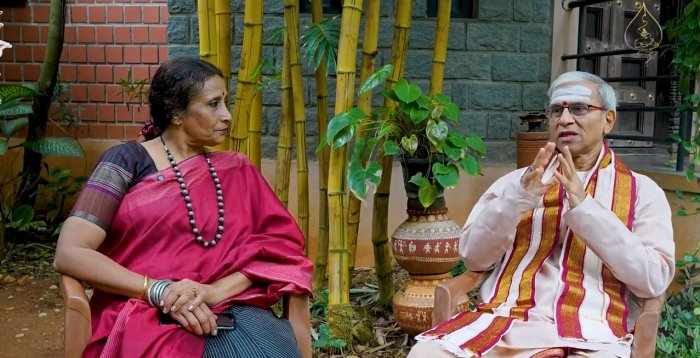 Vyjayanthi Kashi & Pasumarthi Seshu Babu The conversation on Guru P.V.G. Krishna Sarma offers a glimpse into a remarkable tradition of learning in Kuchipudi. Remembered as a Yakshagana legend and a multifaceted artiste, he combined dance, Yakshagana, Carnatic music and Nritya Sangeetam. His son recalls a Guru whose approach to teaching was grand and uncompromising: even young children were taught as though they already possessed profound knowledge. Guru P.V.G. Krishna Sarma's own learning was deeply rooted in direct contact with Gurus. As a young student, he would carry a lantern, notebook and pen to learn from an elderly Guru. Although he wrote down some lessons, he was repeatedly reminded that true learning must ultimately be registered in the mind. This emphasis on memory became an important part of the tradition, knowledge was to live in the body, brain and heart, rather than remain dependent on external records. His teaching was not confined to formal instruction. He brought the authority and imagination of a Sutradhara into the classroom itself. Even when students arrived late, he would address them in theatrical language, turning discipline into an extension of the artistic world. His command of tala and his ability to compose and improvise jatis further demonstrated the depth of his musicianship. Guru Pasumarthi Seshu Babu himself is an expert on music. Hence it was imperative that a significant amount of time was spent on understanding the important distinction between pure Carnatic music and Nritya Sangeetam based on his expertise. Music for dance must do more than maintain pitch and structure; it must support movement, rhythm and bhava. The melodic treatment of a phrase can inspire the dancer's body and facial expression, allowing music and dance to become one integrated artistic experience. Illustrating this deep connection, a historical account was shared where Saint Tyagaraja, deeply moved by a performance of Gopika Geetam ("Madhura Nagarilo"), granted the Kuchipudi Bhagavatulus their request to leave Raga Anandabhairavi primarily as a signature raga for the Kuchipudi tradition. In conclusion, Guru Dr. Pasumarthi Seshu Babu reflected on art as a sacred calling (upasana) where Lord Nataraja resides in every dedicated gesture (mudra). With his entire family immersed in classical music and dance, he reiterated that true artistic mastery demands lifelong humility. Learning never ends. SSoD Mūlam 2026: In Conversation with Guru Dr. Pasumarthi Sheshu Babu Video credit: Anup Chowdary Session 4: Guru Adyar Lakshman - Musicality, inclusivity, and humility Bharatanatyam legend & doyen The fourth session featured an insightful conversation with Guru Roja Kannan, senior disciple of Guru Adyar Lakshman, offering a deep look into the artistic approach and noble character of the legendary maestro. This was hosted by Prateeksha Kashi. 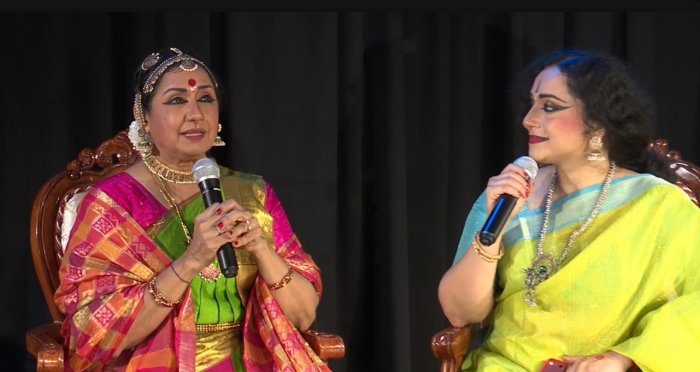 Roja Kannan & Prateeksha Kashi For Guru Adyar Lakshman, dance was inextricably tied to a deep sense of musicality. He urged his students to stay true to the musicality of the Vaggeyakaras (composers) and to move smoothly with the flow of music rather than complicating performances with constant cross-rhythms. A hallmark of his teaching was his broad-mindedness and individualized approach. Rather than enforcing a rigid, uniform template, he recognized the unique strengths of every student and customized movement adaptation to suit their individual body structures and genders. Demonstrating a rare generosity for his generation, he actively encouraged his disciples to learn Abhinaya, Padams, and Javalis from other eminent masters like Kalanidhi Narayanan and allowed them to perform in productions by other senior gurus without fear or insecurity. Beyond the classroom, Guru Adyar Lakshman was a warm, fatherly figure who infused humour into every situation and harboured a lifelong passion for cricket. He advised his students never to chase awards or public acclaim, insisting that recognition should come naturally and that the art must always speak for itself. He emphasized that the artiste is never greater than the art form, maintaining that every dancer remains a lifelong learner. He loved attending performances of all scales, especially arangetrams of young children, believing that every show offered a valuable takeaway and that a few encouraging words could mould a child's future. He exemplified strict punctuality and dedication, always arriving early with his shruti box ready, while constantly reinforcing that true artistic growth comes only through relentless hard work and practice. In the rapid-fire segment, the interviewee distilled her core learnings into a few key principles. She stressed that hard work is the ultimate key to overcoming setbacks and that she actively passes down his exact methods while giving her own students room to grow. She urged modern dancers to embody humility, discipline, and reverence for art above self. For her, the essence of her Guru lives on through unwavering loyalty to the lineage, representing Mulam as the strong root supporting future generations. SSoD Mūlam 2026: In Conversation with Guru Roja Kannan Video credit: Satish A Common Thread - The Guru as the root Though the four conversations emerge from different artistic journeys, a common thread runs through all of them: the Guru is the root from which artistic and personal growth takes place. Guru Rathna Papa speaks of continuity and reverence; Guru Rajendra Gangani speaks of discipline, time and dedication; and the account of Guru Pasumarthi Seshu Babu highlights memory, immersion and the internalization of knowledge; and the reflection of Guru Roja Kannan emphasizes musicality, broad-minded generosity, and profound humility. The interviews also remind us that learning in the classical arts is not limited to technique. It shapes character, discipline, humility, patience, sensitivity and responsibility. The relationship between Guru and Shishya is therefore not merely instructional. It is a relationship through which a way of seeing, living and creating is transmitted. The strongest message emerging from these conversations is that roots do not restrict growth - they make growth possible. To honour the Guru is to honour the knowledge received, to practise it sincerely, to remain humble before the vastness of what is yet to be learnt, and ultimately to pass that knowledge forward. 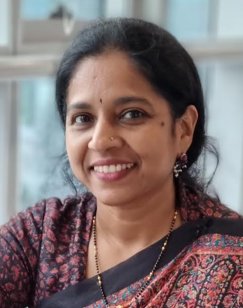 Ashwini Naik is a corporate leader, dance enthusiast and a writer. Vice President in a Multinational, Ashwini tries to intertwine her vocation and avocation by driving cultural initiatives in the corporate world. Having trained in Bharatanatyam and Kuchipudi, Ashwini shares her learnings of leadership qualities from dance with her corporate friends. |
