|     |
|
| |

REVIEW / REPORTSober and elegant recitals- Chandra Anande-mail: chandra6267@yahoo.co.in August 3, 2026 SOBER AND ELEGANT KATHAK RECITAL AT BHAVAN'S Photo credit: Girish Nambiar Bhavan's Cultural Centre, Andheri, Mumbai, in their monthly programs presented Kathak and Odissi at the SPJIMR auditorium, Mumbai, on 27th June 2026. While Sumana Sachidananda and Mansi Somaiya, senior students of Kathak exponent Shila Mehta, representing Lucknow Gharana, presented traditional repertoire of Kathak, Prachi Jariwalla, senior student of Guru Daksha Mashruwalla, presented Odissi. The event was introduced by Ramkrishna Das, the day's curator and coordinator for Bhavan's Cultural Centre, who is also a renowned musician of Hindustani classical music. Sumana and Mansi dedicated the program to their Guru Shila Mehta. They were accompanied by senior tabla artiste Pt. Kalinath Misra and by Vaibhav Mankhad on soulful vocals and harmonium. 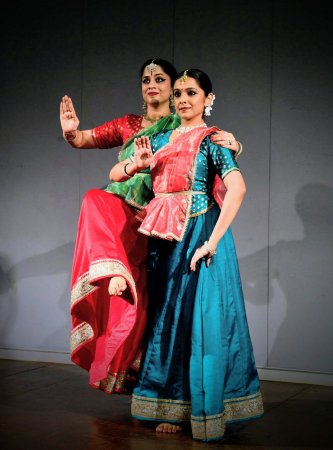 Niratat Shankar A duet presentation of "Niratat Shankar Parvati Sanga", written and composed by Pt. Birju Maharaj, delineated a description of the celestials spending a beautiful evening together. Appearances of Lord Shiva and his consort Parvati, were tastefully described, followed by the various activities done together which included a tiff between them and also reconciling. This innovative choreography was by Shila Mehta showcasing chemistry between Shankar and Parvati, as instruments (been, mridang and jhanjh daf) played in the background accompanying the delightful sounds of damaru and dancing bells. It was an appealing item with elegance and rhythm. Pt.Kalinath Mishra, did a solo piece for the awe-struck audience. He has played for the veteran guru Pt. Vijai Shankar and his senior most student Guru Shila Mehta, and, on this day accompanying her senior disciples was a blessing for them. Technical virtuosity was shown through all three layas of teen taal, testifying varied rhythmic expressions. In vilambit laya they presented Upaj, Thaat, Tripalli (challenging composition in 3 speeds), traditional Uthaan and Paran based Aamad with 21 chakkars. Varied eye movements too, as unit of cadences, were gracefully exhibited. Several bandishes ranging in different complexities taught by veteran tabla guru Pt. Suresh Talwalkar were performed with grace. 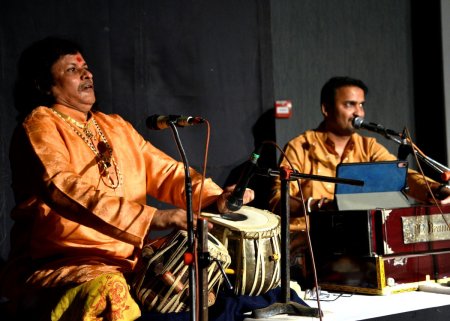 Pt. Kalinath Mishra and Vaibhav Mankad In Madhya laya segment of teen taal, along with pure nritta elements, they included abhinaya too. "Bhaav tihai", a signature piece of Kathak guru Pt. Birju Maharaj was adapted by Shila Mehta. One, depicting "Hori" scene was performed in an endearing manner by Mansi. It was a cute item where tit for tat games were played by Krishna and gopis. Another Bhaav Tihai, soaked in hasya ras, expressing the predicament of the day to day travellers on the train at peak hours in the ladies compartment, was presented in a lively manner by Sumana. The padhant composition and dance choreography was by Guru Shila Mehta. In Bhaav Paksh, they presented "Kanha khelo kahaan aisi hori guiyyan", (Gaara, dipchandi), a hori song composed by Maharaj Bindadin of Lucknow Gharana, performed by the dancers, depicted the Nayika (Radha) as upset that Krishna has already played Holi with some other Gopi before her. Here they have showed two individual nayikas alternatively. In the end they come together and target Krishna by making him dress up as a girl, play holi with him and end up admiring and getting lost in his beauty. This item needs improvisation in all aspects of the presentation. Continuing technical virtuosity, in the Drut Laya of teen taal presented was a chaarani chhand, from chaarani literature, kavitta, a Kathak unit of abhinaya plus nritta, fast paced parans and parmelus. Parmelu means blending of different rhythmic syllables representing nature, tabla and pakhawaj bols. Mansi performed chaarani chhand where she delineated "nayika shringar" in different shades. In kavitta "Ganga avatarna", Sumana delineated how Ganga came down to earth to flow as Ganges. For parmelu presentation, the dancers presented deer, snake and peacock gaits using nature bols. They ended their performance with extremely challenging offbeat tatkaar units taught by Pt. Suresh Talwalkar. All units of Kathak repertoire were represented in the presentation. Tributes was offered to many gurus by representing their techniques. Overall, it was a sober and elegant performance. 'AN EVENING OF CLASSICAL DANCE PERFORMANCES' BY POWAI FINE ARTS Photo credit: Sindhuja Desai Powai Fine Arts (PFA), a non-profit cultural organization based in Powai, Mumbai presented "An evening of classical dance performances" on 11th April 2026 at A. M. Naik School Auditorium, Mumbai. While Vaidehi Kulkarni, presented a solo performance of traditional Kuchipudi items, Dr. Swapnokalpa Dasgupta and troupe presented a thematic Odissi dance drama, 'Harshita - Natyshashtric Ashtanyikas' in Hasya Ras. 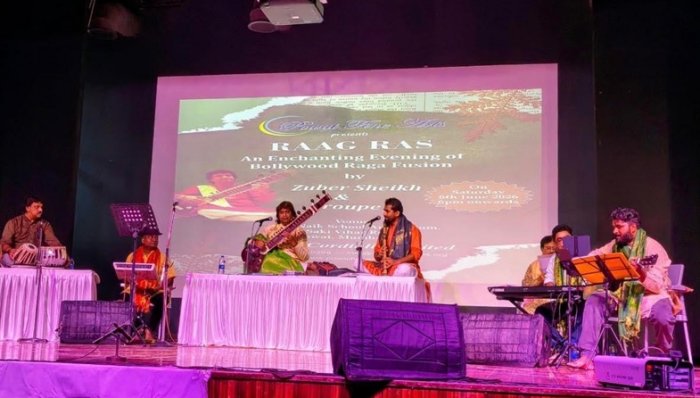 Raag Ras by Zuber Shekh and troupe On 6th June 2026 they presented 'Raag Ras', an enchanting evening of Bollywood Raga Fusion by Zuber Shekh and troupe at the same venue. Kathak was performed by Disha Desai for three semi classical numbers. Her stage presence and expressions were excellent and her deep-rooted grounding in the classical form came through with clarity. 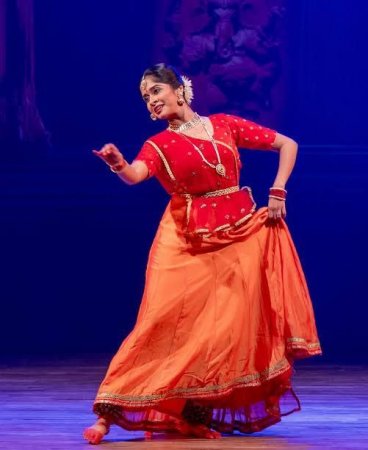 Disha Desai Powai Fine Arts, Mumbai, serves as an important cultural hub in suburban Mumbai, encouraging artistic excellence, community participation, and preservation of India's rich classical tradition. Founded by art enthusiasts and cultural patrons, the organization provides a platform for both renowned and emerging artistes to showcase their talent and provides the art lovers of Powai, and nearby areas, a unique and much required cultural ambience. It also holds workshops, lecture demonstrations, and cultural awareness programs, often held free of charges, in pursuance of making the neighbourhood oriented with the vast Indian cultural heritage that signifies Indian identity. 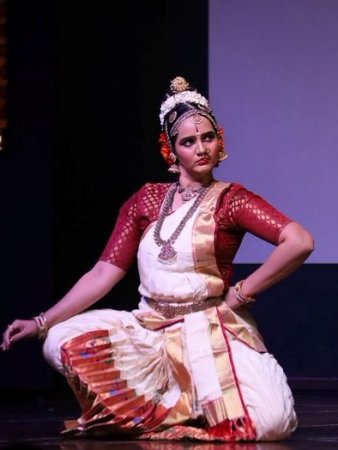 Vaidehi Kulkarni Vaidehi Kulkarni is an accomplished Kuchipudi dancer from Nashik, Maharashtra, trained by Guru Manju Barggavee. She embodied the refined aesthetics of the Vempati Bani. An invocation to the remover of obstacles, the bestower of wisdom, prosperity, and success, Lord Ganesha, was performed with the composition "Sri Ganesha", (Tilang, adi), composed by Papanasam Sivan. The music was rendered by D.S. Srivatsa, with Kannada translation by Sanjay Shantharam. The item was choreographed by Vaidehi. The nritta performed was lively and the bhakti emotion expressed was rampant throughout the item. She presented the Govardhana Giridhara Tarangam (Ragamalika, adi) choreographed Dr. Vempati Chinna Satyam that beautifully portrayed episodes from the childhood exploits of Krishna, blending devotion, playfulness, and divine symbolism, Gopika Vastrapaharanam and Govardhanodharanam. The lyrics also described Krishna as the enchanting cowherd boy, dark as the raincloud, radiating love amidst the Gopis, and ever ready to liberate devotees from the bondage of worldly existence, bestowing eternal bliss. Through the plate dance, the dancer demonstrated both technical virtuosity and devotional expression. The artiste should refrain mouthing words during sanchari, otherwise her artistry was admirable. 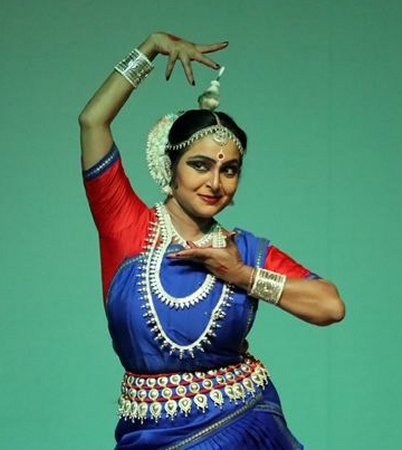 Dr Swapnokalpa Dasgupta Dr Swapnokalpa Dasgupta is an Odissi dancer, teacher and choreographer from Mumbai. She is the Head of Dance department at National Centre for Performing Arts (NCPA), Mumbai for past 14 years and is a visiting faculty of Dr Sandhya Purecha's Bharata College in Mumbai. Swapnakalpa along with her troupe presented. "Harshita - Natyasashtric Ashtanayikas" in Hasya ras. The great Sage Bharata in his magnum opus Natyashastra has classified heroines according to their states in love or "avasthas" popularly known as Ashta Nayikas. The Natyashastra also elaborates on the 8 different emotions lying latent in human beings, the awakening of them is known as Rasa experience. Hasya (laughter) is one of them. Swapnokalpa presented a unique take on Hasya ras - from laughter to rebuke, from smile that hides pain to the one that brings joy using the verses of "Natyashastric Ashta Nayikas". The production further draws parallel with the immortal verses of Gurudev Rabindranath Tagore's Bhanusingher Padavali, an exceptional text inspired from the Vaishnava Padavali written in Brajabuli language by the Nobel laureate over 7 decades of his life. Thus, the topic of ashtanayikas got well expanded by relating to heroines of stories by Gurudev. The theme commenced with an invocation of Kali. Her various adornments were featured correctly suitable to her character, also denoting her shanta swaroopam. The swadhinapathika was the highlight. She showed how an old woman, say grandmother, was definitely a swadhinapathika for now she knows she doesn't have to care anymore about keeping her husband tied to her. She knows he is there for her only. The histrionic abilities of Swapnokalpa come to the fore and her sense of humour was definitely refreshing. Contemporising the 8 heroines was definitely the mark of tradition moving forward with the times. Choreography and concept were by Dr Swapnokalpa Dasgupta and other artistes accompanying her were her students who were following the art form in their middle age. They were Piali Chatterji, Anushree Chatterji, Sushmita Dam, Jayeeta Bose Dutta, Suvashree Dutta Rebello and Padmaja Bhagat. The program was liked by one and all, marking another feather in the cap for Powai Fine arts.  Chandra Anand is a Bharatanatyam artiste and teacher. She has an MA in Bharatanatyam from Tilak Maharashtra Vidyapeeth, and her series on 'Education in spiritual values through Bharatanatyam' is featured in narthaki.com. |
