
|     |
|
| |

REVIEW / REPORTThe haze became a spoil sportText & Photos: Srivatsa Shandilyae-mail: vatsaphoto@gmail.com July 22, 2026 The Academy of Music has earned a respected name for organising major music and dance festivals at Bengaluru's iconic Chowdiah Memorial Hall. Its programs have brought distinguished artistes, senior gurus, musicians and young talent before appreciative audiences over many years. The three-day Nrutya Rangoli 2026, held from July 10 to 12, was conceived as a celebration of India's classical dance traditions, bringing together established artistes from Bengaluru and other parts of the country, with live musical accompaniment forming an important part of the experience. Unfortunately, during this otherwise prestigious national dance festival, the excessive use of a haze machine became a major spoilsport. When the smoke became more visible than the dance Indian classical dance is not merely a display of physical movement. Its soul lies in abhinaya, bhava, rasa, mudras, eye movements, facial expressions, body lines, costumes, group formations and storytelling. Every movement has a meaning. Every glance can communicate an emotion. Every formation contributes to the narrative. However, throughout several performances at the festival, a persistent layer of artificial haze covered the stage. Instead of enhancing the production, it frequently stood between the artistes and the audience. The intricate expressions on the dancers' faces became difficult to observe. The clarity of the costumes and jewellery was reduced. In group presentations, the dancers positioned towards the rear of the stage appeared partially hidden. Carefully designed formations lost their visual strength because the audience could not clearly see the complete stage picture. The haze did not merely soften the background. At several moments, it appeared to overpower the dancers themselves. 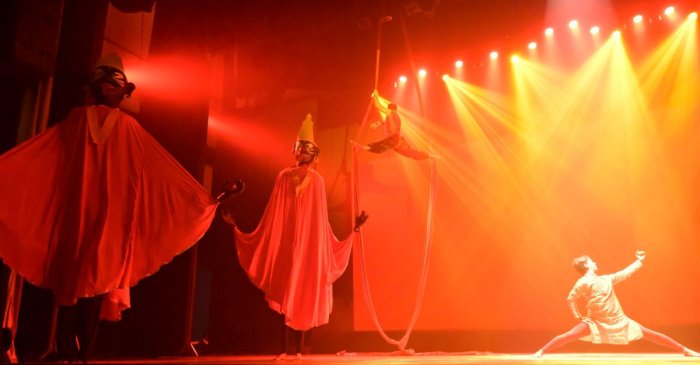 A ₹3,000 effect can undermine an investment of lakhs Organising a three-day national dance festival involves considerable expenditure. Lakhs of rupees may be invested in auditorium rental, artiste remuneration, travel, accommodation, live musicians, stage arrangements, publicity, hospitality, technical production, photography and videography. Senior artistes and their groups spend several weeks or months preparing for a presentation. Costumes are specially designed, music is rehearsed, formations are perfected and every movement is coordinated. Against this enormous artistic and financial investment, a haze machine that may cost approximately ₹3,000 per day can appear to be a minor production expense. Yet, when used without restraint, this relatively inexpensive effect can diminish the visual experience created through an investment of lakhs. The entire festival was certainly not a waste - the artistic excellence of the performers remained unquestionable. However, a significant part of its visual value, audience experience and permanent documentation was unnecessarily compromised. That is the tragedy. Distinguished artistes deserved greater visual clarity The festival featured eminent performers and choreographers from the Indian classical dance world. The presence of artistes such as Lakshmi Gopalaswamy, Sathyanarayana Raju, Parshwanath Upadhye and Pooja Pant should have offered audiences an opportunity to appreciate the finer details of technique, expression and stagecraft. 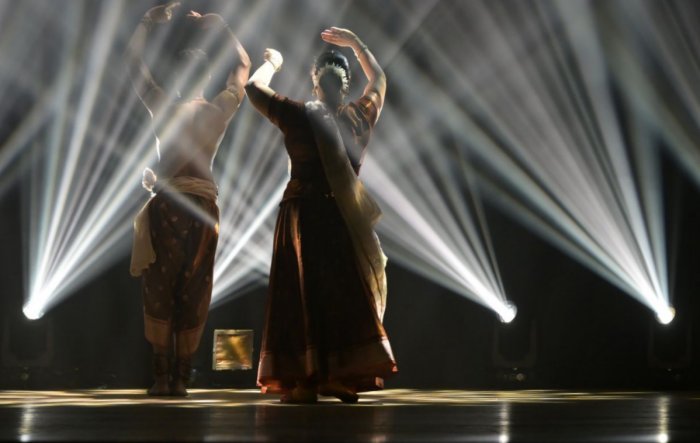 The presentation associated with Usha R.K., a senior arts promoter and curator known for conceptualising dance productions and festivals, depended greatly on narrative clarity and visual storytelling. Unfortunately, the haze made it difficult to appreciate several of the finer storytelling elements. Expressions, spatial arrangements and transitions that should have communicated the narrative were repeatedly covered by the atmospheric layer. The Odissi presentation by Guru Ratikant Mohapatra and the Srjan Ensemble also suffered visually. Odissi is admired for its sculptural positions, tribhangi, chowka, lyrical movements and beautifully organised group patterns. Guru Ratikant Mohapatra is recognised as an important Odissi dancer, choreographer, percussionist and archivist. Such a presentation should allow the audience to enjoy every sculptural line and formation. Instead, the fog reduced contrast and occasionally brought the visual impact of the performance down to a much lower level than the artistry deserved. The grand finale, choreographed by Guru Dr. Veena Murthy Vijay, was similarly overshadowed. Her group presentation contained formations, choreography and narrative elements that should have concluded the festival with clarity and grandeur. Yet the smoke once again became more prominent than the intricate visual language of the dance. Indian classical dance requires a different lighting sensibility A lighting technician must first understand the type of performance being illuminated. Is the production an Indian classical dance presentation? Is it a Western contemporary production, a rock concert, a cinematic event or a commercial stage show? Each requires a different visual grammar. Haze is frequently used in concerts and contemporary productions to make beams of light visible. It can create shafts, silhouettes and dramatic patterns in the air. Used in the correct context and in a controlled manner, it can be effective. But Indian classical dance cannot be illuminated with the same approach used for every other stage production. In classical dance, the priority must be the dancer's face, eyes, hand gestures, body geometry, costume and relationship with the other artistes on stage. The lighting should reveal these details rather than surround them with an artificial cloud. This is not an argument against innovation. Classical performances can certainly use modern lighting and technology. But technology must remain sensitive to the grammar of the art form. A lighting designer should ask: Am I showing the beauty and intricacy of the dance, or am I merely displaying the capabilities of the lighting equipment? Abhinaya cannot be seen through a curtain of haze The essence of Indian classical dance lies in its ability to tell a story without depending entirely on spoken words. Through abhinaya, the performer becomes several characters. A movement of the eyebrow, a change in the direction of the eyes or a subtle shift in expression can transform the meaning of a scene. When the face is hidden beneath a layer of haze and strongly scattered light, this communication is interrupted. 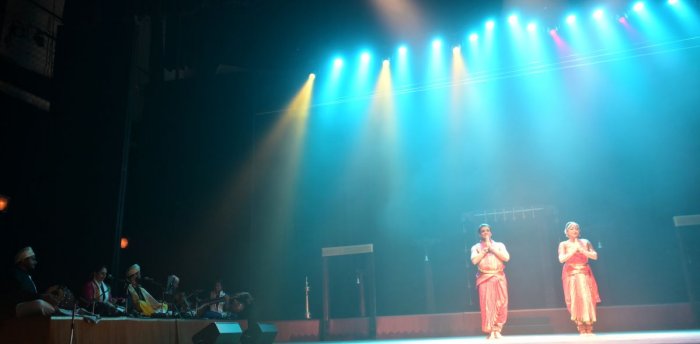 Atmospheric particles scatter light, producing glare, reducing contrast and obscuring fine details. These are recognised challenges in photography and visual imaging under hazy conditions. The audience may still see movement, but it may not fully receive the emotion, meaning or dramatic intention behind that movement. Without visible abhinaya and narrative detail, classical dance risks being reduced to a series of attractive silhouettes. That is not the complete experience of Indian classical dance. Concerns for live singers and musicians Classical dance productions frequently include live vocalists and musicians. They must maintain breath control, concentration and physical comfort throughout the performance. Theatrical fog and haze are generally produced by suspending fine droplets or aerosols in the air. Research involving entertainment industry workers has associated exposure to some mineral oil and glycol based theatrical fogs with coughing, dry throat, respiratory irritation, chest tightness and other symptoms, particularly with repeated or concentrated exposure. Professional stage safety guidance therefore recommends controlling the concentration, duration, machine position and distance between the discharge point and performers. Not every performer will react in the same way, and professionally approved haze used within established exposure limits should not automatically be described as dangerous. Nevertheless, singers and wind instrument artistes should not be required to perform amid unnecessary atmospheric effects. Vocalists depend on a clear throat and controlled breathing. Musicians must also protect valuable traditional instruments, microphones and electronic equipment from needless exposure to airborne aerosol and possible deposits. The guiding principle should be simple: use the minimum necessary effect - or avoid it completely when it adds no artistic meaning. Photography and Videography were severely affected As a professional photographer with over 35 years of experience documenting the performing arts, I found the constant haze particularly damaging to photography and videography. A camera does not interpret a hazy stage in the same way as the human eye. When strong stage lights strike suspended particles, the light scatters directly into the lens. This creates glare, reduces contrast, weakens colour saturation and covers the subject with a grey or white layer. Facial expressions become unclear. Costumes lose their richness. Dark backgrounds become washed out. Strongly lit areas appear excessively bright, while details in other areas disappear. Autofocus can also struggle when moving fog passes between the lens and the dancer. In video, the density of the haze changes continuously, causing one part of a sequence to look reasonably clear and the next to appear clouded. Photography and videography are not merely promotional activities. They are the permanent visual records of a festival. Artistes may use these images for archives, publications, portfolios, awards, research and historical documentation. Once the abhinaya, mudra or formation is hidden by smoke at the moment of capture, no amount of editing can completely restore the lost detail. The photographs accompanying this article demonstrate how the haze formed a visible layer between the artistes and the camera, reducing the clarity and quality of what should have been an important visual record. This article is not intended to undermine the efforts; the enormous commitment, resources and coordination should not go to waste. Organisers, choreographers, artistes, lighting designers, photographers and videographers should jointly review atmospheric effects during the technical rehearsal. The decision to use haze should not be left to one technician simply because a machine is available. Before switching it on, the team must consider: Does the production genuinely require haze? Will it hide the dancers' expressions? Will it reduce the visibility of group formations? Will it affect live singers or sensitive performers? Will it damage the quality of photography and videography? Does it serve the classical narrative - or merely make the lighting beams visible? A professional lighting technician must think twice before filling a classical stage with smoke. The choice is ultimately between showing the smoke effect and showing the grammar, expression and intricate beauty of Indian classical dance. The audience has come to see the artistes - not the haze. Let lighting illuminate the art. Let technology support the artiste. And above all, let the classical performance remain clearly visible. 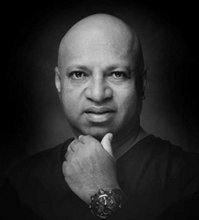 Srivatsa Shandilya is a Performing Arts photographer and Arts Curator. |
