
|     |
|
| |

REVIEW / REPORTA divine offering of dance by Aasha Yeluri- Sribala Wunnavae-mail: sribalaw@gmail.com July 9, 2026 On the evening of June 6, 2026, the pristine auditorium of the Bridgewater Temple in NJ was transformed into a sacred altar as Aasha Yeluri presented her much-awaited Nrityarchana. The recital was a celebration of artistry, discipline, spirituality, and the timeless tradition of Kuchipudi. In an age where preserving classical arts outside India presents unique challenges, Aasha's Nrityarchana stood as a powerful affirmation that excellence knows no geographical boundaries. Throughout the evening, Aasha performed with a level of polish, confidence, and artistic maturity that one ordinarily associates with accomplished professional artistes. Her Nrityarchana served as an inspiration to the Indian diaspora, reaffirming that our classical arts can continue to flourish with dignity, authenticity, and the highest artistic standards, even thousands of miles away from their birthplace. The daughter and disciple of Guru Divya Yeluri, Aasha has grown up immersed in the rich traditions of Kuchipudi and Carnatic music. Years of rigorous training, unwavering dedication, and inspired artistic guidance have shaped her into an accomplished artiste, and her Nrityarchana reflected the depth, refinement, and conviction that define her artistry. Throughout the evening, she captivated the audience with her command over nritta, expressive abhinaya, and the ability to transform mythology into a deeply moving spiritual experience. 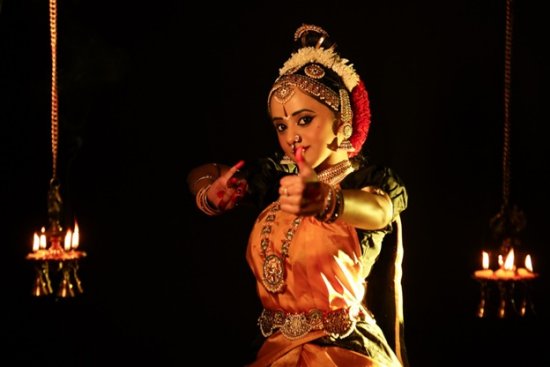 The recital commenced with the traditional invocatory Vani Paraku, presented by the students of Nritya Madhavi as an offering to Goddess Bala Tripura Sundari, creating a serene and devotional atmosphere for the evening. Aasha's opening solo "Sri Vighna Rajam Bhaje" was especially significant as it was choreographed by Aasha herself. Through imaginative sancharis depicting Ganesha Jananam and Ganaadhipatyam, she displayed remarkable creativity, confidence, and an impressive understanding of narrative choreography. It was an auspicious beginning that set the tone for an evening distinguished by artistic refinement, expressive depth, and technical elegance. She followed with Sivashtakam and Kamakshi Stuti, two iconic choreographies of Guru Dr. Vempati Chinna Satyam. In Sivashtakam, she portrayed the majesty and cosmic energy of Lord Shiva with strength and poise. Kamakshi Stuti featured a beautifully enacted Manmadha Dahanam, vividly portraying Lord Shiva reducing Kamadeva to ashes while simultaneously depicting the compassion and divine grace of Goddess Parvati with sensitivity and elegance. One of the defining presentations of the evening was the Tyagaraja Pancharatna kriti "Sadhinchane," an expansive production that seamlessly wove together episodes from the Ramayana and Mahabharata. The pallavi unfolded through striking portrayals of the Dasavataras, followed by memorable scenes of Rama accompanying Sage Vishwamitra, the slaying of Tataka, Ahalya's redemption, Sita Swayamvaram, and the celestial wedding of Rama and Sita. The celebrated "Samayaaniki" segment then transitioned into the Mahabharata. Aasha contrasted the humility of Arjuna and the arrogance of Duryodhana as they sought Krishna's support before the Kurukshetra war. The emotional intensity deepened with the Gitopadesham, where Krishna gently dispelled Arjuna's despair and imparted the eternal wisdom of the Bhagavad Gita. The sequence culminated in an impressive portrayal of the Vishwaroopam, where Aasha convincingly conveyed both the infinite cosmic form of the Lord and Arjuna's complete surrender before the Divine. Her expressive interpretation and commanding stage presence transformed this episode into one of the memorable moments of the recital. The graceful Rukmini Pravesa Daruvu flowed effortlessly into "Venu vinodamu vinnara," where intricate jathis set to misra chapu tala highlighted Aasha's rhythmic precision, crisp footwork, and graceful movements. 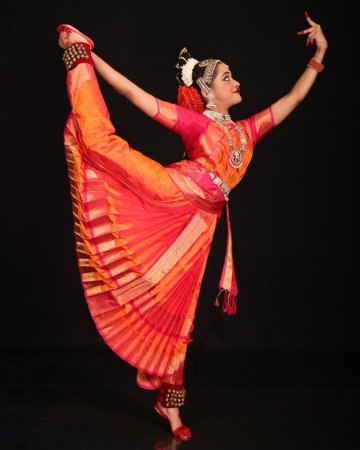 Following the intermission came Alokaye Tarangam, choreographed by Guru Divya Yeluri, which emerged as another major highlight of the evening. Through vivid storytelling, Aasha brought alive several beloved episodes from Krishna's childhood. The innocence of Bala Krishna eating mud and revealing the entire universe within his mouth to Mother Yashoda was portrayed with delightful charm. Equally moving was the Damodara episode, where the child Krishna, bound to a wooden mortar by his mother, compassionately liberated the two cursed Gandharvas. The exhilarating Kaliya Mardhanam combined strength, agility, and dramatic expression before culminating in the traditional plate dance, executed with impeccable balance, rhythmic precision, and complete confidence, earning thunderous applause from the audience. Aasha's command over abhinaya was well displayed in the expressive Vani Pondu Javali, where she portrayed a spirited Khandita Nayika confronting her unfaithful beloved with dignity, wit, and emotional authenticity. In "Sringa Puraadheeswari," she presented an elegant homage to the Divine Mother through graceful movements, intricate rhythmic patterns, and sculptural poses. The emotional pinnacle of the recital arrived with the Meera bhajan "Tum bin more kaun khabar le." In the moving choreography of Govardhana Giridhari, Aasha first portrayed Krishna lifting Mount Govardhana to protect the people and animals of Vrindavan from Indra's devastating storm. She then presented the deeply poignant episode of Krishna protecting Draupadi during her humiliation in the Kaurava court. As Draupadi surrendered herself completely to the Lord, Krishna responded with boundless compassion, granting her endless robes and demonstrating that unwavering faith is never forsaken by the Divine. Guru Divya Yeluri's sensitive choreography, combined with Aasha's moving interpretation, elevated this presentation into a profoundly spiritual experience. During the felicitation ceremony, Guru A.B. Kondalrao presented Aasha with the title "Nartana Ratnam" on behalf of Kuchipudi Kalaakendram, Visakhapatnam. Distinguished guest Ivaturi Babanna fondly recalled Guru Divya Yeluri's early years and praised the spiritual depth and classical excellence of Aasha's presentation. Speaking on behalf of the dance and music fraternity of New Jersey, Guru Nirupama Chandrasekharan appreciated the thoughtful selection of repertoire, outstanding choreography, and Aasha's deeply engaging execution. Aasha was also conferred the honorific title "Divya Natya Deepam" - The Divine Lamp of Dance - a fitting recognition of her dedication, artistry, and unwavering devotion to Kuchipudi. The recital concluded with an energetic Kadana Kutuhalam Tillana, radiating the joyous spirit of Vrindavan through sparkling rhythm and vibrant choreography. The concluding Garuda Gamana Tava Mangalam offered a serene and contemplative finale. Its subtle depiction of the Kundalini awakening elevated the concluding prayer beyond ritual into a profound spiritual metaphor, gently leading the audience from the exhilaration of performance into a state of inner stillness and devotion. Guru Divya Yeluri's inspired choreography and commanding nattuvangam formed the artistic backbone of the recital. She was ably supported by Flute Raman's Sri Krishna Vadya Vrunda Orchestra of the Indo-American Academy of Classical Music, Virginia. The ensemble featured Sudha Srinivas on vocal, B. V. Ganesh Rao on mridangam, C. K. Vijayaraghavan on violin, and Gokula Krishnan on flute, whose sensitive and accomplished accompaniment complemented every presentation. The thoughtfully designed stage setting reinforced the spiritual atmosphere. Framed by an elegant temple arch backdrop, the stage evoked the sanctity of a temple. The harmony between the stage design, lighting, choreography, and music elevated the recital beyond performance, creating an immersive experience of devotion. By the end of the evening, it was evident that the audience had experienced far more than a dance recital. Aasha Yeluri danced with the confidence of an accomplished artiste, the humility of a devoted disciple, and the spiritual radiance of one truly immersed in her art. 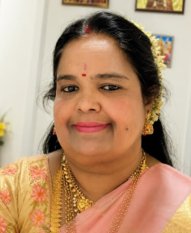 Sribala Wunnava is a Carnatic singer, Kuchipudi dancer, and technology leader based in Charlotte, North Carolina. Deeply rooted in Indian classical arts, literature, and devotional traditions, she writes on dance and music through the lens of both practitioner and rasika. She believes classical arts are a timeless bridge between devotion, tradition, and inner transformation. |
