
|     |
|
| |

REVIEW / REPORTShri: The Goddess of Grace and BeautyA Bharatanatyam performance by Shriya Kashyap- Sudha Prakashe-mail: sudhaprakash0325@gmail.com July 7, 2026 Rangoli Dance Company presented Shri: The Goddess of Grace and Beauty, a solo Bharatanatyam performance by young dancer Shriya Kashyap, a disciple of Guru Malathi Iyengar, on Saturday, June 27, 2026, at the historic Barnsdall Gallery Theater. The theater, a facility of the City of Los Angeles Department of Cultural Affairs, is located on the ancestral and present-day homeland of the Tongva, Gabrieleno, and Chumash peoples. Choreographed and conducted by Malathi Iyengar, the evening showcased the devotional and aesthetic richness of the South Indian classical dance and live music tradition, centered on grace, beauty, and spiritual reverence. The venue and stage were tastefully decorated with sculptures by Suresh Iyengar. Gentle instrumental music played as the audience entered and took their seats. The event opened with an invocation to Lord Ganesh by lead singer Abhishek Prasad. Shriya began her performance with Pushpanjali, offering flowers to Lord Ganesh and seeking blessings from God, her guru, Mother Earth, and the audience. From the start, Shriya demonstrated sincerity in her presentation, and her confidence shone through. 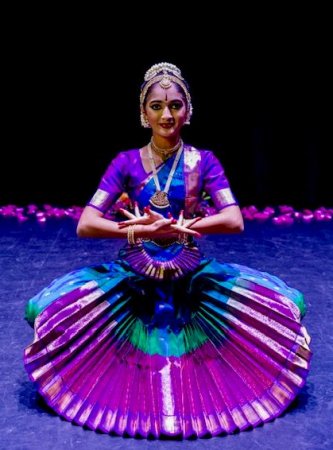 In presenting the varnam ("Sakhiye Inda Jalam", a composition of K.N. Dandayudapani Pillai in ragam Shankarabaranam, talam adi), the central and crowning piece of the Bharatanatyam repertoire, Shriya portrayed a devotee pleading with her friend, the sakhi, to bring her beloved Lord Krishna - an incarnation of Lord Vishnu - to her. The lyrics recounted Lord Vishnu's feats across his various avatars, celebrating his protection of devotees and his destruction of evil in the world. Shriya's performance in this piece found a compelling balance between youthful energy and classical discipline. The rhythmic passages revealed clean lines and adavus performed with clarity and precision. In the abhinaya sequences, she conveyed the nuances of bhakti and love for the Lord through graceful hand gestures and facial expressions that were subtle or expansive as the moment required. It was a pleasure to watch Shriya showcase her artistry and grace in pure dance, or nritta; her delicate and richly felt emotions in abhinaya; and her dramatic expressiveness through gesture and expression in natya. After the intermission, Shriya presented Swarajathi, a unique musical composition of Syama Sastri, describing the beautiful Goddess Kamakshi of Kanchi as graceful, courageous, loving, and compassionate toward her devotees. Shriya conveyed her devotion to the goddess through subtle shifts of gaze, posture, and facial expression, giving her portrayal of the divine feminine a quiet dignity and grace. In presenting the composition "Shankara Srigiri," a work by Maharaja Swati Tirunal that praises Lord Shiva's cosmic dance at the Chidambaram temple, Shriya displayed strength, form, and discipline. Her precise hand gestures, sculptural poses, rhythmic footwork, and expressive eyes revealed her understanding not only of Bharatanatyam technique, but also of the spiritual significance of Lord Shiva as Nataraja, the Lord of Dance. Through this performance, she drew the audience into a contemplative space of devotion and reverence. 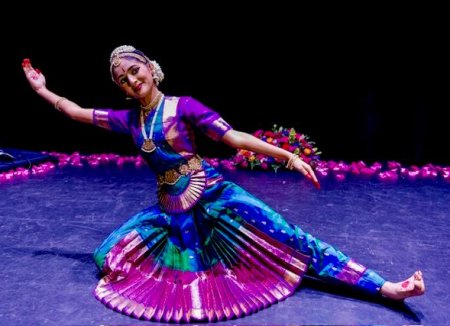 In the playful "Aada hodalle makkalu," depicting child Krishna complaining to his mother, Yashoda, about friends teasing him, Shriya performed with childlike innocence while also evoking Krishna's radiance and auspiciousness. The composition by Purandara Dasa, though framed as a child's complaint, embeds philosophical messages and references to the miracles performed by Purandara Vittala in childhood. Shriya brought this piece to life with warmth and expressiveness, capturing both Krishna's mischievous innocence and his divine presence. The concluding piece, Thillana, a composition by Lalgudi Jayaraman in Sindhubhairavi, featured expressive hand gestures, rigorous footwork, sculptural poses, leaps, and twirls executed with precision and strength. Shriya infused her physical energy and refined technique with inner feeling, bringing the performance to a graceful and uplifting close. The production benefited from the thoughtful and distinctive artistic direction of Guru Malathi Iyengar, whose careful choreography gave Shriya the space to demonstrate her technique, grace, and strength as a performer while allowing her artistic voice to emerge. Lakshmi Iyengar's lighting enhanced the atmosphere, creating a mood that felt both ceremonial and intimate. The evening was inspiring because Shriya's performance felt like a sincere offering by a young dancer to God, her guru, and the audience. Her stage presence revealed promise, humility, and artistic maturity. With continued training and experience, Shriya is well positioned to deepen and strengthen her craft and contribute meaningfully to the future of classical dance. Abhishek Prasad was on vocal, Gurumurthy Gampalahally on mridangam, Bhargava Halambi on morsing and khanjira and Nitish Ammannaya on flute. The live music, performed by musicians from India, brought depth and vitality to the dance, reminding the audience that Bharatanatyam is a collaboration and a conversation among dancer, musicians, and viewers. 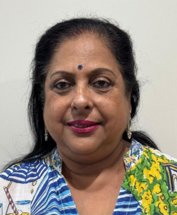 Sudha Prakash is a Los Angeles-based freelance writer whose work has appeared in India West, India Post, India Journal, Immigrant News, and Narthaki. After a 32-year career as an I.T. professional with Los Angeles County, she now enjoys traveling, discovering new places, and sharing her experiences through writing. |
