|     |
|
| |

REVIEW / REPORTSharanagati 2026- Tapati Chowdhuriee-mail: tapatichow@yahoo.co.in Photos: Arijit Roy July 6, 2026 Sharanagati 2026 presented on June 13, 2026 by Yakshini Cultural Foundation at Gyan Manch, Kolkata, offered an evening of polished Kathak performances that combined devotion, rhythmic ingenuity, and choreographic finesse. The programme, the foundation's second offering after Nrityarpan, opened with Guru Vandana and Teentaal - an invocation to the Guru, the eternal source of wisdom, grace, and enlightenment - seeking blessings for an auspicious beginning. The performers were young disciples of Kathak exponent Paromita Maitra. The evening began with "Guru Charanan," composed and rendered by Pt Birju Maharaj, which glorifies the Guru as the embodiment of the Divine. Rooted in the timeless belief that Guru and God are one, the composition functioned as a heartfelt offering at the Guru's feet, the source from which knowledge, devotion, and spiritual awakening flow. The piece was performed by young Kathak aspirants. 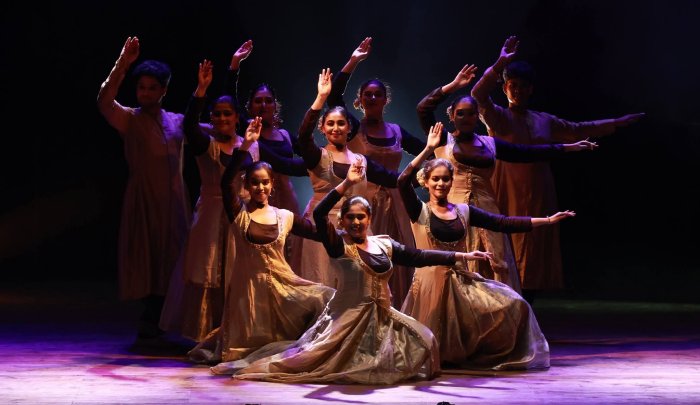 Kathakas Jinia Ghatak, who trained in Kathak for seventeen years under Paramita Maitra, and Payal Saha, a disciple of the same guru for over a decade, performed together. They presented Angikam Stuti followed by Shuddha Nritya in Roopak taal, a seven-beat rhythmic cycle. An excellent team of accompanying artistes supported the dancers, with bol padhant by Sarodiya Dutta. A group presentation of Yaman Tarana, a vibrant composition by Pt Birju Maharaj set to raag Yaman and Teentaal, highlighted graceful movements, intricate footwork, and lively rhythmic interplay. Bol padhant for this item was rendered by Sangita Bhattacharjee. Aroha began with Ganesh Vandana, invoking Lord Ganesha - the remover of obstacles - before unfolding into Teentaal. This devotional piece celebrated Kathak's grace, rhythm, and energy; Satabdi Maji and Anushree Paul narrated the bols with assurance. 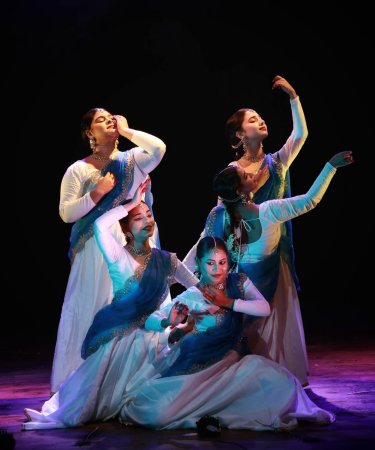 Nilopa Maitra's disciples Mandakini Chaudhuri, who trained under Guru Moloy Bhattacharyya and later under Luna Poddar at the Prerna Centre for Performing Arts, also studied extensively with Pt Birju Maharaj and Saswati Sen, and has served on the faculty at Kalashram, New Delhi. She opened with the Tagore song "Prothom adi tobo shakti," followed by a Teentaal presentation that impressed. Nilopa Maitra handled the bol padhant with clarity. 'Thunga Thunga,' a Krishna pada composed and sung by Pt Birju Maharaj, celebrated the beauty of Lord Krishna's dance. The dancers evoked Krishna's divine charm through rhythm and expression, supported by a pleasing stage presentation. Raas, also composed and sung by Pt Birju Maharaj, portrayed the divine play of Krishna. Presented by the youngest students of Yakshini Cultural Foundation, the piece captured the playful spirit and celestial beauty of the deity. Samali Roy, a disciple of Sandip Mallick and currently training under Saswati Sen and Paramita Maitra, presented a Vilambit Teentaal followed by a 13-matra composition; Sarodiya Dutta provided bol padhant. She also performed a thumri during her segment. Ada Chautaal Tarana, composed by Pt Birju Maharaj and based on Ada Chautaal and Dhamaar (a fourteen-beat cycle), showcased Kathak's rich rhythmic vocabulary, blending intricate layakari with elegance. The group performed this piece with élan. Niratata Dhang, originally written and composed by Pt Bindadin Maharaj and sung by Srijani Banerjee with music by Chandrachur Bhattacharya and tabla by Bishwajit Pal, glorified Krishna's beauty. The dancers used space and time with excellent precision. 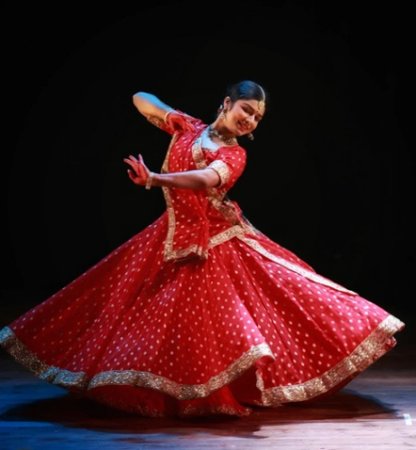 Aliyah Banerjee Aliyah Banerjee, who began learning Kathak at age four under Pt. Jaikishan Maharaj, Ruby Mishra, and Tribhuwan Maharaj, currently serves as a student faculty member at Birju Maharaj Parampara, Delhi. Her group piece, Fusion - arranged by Chandrachur Bhattacharya with vocals by Debashish Sarkar and tabla by Bishwajit Pal - blended Indo-Western percussion traditions into a cohesive rhythmic tapestry; the performing team did full justice to the music. 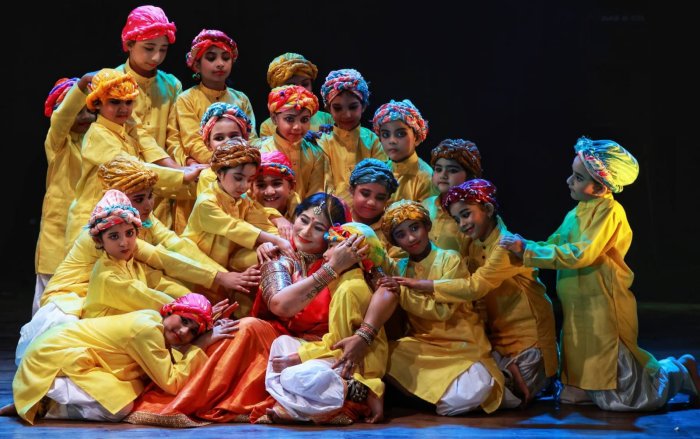 Makhan chori 'Makhan Chori' dramatized the beloved tale of little Krishna stealing butter with his friends and being lovingly reproved by Yashoda. Ranjana Kumari played Yashoda while the institution's tiny tots enacted the makhan chors in a charming presentation. "Baso more nainan mein Nandalal," danced solo by a disciple of Nilopa Maitra, was a devotional Krishna vandana expressing the devotee's longing for the Lord to dwell eternally in their eyes and heart. Choreographed by Nilopa Maitra, the piece portrayed complete devotion and surrender through spiritual imagery. Anukana Pan, a lifelong disciple of Luna Poddar, presented a noteworthy solo. Her Jhaptaal (10-beat) recital came alive through bol padhant narration by Madhuka Dutta. Taal Sangam stood out as a unique exploration of rhythm. Anushree Paul and Nilam Raj Roy performed in a seven-and-a-half-beat cycle, while Satabdi Maji and Sarodiya Dutta presented compositions in an eight-and-a-half-beat cycle. The segment culminated in a confluence that merged these uncommon structures into a complementary sixteen beat cycle, celebrating Kathak's mathematical beauty and creative possibilities. Reshmi Mitra, a senior disciple of Paramita Maitra, who began learning Kathak at age five, presented the abhinaya piece "Naina more taras gaye, aaja balam pardesi," which conveyed longing and devotion with sensitivity. Yashaswini Maharaj, belonging to the Kalka-Bindadin gharana and initiated into Kathak at age three by her grandfather Pt Birju Maharaj, and Mamta Maharaj, performed two compositions: "Shyam murat mann bhaye" (a Pt Birju Maharaj composition choreographed by Mamta Maharaj) which described Krishna's enchanting beauty and attire, and "Koi prem ki peng jhulave" (a devotional composition by saint-poet Maluk Das, set to music by Pt Birju Maharaj and choreographed by Mamta Maharaj), which celebrated the bliss of divine love. 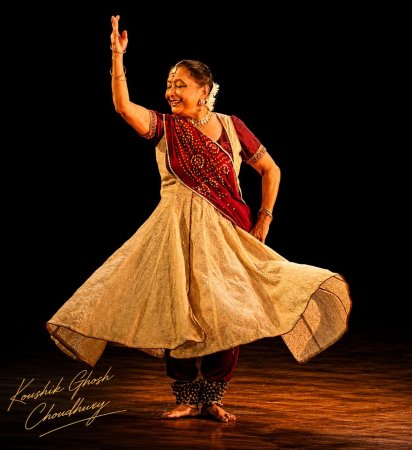 Saswati Sen Saswati Sen delivered a scintillating recital encompassing the full breadth of the Kalka-Bindadin gharana. She was accompanied by an accomplished set of musicians: sitar - Chandrachur Bhattacharjee; sarod - Sunando Mukherjee; vocals - Arindam Bhattacharya and Jaydeep Sinha; and tabla - Bishwajit Pal. Nilopa Maitra rendered the bol padhant. The ensemble of accompanying artists - Chandrachur Bhattacharjee (sitar), Hrisav Sarkar (tabla), Tarun Deb (tabla), Jaydeep Sinha (vocals), and narrators Satabdi Maji and Anushree Paul, among others - helped the dancers bring out their best. Overall, Sharanagati 2026 was a carefully curated evening that balanced devotional abhinaya, complex rhythmic experiments, and youthful exuberance. The Yakshini Cultural Foundation succeeded in presenting a programme that paid homage to tradition while showcasing the next generation of Kathak practitioners.  Tapati Chowdhurie trained under Guru Gopinath in Madras and was briefly with International Centre for Kathakali in New Delhi. Presently, she is a freelance writer on the performing arts. She is the author of 'Guru Gopinath: The Making of a Legend.' |
