
|     |
|
| |

REVIEW / REPORTA masterclass in abhinaya and ageless energy- Pallavi Nageshae-mail: pallavi.nagesha@gmail.com Photos: Anikris Photography June 25, 2026 The character of Surpanakha in Kamba Ramayanam is rarely painted in a single hue. In his Tamil magnum opus Ramavatharam, the poet Kamban portrays her as a complex, chameleon-like force - a tragic, cunning, and pivotal catalyst of the epic. Bringing this demanding solo dance theatre piece to life requires not just technical prowess, but a profound intellectual and emotional maturity. In the world premiere of Surpanaka, Jothi Raghavan - a revered pillar of the Boston dance community - demonstrated exactly what happens when decades of absolute dedication meet an unyielding artistic spirit. After teaching and shaping generations of dancers in New England for over forty years, Raghavan chose her artistic home of Boston to debut this ambitious new work. She did not merely perform; she commanded the stage. Backed by the rich, evocative musical compositions of Sudha Raghuraman, the evening shifted the focus away from rigid technical precision to spotlight the unparalleled dramatic weight of a veteran master. An immersive intimacy The choice of venue played an indispensable role in the evening's success. Staged at the Black Box Theatre within the Boston Center for the Arts, the performance benefited immensely from the stark, minimalist intimacy of the space. In a traditional, large-scale auditorium, the fine nuances of a dancer's facial expressions can easily be swallowed by distance. However, the close proximity of the Black Box format stripped away the barrier between the stage and the audience. Every sharp intake of breath, every trembling lip, and every rapid shift in Raghavan's gaze reverberated directly through the room, making the spectators feel entirely enveloped by the unfolding tragedy and malice of the epic. The poetic resonance of high Tamil 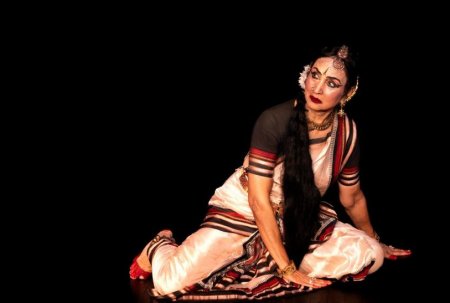 A core element that elevated this world premiere was the text itself - the exquisitely beautiful, high classical Tamil utilized by Kamban. Raghavan's performance did not just treat the language as a script, but as a living partner to the production's auditory and visual elements. The rhythmic cadence and elevated poetry of the verses perfectly complemented Sudha Raghuraman's rich musical compositions, creating a seamless dialogue between word and sound. This linguistic beauty deeply informed the choreography and the poetry lent a regal weight to the performance. Even as the narrative shifted through volatile emotional landscapes, the presentation remained exquisitely refined and artistically sublime. A synergy of vision and sound The deep cohesion between the auditory and visual elements of the piece was a direct result of a highly collaborative creative process. Rather than setting choreography to pre-existing scores, the work was built from the ground up: Sudha Raghuraman first composed the intricate music based entirely on Jothi Raghavan's conceptual description and emotional vision for the piece. Raghavan reverse-engineered the movement, choreographing her physical narrative directly into the tailored cadences of the score. This symbiotic evolution ensured that every emotional swell in the music felt structurally and physically mirrored on stage. Narrative mastery over technical precision What immediately set this world premiere apart was its intellectual grounding and dramatic focus. Developed in consultation with Kamba Ramayana scholars Puduagraharam Parthasarathy and Pudhuagraharam Vasudevan, Raghavan's deep structural understanding of Kamban's poetry radiated through every gesture. While the production maintained a high level of physical energy and theatrical dynamism, its true strength lay in the fluid, expressive storytelling. Raghavan allowed the emotional current of the narrative to take precedence, focusing her immense presence on the psychological landscapes of the character. The pure dance elements served as an energetic framework to support the heavy dramatic weight of the piece. The aesthetic of the grotesque 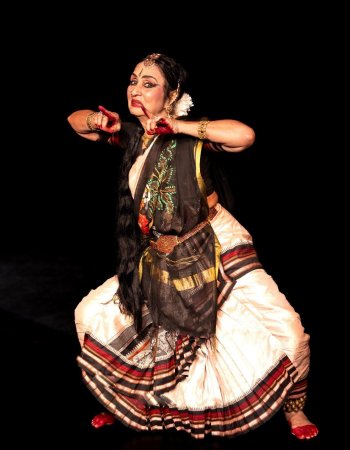 Perhaps the most arresting triumph of the evening was Raghavan's unapologetic exploration of Bibhatsa and the grotesque. It takes a master of abhinaya to make the physically repulsive look visually and artistically sublime. Raghavan did not shy away from the raw horror of Surpanakha's nature or her subsequent mutilation. Through realistic, visceral facial expressions and contorted body language, she brought out the raw, unrefined demoness with chilling accuracy. Yet, because this realism was filtered through decades of classical rigor, the grotesque was transformed into something utterly beautiful. It became a powerful aesthetic choice rather than a mere shock tactic, proving that in the hands of a veteran, even agony and distortion can be elevated to high art. The metamorphosis The production flawlessly charted Surpanakha's psychological and physical transformations, weaving her evolutionary arc into a continuous narrative tapestry. Raghavan first showcased a brilliant dramatic range by capturing the chaotic, heavy-footed arrival of the copper-haired Rakshasi, only to seamlessly liquefy her posture into the graceful, swan-like gait of a beautiful maiden attempting to seduce Rama. The comic timing and tension she maintained during the dialogue with a skeptical, sarcastic Rama - followed by the sudden flare of ugly jealousy upon seeing Sita - were delivered with sharp, theatrical brilliance. Pushing the performance into deeper emotional territories, Raghavan then vividly captured the madness of lust, portraying a woman weeping, laughing, and literally embracing dark clouds as she hallucinated her beloved. This psychological unraveling culminated in a visceral, gripping intensity as she masterfully executed the sudden, shocking shift to horror and physical trauma during the mutilation scene. Relentless defiance and the seeds of destruction The performance reached its artistic peak in the latter half of the story. Rather than playing Surpanakha as a defeated victim after her mutilation, Raghavan emphasized the character's relentless, unyielding pride. Her defiance of Rama - mocking Sita as a "puny little girl" and delivering biting, sarcastic counter-proposals - showed a fierce psychological complexity. "Can beauty remain," she wails, "when the ears, the nose, and the breasts have been severed?" The finale in Ravana's court expertly layered Surpanaka's conflicting emotions: she was simultaneously traumatized by her wounds, strangely intoxicated by the beauty of her attackers, and hyper-calculating as she spun a lyrical net of poison to entice her brother Ravana. Watching Raghavan embody Surpanakha manipulating Ravana's desires - knowing it would ultimately spark the fire that consumes the entire Rakshasa clan - was an unforgettable theatrical climax. The verdict This world premiere of Surpanakha was far more than a milestone for a legendary career; it was a vital, pulsing piece of dance theatre that Boston was privileged to witness first. Jothi Raghavan's physical endurance was inspiring, but it was her ability to balance the beautifully graceful with the realistically grotesque that gave the performance its soul. By utilizing the intimate layout of the BCA Black Box, she didn't just dance the story of Surpanaka; she invited the audience directly into her shifting world, leaving everyone spellbound by a performance that prioritized deep dramatic truth above all else.  Pallavi Nagesha is an acclaimed classical dancer, educator, and arts advocate based in the New England area. As the curator and leader of the annual LearnQuest Dance Festival in Boston, she is dedicated to cultivating a vibrant, equitable platform that unites internationally renowned masters with emerging local talent on the professional stage. Driven by a deep commitment to classical rigor and cultural preservation, Pallavi lends her specialized background in dance pedagogy, literature, and choreography to offer insightful, deeply rooted perspectives on contemporary classical Indian dance and theatre. |
