|     |
|
| |

REVIEW / REPORTAntardrishti: A journey within through Kathak- Manjari Sinhae-mail: manjari@sinha.com Photos: Senthilvvphotography June 20, 2026 Every dance production has a theme. Some celebrate mythology, some seasons, and others the repertoire of a dance tradition. Rarely, however, does one encounter a presentation that is an expression of a guru's inner journey. 'Antardrishti', the bi-annual recital of Nartan Academy of Indian Classical Dance, presented on May 24 at Watkins Mill High School, Gaithersburg, was precisely that: an artistic reflection of Guru Purvi Rajyaguru Bhal's continuing spiritual and creative quest. Groomed under Guru Dharamshibhai Shah, in Bhavnagar, Gujarat, Purvi Bhal, with her Guru's blessings, founded Nartan Academy after moving to the United States in 2006 with just three students. Two decades later, the academy has blossomed into a thriving institution with nearly ninety students participating in this year's production - a testimony not only to dedicated teaching but to the nurturing of a vibrant Kathak community. Welcoming the audience, Purvi spoke with touching simplicity: "Kathak is deeply spiritual for me, and today's presentation reflects my journey within." Those words became the key to understanding the evening. Her recent visit to India learning and interacting with Kathak gurus and her pilgrimage across India-to the sacred Jyotirlingas, Shirdi, Prayagraj, and the historic Kalka-Bindadin ki Dyodhi in Lucknow, dedicated to the legendary Pandit Birju Maharaj and his legacy of Lucknow gharana, appears to have strengthened both her spiritual convictions and her artistic vision. This inward exploration found eloquent expression in Antardrishti, where every composition seemed carefully chosen to reflect devotion, introspection, joy, and the evocative aesthetics of Kathak. 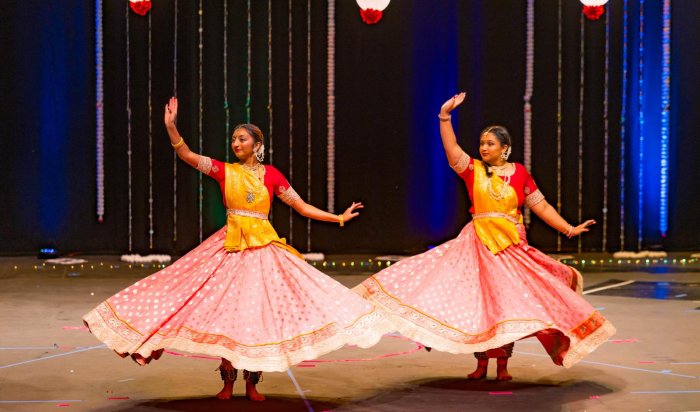 Ganesh Vandana The recital opened with a graceful Ganesh Vandana, Jehi sumirat siddhi hoi, composed and rendered soulfully by Ashwini Bhide Deshpande. The poised performance by Prisha Bhal and Tanushree Pal immediately established the devotional ambience that pervaded the evening. One of the most engaging early presentations was Kavitta-Mala, a delightful garland of traditional kavittas narrating episodes from Krishna's life. The choreography cleverly wove together compositions by renowned Kathak acharyas like Pt. Narayan Prasad, while the 'lehra' accompanying the rhythm, shifted through different ragas, lending each poetic vignette its own distinct emotional colour. The young dancers displayed admirable confidence and rhythmic awareness. 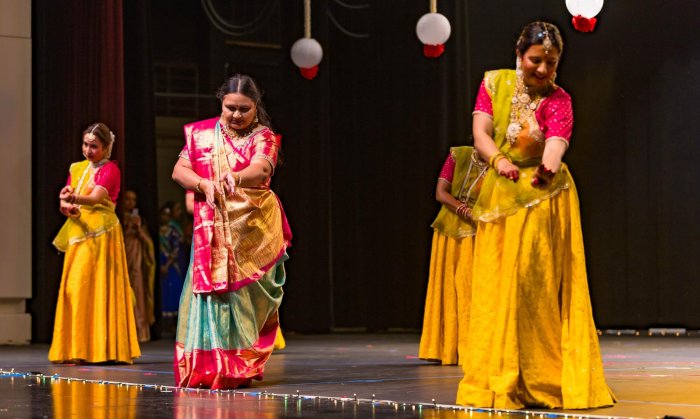 Guru Vandana Equally moving was the Guru Vandana, where the timeless Sanskrit verse Brahmanandam Parama Sukhadam flowed into a lyrical bandish composed by Pt. Tushar Shukla and set to music by Asit Desai in raga Ahir Bhairav. It served as a heartfelt homage to the guru-shishya tradition that lies at the heart of Indian classical arts. 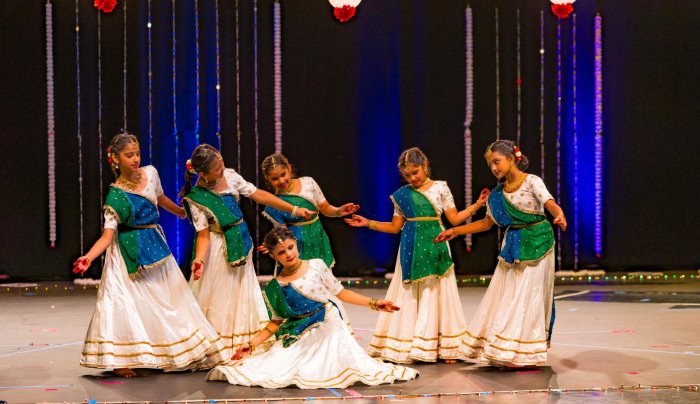 Mann mor bani Purvi Bhal's choreography revealed an impressive ability to balance tradition with accessibility. The Gujarati favourite Mann mor bani thanghat kare, celebrating the arrival of the monsoon, radiated youthful exuberance, while Mahadeva, choreographed to Anoushka Shankar's evocative music, explored Shiva's cosmic energy with dynamic group formations and vigorous movement. 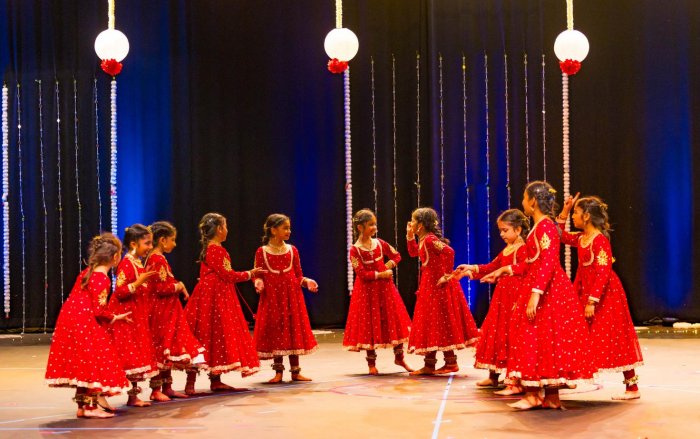 Antakshari Perhaps the most charming innovation of the afternoon was Khel Khel Mein - Antakshari, created for the academy's youngest students by Guru Geetanjali Lal during her workshop for Nartan Academy. By blending the familiar childhood game with Kathak vocabulary-aamad, toda, tukda, tihai, rhythmic counting and playful improvisation-Purvi transformed pedagogy into performance. The children danced with infectious enthusiasm, demonstrating that disciplined training and joy can coexist beautifully. 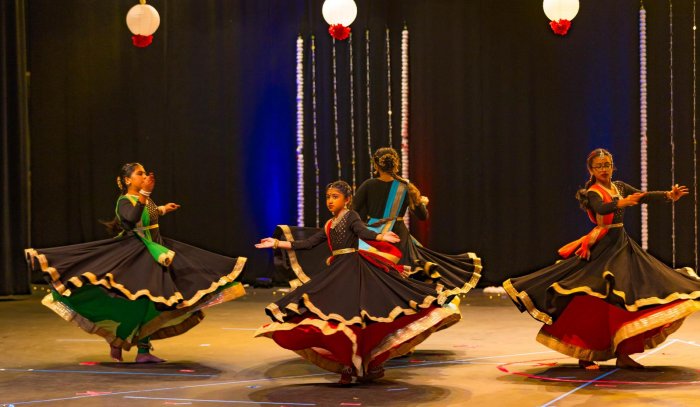 Tarana Malhar Jam The senior students presented more mature explorations of both nritta and abhinaya. The Sufi-inspired E ri sakhi more piya ghar aaye, attributed to Amir Khusrau, beautifully conveyed the soul's longing for union with the Divine. In contrast, Malhar Jam Tarana showcased Purvi's openness to contemporary musical experimentation, combining traditional Kathak vocabulary with an energetic fusion score featuring both Indian and Western instruments. The choreography remained firmly rooted in Kathak even while embracing a modern musical landscape. 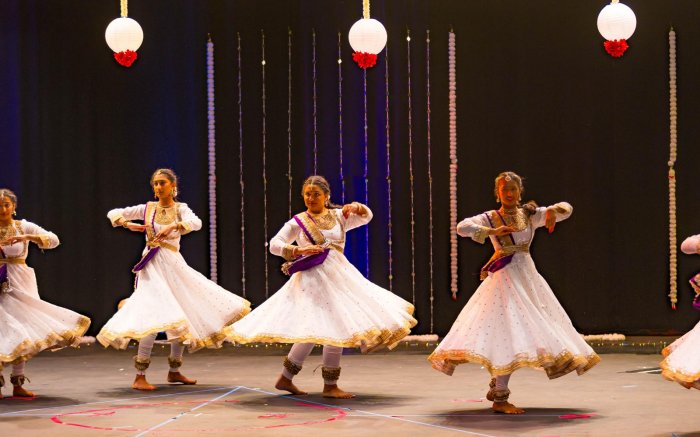 Sargam Pure dance found expression through Teen Taal, Trivat, and Sargam, where the dancers negotiated increasingly intricate rhythmic structures with commendable confidence. Particularly noteworthy was the academy's emphasis on layakari, tatkar, hastaks and chakkars, all presented with clarity and disciplined training. 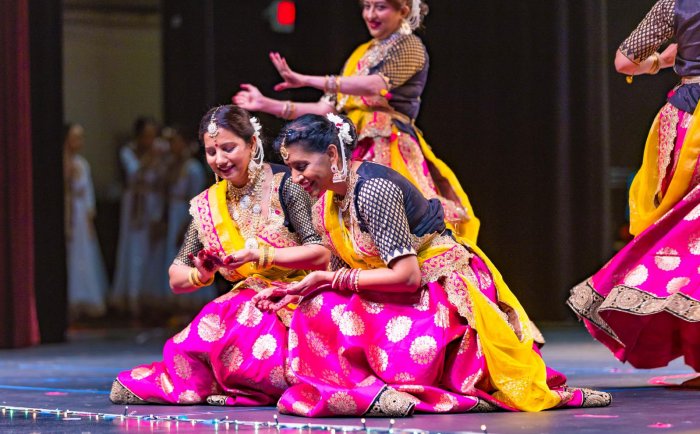 Albela sajan aayo ri Among the evening's highlights was Albela sajan aayo ri, one of Hindustani music's most beloved classical bandishes in raga Ahir Bhairav. Beginning with a contemplative Dhrupad-ang alap before unfolding into expressive abhinaya and vigorous nritta, the choreography beautifully captured the anticipation of the heroine preparing for her beloved's arrival. It reflected Purvi's thoughtful understanding of Kathak's seamless integration of rhythm, melody and emotion. 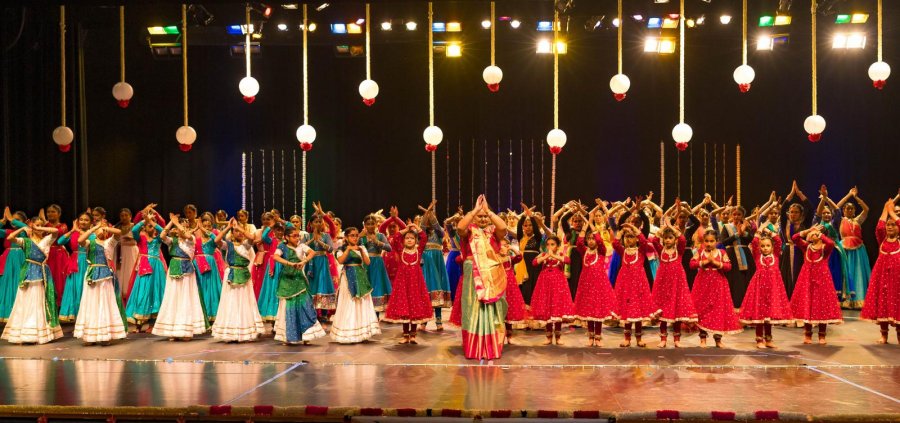 Finale The finale, led by Guru Purvi herself alongside her daughter Prisha Bhal, brought together every performer on stage. More than a concluding item, it symbolised continuity-the passing of tradition from one generation to the next and the collective spirit that has become the hallmark of Nartan Academy. What distinguished Antardrishti was not merely the scale of the production but its sincerity. Beneath the colourful costumes, polished choreography and disciplined ensemble work lay a deeper narrative of self-discovery. Purvi Bhal has clearly evolved beyond presenting annual recitals; she is nurturing a community where Kathak becomes a vehicle for artistic expression, spiritual reflection and personal growth. As Nartan Academy approaches its twentieth anniversary, Antardrishti stands as a celebration not only of two decades of dedicated teaching but also of a guru's continuing inward journey-a journey that now inspires nearly a hundred students to discover their own.  Manjari Sinha is a musicologist and an acclaimed classical music and dance critic. She has an MA in Sanskrit from Allahabad University, MA in Music from Vikram University, Ujjain; Sangeet Prabhakar in Hindustani Vocal, Tabla, Sitar and Kathak dance from Prayag Sangeet Samiti, Allahabad; and further training in Sitar under Guru Pt. Arvind Parikh in the lineage of Ustad Vilayat Khan. She has authored a book on Ustad Bade Ghulam Ali Khan, commissioned & published by Roli Books. She has contributed the chapter on Kathak for 'Indian Dance: the Ultimate Metaphor'. Her articles in English and Hindi on Music, Dance, Art & Culture are regularly showcased in a variety of leading journals and periodicals. |
