
|     |
|
| |

 Quiet intensity and classical restraint in Sandhya Easwar's Mohamana varnam- Satish Surie-mail: satishism@yahoo.co.in May 17, 2026 Sandhya Easwar, a Bharatanatyam artiste shaped by the illustrious Kalakshetra tradition, and mentored by the legendary Dhananjayans of Bharatakalanjali, presented on the 26th of April at Seva Sadan, Bangalore, under the aegis of Ananya, a poised and evocative interpretation of the classic Mohamana varnam (raga Bhairavi, talam Rupakam), a cornerstone of the Tanjore Quartet repertoire, most often attributed to Ponniah Pillai. Rooted in the nuanced idiom of sringara bhakti, the varnam unfolded the inner landscape of the nayika, her yearning for communion with the divine beloved, here envisioned as Tyagesha of Tiruvarur, interlacing tender reproach, aching viraha, and eventual surrender. From the opening pallavi, "Mohamana en meedil nee inda velaiyil modi seyyalamo en saami," Sandhya established an intimate emotional register. The nayika's voice emerged as one of gentle complaint suffused with devotion, questioning the beloved's delay even as she stood prepared for union. Sandhya's abhinaya was marked by restraint and clarity. Her glances carried a delicate interplay of accusation and longing, while her facial transitions moved seamlessly between separation and anticipation. She avoided overt dramatisation and allowed the emotional content to unfold with quiet inward intensity. 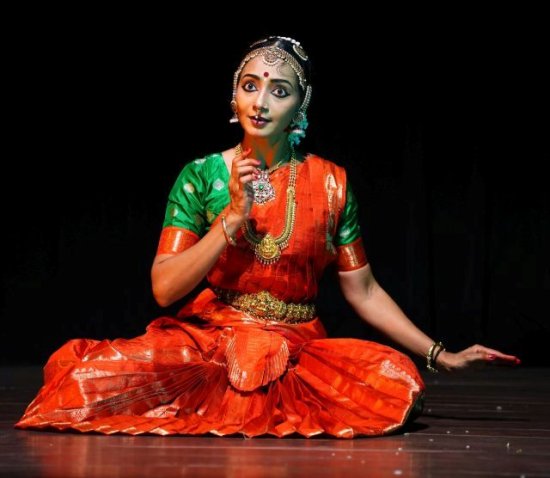 Sandhya Easwar Photo: Prof. K.S.Krishnamurthy Sandhya's nritta was defined by clean lines, precise geometry, and measured control. The varnam's intricate jatis and teermanams in Rupaka tala demanded rhythmic accurity, which she met with assured clarity. Her footwork was crisp and well articulated, maintaining steady kinetic energy without compromising aesthetic refinement. Hasta usage was equally articulate, particularly in passages depicting the lord's procession or the playful torment of Manmatha's arrows. A notable strength lay in her calibrated negotiation between nritta and nritya. The muktayi swara sahityam and subsequent charanams, especially in lines such as "Maran kanaigal toovuran... ini en seiguven?" were rendered with deepening emotional resonance. Sandhya evoked the nayika's restlessness through understated yet telling details, the suggestion of breeze, the call of the cuckoo, and the elongation of time itself, poignantly captured in the line "ara nimisham yugamaaghude." These moments were not merely illustrative but experiential, drawing the audience into the temporal and emotional stretch of longing. Her interpretative approach remained anchored in simplicity and aesthetic restraint. The sanchari bhavas unfolded organically and never appeared superimposed or excessive. In delineating both the allure of the divine and the devotee's yearning for union, "anubhogam seyya va," Sandhya balanced humility with assured stage presence, embodying the inwardness of the bhakti idiom. The musical accompaniment was presented on a recorded track and provided a supportive and well-textured aural frame. The orchestral layering, though pre-recorded, retained cohesion and sensitivity, allowing the dancer sufficient space to inhabit both the lyrical and rhythmic dimensions of the varnam. In sum, Sandhya Easwar's rendition of Mohamana stood out for its disciplined classicism and understated emotional depth. It was a performance that privileged internalisation over display and reaffirmed the enduring strength of the Kalakshetra aesthetic when inhabited with sincerity and intelligence.  Bangalore based Satish Suri is an avid dance rasika besides being a life member of the Music and Arts Society. |
