
|     |
|
| |

REVIEW / REPORTThe body remembers what spaces forget- Anurag Chauhane-mail: anuragchauhanoffice@gmail.com Photos courtesy: Keelaka Dance Company May 15, 2026 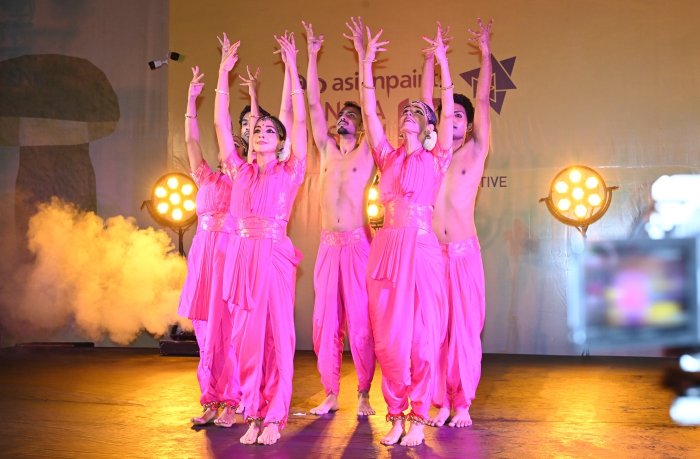 Civilisations are often remembered through what they leave behind: temples, textiles, manuscripts, sculpture, music. Yet their most intimate archive has always been the moving body. Long before theory was written or aesthetics codified, knowledge travelled through gesture, rhythm, breath, and the disciplined intelligence of performance. It was therefore fitting that within a gathering devoted to design and form, the most eloquent object of the evening proved to be neither stone nor fabric, but the dancer. Presented by Keelaka Dance Company for India Design ID, SAMĀ: The Echoes of Form approached the theme of syncretism with a maturity too rarely seen in contemporary curation. Syncretism is frequently mistaken for haste, a quick and fashionable blending of references. This work understood something subtler and far more difficult: that traditions do not need to dissolve in order to speak to one another. 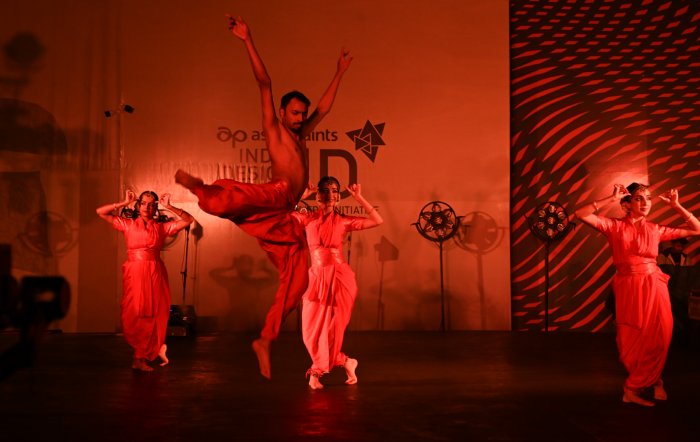 Conceived by Jyotsna Shourie and Aneesha Grover, the choreography placed Bharatanatyam at its centre, not as decorative citation but as structural intelligence. The opening passages, set to a Carnatic Swarajathi, were anchored in firm araimandi, lucid adavu execution, clean hasta articulation, and an assured command of tala. The diagonals were measured, the transitions economical, and the rhythmic punctuation precise. One was reminded that Bharatanatyam is not merely dance vocabulary, but a philosophy of order. What followed was not rupture, but expansion. As subtle electronic textures entered the score, the movement language began to test new coordinates. A contemporary ballet vocabulary introduced buoyancy, elongated lines, travelling momentum, and moments of suspension that stood in elegant counterpoint to the weighted authority of the classical body. Where Bharatanatyam speaks from the earth upward, ballet often writes itself into air. The dialogue between the two was visually intelligent and musically sensitive. The introduction of an intuitive modern dancer altered the emotional grain of the piece further. Release based phrasing, spinal articulation, off centre balances, falls, recoveries, and fluid floorward transitions brought a kinetic softness absent from stricter codified form. Importantly, the choreography did not sentimentalise contrast. Each vocabulary retained its discipline. They met not as costumes, but as systems of thought. 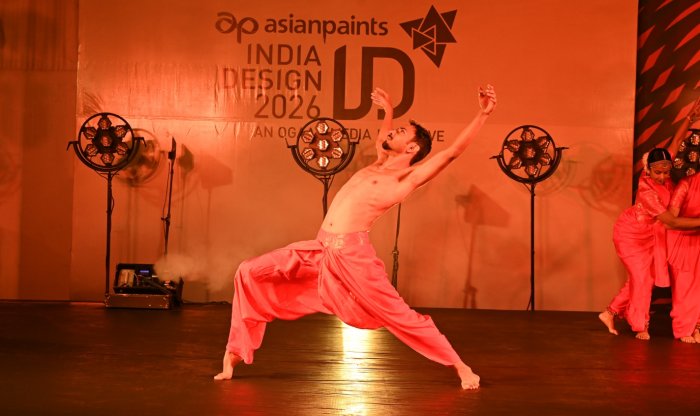 Later, folk and tribal inflected movement expanded the performance into a more collective register. The body opened laterally, pathways broadened, pulse overtook metric precision, and the atmosphere acquired a communal vitality. This shift from sculptural containment to circulating energy was one of the work's most astute compositional decisions. A live jathi in adi talam set against beatboxing and alaap became one of the evening's most persuasive passages. Rhythmic architecture remained intact while contemporary vocal percussion introduced fresh accents around the tala cycle. Innovation, when rooted in grammar, rarely needs to announce itself. The concluding sequence gathered all movement languages into a shared field. With live vocals by Harini Iyer carrying a Sindhubhairavi Tillana over jazz tinged instrumentation, Bharatanatyam nritta, contemporary release work, balletic extension, and freer torso led phrasing occupied the same space without hierarchy. This was not fusion. It was conversation. The performers, Nandita Kalaan, Aneesha Grover, Amrita Sivakumar, Benjamin Jacob, Joe Mathew and Nilava Sen, navigated these transitions with admirable musicality, technical control, and spatial awareness. Ensemble choreography of this nature demands more than skill. It requires listening, humility, and the ability to yield focus without losing presence. 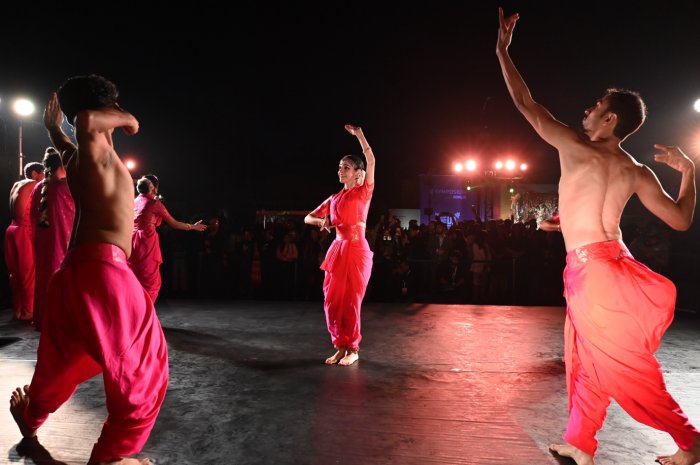 For those of us who come from a civilisation where dance was once offered as devotion before it became spectacle, movement carries meanings beyond entertainment. It holds memory, discipline, philosophy, and prayer within the body. To witness such forms is not merely to watch, but to attend. That is perhaps why one hopes audiences everywhere, whether in theatres, galleries, or public forums, meet dance not casually, but with the fullness of attention it so deeply deserves. And yet there is undeniable value in seeing such traditions travel into contemporary spaces. At gatherings like India Design ID, where global audiences converge, Indian movement vocabulary finds new interlocutors and fresh admiration. If even a passing viewer pauses in wonder, the art has already done its work. 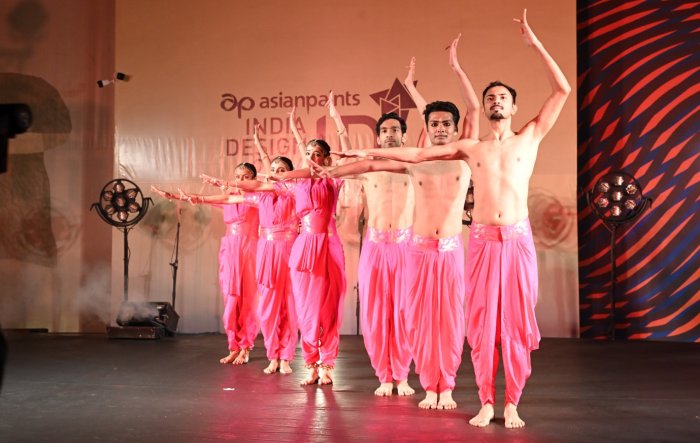 SAMĀ: The Echoes of Form did something increasingly rare. It treated tradition neither as relic nor commodity. It treated experimentation not as rebellion, but as responsibility. And in doing so, it reminded us that the most enduring conversations are those in which no voice is asked to disappear. 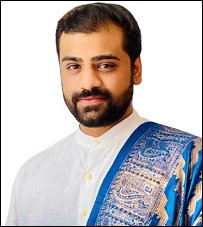 Anurag Chauhan, an award-winning social worker and arts impresario, combines literature and philanthropy to inspire positive change. His impactful storytelling and cultural events enrich lives and communities. |
