
|     |
|
| |

 Oneness: The BlossomingInterweaving classical dance forms in a contemporary festival frame- Dr. Rohini Dandavatee-mail: dandavate2@gmail.com May 8, 2026 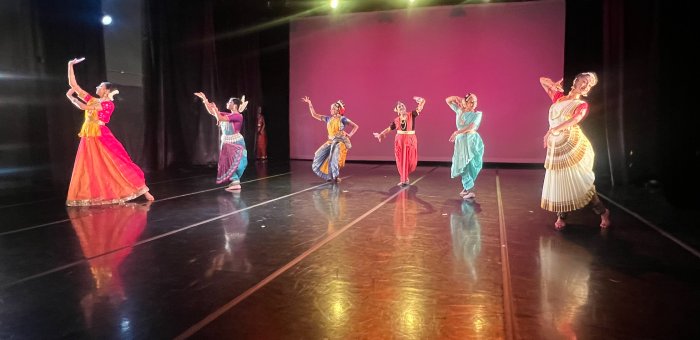 The San Francisco International Arts Festival, which began as a small multicultural initiative in 2003, has evolved into a significant community platform that brings together local and international artists, fosters cultural diversity, and engages with contemporary social concerns through artistic expression. Oneness: The Blossoming reflected these aims through a curated presentation of Indian classical dance traditions by practitioners of the Bay area. The program brought together six distinct classical forms, each rooted in its own regional vocabulary of movement, music, and expression. Presented in their individual integrity through choreography, costume, and musical structure, the styles offered a vivid encounter with India's rich and layered dance heritage. At the same time, their juxtaposition and interaction on stage invited the audience into a larger field of dialogue, where difference became a site of connection. The opening musical framework, drawn from Sense Beyond by Madurai R. Muralidharan, established the distinct sonic identities of each tradition while also hinting at an underlying continuity across forms. The extended program featured works by legendary Gurus from each tradition, interwoven with select experimental pieces that expanded the expressive range of the evening. Odissi's fluid grace, Kathak's rhythmic intricacy, Bharatanatyam's sculptural precision, Manipuri's lyrical softness, and Kuchipudi's playful expressiveness collectively formed a dynamic and layered tapestry of Indian classical dance. A notable highlight was the Arabhi Pallavi (1972), choreographed by Guru Kelucharan Mohapatra with music by Pundit Bhubaneswar Mishra was envisioned with movement sequences of unbroken circular movements evoking the rhythmic ebb and flow of ocean waves. The ensemble's performance reflected clarity of form and expressive refinement. Spring as a thematic arc Across the program, five presentations - Holi Khela (Manipuri), Ritu Samhara (Bharatanatyam), Smriti (Mohiniyattam), Raageshwari Tarana (Kathak), and Samanvaya (Kuchipudi) - offered varied interpretations of spring as a season of renewal. In Holi Khela, spring unfolds as an intimate devotional expression of Shringar Rasa, where Krishna's arrival in Vrindavan transforms Holi into an inward celebration of love and union, rendered through Manipuri's soft, globular movement vocabulary. This dance was adapted from Radha Nartan, a composition by the legendary Guru Bipin Singh. In Ritu Samhara, spring emerges as a communal festival of life, marked by temple processions, shared joy, and playful interaction. An excerpt from the larger musical Ritu Samhara, composed by Madurai R. Muralidharan, the Bharatanatyam performers frame seasonal renewal through structured rhythm and collective participation, displaying the characteristic precision, geometric clarity, and sculptural strength of the technique in movement. Smriti situates spring within Kerala's Thiruvathira festival, blending ritual and celebration through pre-dawn purification, floral offerings (dashapushpam), circular Thiruvathirakali, and playful Pandattam, expressed through Mohiniyattam's flowing grace. Raageshwari Tarana taken from Dr. Shovana Narayan's work, expands the idea of spring into an ecological awakening, where nature itself becomes animate through sound, rhythm, and movement. Kathak's choreographic vocabulary reflects biodiversity and coexistence, situating humans and nature within a unified rhythmic order. Samanvaya shifts the lens to cosmic balance and inner alignment. Spring is portrayed as the awakening of universal energy, where movement arises from stillness and creation unfolds through awareness, discipline, and harmony between body, rhythm, and spirit. Together, these works present spring as a continuum of renewal - ranging from devotional intimacy to social celebration, ritual memory, ecological awareness, and cosmic equilibrium. Collaborative works: Extending the idea of Unity A parallel strand of the program explored collaboration as a metaphor for interconnectedness across artistic and human experience. In The Rose (Kathak and Odissi), spring is reimagined as emotional resilience and hope emerging from adversity. In Mother (Manipuri and Kuchipudi), it becomes a generative force of creation, nurture, and return, rooted in the imagery of motherhood as eternal spring. In Uniting Hearts and Community (Bharatanatyam and Mohiniyattam), it is expressed as social cohesion, where differences dissolve through recognition of shared humanity. Despite differing contexts - emotional, cosmic, and social - all three works converge on a central idea: that separation is perceptual, while connection is fundamental. Each collaboration demonstrates how distinct movement languages can converge to articulate shared human values. 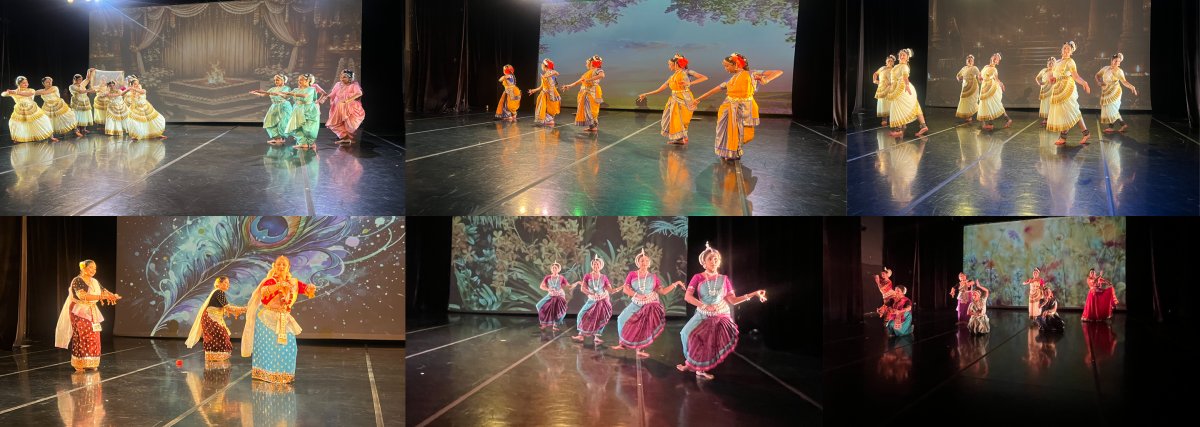 Conclusion Oneness: The Blossoming ultimately functioned as both artistic presentation and reflective inquiry, demonstrating how diverse classical dance forms can communicate shared emotional and philosophical truths without losing their individual identities. The integration of movement, music, costume, and stage design created an immersive aesthetic environment in which form and feeling remained inseparable; each tradition retained its specificity while contributing to an overarching sense of cohesion. Realized through the collective effort of nearly fifty artists under the artistic direction of Anupama Srivastava, Niharika Mohanty, Madhuri Kishore, Dr. Deepa Mahadevan, Bindu Pratap, Mousumi Bose, and Chandreyee Mukherjee of the Bay Area, the production reflected not only careful curation but also deep artistic trust and collaboration. In this sense, the creative process itself became an embodiment of its theme - individual voices merging into a unified, dynamic whole. The program concluded to an enthusiastic audience response, affirming both its artistic impact and its resonant message of interconnectedness and shared belonging. This spirit finds a natural home in the San Francisco Bay Area, one of the world's leading centers of innovation across technology, the arts, design, and business. The region continues to attract individuals from around the globe who seek to engage with diverse cultures and channel their imagination through the cross-pollination of ideas. The artists featured in this performance bring with them that spirit of curiosity, energy, and creative rigor that fuels cross-cultural experimentation in the arts. What unfolds is not merely a finished production, but a living space for dialogue - one that nurtures the creative spirit of the community. In this way, the performance reflects a broader understanding of creative ecosystems, as articulated by Richard Florida in his book The Rise of the Creative Class: that truly vibrant cultural centers emerge from an interplay of diversity, artistic vitality, economic opportunity, and a sense of place that encourages interaction and the free exchange of ideas. Through this lens, Oneness: The Blossoming stands not only as a performance, but as a testament to the enduring power of collective creativity in shaping shared cultural meaning.  Dr. Rohini Dandavate is a distinguished practitioner of Odissi dance and a scholar in the field of Cultural Policy and Arts Administration, holding a doctorate from The Ohio State University. Born and raised in Cuttack, Odisha, she received her training in Odissi at Kala Vikash Kendra under the guidance of revered gurus including Dr. Menaka Thakkar, Guru Raghunath Dutta, Guru Ramani Ranjan Jena, and Guru Kelucharan Mohapatra. Blending academic insight with artistic practice, Dr. Dandavate designs workshops and curricula for educational institutions and community organizations that promote cultural diversity through the lens of traditional arts. She has produced multimedia resources to support Odissi dance education and authored numerous papers on Odissi, arts administration, cultural policy, and dance education. |
