
|     |
|
| |

 Samarpana Festival and Vibhuti- Satish Surie-mail: satishism@yahoo.co.in April 12, 2026 SAMARPANA FESTIVAL Photos: Prof K.S. Krishnamurthy and Sudhi The Samarpana Music and Dance Festival, curated by Vinaya Narayanan, disciple of Bharati Shivaji, and her organisation, the Samarpana Mohiniyattam Collective, presented three artistes in celebration of their art form. The presentation, held on the 12th of February 2026 at Seva Sadan, Bengaluru, opened with a documentary on the life of Kalamandalam Kalyani Kuttyamma, offering audiences a moving glimpse into the legacy of one of Mohiniyattam's most revered figures, before the stage came alive with three dance performances. Bharatanatyam by Meera Sreenarayanan Meera Sreenarayanan delivered a captivating and emotionally resonant performance of the Swarajati "Emandayanara na sami" in raga Husseini, showcasing her signature blend of technical precision, expressive depth, and spiritual sensitivity. This devotional Telugu piece, composed by Tanjore Ponniah Pillai, served as a poignant highlight of the evening, its intricate melody and themes of profound longing for the divine beautifully translated into movement. Shaped under the thoughtful guidance of Indira Kadambi, the piece bore the hallmarks of a seasoned artistic vision, with jathi sequences composed by Kalamandalam Sharada lending the nritta sections a structural elegance and rhythmic ingenuity that enriched the overall experience. 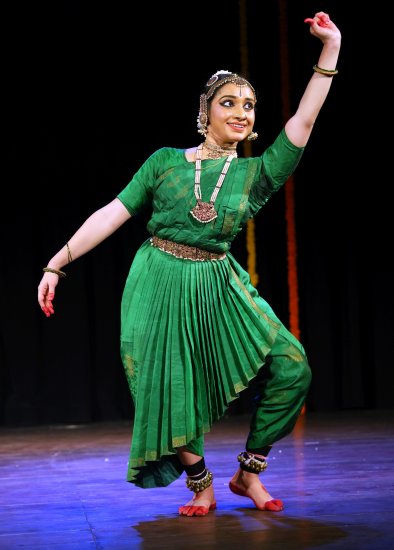 Meera Sreenarayanan From the opening phrases of the pallavi, Meera established a tone of intimate devotion, her abhinaya conveying the nayika's heartfelt plea to the beloved Lord with subtlety and sincerity. The slow, measured sancharis allowed her to explore the raga's melancholic yet soul-stirring nuances, those characteristic sliding gamakas and poignant lower octave phrases, through fluid neck movements, eloquent eye work, and restrained yet powerful facial expressions. Her portrayal captured the essence of a quiet yearning rather than overt drama, making the spiritual longing feel personal and immediate. The lyrics unfolded with the heroine's direct, almost accusatory question: "Who is that slow-gaited woman who has swayed your heart?" Meera portrayed this opening line with striking precision—her eyes narrowing in sharp suspicion, a subtle tilt of the head toward an imagined rival off-stage, and a graceful yet deliberate sway of the hips and torso to evoke the "mandagati" (slow, alluring gait) of the other woman. The description came alive not through exaggeration but through understated elegance: soft, languid hand gestures tracing the rival's walk, contrasted with the nayika's own momentarily stiffened posture, revealing inner turmoil. The narrative unfolded with compelling clarity as the nayika addressed King Pratapsimha in tones of gentle reproach and aching vulnerability. This poetic invocation of a rival, a classic descriptor from Indian classical literature and dance, was rendered by Meera with a delicate mix of dignified sorrow and restrained indignation. She then turned inward, lamenting that when he had conquered her heart, she had trusted him to keep it safe, only to discover that the battle of love had become hers alone to fight, while he had long since moved on. The emotional intelligence with which Meera inhabited these sentiments was remarkable, making the ancient verse feel achingly immediate. As the piece progressed into the more elaborate swara passages set to Rupaka tala, her technical command came to the fore. The jathi sequences, crafted by Kalamandalam Sharada, revealed themselves here in their full brilliance, their inventive rhythmic architecture providing Meera with a compelling framework within which to demonstrate her precision and control. Her crisp nritta was marked by sharp footwork, balanced araimandi, and well-executed teermanams that interwove seamlessly with the melodic structure. The korvais were executed with clarity and rhythmic vitality, yet never overshadowed the devotional mood. Instead, they served to heighten the emotional peaks of the composition. Particularly striking were her interpretations of the swara patterns, where she employed layered hastas and graceful spins to mirror the raga's flowing phrases, creating a visual echo of the music that felt both organic and inspired. What elevated this rendition above the ordinary was Meera's innate ability to infuse the choreography, shaped so carefully under Indira Kadambi's guidance, with imaginative touches without ever deviating from authenticity. Her nuanced abhinaya in the devotional sections, soft glances cast upward, gentle imploring gestures, and moments of quiet surrender, evoked a profound sense of spiritual ecstasy. The emotional depth she brought to lines expressing separation and union resonated deeply with the audience, drawing quiet sighs of appreciation that spoke to the intimacy she had created between performer and observer. A competent orchestral ensemble on a recorded track lent the performance cohesion and immersive warmth. The vocalist rendered the Telugu lyrics with bhava-rich clarity, and the mridangam offered a subtle yet supportive rhythmic framework that never competed with the dancer's expressiveness. The lighting and stage presence further enhanced the introspective atmosphere, ensuring that Meera's expressions remained the undisputed focal point throughout. Mohiniyattam by Smitha Rajan Carrying the weight of an extraordinary artistic legacy, Smitha Rajan took to the stage with a grace that felt both inherited and deeply personal. The daughter of Guru Sreedevi Rajan and granddaughter of the legendary Kalyani Kuttiyamma, Smitha embodied three generations of dedication to the classical dance form of Mohiniyattam, a lineage that remained palpable in every movement she offered. She commenced her performance with the Ganesha Sthuti, "Unni Ganapathi Thampurane," a composition written and choreographed by her mother, Guru Sreedevi Rajan. Set to the mellifluous raga Anandabhairavi and the measured cadence of tala adi, the piece unfolded as a devotional invocation, its melodic contours perfectly suited to Mohiniyattam's lyrical vocabulary. At the heart of the narrative lies the beloved tale of the divine contest between Ganesha and Muruga, two sons of Shiva and Parvati, each vying to be the first to circumnavigate the world. Where Muruga took to the skies astride his peacock, the wise Ganesha simply circled his parents, recognising them as his entire universe. Smitha brought this story to life with remarkable expressive depth, her abhinaya capturing the playful rivalry between the brothers, the gentle wisdom of Ganesha, and the quiet tenderness of divine parental love. What distinguished her rendition was the seamless marriage of devotion and technique. Subtle shifts in her gaze, the delicate arching of her brows, and the unhurried eloquence of her hands told the story as much as any choreographic sequence did. 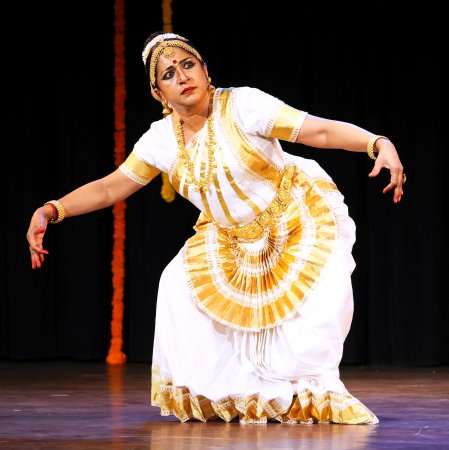 Smitha Rajan Smitha Rajan's second piece drew the audience into an altogether more intimate and tender world. A Padam set in Ragamalika and adi tala, this choreography bore the distinguished imprint of her grandmother, Kalamandalam Kalyani Kuttiyamma, one of the great custodians of the Mohiniyattam tradition. The piece unfolded as a portrait of longing and devotion. The heroine, consumed by love for Lord Krishna, had sent her trusted Sakhi as a messenger, entrusting her with the deepest feelings of her heart. As the narrative began, the heroine waited in quiet anticipation, her every thought reaching out to the one she so ardently adored. What followed was a moment of extraordinary grace. The Sakhi, upon coming into the divine presence of Lord Krishna, was entirely overwhelmed. Words failed her. She could only fall at his feet, tears flowing freely down her face, her very being undone by the encounter. It was a moment that Smitha rendered with luminous sensitivity, her abhinaya conveying the Sakhi's awe, surrender, and boundless emotion with a restraint that made the feeling all the more profound. Krishna, in his infinite compassion and understanding, received the Sakhi with gentleness. He listened, acknowledged the depth of the heroine's love, and sent the Sakhi back bearing his blessings. The Sakhi returned not with words alone but with joy radiating from within, transformed by the encounter and glowing with the knowledge that the love she had carried as messenger had been met with divine warmth and grace. Smitha's interpretation of this Padam was deeply felt and quietly powerful, a testament to the richness of the choreographic legacy she carried and the emotional maturity she brought to every moment on stage. Smitha Rajan saved her most ambitious and personal offering for last. The concluding piece of the evening was an original composition and choreography by the artiste herself, a significant milestone that announced not only her arrival as a mature performer but also her emergence as a creative voice of substance within the Mohiniyattam tradition. The work was a deeply layered invocation of Mahadeva, Lord Shiva, adorned by Vasuki, the king of serpents, coiled in divine splendour. Smitha's choreography moved through the many dimensions of the great god's being, celebrating his divine attributes with reverence and poetic imagination. The narrative reached its cosmic peak in the evocation of the Samudra Manthan, the churning of the celestial ocean, when Shiva consumed the deadly Halahala poison that threatened to annihilate all of creation. As Neelakantha, the blue-throated one, he held the poison within himself, standing as the supreme protector of the cosmos, sacrificing his own comfort for the preservation of the universe. Yet the choreography did not rest with mythology alone. With remarkable intellectual ambition, Smitha wove into the narrative the awakening of the Kundalini, that primal cosmic energy lying dormant within, and the eternal union of Purusha and Prakriti, consciousness and nature, the masculine and feminine principles from which all existence flows. This philosophical dimension elevated the piece beyond devotional expression into something approaching a meditation on the nature of creation itself. Smitha's facial expressions moved between awe, surrender, fierce devotion, and transcendent stillness with ease. The characteristic fluidity of Mohiniyattam, its wavelike grace and languid yet precise articulation of the body, was fully present in her movements, yet shaped here by an intensity befitting the grandeur of the subject. The choice of ragas, Punnagavarali and Sri, was particularly inspiring. Together, the ragas and the rhythm worked in seamless accord with the choreography, deepening the spiritual atmosphere that Smitha so carefully built across the arc of the piece. In composing and performing this work, Smitha Rajan demonstrated that she was not merely an inheritor of a great tradition but a thoughtful artiste fully capable of extending it. The evening as a whole left audiences with the sense of having witnessed something rare: three generations of a remarkable artistic lineage alive and in conversation, and a young dancer stepping forward with quiet confidence to claim her own place within it. Kuchipudi by Ambily Rajesh Ambily Rajesh, a disciple of Guru Geeta Padmakumar, presented a Kuchipudi recital that revealed an artiste attentive to tradition and musicality. The performance unfolded as a thoughtfully structured journey in which devotion, lyricism, and classical discipline were held in poised equilibrium. The evening commenced with the Ganesh Stuti "Sree Ganesha Charanam," a composition of Papanasam Sivan set in raga Tilang and adi tala. Tilang, with its firm and grounded tonal character, created an atmosphere of calm invocation. Beginning with the pallavi "Shri Ganesha charanam," the piece expressed complete surrender to the elephant-faced deity of wisdom. Ambily's abhinaya conveyed reverence without excess, allowing the devotional content to unfold with clarity and dignity. Her delineation of Gajanan, worshipped even by the celestial beings, reflected a sensitive reading of the sahitya. These opening moments established the aesthetic tenor of the recital, affirming a performer who allowed nritta and bhava to coexist as interdependent forces. 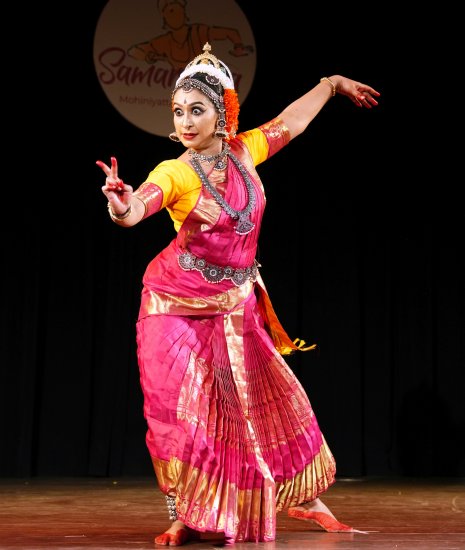 Ambily Rajesh The Annamacharya keertana "Paluku tenela talli" in raga Abheri opened the emotional core of the recital. Annamacharya's poetry, marked by intimate devotion to Lord Venkateswara, often renders the divine in deeply human terms, and this composition portrays the tender relationship between Alamelumanga and Lord Venkatesa. The narrative of the attendants discovering the Goddess at dawn, still immersed in the languor of nocturnal union, offered rich scope for abhinaya. Set in the plaintive sweetness of Abheri, the piece required emotional nuance and restraint. Ambily rose to the challenge with a performance marked by maturity and inwardness. Her portrayal of Alamelumanga's shy radiance, gentle embarrassment, and lingering affection was rendered through finely modulated expressions and controlled movement. The choreography of late Vempati Chinna Satyam provided structural clarity, balancing lyrical expansiveness with rhythmic definition. This segment revealed Ambily as an artiste capable of sustaining emotional continuity without sacrificing classical form. The recital culminated in Muthuswami Dikshitar's "Kanchadalayadakshi" in raga Kamalamanohari, also choreographed by Vempati Chinna Satyam. The composition extolled the Goddess in her resplendent majesty, describing her moon-like countenance, graceful gait, and her identity as the consort of Lord Ekambareshwar. Dikshitar's intricate synthesis of melodic architecture, rhythmic precision, and devotional depth demanded both technical assurance and interpretative insight. Ambily met these demands with commendable authority. A particularly evocative passage was the interpretation of the Manmadha Bhasmam episode within the depiction of Shiva and Parvati, introduced with imagination for the line referring to the moon-faced Goddess. This moment transformed poetic imagery into dramatic visualisation, demonstrating the dancer's capacity for interpretative expansion. The concluding sequences showcased the hallmark blend of grace and assertive footwork associated with the Kuchipudi idiom. The Goddess emerged not merely as an icon but as a living presence, bringing the recital to a close in an atmosphere of serene exaltation. The Samarpana festival concluded on a mellifluous note with an evocative ghazal presentation by Vandana Srinivasan, accompanied by the Madras Mehfil Group. Their carefully curated selection of compositions created an atmosphere of intimate reflection, offering a gentle yet resonant close to the festival. Vandana's expressive singing, marked by tonal warmth and lyrical sensitivity, was complemented by the ensemble's understated and refined accompaniment, together regaling the audience and leaving them in a mood of lingering nostalgia and quiet fulfilment. VIBHUTI Photo: Prof K.S. Krishnamurthy Citsabha Centre for Kuchipudi and Allied Arts presented their annual showcase, titled Vibhuti, on the 15th of February 2026, marking the auspicious occasion of Mahashivaratri. The evening opened with performances by the school's students, before culminating in a stellar Kuchipudi performance by Sannidha Rajasagi. Sannidha Rajasagi's Kuchipudi recital offered an evening of thoughtfully curated pieces that revealed not just technical accomplishment, but the rarer gift of genuine artistic depth. She opened with "Adityam Aasrayaami", a composition by Carnatic musician Garimella Balakrishna Prasad, rendered as an ode to Lord Surya. The timing felt auspicious, as the sun god is venerated throughout the sacred month of Maagha. What made Sannidha's rendering particularly impressive was her ability to navigate the dual dimensions of the composition: the physical grandeur of the sun as a cosmic force, and its deeper metaphysical significance as the sustainer of all life. Her abhinaya was clear-eyed and purposeful, never slipping into decoration for its own sake. 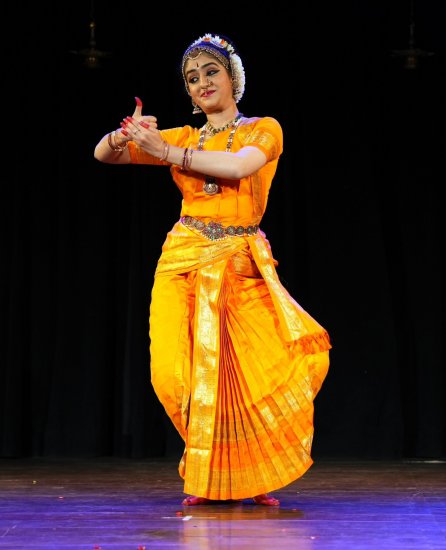 Sannidha Rajasagi "Chandrasekharam sada bhajehum" set in the hauntingly beautiful Margahindola ragam, was a composition of Muthuswami Dikshitar, and in the hands of a lesser dancer, its meditative quality could easily have flattened into stillness. Choreographed by Sannidha's guru, Hari Rama Murthy, this invocation of Lord Siva was anything but static. It pulsed with the hallmark qualities of Kuchipudi at its finest: footwork of quicksilver precision, transitions of athletic authority, and above all, a saatvikaabhinaya of striking intensity. Sannidha inhabited the devotional world of the piece completely, her face and eyes doing as much expressive work as her hands and feet. The evening's most memorable moment came with the concluding Nandagopala Krishna Tarangam, once again Guru Hari Rama Murthy's choreography, which drew on the timeless story of Sudama and Krishna. The tarangam form, with its demands of extraordinary balance and lyrical grace, was a true test of a dancer's maturity, and Sannidha met it with poise. What elevated her performance here was her capacity to become her characters rather than merely depict them, a quality that cannot be taught so much as cultivated over years of sincere practice. The devotion, the longing, the overwhelming joy of reunion, all of it registered with quiet authenticity. A thread that wove elegantly through all three pieces was vachikaabhinaya, the art of emoting through the spoken word, handled with confidence and clarity throughout the evening. Vocal support across all three pieces was provided by the prolific musician D.S.V. Sastry, whose musicianship anchored each composition with warmth and precision, giving Sannidha a rich sonic landscape to inhabit. 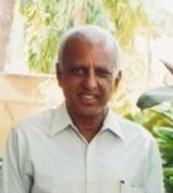 Bangalore based Satish Suri is an avid dance rasika besides being a life member of the Music and Arts Society. |
