
|     |
|
| |

 A resonance of Navarasa in the works of Purandara Dasa- Y.K. Sandhya Sharmae-mail: ykss77@yahoo.com April 11, 2026 Purandara Dasa, the pre-eminent among Dasas, famously hailed as "Dasarendra Purandara Dasaravya," composed more than four lakh kirtanas (devotional songs). Like the saying, "There is no leaf a goat doesn't touch," there is no topic he did not touch in his compositions. He portrayed an objective meaningful and analytical analysis of all facets of life around us. He meaningfully mocked the world's flaws, superficialities, and absurdities, trying to open people's eyes. His own life is a brilliant model for a philosophical understanding of life. It is an equally heartfelt narrative, a practical illustration of mundane attachments and detachment. Therefore, his songs, with life experience as their backdrop, are a beautiful blending of all flavors (rasas), emotions (bhavas), and fragrance (gandhas). 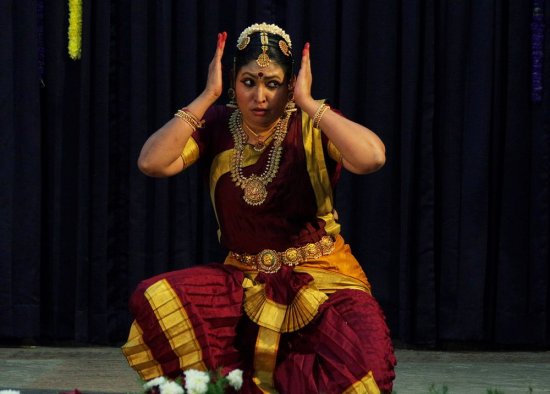 Purnima Rajini In many of his works, Purandara Dasa brings in exemplary stories, making the ultimate aesthetic experience of the emotions emerge in a resonance of Navarasas. The honey of rasa (aesthetic experience) in his words is touchingly beautiful. Choosing such highly appropriate and meaningful works, dancer Purnima Rajini seamlessly wove them into a harmonious garland of aesthetic delights and presented them delightfully, in her unique conceptualization of choreography. She recently presented 'Nritya Naivedya' of Purandara Bhakti Rasayana at the Sri Venkateshwara Temple in Devagiri, with devotional absorption. The "Jagadoddharana Adisidaleshode" dripping with love and maternal affection (shringara and vatsalya), beautifully captured the unadulterated motherly love, in association with Bala Krishna's naughtiness and wonderful miracles, resonating subtle love. Purnima, in her presentation, made effective view of her expert abhinaya, based on experience. She brought to life the variety of toddler Krishna's crawling, innocent glances, play, and naughty acts, and how Yashoda gets exhausted by her son's teasing, providing aesthetic delight and spreading emotional depth in the elegant flow of her angika abhinaya (bodily movements), giving joy. Subsequently, mocks Dasa, saying, "You say you know everything, don't you? But didn't leave your bad habit." He holds a mirror to the contradictions and absurdities of social facets in a comedic vein. He presented several examples of hypocrisy and pretension in a humorous style of abhinaya, effectively narrating, and Purnima exuded her sensitive abhinaya. This work with a worldview mindset provided ample scope for the artiste's creative imagination. Later, he surrendered to Sri Hari, saying, "Won't compassion come now, on your Dasa?" exhibiting the peak of humility, and Purnima demonstrated the compassionate (karuna) emotion of Dasa bhava. In "Chandrachuda Shiva Shankara Parvati Ramana...", opening his furious third eye to burn Kamadeva for disturbing his deep meditation, Purnima materialized the scene with her wrathful raudra facial expressions, bloodshot eyes, and powerful bodily movements. 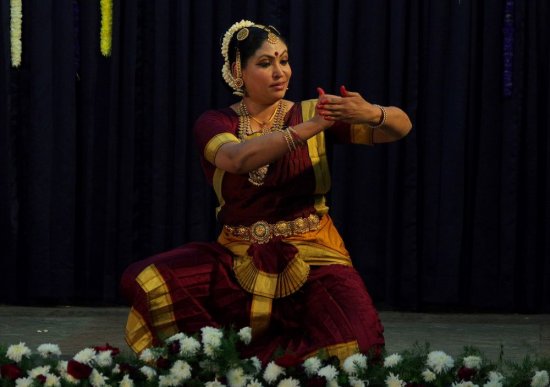 Purnima Rajini The heart wrenching passage (sanchari) depicted Sri Hari protecting the innocent, trusting devotee Prahlada. The artiste's thrilling abhinaya as Narasimha and Hiranyakashipu received praise and applause from the audience. In the work "Do not say Yama cannot be seen anywhere," depicting the unique experience of divine realization, she showed Sri Rama's dual aspect: the Sri Rama who protects in distress, also becomes the wicked, destroying Yama, materializing veera rasa (heroic sentiment). Young Krishna, scared of Gumma (bogey man), terrified, implores his mother, "Do not call Gumma." In these beautiful scenes, Purnima portrayed the terrifying (bhayanaka) sentiment. In the various disgusting situations in life where one is tired and disgusted, saying, "What did you write, Brahma?" she revealed disgust (bibhatsa). Based on the famous incident of Kalinga Mardhana in Sri Krishna's adventurous sagas, she expressed the wondrous (adbhuta) sentiment, singing, "Ranga danced wonderfully..." At the beginning of the composition, Bala Krishna and his friends were playing ball, and Purnima depicted the scene of their panic and confusion when it fell into the Kalindi pool, responding as a child with children, beautifully showing the bewildered expression. The victory dance of Bala Krishna, subduing the furious Kalinga with its spread hood, matching the dancer's defiant dance, controlling it, and dancing on its hood, created wonder. In the Kurukshetra battlefield scene, in the dialogue between Krishna and Arjuna, Krishna instilling strength into the collapsed Arjuna, and with the support of his courage, he knocking down his grandfather Bhishma, were heartfelt. Later, all was sorrow. But, Purnima, concentrating on the final peace sentiment (shanta rasa) - a state of equanimity - and steadfast facial expression, presented the story of old Bhishma on his bed of arrows, symbolic of steadfastness and a serene state of mind, singing, "Narayana, the strength of your name."  YK Sandhya Sharma is a Kannada author, poetess and dance-drama critic. |
