
|     |
|
| |

 Draupadi's Mahabharata: Visually rich with deeper potential- Ratna Bharati Acharyae-mail: ratnabharati@gmail.com Photos: Vansh Sarwan April 8, 2026 'Draupadi's Mahabharata' was presented by Nrityantar Academy of Performing Arts, Bengaluru, on 31 March 2026 at Stein Auditorium, India Habitat Centre, New Delhi. The choreography and direction were by Madhulita Mohapatra. The production opened with a beautifully crafted prologue, set to evocative music and accompanied by English narration. The opening was aesthetically strong, establishing an immersive atmosphere. 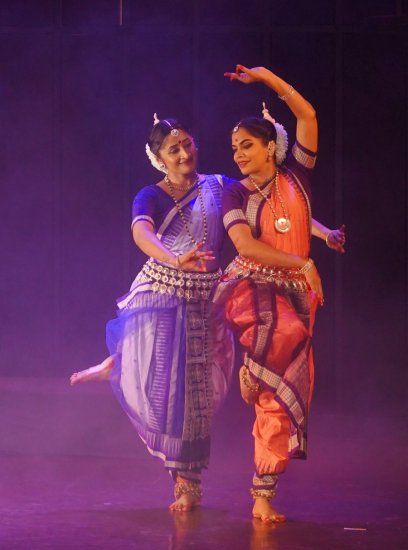 The narrative unfolded with the birth of Draupadi, followed by the introduction of the Kauravas and Pandavas, each depicted with clarity. The Swayamvara sequence captured the gathering of kings, Draupadi's refusal of Karna, and Arjuna's successful completion of the challenge, culminating in their marriage. A key turning point followed when Arjuna refers to Draupadi as "alms," and Kunti, unaware, asks that it be shared among the five brothers - leading to Draupadi becoming the wife of all five Pandavas. The Indraprastha sequence was visually striking, with Duryodhana's fall portrayed effectively, and Draupadi's remark "andha ra putra andha" clearly setting the stage for his desire for revenge. This transitioned seamlessly into the game of dice orchestrated by Shakuni, culminating in the disrobing of Draupadi and eventually the Mahabharata war. The Gita upadesha scene, where Krishna guides Arjuna towards his dharma, was presented with clarity and purpose. The war commenced effectively with the sound of the conch, and the narrative moved through key episodes - from Bhishma's fall to Abhimanyu's death, and finally the demise of Karna, Dushasana, and Duryodhana - maintaining continuity while covering significant milestones. In the climax, Draupadi's reflection on the consequences of war conveyed a powerful message - that victory often carries the weight of deep loss. The narrative was clear and well-structured, with a smooth progression that sustained audience engagement. While the storytelling was effective, a deeper exploration through choreography - particularly in capturing the emotional subtleties of each character specially Draupadi and Arjuna - would have further elevated the overall impact. 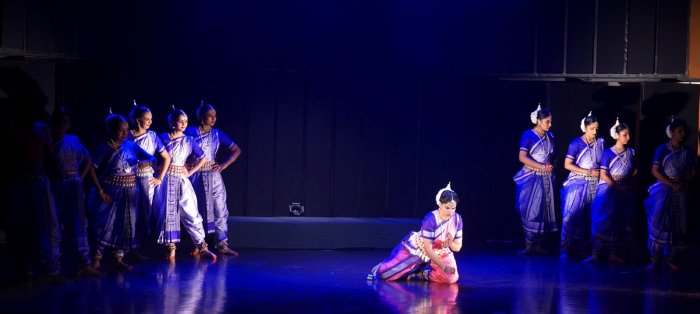 Draupadi, also known as Yajnaseni and Krishnaa, embodies immense strength and dignity, with a natural resilience shaped by her unique position as the wife of five extraordinary warriors. However, this emotional complexity does not consistently come through in the portrayal, leaving her characterization somewhat underexplored. Pivotal moments in her journey - especially her transition into accepting five husbands - carry profound psychological weight and would benefit from a more nuanced portrayal of her inner conflict and perspective. Similarly, the disrobing episode, one of the most defining moments in the epic, calls for a seamless integration of humiliation, anger, betrayal, and unwavering dignity; a more cohesive and intense expression of these emotions would have significantly heightened its dramatic effect. 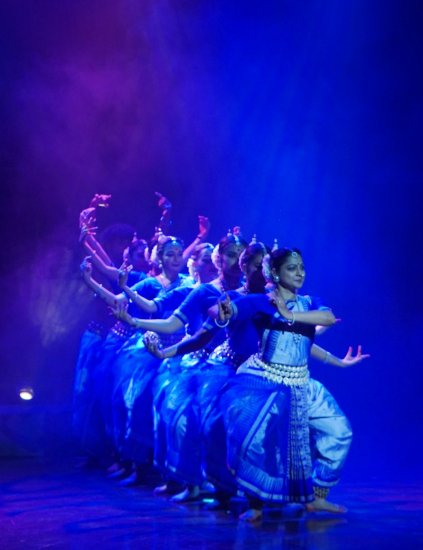 In the scene where Krishna imparts the wisdom of the Gita to Arjuna, the presence of the flute feels slightly out of context. Traditionally, Krishna in the Mahabharata is depicted as a charioteer and guide rather than the flute-bearing figure of Vrindavan, and even in the Vishwaroopa, the flute is not represented. Its reappearance without a clear transition slightly disrupts visual continuity, from a dramaturgical standpoint. In another instance, the same dancer portraying Arjuna appears as a Kaurava warrior in the Chakravyuha sequence immediately after, momentarily affecting narrative continuity. Thoughtful casting or minor staging adjustments would help maintain clarity. Additionally, the portrayal of Arjuna remains somewhat underdeveloped in emotional depth, particularly in pivotal moments such as Abhimanyu's death and the Swayamvara scenes. 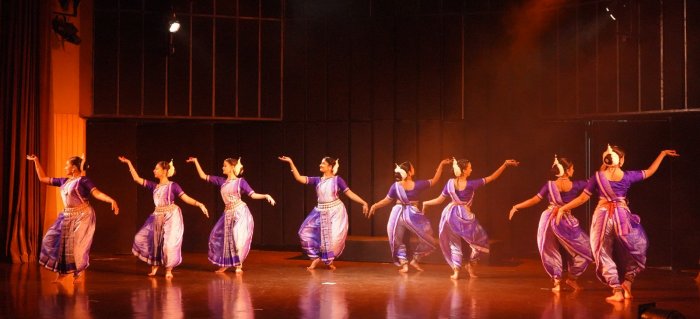 On a positive note, the portrayal of Bhima stood out - dynamic, powerful, and expressive. The artiste brought remarkable energy and conviction to the role, especially in the combat sequences with Duryodhana and Dushasana, with physicality and expressions well aligned to the character. The dancers' interpretation of the narration in both the opening and closing segments was striking and visually engaging, sustaining the audience's attention and creating an immersive experience. The climax, culminating in Draupadi's realization, left a lasting impression. Musically, the production was highly appealing. Pieces like "Dheera samire" were rendered beautifully, and the overall composition and narration were engaging. Rupak Kumar Parida's voice was particularly commendable, adding depth and richness to the musical experience. Guru Dhaneswar Swain's mardala accompaniment, especially during the dice game and war sequences, was powerful and evocative. A gentle suggestion would be to minimize the use of techno sounds, as the traditional mardala itself possesses a rich expressive quality and is fully capable of conveying dramatic intensity. Poetic contributions were by Ashtavadhani Balachandra Bhat (Sanskrit) and Kedar Mishra (Odia). In conclusion, the production reflects strong artistic potential and a capable ensemble. Presenting such an expansive narrative within a limited timeframe is commendable; however, a deeper exploration of Draupadi's perspective would have added greater emotional resonance and narrative clarity. The inclusion of Abhimanyu's episode felt less essential within the overall structure. The foundation is undoubtedly strong; with thoughtful refinement, it has the potential to evolve into a more powerful and compelling presentation that truly does justice to its "Title".  Ratna Bharati Acharya is an Odissi practitioner with a deep passion for the classical, folk, and traditional art forms of India, particularly those of Odisha. Her current focus involves an in-depth exploration of these artistic traditions, researching into their origins and subtle intricacies. Through her writing and storytelling, she strives to share these narratives with children as well as international audiences, especially dancers living beyond India's borders. |
