
|     |
|
| |

 Jharna: A confluence of ideas, choreography and emerging voices- Archana MuraliPhotos: Iyappan / A4medias April 8, 2026 The fifth edition of Jharna, Bharata Kalanjali's choreographic initiative in Chennai, once again brought this vision to life, creating a space where emerging dancers could present original works, test new ideas, and engage with the classical form in personal and imaginative ways. Meaning 'waterfall,' Jharna evokes the image of a flowing source of art, ideas, and creativity. Conceived as a space for exploration within the classical form, the initiative is presented by Bharata Kalanjali and Kaladham Trust. It was conceptualised by the managing team at Bharata Kalanjali, along with the seed support of Dr. Anuradha Murali through the Shiva Saroja Scholarship Fund. Over the years, Jharna has steadily grown into a significant platform that nurtures young choreographers and encourages them to engage with Bharatanatyam in innovative and meaningful ways. This year's edition once again highlighted the vitality of the next generation of dancers, offering audiences a series of compelling performances that thoughtfully balanced tradition with contemporary imagination. Hosted at the TEACH Auditorium in the SPASTN campus in Taramani, Chennai, the festival took place across two weekends: February 21, 22, 28, and March 1, 2026. Over these four evenings, audiences were treated to a carefully curated line-up of original choreographic works presented by a select group of dancers chosen through a rigorous selection process. From a large pool of applicants, five artistes were selected to present their work, each bringing a distinctive artistic voice while remaining deeply rooted in the grammar of Bharatanatyam. What distinguishes Jharna from many traditional dance festivals is its focus on choreography and creative exploration. Rather than presenting standard repertoire pieces, the platform invites artistes to develop original works that respond to contemporary questions, personal narratives, or new interpretations of classical themes. The result is a festival that feels both reflective and forward-looking, offering audiences an opportunity to witness Bharatanatyam in dialogue with the world around it. 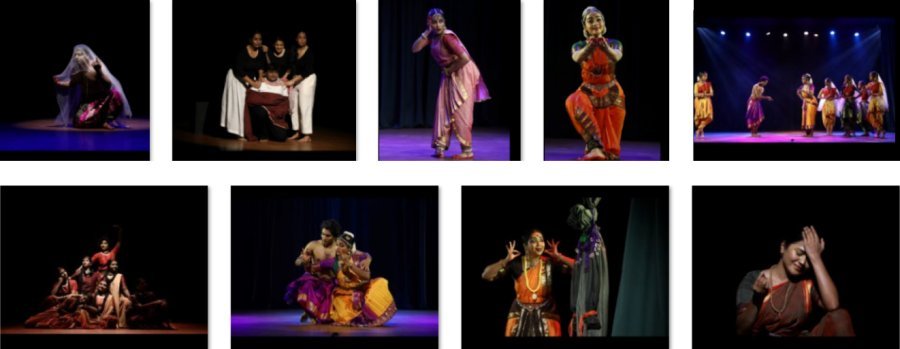 Sahana Selvaganesh's presentation stood out for its nuanced approach to storytelling and movement. Her piece, Tied: The Weaver's Loom, explored a woman's journey of finding her own voice, using the act of weaving as a powerful metaphor. The performance gently unfolded the inner world of the protagonist, drawing the audience into a reflective and intimate narrative space. Through thoughtfully layered choreography and expressive depth, the work revealed a refined sensitivity to both rhythm and emotion. Himanshu Srivastava's choreography, The Abandoned Gopi, brought a refreshing perspective, maintaining a dynamic interplay between rhythmic passages and expressive segments, creating a performance that was both engaging and thought-provoking. Bangalore based Kruthika Thyagarajan's Mounam - The Voices of Silence displayed an elegant sense of structure and musicality. Her choreography reflected a thoughtful engagement with the tradition while presenting a personal artistic voice. Navyashree K. N. presented Venkatesha Shreesha on the Lord of the Seven Hills. Rooted in deep bhakti, the piece emphasized devotion to Lord Venkatesha while evoking a profound sense of spirituality through its expressive choreography and contemplative mood. Vaishnavi Dhore's A Woman Beyond Letters - Bahinabai Chaudhari on the unsung heroine Bahinabai, drew the audience into a deeply emotional landscape, creating moments of quiet reflection alongside powerful dramatic intensity. Bahinabai, a Marathi poetess, is remembered for her poignant writings that reflected on marital abuse and the many challenges faced by women, and the choreography brought these themes to life with sensitivity and depth. In addition to the selected artistes, the festival featured special guest presentations that broadened its artistic dialogue. One such highlight Pinnal: Tales of a Sisterhood choreographed by Divya Nayar and presented by the Dakshina repertory, explored themes of feminine strength and solidarity through layered choreography that blended classical technique with contemporary sensibilities. Its evocative storytelling and ensemble dynamics added a powerful dimension to the festival. Another notable presentation was In Other Words by Bhavya Balantrapu. The play explored how language can serve as a powerful medium in shaping one’s identity in a country as diverse as India. This marked the first time that a theatre presentation was featured at Jharna, reflecting the festival’s openness to interdisciplinary artistic expression. The festival concluded with a mesmerising presentation by the renowned duo, Renjith and Vijna, who performed Vrajam Bhaje; an evocative ensemble work that journeys into Vraja not merely as a physical landscape, but as a sacred state of being. It was a true visual treat. Witnessing Renjith as Krishna and Vijna as Radha felt as though the divine pair themselves had come alive on stage. A special mention must be made of Shreya, who anchored the festival as the emcee, bringing clarity, warmth, and continuity to each evening's proceedings. Jharna created a valuable space where emerging choreographers could present their work to an attentive and appreciative audience, while also engaging with guest reviewers who offered insightful feedback and suggestions on their performances. The distinguished panel of reviewers included renowned dancers and scholars: Priya Murle, Shijith Nambiar and Parvathy Menon, Dr. Gayathri Kannan, and Dr. Anita Ratnam, whose thoughtful observations and feedback created a meaningful space for dialogue and reflection for the participating artistes. Equally important was the collective effort that brought the festival to life. The dedication of the technical team, along with the committed staff of Bharata Kalanjali and Kaladham Trust, ensured the smooth execution of every performance. It was truly a collaborative effort, where every contribution played a role in the festival's success. Jharna Edition 5 was made possible through the generous support of its patrons and partners. The Shiva Saroja Scholarship Fund, instituted by Dr. Anuradha Murali, served as the Founding Patron, while Sundaram Finance was the Title Patron. The festival was also supported by other organizations and individual patrons, whose contributions played an important role in enabling the platform and sustaining its vision. Throughout the festival, what emerged most clearly was a strong sense of a supportive and nurturing artistic environment. Each evening unfolded with a spirit of anticipation and discovery, as audiences encountered fresh ideas and perspectives within the evolving framework of Bharatanatyam. As the performances concluded, the festival left audiences with a sense of optimism about the future of the art form. With its thoughtful curation and inspiring performances, Jharna Edition 5 stands as a testament to the enduring vitality of classical dance and the importance of platforms that nurture the voices of tomorrow.  Archana Murali is an Arts Manager and musician. |
