
|     |
|
| |

 Prabaha- Debolina Ghoshe-mail: debolina.2009@rediffmail.com Photos: Tarun Bose April 6, 2026 He is Vishnu, he is Maheswara and he is sakshat Param Brahma for all Odissi dancers and dance lovers - Guru Kelucharan Mohapatra, whose very name is awe inspiring. This year, it is his birth centenary. Indian classical dance is like a swirling river which keeps its flow continued through guru shishya parampara. Odissi dancer Rina Jana is marvellously bearing the torch of guru shishya parampara and presented it for the Kolkata rasikas on 16th March at Gyan Manch. She is the founder of Krittika Bhowanipore which was established in 2002. Rina Jana has given mesmerizing performances in India and abroad. Now it was the time to mesmerise Kolkata by Prabaha - the flow of life. We can see Prabaha as a gallery consisting of six different canvases. They are Yatra, Ardhanareeswara, Khambaj Pallavi, Manipuri Pung Cholam - Dhol Cholam, Mukhari Pallavi and Moksha. 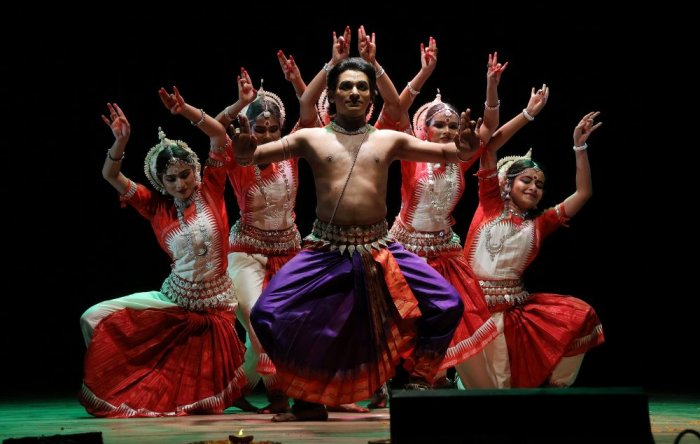 Yatra performance by the dancers of Krittika Foundation The first canvas of Yatra transported us to the world of aesthetic pleasure where nature, life and spirituality are intermingled with each other. Indian art forms are interdisciplinary. So, if we speak on dance we also have to talk about music and instruments. Rina Jana was ably supported by Sukanta Kundu (music) and Guru Dhaneswar Swain (rhythm) to create her own choreography. Drawing impetus from Adi Shankaracharya's Jagannath Ashtakam, Rina Jana divulged the soul's euphoric journey towards the sublime infinite, following the path of joy beckoning devotion as its undercurrent, in Yatra. The song depicts the different incidents of Krishna's life since his childhood. Sincere and rigorous practice of the dancers were reflected in the performance. Description of Kaliya Daman was picturesque. Coordination of all the Gopis with Krishna was praiseworthy. Their final rendition to lord Jagannath took the audience to a superior realm of art. Sanjay Shaw, Sucheta Sarkar, Anisha Mondal, Mala Sinha, Sujan Maity, Piyali Das, Subhadeepa Dey and Aparajita Majumdar of Krittika cast a magical spell over Kolkata rasikas with their graceful Odissi. 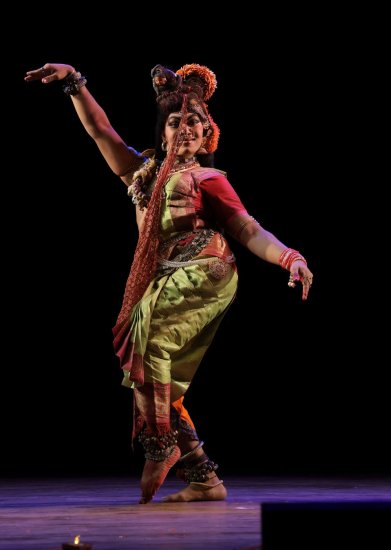 Ardhanareeswara by Rithwik Venkat The second canvas was painted with Kuchipudi dance. Shiva means the Shunya (emptiness), the unmanifested entity holds all the dualities like life and death, creation and destruction and even male and female. Our philosophy of Ardhanareeswara is the finest example of showing unity in duality. Rithwik Venkat, son of stalwart Kuchipudi dancer Ardhanareeswaram Venkat presented Ardhanareeswara. The costume was designed by his grandmother, a proof of her innovative idea and Rithwik's artistic lineage. Combination of vigorous utplavana and soft bhramaris in his jathis expressed the duality (masculine and feminine) in unity. And finally, his chalam before his exit from the stage was noteworthy. A single body was moving with a masculine vigour and feminine grace, an ultimate answer that can nullify any gender chaos. 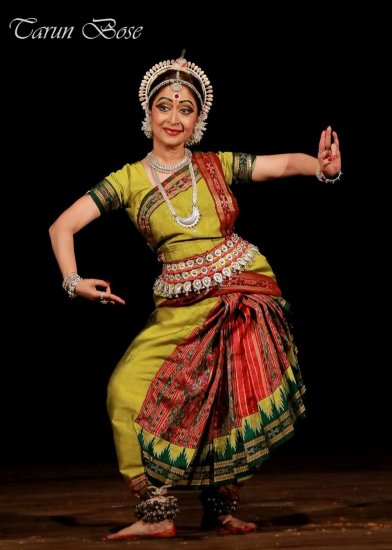 Nandini Ghosal In the third canvas, there were all elements to cherish and admire the Odissi dance form. Nandini Ghoshal, disciple of Guru Kelucharan Mohapatra, is a well-versed performer of national and international stature. She presented Khambaj Pallavi, a lyrical and graceful Pallavi, based on Khambaj raga, Jhampa taal and was beautifully rendered. The Pallavi was choreographed by Guru Kelucharan Mohapatra and music was by Pt. Bhubaneswar Mishra. 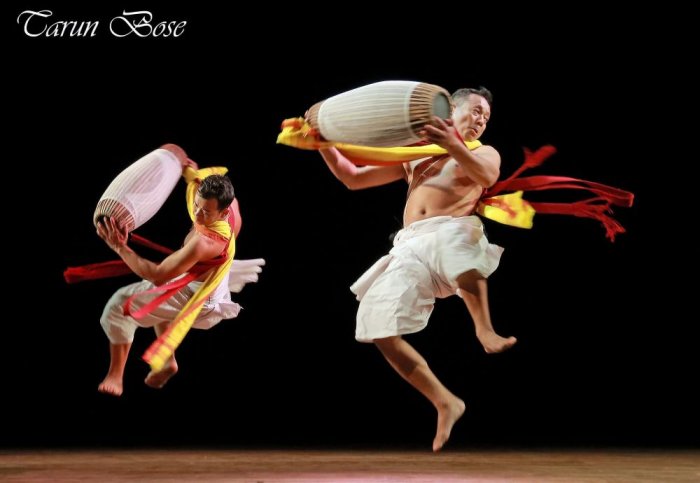 Thingam Brojen Kumar Singha and Thingam Kulla Chandra Singha The fourth canvas was a vibrant blast of Manipuri percussion and movement, titled Murchhana. At first Pung Cholam was presented by Thingam Brojen Singha and Thingam Kulla Chandra Singha marked by agility of their body, rhythmic leaps and spins and acrobatic movements. With Manipuri dhol, mardala was played by Sanjay Shaw who is a disciple of Rina Jana. She encouraged Sanjay to learn mardala from great percussionists Guru Banamali Maharana and Guru Dhaneswar Swain. The repeated phrase played and danced in the song was... "sachiro dulal, sachiro dulal" in Bengali language which means son of mother Sachi, who is none other than Sri Chaitanya Mahaprabhu, and what immense influence he had on our cultural landscape, starting from North East of India to far South India. 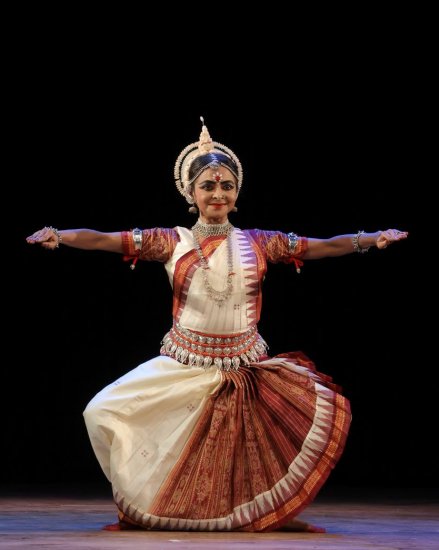 Rina Jana The fifth canvas was dedicated to Sanjukta Panigrahi. Rina Jana was her ardent disciple. Guru Kelucharan Mohapatra composed Mukhari Pallavi specially for Sanjukta Panigrahi who was his dedicated disciple. The music was composed in raag Mukhari and taal Jyoti. Rina Jana performed this gracefully and dedicated it to Sanjukta Panigrahi. Moksha, the final canvas was a beautiful ending to 'Prabaha' where the dancers brought the rasikas to a superior realm of art. Rina Jana and Nandini Ghoshal performed it with technical mastery, joyful expression and profound grace. The whole program was nicely anchored by Aklanta Majumdar and Parama Bhowmick paid homage to Guru Kelucharan Mohapatra on behalf of Krittika through words of reverence. On this evening, Rina Jana honoured Guru Khagendra Barman (Bharatanatyam exponent), Prakriti Dutta (singer), Sangita Pal (theatre artiste) and Prashant Arora (photographer). Overall, it was a pleasant aesthetic experience.  Debolina Ghosh is an MPhil scholar, Department of Sociology, University of Burdwan, West Bengal. |
