
|     |
|
| |

 Stree Shakti - The power of womanhood- Sujatha Ramanathane-mail: sujatharam13@gmail.com Photos: Adesh Pednekar March 30, 2026 On March 8, 2026, I witnessed a grand celebration of "diversity and inclusion of womanhood", titled 'Stree Shakti' conceptualized and curated by senior Kathak exponent Shila Mehta. This was hosted and led by 'The Women's Wing of the Sri Shanmukhananda Fine Arts and Sangeetha Sabha' on International Women's Day. The evening celebrated 'Soldiers of Culture', a concept coined by Shila Mehta. The performances integrated classical and folk dance with multimedia, voiceovers, and digital film. The script concept and digital film direction was by Shila Mehta. An elevating script and an immersive voice-over by Dr. Lata Surendra guided the audience through the entire journey. Digital Filmmaking and Editing by Sunil Kumar Sharma, Design and Visual Aesthetics by Sumana Sachidananda. The event united about 75 senior artistes and rising talent in addition to tributes to revered inspirational Gurus through the digital medium. Shila Mehta's visionary conceptualization offered a "wholesome treat," much like an Indian thali, seamlessly weaving together solo and group performances into a cohesive narrative. The experience left me feeling like I witnessed a beautiful well integrated "margam" which was a timeless flow. The journey began in "Adi Kaal," transcending time and space with an offering to the divine energy of TriDevi. It transitioned into the Epic period, honoring great women such as Sita, Amba Shikhandi, Kausalya, Shoorpanakha, and Kunti. The performance then honored a 12th-century divine poet-saint before moving to community rituals celebrating jana shakti through Garba - a transition that felt as meaningful as a Thillana within a margam. This was followed by Kolattam, leading to a grand finale of "Vande Mataram," symbolizing Dharti Maata (Mother Earth), the force that binds humanity together. Throughout the performance, integrated multimedia enhanced the visual appeal, resonating deeply with every audience member. A beautifully woven film transcended time periods to celebrate the contributions of inspiring leaders and torchbearers. The featured legends included: Dr. Vyjayanthimala Bali (Film & Bharatanatyam), Dr. Roshan Kumari (Kathak), Sunayana Hazarilal (Kathak), Darshana Jhaveri (Manipuri), Dr. Padma Subrahmanyam (Bharatanrityam), Dr. Sonal Mansingh (Bharatanatyam & Odissi), Hema Malini (Film, Bharatanatyam & MP) , Dr. Shovana Narayan (Kathak), and Mumbai's senior artistes. 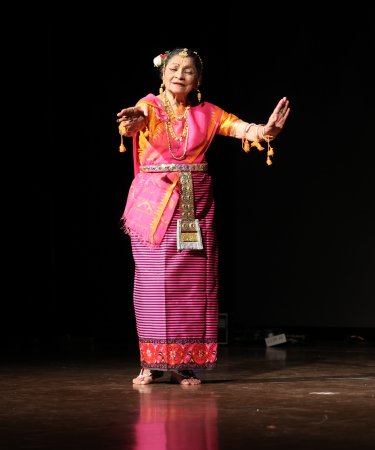 Darshana Jhaveri The performance unfolded with Darshana Jhaveri who opened the evening with a Mangalacharan, an invocation to Lord Krishna. Her presence exuded sattvika and auspiciousness, her graceful movements flowing effortlessly like a river - a beautiful prologue traditionally found in the Rasleela and Sankirtan of Manipur. 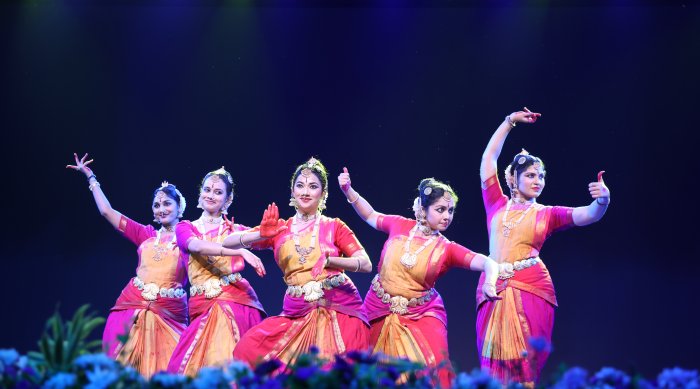 Sandhya Purecha's ensemble This was followed by a vibrant Bharatanatyam performance by Dr. Sandhya Purecha's ensemble, who presented a Mallari and a TriDevi Kautuvam. A Mallari is a traditional invocatory composition that evokes the atmosphere of a temple procession. Originating from the music played on the nadaswaram during deity processions, it is a pure dance piece focused on rhythm, speed, and devotion. The dancers entered each representing a musical instrument in traditional temple format and then depicted Devi as Bhairavi, Mahalakshmi, and Savitri. The performance concluded with a mangal mantra. The synergy of rhythm, movement, and expression made it an absolute delight for the audience. 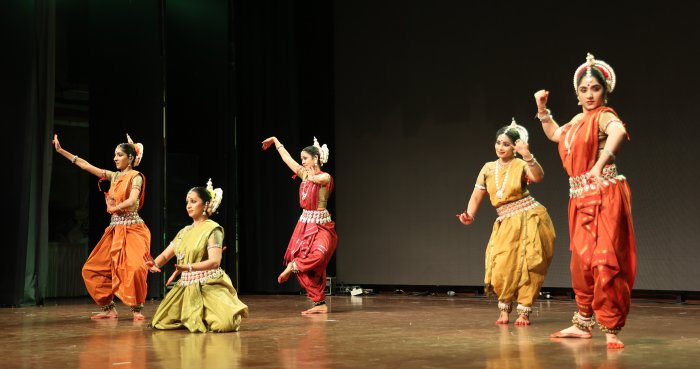 Daksha Mashruwala's ensemble The Odissi dancers of Daksha Mashruwala's ensemble presented a soulful salutation to the Divine Mother, celebrating her diverse forms as Kalyani, Bageshwari, Durga, and Saraswati. Through evocative music and movement, they channeled primordial energy to honor Devi, the Goddess. 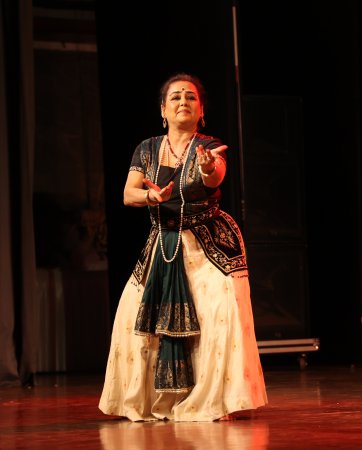 Prateesha Suresh In a Sattriya performance of 'Sita's Abhishaap,' Prateesha Suresh brought to life an excerpt from Madhav Kandali's 14th-century Assamese Ramayan. The episode portrays a distressed but resolute Sita confronting Ravana. Unwavering in her strength, she warns Ravana of his inevitable end at the hands of Lord Rama. 'Nimitta,' a Kathak performance led by Shila Mehta and her disciples, exuded pure brilliance in narrative, expression, and storytelling. The production employed the chaarani ballad singing style and text that mainly exists in Rajasthan and Gujarat. The production masterfully connected with the present by bringing the powerful character of Shikhandi to relevance. Central to its impact was the concept of "becoming the character" - a complex portrayal of Shikhandi executed with profound elegance. Born as a woman and destined to live as a man, Shikhandi became the nimitta (the cause) of Bhishma's fall in the Mahabharata. This work reflects on a purpose that transcends gender: "Stay behind me, Arjuna. Let me be your shield. I am neither 'he' nor 'she' - I am Nimitta." 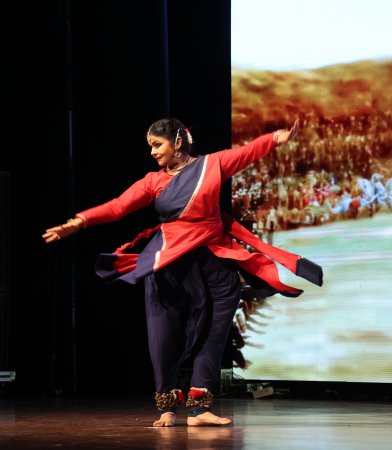 Shila Mehta 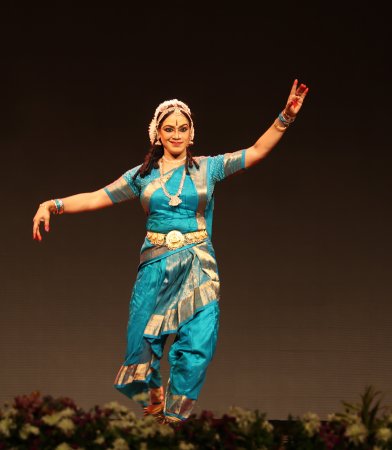 Aishwarya Harish Aishwarya Harish presented two significant and contrasting characters from the Ramayana through Bharatanrityam: the devoted Kausalya and the complex Shoorpankha. The performance captured Kausalya's maternal affection as she asks Rama to appear before her as a child rather than in his divine Vishnu Swarupa. In stark contrast, the portrayal of Shoorpankha - the catalyst for her brother Ravana's downfall - was both powerful and witty. Her demeanor and expression stood out, particularly in how she paradoxically looks up to Sita despite her own jealousy. 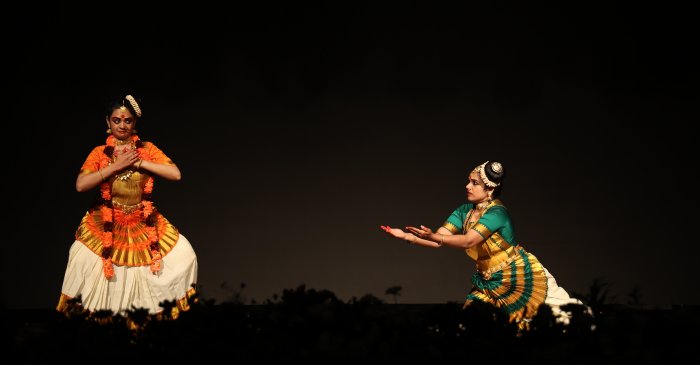 Sujatha Nair and group Sujatha Nair and her ensemble presented 'Kunthi,' one of the Panchakanyas, through the graceful medium of Mohiniyattam. This impactful performance brought to life the characters of Surya, Kunthi, and Karna. In a particularly poignant scene, a veiled Kunthi meets Karna for an intense conversation that culminates in a solemn promise: she will indeed have five sons. The performance beautifully portrayed Kunthi as the quintessential mother, whose life is defined by her devotion and purpose for her children. 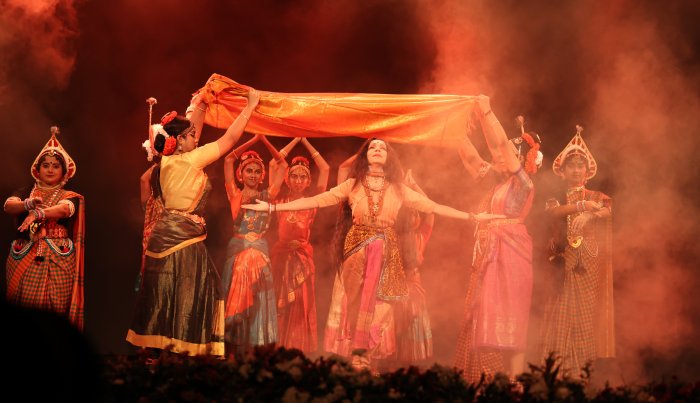 Lata Surendra and group 'Akka Mahadevi' was a spiritually stirring performance. Led by Dr. Lata Surendra, this performance featured an evocative blend of Yakshagana and Bharatanatyam to honor Akka Mahadevi - the 12th-century revolutionary poet-saint and ardent devotee of Lord Shiva (Chennamallikarjuna). A pioneer who defied societal norms, she famously rejected royal marriage and renounced all worldly possessions - even her clothes - to walk covered only by her long hair in a quest for divine union. Through the classic "Roopamu Joochi" varnam, the performance explored the profound conversation between the soul and the Divine. It captured the essence of Madhura Bhakti - an intense, yearning devotion portrayed with deep emotional resonance. 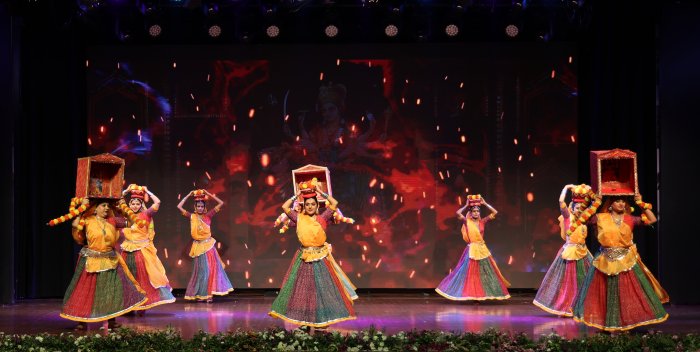 Maa Garba 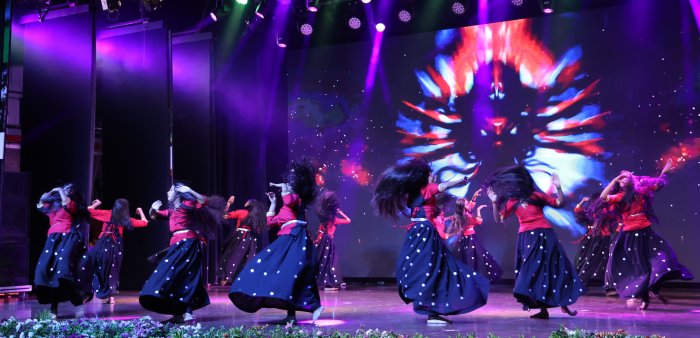 Daakla Garba As we moved into the finale, the segments began with an energetic Garba performance presented by Nupur Zankar ensemble and Shri T. P. Bhatia Science College and KES's Sardar Vallabhbhai Patel Vividhlakshi Vidyalaya choreographed by Shila Mehta. Garba takes its name from the Sanskrit Garbha - meaning the womb and is a celebration of the Divine Feminine performed with exuberant energy. The dancers moved in perfect synchronization and rhythm, while their coordinated costumes added to the overall visual spectacle. 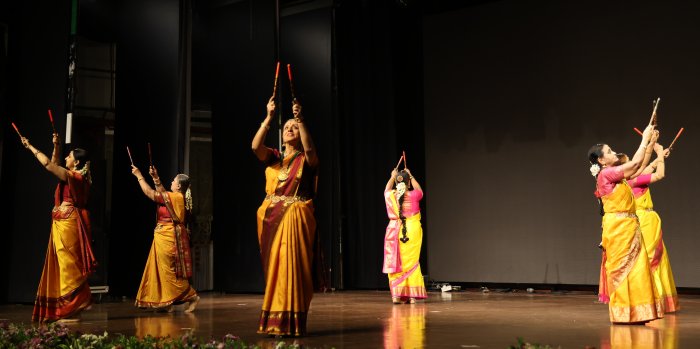 Kolattam The next segment was an elegant Kolattam performance by the senior Gurus of ABHAI Mumbai Shakha, choreography Guru Padmini Radhakrishnan. A symbol of community harmony, Kolattam is traditionally performed during festivals to the Thiruppugazh hymns by the saint-poet Arunagirinathar in praise of Lord Muruga. This musical form of worship was further enhanced by the dancers' thoughtfully chosen costumes, which accentuated their fluid, harmonious movements. The evening reached its crescendo with a collective rendition of 'Vande Mataram' by all the artistes. This finale celebrated the spirit of Bhoomi Maata - Mother Earth - the force that binds and holds us all together. As the curtains fell, the audience departed with a profound sense of respect for womanhood, inspired by a journey that wove together episodes from mythology and the great epics with the present day. 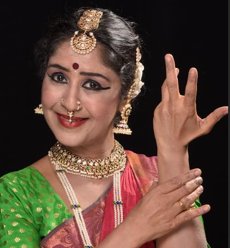 Sujatha Ramanathan is a versatile Mumbai based Bharatanatyam artiste, trained in Carnatic music, Karanas, and Natyashastra. Formerly a banker and Cost Accountant, she brings a unique, disciplined perspective to her dedicated practice as a full-time artiste. |
