
|     |
|
| |

 Multifaceted artistry in classical dance traditions- Satish Surie-mail: satishism@yahoo.co.in March 21, 2026 KRITAJNATA Photos: Prof . K.S. Krishnamurthy Chandraguru School of Dance presented 'Kritajnata', a national dance festival conceived as an offering of gratitude, on February 19th at Seva Sadan. Organised by Bengaluru-based Kuchipudi dancer Gururaju N, the evening brought together distinguished exponents of Kuchipudi, Kathak, Bharatanatyam, and Odissi in a richly devotional confluence. 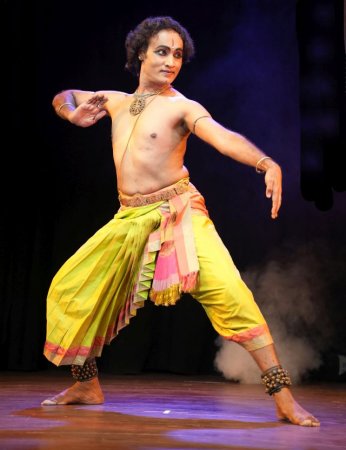 Gururaju Gururaju opened the festival with a commanding Kuchipudi recital that reflected the rigorous training he received under Vyjayanthi Kashi. He commenced with a vibrant Shiva composition in raga Hamsanandi and adi tala, choreographed by his guru, invoking the cosmic grandeur of Nataraja. Powerful footwork, dynamic spins, and sculptural poses evoked the vigour of tandava, balanced by fluid abhinaya that captured Shiva's fierce yet benevolent essence. He followed this with a Tarangam in raga Durga, performed with poised control on the brass plate. The intricate rhythmic patterns and measured grace underscored both technical finesse and devotional surrender, creating an atmosphere of spiritual intensity. 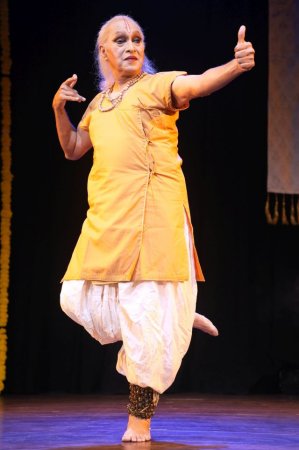 Mysore Nagaraj Kathak exponent Mysore Nagaraj brought contemplative gravitas to the stage. Opening with a Dhrupad in raga Malkauns, invoking Lord Shiva, preceded by the shloka "Angikam bhuvanam yasya," he established a tone of inward stillness. His subsequent portrayal of Shabari Moksha from the Ramayana was marked by nuanced storytelling and expressive depth. Through refined footwork and evocative abhinaya, he delineated Shabari's decades of patient devotion and the climactic moment of liberation upon Rama's arrival. Notably, Nagaraj seamlessly transitioned between the roles of Tulsidas, Rama, and Shabari, demonstrating versatility and emotional clarity while sustaining a mood of quiet spiritual authority. 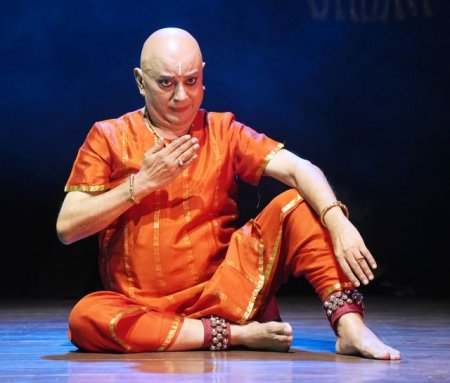 Deepak Mazumdar Senior Bharatanatyam guru Deepak Mazumdar followed with a deeply reflective presentation. He began with Tulsidas's "Tumaku chalat Ramachandra," rendering the childhood of Rama with tender expressivity, particularly in his portrayal of Queen Kaushalya's maternal devotion. The ashtapadi "Kuru yadu nandana" from Jayadeva's Gita Govinda explored Radha's post-union state with philosophical subtlety, his abhinaya dissolving the boundaries between performer and persona. He concluded with "Ram charan sukhdai," a meditative invocation of Rama's grace, delivered with inward absorption and bhakti rasa. 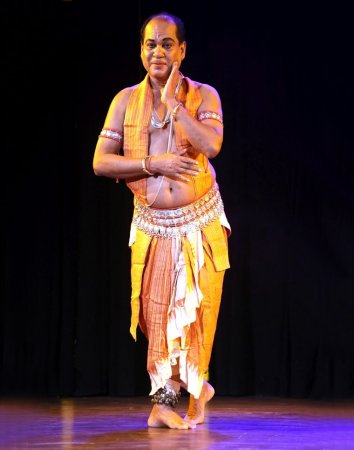 Bichitrananda Swain 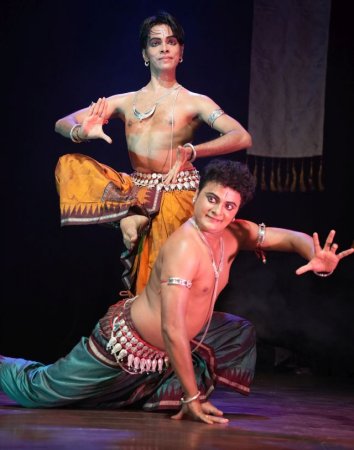 Santosh Ram and Sameer Kumar Panigrahi 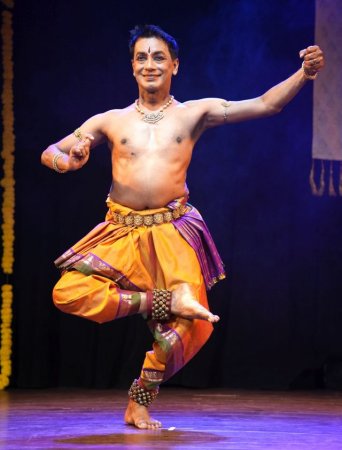 Shankar Kandasamy The evening concluded with Bharatanatyam exponent Shankar Kandasamy, whose recital combined technical command with interpretative depth. He opened with Muthuswami Dikshitar's "Kanjadalayatakshi Kamakshi" in raga Kamalamanohari, evoking the resplendent grace of Goddess Kamakshi through seamless integration of jatis, adavus, and expressive abhinaya. The Manmadha Bhasmam episode stood out for its dramatic layering and emotional intensity. Transitioning to Tulsidas's "Sri Ramachandra kripalu bhajamana," he balanced lyrical description with devotional fervour. The festival reached a luminous close with "Madhurashtakam" inspired by M.S. Subbulakshmi's immortal rendering. Kandasamy's portrayal celebrated the sweetness of Krishna in all aspects, each invocation of "Madhuram" deepening the atmosphere of ecstatic devotion. "Kritajnata" thus unfolded as a thoughtfully curated homage to the devotional core of India's classical dance traditions, uniting diverse styles in a shared offering of gratitude and artistry. KUMUDINI - A LOTUS SAGA Photo: Aswin Vijay In Indian thought, the lotus stands as one of the most enduring metaphors of spiritual awakening - its immaculate bloom rising unsullied from the depths of muddy waters. Drawing upon this evocative symbolism, Bharatanatyam dancer Prathibha Satyavannan presented 'Kumudini - A Lotus Saga' on February 21, 2026, at Punyah Theatre in Bengaluru. Conceptualised by Akshathaa Somaiah, the production unfolded as a contemplative dance narrative that intertwined philosophical reflection, devotional imagery, and aesthetic grace, offering audiences not merely a performance but a meditative artistic experience. Moving beyond the format of a conventional recital, Kumudini explored the many resonances of the lotus, its spiritual associations in Puranic lore, its symbolism of purity and transcendence, and its intimate connection with the divine imagery of Lord Krishna. Prathibha, a dedicated disciple of the late Padmini Ramachandran and presently mentored by senior disciple Kirti Ramgopal, brought to the stage a mature artistic sensibility. Her performance reflected years of disciplined training balanced with thoughtful introspection, resulting in an experience that felt both technically assured and emotionally sincere. The choreography opened with grounded, deliberate movements that evoked the density of material existence, the "muddy waters" from which the lotus emerges. Gradually, Prathibha's movement vocabulary expanded into fluid, ascending phrases that beautifully suggested the flower's gentle rise and unfolding bloom. Her abhinaya found particular eloquence in passages describing Krishna's lotus-like attributes, the luminous beauty of his eyes, palms, face, and feet. Through articulate hastas, precise rhythmic footwork, and nuanced facial expression, she conveyed the paradox of spiritual purity flourishing amidst worldly entanglement, inviting the audience to contemplate the possibility of inner clarity amid life's complexities. 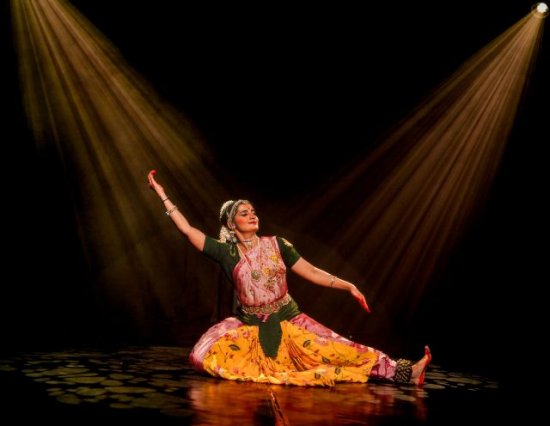 Prathibha Satyavannan One of the evening's most evocative segments envisioned Vrajabhumi as a cosmic lotus, its twelve sacred forests unfolding like petals. Here, Prathibha's spatial imagination came to the fore. Circular pathways traced across the stage, expansive arm movements, and layered rhythmic patterns created the impression of a living mandala, transforming the performance space into a symbolic universe rooted in the lotus motif. Philosophical reflection and devotional bhakti blended seamlessly, culminating in a moment where the dancer's form seemed almost to embody the blossoming flower itself. The production also incorporated evocative sancharis portraying episodes from Krishna's divine narrative, the vanquishing of the demons Shakatasura and Bakasura, thwarting the several attempts of Kamsa to kill Krishna, lifting Govardhana Hill, protecting Draupadi's honour, the ten avatars of Vishnu, the relief to Kubja the hunchback, the battlefield discourse to Arjuna at Kurukshetra, the death wish of Bhisma and the enchanting Ras Leela and intrinsic beauty of Radha. Each episode was rendered with narrative clarity and sensitivity, seamlessly integrated into the overarching thematic arc. Musically, the evening maintained a contemplative flow through a carefully curated palette of ragas and talas. The recorded ensemble featured Rohit Bhat Uppoor on vocals, Vinay Nagarajan on mridangam, Jayaram Kikkeri on flute, Pranav Dath on rhythm pad, Kruthika Thyagarajan on nattuvangam, and Subrahmanya Hegde and Suma Rani on sitar. Their combined musical textures provided a resonant sonic landscape that supported the unfolding narrative. Lighting design by Nidhag Karunad subtly complemented the thematic progression, shifting from subdued earthy tones suggesting origins to luminous golden hues evoking blossoming and spiritual illumination. The concluding segment expanded the lotus imagery to invoke Lord Jagannath, the all-embracing Lord of the Universe whose presence transcends worldly divisions of caste, status, or circumstance. Here, Prathibha's abhinaya achieved a remarkable stillness within motion. Gathering softly into anjali mudra, with palms resting at the heart and eyes lowered in quiet devotion, she conveyed surrender through restraint rather than spectacle. Gentle sways, delicate neck movements, and understated rhythmic phrases suggested offering and contemplation, while her serene expression radiated a quiet inner grace - echoing both the lotus's untouched purity and Jagannath's boundless compassion. Throughout the recital, Prathibha demonstrated a firm command over Bharatanatyam's grammar, clear lines, rhythmic precision, and balanced poise. Yet what ultimately distinguished 'Kumudini' was its sincerity. Technique served not merely as a display but as a vehicle for introspection and spiritual engagement through dance. CALL OF THE FLUTE PICHWAI, KUCHIPUDI AND BANSURI IN SACRED DIALOGUE Photos: Sudhi There are evenings in the performing arts that gently dissolve the boundaries between disciplines and invite the audience into a more immersive aesthetic experience. 'Call of the Flute' presented at the Bangalore International Centre on February 23, 2026, unfolded as such an occasion. Conceived as a meeting ground for Pichwai painting, Kuchipudi dance, and the resonant voice of the bansuri, the presentation revealed how visual art, movement, and music can converge within a shared devotional imagination centred on Krishna. 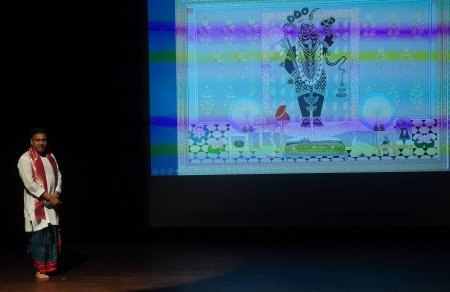 Shan Bhatnagar Painter Shan Bhatnagar served as both narrator and visual guide through a series of Pichwai works that drew inspiration from the Nathdwara tradition while exploring contemporary depth through colour and texture. Executed in oils on cloth, the paintings were not treated as static backdrops but as living presences within the performance space. As the evening progressed, they appeared to gather new meaning once the dancer and musician entered into dialogue with them. Bhatnagar's narration introduced the audience to the philosophical framework of the Pushti Marg. He described the four devotional attitudes through which Krishna is approached. In Madhurya Bhava, Krishna emerges as the divine beloved, the eternal centre of the Ras Leela. Dasya Bhava positions the devotee as a servant who turns to Krishna as protector and fulfiller of wishes. Vatsalya Bhava imagines the deity as the playful child who delights in butter and mischief. Sakha Bhava celebrates Krishna as a companion and confidant, a relationship expressed with warmth, teasing and affectionate irreverence. The artiste also spoke about the ritual life of the Shrinathji Temple, whose eight daily darshanas are accompanied by specific musical modes of Haveli Sangeet and elaborate adornment of the deity. A particularly evocative moment came when members of the audience were offered cotton scented with Chaitra Gulab, the rare rose fragrance associated with the temple rituals. The gesture subtly transformed the atmosphere of the hall, allowing scent to join image and sound as part of the evening's sensory landscape. 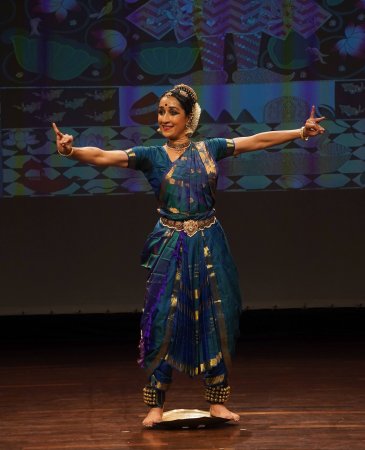 Amrita Lahiri If the paintings created a devotional environment, the Kuchipudi performance of Amrita Lahiri animated that space with movement and emotion. Appearing in radiant yellow, she opened with a portrayal of the Ras Leela that suggested both longing and celebration. Her abhinaya remained understated and controlled, relying on clarity of gesture and gaze rather than overt theatricality. The result was an inwardly focused portrayal of devotion that allowed the emotional content to emerge with quiet intensity. Several moments stood out for their delicacy of detail. In one sequence, she suggested a gopi pausing in the midst of churning butter, the movement suspended before dissolving into flowing circular gestures that seemed to follow the imagined sound of Krishna's flute. Elsewhere, a poised one-legged stance evoked a grazing cow before unfolding into balanced turns. A lotus blossomed gradually through layered hand gestures and widening eyes. Her nritta passages remained crisp and rhythmically assured, always anchored in expressive intention. 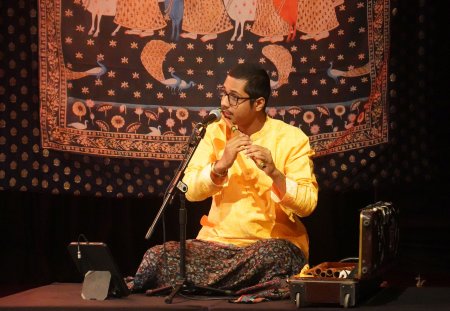 Hrishikesh Mazumdar The evening also included an engaging exchange between Lahiri and flautist Hrishikesh Mazumdar. Their lively dialogue celebrated the exuberance of Holi, with rhythmic footwork and melodic improvisation unfolding in playful conversation. The dancer responded to the flute's phrases with quicksilver shifts of energy, creating a spirited interplay that drew appreciative smiles from the audience. Mazumdar's solo interlude in Khamas provided the contemplative centre of the programme. In the quiet that followed the dance segment, the bansuri's voice expanded through the hall with lyrical restraint. His exploration of the raga lingered on notes of yearning, allowing phrases to unfold with patience and emotional clarity. The audience remained absorbed in the delicate progression of melody. The performance concluded with the much-loved Kuchipudi Tarangam, a work that combines narrative devotion with striking technical virtuosity. Lahiri began by invoking the many facets of Krishna, from the son of Nanda to the cosmic guide who revealed the Vishwarupa to Arjuna on the battlefield of Kurukshetra. The narrative then moved toward the playful child who subdued the serpent Kaliya through rhythmic grace. Balancing upon the traditional brass plate, Lahiri executed the intricate footwork that defines this celebrated segment of Kuchipudi repertoire. The ringing resonance of metal underfoot created a rhythmic dialogue that heightened the excitement of the moment. Despite the demanding technique, she maintained composure and clarity of line, bringing the evening to an energetic and satisfying conclusion. She concluded the recital with a Thillana set in raga Desh, interspersed with evocative verses from Rabindranath Tagore's "Esho shyamalo sundaro". The lines, inviting the dark and beautiful one to arrive with his life giving presence, carried the gentle lyricism characteristic of Tagore's poetry. By weaving these Bengali verses into the Thillana, the dancer quietly acknowledged her own cultural roots while retaining the structure of the classical form. The piece unfolded with brisk rhythmic passages and buoyant movement, where crisp footwork alternated with expressive flourishes. Classical precision remained firmly at the centre of the choreography, yet the performance radiated an infectious energy that animated the concluding segment. The result was a vibrant finale in which rhythmic vitality and expressive warmth came together, leaving the audience with a sense of celebratory completion. By the close of the evening, the peacock feather, the flute, the painted lotus and the ringing brass plate had become interconnected symbols within a single aesthetic journey. The audience departed not only with memories of the performance but also with the lingering fragrance of Chaitra Gulab, a subtle reminder of the sacred world the artistes had briefly brought to life.  Bangalore based Satish Suri is an avid dance rasika besides being a life member of the Music and Arts Society. |
