
|     |
|
| |

 Thematic dance performances with philosophical overtones- Satish Surie-mail: satishism@yahoo.co.in March 4, 2026 MAALYADA - ANDAL'S SACRED GARLAND A luminous dance offering of devotion Photos: Prof K.S.Krishnamurthy On 26 January, HCL Concerts presented 'Maalyada' at the Chowdiah Memorial Hall, featuring Rama Vaidyanathan and her disciples. An 80-minute Bharatanatyam offering, Maalyada - Andal's Sacred Garland, unfolded like a living prayer, reawakening the devotional spirit of Andal's 9th-century Thiruppavai. Drawing inspiration from D. Jeysundhar's illuminating scholarship, Vaidyanathan conceived and choreographed a work that felt like a luminous pilgrimage, guiding the audience through the nine-fold path of devotion that Andal and her companions tread in their yearning for Krishna. 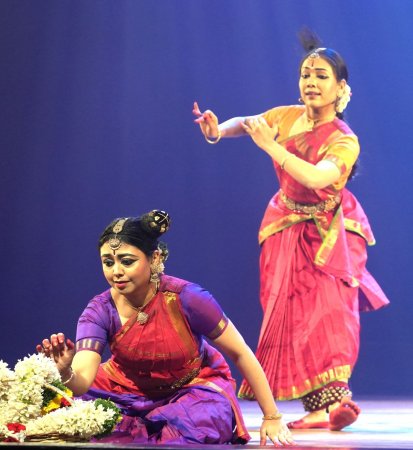 Maalyada From the very first moment, the stage glowed with quiet intensity. Scarlet costumes, subtly varied to distinguish each sakhi, responded vividly to the play of light across the stage.The orchestra, positioned on raised pedestals at the four corners, enveloped the space in an omnipresent yet gentle sonic embrace, Sudha Raghuraman's resonant voice emanating from the heart of the stage, supported by Himanshu Srivastava's crisp nattuvangam, the warm, grounding pulse of the mridangam, and the liquid lyricism of Raghuraman's flute. Sannidhi Vaidyanathan's sensitive embellishments on the mridangam and cymbals lent an added shimmer and flourish to the soundscape. Surya Rao's lighting never clamoured for attention; instead, it breathed—softening into dawn-like warmth or deepening into twilight reverence as emotional registers shifted. Sayani Chakraborty's Andal appeared first, alone in the pastoral fields of Srivilliputhur, weaving a garland for the deity while immersed in thoughts of Krishna. A flicker of playful transgression crossed her face; lifting the half-finished garland, she hesitated, then slipped it over her own head. Turning to a mirror, she encountered not her reflection but Krishna himself, mirroring her every tilt, glance, and beckoning gesture with divine precision. It was a moment of pure enchantment,two beings wearing the same garland, reaching toward one another yet never quite touching, a fragile dance of longing and recognition that drew the audience deep into Andal's intimate, secret world. What followed was a seamless unfolding of the nine forms of devotion, each pasuram translated into movement and meaning. Every segment opened with a haunting flute phrase, brief, suspended like incense in the air before yielding to the invigorating syllables of rhythmic jati, priming the body and spirit for surging passages of nritta. 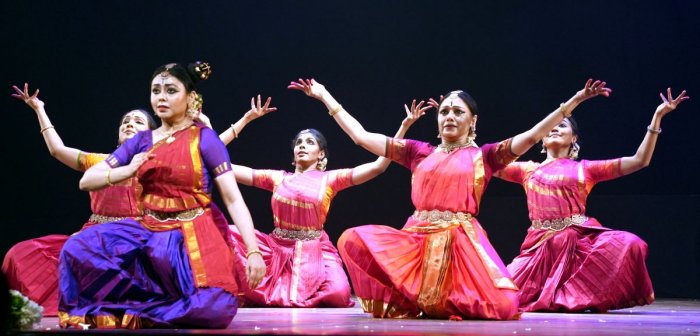 Maalyada Shravanam became an act of praise, where the very utterance of "Narayana" promised liberation. The sakhis were softly roused from sleep, called to rise and ready themselves for Margazhi, the most auspicious of months, beckons seekers to fulfil their vows through the Lord's grace. The beautiful child, his face radiant with divine light, was sung in loving reverence. In Smaranam, contemplation was rendered through disciplined austerity: fluid lines and restrained gestures evoked the purifying chill of an early-morning bath, quiet acts of charity, and a life pared down to its spiritual essence. Sankeerthanam burst forth in joyous praise of Lord Vamana, whose single stride spanned the three worlds; sweeping arms and buoyant footwork conjured monsoon rains, golden harvests, and vessels overflowing with abundance. Vandanam gathered the sakhis in collective prayer, their bodies arching in reverence as Padmanabha's shoulders rose like storm clouds, lightning flashing through sharp mudras as the Sudarshana Chakra, thunder resonating in the conch-like call of the Panchajanya, and rain scattering like arrows from the Saranga bow. In Archanam, surrender found tender expression as the dancers offered invisible flowers through open-palmed gestures, each petal a vow of unsullied devotion to the Lord who chose mortal birth in the Vrishni clan. Pada Sevanam brought the group to their knees at the lotus feet of the divine cowherd; circling movements and deep bows traced the compassion of the ten incarnations who descended for the world's welfare. Sakhyam explored the intimacy of divine friendship, Krishna's choice of humble Kuchela and Arjuna over the proud Duryodhana revealed through nuanced contrast, culminating in the Lord's steadfast guidance amid the turmoil of Kurukshetra. Dasyam celebrated the demon-slayer's effortless prowess, powerful stances and swift turns, portraying victories won with divine ease, before dissolving into gestures of humble servitude. Finally, Atma Nivedanam erased all separation, devotion across lifetimes, the yearning to remain forever in Krishna's presence, even beyond liberation, pulsed through every breath, culminating in the sublime anubhava of serving, experiencing, and becoming one with the divine. Throughout, Rama Vaidyanathan danced with a vitality, her lines incisive, her footwork electrifying her template unifying every pasuram yet always in organic harmony with her disciples. Reshika Sivakumar, Sayani Chakraborty, Shubhamani Chandrasekhar and Vaishnavi Dhore moved as seamless extensions of a shared devotional intent, their formations fluid, their abhinaya luminous. The choreography maintained a graceful continuity, allowing each facet of bhakti to reveal itself without excess, while the pure dance passages surged with controlled, exhilarating energy. As the final note faded and the dancers stilled, the audience rose as one in spontaneous tribute. MADHVA - THE ACHARYA AS HERO Solo Nritya Harikatha by P Praveen Kumar Photos: Madhukar / Universal Rasikas P Praveen Kumar's 'Madhva - The Acharya as Hero' presented on 29 January at Seva Sadan, stood out as a work of rare intellectual rigour and devotional intensity. Conceived, choreographed and performed by the artiste, this solo Nritya Harikatha reimagined Sri Madhvacharya, the thirteenth-century founder of Dvaita Vedanta, not merely as a towering philosopher but as a heroic presence embodying both spiritual radiance and moral and inner valour. 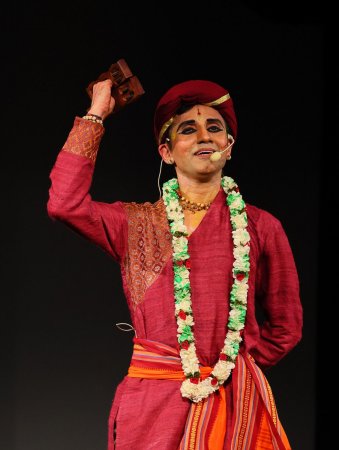 P Praveen Kumar The performance opened with a soulful invocation through a composition by Kalyani Devi, sister of Madhvacharya, tracing the Acharya's early life and familial grounding, immediately establishing a contemplative atmosphere. Appearing as a wandering ascetic in a simple kurta and turban, Praveen evoked Madhvacharya's austere life of discipline, dharma and unwavering bhakti. His portrayal remained restrained and inwardly focused. Emotion arose from conviction rather than embellishment, allowing the philosophical core of the work to unfold with clarity and dignity. A notable strength of the production lay in its narrative design. Spoken passages were seamlessly interwoven with dance, serving as organic transitions rather than explanatory interruptions. The script traced Madhvacharya's divine lineage as the third incarnation of Vayu, following Hanuman and Bhima, lending epic resonance to the philosophical journey. These ideas found vivid embodiment through Praveen's supple physicality. Animal motifs, elemental surges and symbolic imagery were articulated with precision. Particularly evocative was the depiction of Lakshmana's silent strength, offered as a metaphor for steadfast service and inner resolve, rendered through controlled abhinaya and sculptural stillness. Several vignettes depicting the Dasavatharas and the navavidha bhakti of Shravanam, Smaranam, Sankeerthanam, Vandanam, Archanam, Pada Sevanam, Sakhyam, Dasyam and Atma Nivedanam were delicately and poignantly expressed. These episodes revealed Praveen Kumar's nuanced understanding of devotional states and his ability to translate layered philosophical ideas into evocative movement and abhinaya without didacticism. Through a judicious interplay of nritta and abhinaya, the work posed timeless questions of who is God and where the divine is to be found, and responded through the tenets of Dvaita. The eternal distinction between Ishwara jiva and jagat and the omnipresence of divinity permeating all existence were communicated with choreographic intelligence. Praveen translated abstract metaphysics into sensorial experience. The nine navatattvas of Dvaita were animated not as doctrinal assertions but as lived principles articulated through rhythm, gesture and devotional intent. 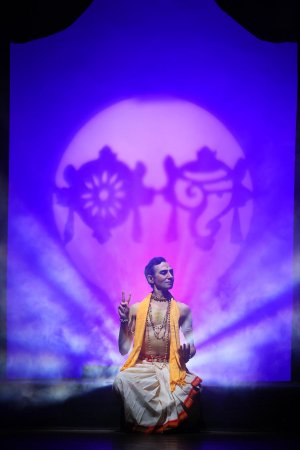 P Praveen Kumar The final sequence centred on the momentous episode of the discovery of the Bala Krishna murti and its consecration at Udupi, alongside the establishment of the eight ashta mathas. This culminating segment illuminated Sri Madhvacharya's divine role as an intermediary who brought the ancient Krishna idol from the northern sacred landscape of Dwaraka to the southern spiritual centre of Udupi, rendering the deity eternally accessible to devotees. The episode underscored Madhvacharya's heroic devotion and spiritual potency, portraying him as a philosopher, visionary and divine protector who bridged geography, theology and lived bhakti. In Praveen Kumar's choreography, this sacred narrative unfolded with evocative clarity. Fluid transitions traced the ocean journey, the revelation of the idol embedded in clay, the miraculous act of lifting and the ecstatic bearing of the murti to its destined abode. Kinetic nritta passages blended seamlessly with eloquent abhinaya, allowing wonder and reverence to arise organically and bringing the evening to a resonant contemplative close. The impact of the performance was significantly enhanced by a sensitive live music ensemble. Pradesh Achar's vocals anchored the narrative with clarity of diction and expressive depth, responding intuitively to both word and movement. Mahesha Swamy's flute provided lyrical contrast and moments of repose, while Navyashree's assured nattuvangam offered rhythmic structure and cohesion. Percussion support by Anoor Vinod Shyam on the mridangam and tabla added gravitas and kinetic energy, reinforcing shifts in tempo and mood. Nagaraj's understated lighting design complemented the dramaturgy, shaping an ambience that remained contemplative, focused and always in service of the philosophical arc. Madhva - The Acharya as Hero emerged as a thoughtful and dignified tribute to Sri Madhvacharya's enduring legacy as a fearless defender of truth, a philosopher of luminous clarity and a passionate proponent of Vishnu bhakti. In P Praveen Kumar's hands, philosophy found eloquent embodiment, offering the audience an experience that was reflective, invigorating and deeply moving. 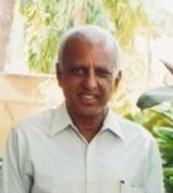 Bangalore based Satish Suri is an avid dance rasika besides being a life member of the Music and Arts Society. |
