
|     |
|
| |

 Decolonising the body, Reclaiming the voice:Reimagining Mohiniyattam in the modern spectacle- Dr. Lekha N.B.e-mail: vaishnavy@gmail.com March 2, 2026 The Nishagandhi Dance Festival 2026 organised by the Department of Tourism, Government of Kerala at the picturesque Nishagandhi Auditorium, Thiruvananthapuram, offered an intellectually stimulating and aesthetically rich experience for Mohiniyattam lovers this year. Two Mohiniyattam recitals stood out for their strong artistic vision and deeper cultural relevance. On 16 February 2026, Dr. Rachitha Ravi and her team presented the dance production Damitham, and on 17 February 2026, Sithara Balakrishnan presented a Mohiniyattam repertoire in the Sopanam style, choreographed by her guru, Dr. Kanak Rele. Both performances, though very different in approach, contributed significantly to what can be understood as a decolonial shift in Mohiniyattam reclaiming Kerala’s own aesthetic traditions and foregrounding women’s voices and experiences. It is no coincidence that both dancers won the Kerala Sangeetha Nataka Akademi Award for Mohiniyattam in 2024 and 2023, respectively. RECLAIMING THE SOPANAM AESTHETIC 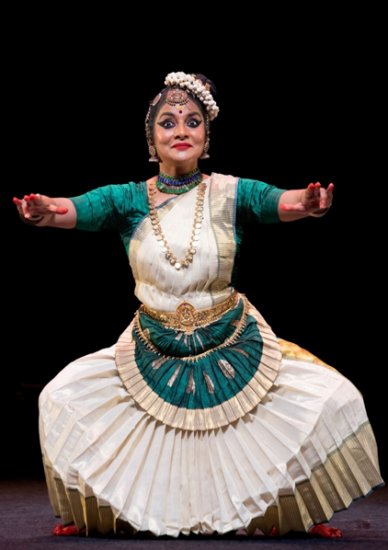 Sithara Balakrishnan Sithara Balakrishnan’s performance was remarkable for its strict adherence to the Sopanam style, which immediately created a distinct atmosphere different from the more familiar Carnatic-based Mohiniyattam recitals. Kalamandalam Gireeshan provided vocal support and nattuvangam, Naveen Anand performed on mridangam and maddalam, Murali Krishna played the veena, and Sajith Pappan accompanied on edakka. The combined presence of these instruments, especially maddalam and edakka, which are deeply connected to Kerala’s temple traditions, created a soundscape that was both powerful and emotionally immersive. The music did not function merely as accompaniment but as an equal narrative force that shaped the dancer’s movement and expression. She began her recital with the Ganapathi piece composed by Kavalam Narayana Panicker in raga Arabhi and adi tala. What made this presentation particularly meaningful was its cultural interpretation. Instead of presenting Ganapathi as a deity enclosed within temple structures, the choreography positioned him outside the temple, under a tree, reflecting the older Kerala system of sacred groves or kavu. This interpretation is significant because it recalls a time when worship was closely connected to nature and local ecology rather than institutionalized temple systems. Sithara’s performance beautifully conveyed this idea through her gestures, body movements, and rhythmic execution. The use of Sopanam chollukal gave the piece a rhythmic depth and regional identity. Her adavus were detailed and precise, yet fluid, maintaining the soft and graceful quality of Mohiniyattam while also bringing rhythmic strength. She also portrayed the relationship of Ganapathi with Shiva and Saraswati in a manner that felt organic and deeply rooted in cultural memory. This presentation, therefore, was not just devotional but also decolonial, reclaiming an indigenous spiritual imagination. The highlight of the evening was the presentation of the Swathi Thirunal padam “Poonthen Nermozhi” composed by Swathi Thirunal Rama Varma, in raga Anandabhairavi. This padam is widely performed in Mohiniyattam, usually within the Carnatic musical framework. However, Sithara’s presentation in the Sopanam style transformed its emotional quality. The music was slower, more introspective, and deeply evocative. The presence of edakka added a distinctly Kerala aesthetic, creating a mood that was intimate and reflective. Sithara’s abhinaya was extremely natural and unforced. Her facial expressions were subtle yet powerful, allowing the emotional content of the poetry to emerge gradually. Rather than presenting the heroine as an abstract classical figure, she made her feel like a real woman with real emotions. This naturalness was one of the greatest strengths of her performance. The concluding piece, Kubja, based on the Malayalam translation of the original poem by Sitakant Mahapatra, was the most thought-provoking part of the recital. Kubja, the hunchbacked maidservant of Kamsa, is often seen in mythology as a marginal character. However, in this performance, she became a symbol of women burdened by patriarchy. Sithara showed how the hunch was not just a physical deformity but also a metaphor for emotional and social oppression. Through her expressive body language, she conveyed how the weight of social expectations, humiliation, and gender discrimination gradually bends a woman’s spirit. The moment of Kubja’s transformation upon meeting Krishna was interpreted not as a miracle in the religious sense but as a moment of self-realisation and liberation. The dancer suggested that moksha does not mean escaping from this world but freeing oneself from internal burdens and reclaiming one’s life. This interpretation connected the mythological story to contemporary women’s realities, making the piece deeply relevant today. Even though the choreography and music followed traditional frameworks, the interpretation gave it a strong contemporary and decolonial meaning. REWRITING THE EPIC THROUGH THE WOUNDED FEMININE While Sithara’s recital decolonised Mohiniyattam through music and aesthetic structure, Rachitha Ravi’s dance production Damitham achieved decolonisation through narrative and content. The word Damitham, meaning “the wounded,” itself reflects the central theme of the production. Presented by Kalamandalam Rachitha Ravi and her team, the work focused on the lives of three women from the Ramayana, Tataka, Surpanakha, and Sita who have traditionally been misunderstood, marginalised, or idealised within patriarchal interpretations. Rachitha Ravi’s choreographic approach moved beyond the conventional Mohiniyattam repertoire structure. While retaining the basic grammar of the form, she expanded its expressive possibilities to accommodate a powerful narrative. The production combined expressive abhinaya, strong group choreography, and meaningful spatial design to create a visually compelling and emotionally intense performance. The accompanying artistes played a crucial role in bringing the production to life. The poetic text written by Sobin Mazhaveedu provided a powerful literary foundation, while the music composed by Vayala Rajendran created an emotionally layered soundscape. The vocal rendering by Kalamandalam Karthikeyan added depth and intensity to the narrative, enhancing the emotional impact of each character. The portrayal of Tataka was particularly striking. Instead of presenting her as a demoness, the production showed her as a woman defending her land and identity. Her killing was presented not as a heroic act but as an act of violence against a woman who resisted invasion. Similarly, Surpanakha’s story was presented from her perspective. Her expression of love was shown as natural and human, and her mutilation was portrayed as a brutal punishment for her courage to express desire. The portrayal of Sita focused on her suffering, endurance, and strength, highlighting how she was repeatedly abandoned and tested despite her loyalty and love. 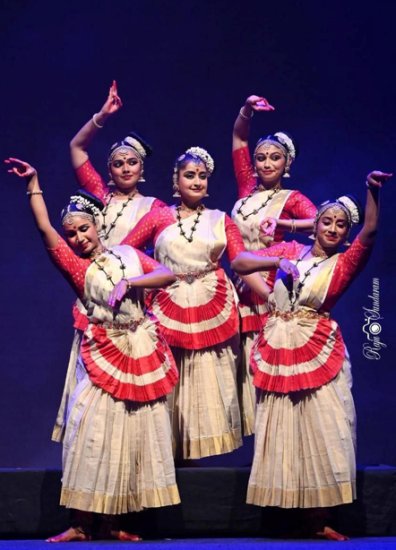 Damitham Rachitha Ravi’s performance was powerful not only because of its theme but also because of her expressive strength as a performer. Her body became a site of resistance, capable of expressing pain, anger, dignity, and courage. The group dancers Anjali Balan, Deepa Parthasarathy, Anjali, and Jyothisree provided strong support, contributing to the visual and emotional richness of the production. Their coordinated movements and expressive synchronisation strengthened the narrative impact. One of the most important aspects of Damitham was its reinterpretation of the Ramayana from a feminist perspective. Instead of accepting traditional patriarchal narratives, the production questioned them and offered alternative ways of understanding these women’s lives. This itself is a decolonial act, as it challenges dominant ideological frameworks and restores agency to marginalised characters. Together, these two performances demonstrated the evolving nature of Mohiniyattam. Sithara Balakrishnan’s recital reclaimed the indigenous musical and ritual foundations of the form through the Sopanam tradition, while Rachitha Ravi’s Damitham reclaimed the voices of women silenced within mythological narratives. Both performances affirmed that Mohiniyattam is not merely a classical dance form preserved for tradition’s sake, but a living art capable of critical reflection, cultural recovery, and social transformation. What emerged most strongly from these performances was the idea that Mohiniyattam today is participating in a larger process of decolonization not only by returning to its regional roots but also by engaging with contemporary social realities. Through music, movement, and narrative, these artistes demonstrated that Mohiniyattam can question history, challenge patriarchy, and express women’s resistance. In doing so, they reaffirmed the relevance of Mohiniyattam in the modern world, not just as an aesthetic experience but as a powerful cultural and intellectual practice. 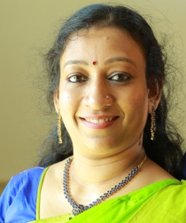 Lekha N. B. is a sociologist, Mohiniyattam dancer, and researcher from Kerala whose work bridges performance practice and critical academic inquiry. Her research particularly focuses on the intersections of gender, body, sensuality, spirituality, and cultural politics within Kerala’s performance traditions. Alongside her academic career as a faculty member and author, she actively participates in lecture demonstrations, workshops, and performances, contributing to contemporary discourses that reposition Mohiniyattam as a living, thinking, and socially relevant art form. |
