
|     |
|
| |

 Engaging dance performances- Satish Surie-mail: satishism@yahoo.co.in February 24, 2026 A MARGAM OF MEASURED GRACE Disciples of Guru Gayathri Keshavan at Bharatiya Vidya Bhavan, Bengaluru On January 4, 2026, the KRG Auditorium at Bharatiya Vidya Bhavan, Bengaluru, resonated with disciplined classicism and quiet devotion as disciples of Gayathri Keshavan - Shamti Ruiz Nambiar, Vaishnavi, and Bhavana - presented a thoughtfully curated Bharatanatyam margam. Conceived and choreographed under the artistic direction of Guru Gayathri Keshavan, Director of the Academy of Bharata Natyam, the evening stood firmly marked by geometric clarity, textual fidelity, rhythmic exactitude, and an unwavering spiritual core. 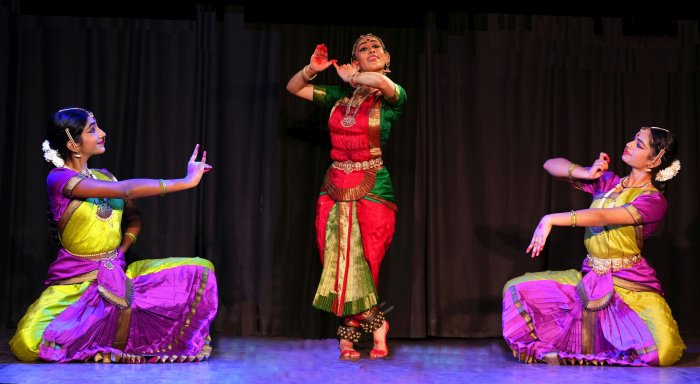 Bhavana, Shamti and Vaishnavi (Photo:Prof K.S.Krishnamurthy) The recital opened with an auspicious invocation to Lord Ganesha in Kambhoji, its stately melodic contours establishing an atmosphere of repose and sanctity. This flowed seamlessly into a Tisra Nadai Alarippu, where crisp sollukattus, measured araimandi, and uncluttered lines affirmed the dancers' grounding in nritta fundamentals. The restraint and symmetry were evident, allowing rhythm and form to speak without embellishment. An early highlight was the Durga Stuthi in Hamsadhwani, composed and choreographed by Gayathri Keshavan. Saluting the Goddess as the remover of sorrow, the choreography balanced strength with serenity. Clean, expansive movements and poised stances evoked Durga's protective power while retaining a devotional softness, reflecting the guru's aesthetic sensibility. The mood turned inward with Purandara Dasa's "Smarane onde salade", a philosophical assertion that remembrance of the divine name alone suffices. Eschewing overt dramatisation, the dancers employed restrained abhinaya to convey surrender and faith, allowing the sahitya to unfold with quiet conviction. Anchoring the margam was the varnam "Karunai nee seyyade" by Dandayuthapani Pillai in Nattukurinji, choreographed by Gayathri Keshavan. Here, Shamti Ruiz Nambiar, Vaishnavi, and Bhavana embodied the nayika as an ardent devotee, pleading for Lord Muruga's compassion. The choreography skillfully interwove vigorous jatis with emotive sancharis. Swift teermanams and accelerating korvais contrasted with fluid torso movements that suggested trembling supplication. The dancers' mukhachalanams, precise and controlled, radiated steadfast devotion rather than despair. Poignant narrative passages depicted viraha through upward glances that shifted subtly from anguish to hope, enriched by evocative imagery of Muruga's peacock vahana and the gleam of his vel. The fusion of sringara and bhakti rasa was sensitively handled, never tipping into excess. Technically, the varnam stood out for its crisp karanas, intricate pada bhedas, and seamless synchronisation with nattuvangam cues, underscoring the dancers' stamina, laya control, and stylistic discipline. 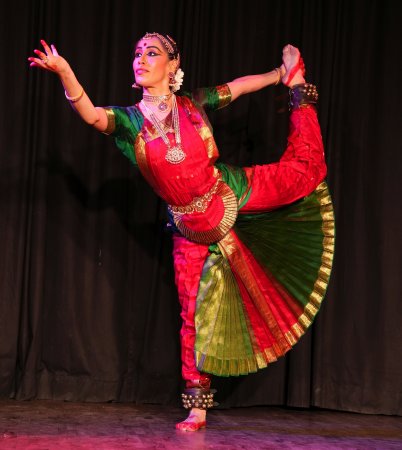 Shamti Ruiz Nambiar (Photo:Prof K.S.Krishnamurthy) A compelling solo moment followed with "Bhushana bhujanga", a devotional bhajan in Brindavani Saranga set to khanda chapu tala, performed by Shamti Ruiz Nambiar. She vividly sculpted the iconic imagery of Lord Shiva - serpents adorning his body, sacred ash smeared upon his form, and the Ganga cascading from his matted locks, while Parvati stood beside him in serene companionship. With understated yet eloquent gestures, Shamti transformed poetic description into visual meditation. Her expressive eyes and nuanced abhinaya conveyed reverence tinged with shringara bhakti, leaving the hall enveloped in contemplative stillness. The trio returned with a buoyant Thillana in Khamas and rupaka tala, bringing rhythmic sparkle and release. Lively footwork, playful korvais, and dynamic group patterns infused the piece with joy, while the lilting melody lent lightness and festivity. Even in exuberance, the dancers maintained stylistic restraint and ensemble harmony. The evening concluded with "Chatrum charmaram", attributed to Adi Shankaracharya, offered as a final act of surrender. Symbolically presenting and extending the offering to nritta itself, the dancers conveyed humility and devotion through minimalistic movement and synchronised abhinaya. The margam closed in meditative calm, leaving a lingering sense of spiritual fulfilment. Ably supported by a sensitive music ensemble - Gayathri Keshavan on vocals, Maithreyi Barve on nattuvangam, Dayakar on violin, and Narayanaswamy on mridangam - the recital unfolded as a cohesive artistic offering. Particularly noteworthy was Shamti Ruiz Nambiar, a long-term disciple of Gayathri Keshavan, originally from Mexico and founder of Pneuma Dance, whose interpretive depth and technical finesse blended seamlessly with the assured performances of Vaishnavi and Bhavana. NRITYARPANA BY LAKSHMI PARTHASARATHY ATHREYA Lakshmi Parthasarathy Athreya's Bharatanatyam recital 'Nrityarpana', presented on January 23, 2026, at Yuvapatha, Viveka Auditorium under the aegis of Bangalore Visesha Habba, unfolded as a poised homage to Karnataka's cultural ethos. Rooted firmly in classical grammar yet suffused with a distinct Kannada sensibility, the evening resonated deeply within the intimate, community-oriented space of Yuvaka Sangha, long a nurturing crucible for youth and the arts in Bengaluru. 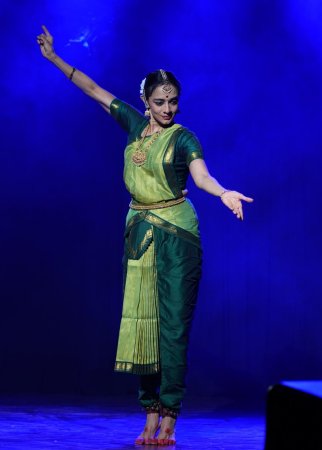 Lakshmi Parthasarathy Athreya (Photo: Hitesh Shankar) The recital commenced with Anjali, choreographed by her Guru Chitra Visweswaran. Lakshmi's expansive lines, well-articulated adavus, and eloquent stillness established an immediate atmosphere of reverence, an offering to the divine, the guru, and the gathered audience. This invocation seamlessly transitioned into "Ananda Narthana Ganapathi" in Gambhiranattai, where Lakshmi animated the dancing Ganesha with buoyant energy. Crisp footwork, lilting torso movements, and spirited stage presence captured the deity's joyous abandon and playful mischief, drawing the audience into a vibrant rhythmic dialogue. At the heart of the evening was an evocative Kannada varnam, "Kaanade", with sahitya by Prasanna Kumar and music by Balasubrahmanya Sarma. The choice of Kannada lent immediacy and regional intimacy to the Ramayana episode, portraying Rama's viraha from Sita. Through layered abhinaya, Lakshmi traced Rama's anguished search across the directions, his tender recollections of Sita's sacrifices, forsaking royal comfort, walking barefoot through thorny forests, and the poignant mediation by Hanuman. The exchange of Rama's signet ring and Sita's chudamani was rendered with restrained intensity, culminating in Rama's profound relief upon learning of Vaidehi's whereabouts. Karuna, sringara, and bhakti flowed seamlessly, the Kannada sahitya allowing each emotional nuance to register with clarity and warmth. The emotional gravitas of the varnam yielded to gentle introspection with Purandaradasa's "Jagadoddharana." Lakshmi sensitively embodied Yashoda's blissful unawareness of her child's cosmic identity as Jagadoddhara, the sustainer of the universe. Subtle mukha abhinaya traced Yashoda's mock sternness at Krishna's mischief, narrowed eyes and feigned scolding, melting into tender cradling gestures. Nuanced sanchari bhavas layered adoration, mild exasperation, and an undercurrent of devotional surrender. A contemplative stillness enveloped the auditorium with "Saddu madalu bedavo," the evocative Purandaradasa padam set in the hush of night. Here, Lakshmi's abhinaya thrived on restraint. The Gopika's whispered entreaty to preserve the sanctity of a clandestine union unfolded through delicately muted gestures, stilled bangles, hushed anklets, coral pendants drawn close, and carefully controlled drapery. Beneath this silence lay the anxiety of discovery, the fear of gossip, and the looming presence of societal vigilance. In this understated interplay of sringara and bhakti, silence itself became expressive, rendering the padam as an intimate nocturnal confession, tender, vulnerable, and profoundly human. The mood gently lifted with "Madhurashtakam", composed by R Visweswaran to Vallabacharya's celebrated verse. This octet, an ecstatic outpouring rather than mere description, celebrates Krishna's every aspect as suffused with sweetness, reflecting madhurya bhava. Lakshmi's emotive depth brought vivid life to Krishna's playful gait, enchanting smile, and childlike charm through refined facial articulation and graceful movement. The recital concluded auspiciously with "Bhagyada Lakshmi Baramma," Purandaradasa's beloved invocation of Goddess Lakshmi. Expansive movements and radiant expressions transformed the finale into a collective benediction, rounding off the margam with joy, gratitude, and regional resonance. Integral to the evening's success was the accomplished music ensemble. Dr Murali Parthasarathy's soulful vocals lent emotional depth and textual clarity, particularly in the Kannada varnam and Devaranamas. Vedakrishnaram's mridangam offered rhythmic acuity and sensitive reinforcement of both teermanams and emotive peaks. Jayaram Kikkeri's flute wove lyrical melodic strands that gently enhanced the abhinaya, while Vidya Ravindran Anand's crisp nattuvangam anchored the performance with precision and flow. Surya Rao's understated lighting design subtly shaped the visual mood, from devotional warmth to heightened dramatic focus, enriching the stage without intruding upon the dance. PRASTUTHI: A RESONANT OFFERING IN KUCHIPUDI BY PRAGNYA THAMIRE On the evening of January 27, 2026, Medai, The Stage in Bengaluru, became the site of a luminous offering as Kuchipudi dancer Pragnya Thamire presented 'Prastuthi', a solo recital steeped in devotion, vitality, and classical finesse. Trained under Guru Anuradha Nehru of Kalanidhi Dance, Pragnya revealed a mature engagement with the form, marked by kinetic clarity, expressive intelligence, and rhythmic élan. The carefully structured programme unfolded as a seamless spiritual arc, drawing the audience into the aesthetic and devotional heart of Kuchipudi. 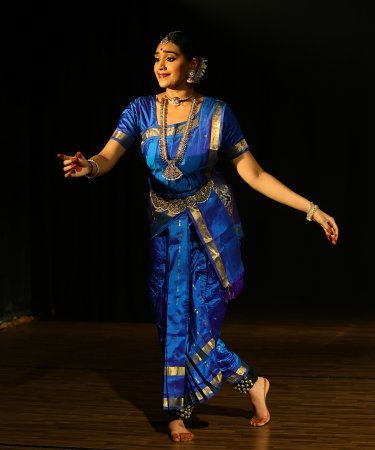 Pragnya Thamire (Photo: Biju) The recital commenced with an auspicious "Saraswati Stuti", a composition of Muthuswami Dikshitar, choreographed by Jaikishore Mosalikanti. With restrained elegance, Pragnya invoked the goddess of learning, seated upon the white lotus, revered by the gods, veena resting gently in her hands, the book and japamala symbolising wisdom and contemplation, and the swan as her discerning vahana. Her serene abhinaya and unhurried movements established a meditative stillness, inviting the blessings of clarity, purity, and artistic eloquence. The invocation set a contemplative tone, anchoring the evening in reverence and poise. This sense of sanctity deepened with "Omkara Karini", the evocative composition by Dr M. Balamuralikrishna, also choreographed by Jaikishore Mosalikanti. Here, Pragnya articulated the dual essence of the Devi as both compassionate mother and formidable force. Her sharply etched gestures, grounded stances, and dynamic transitions embodied the goddess as the pulsating energy of the primordial Om. The choreography allowed Kuchipudi's inherent dynamism to flourish, revealing shakti not merely as power, but as cosmic rhythm and resolve. The emotional centre of Prastuthi emerged through the ashtapadi "Sa virahe" from Jayadeva's Gita Govinda, choreographed by Anuradha Nehru. Spoken entirely through the voice of the sakhi, who bears witness to Radha's anguish and reports it to Krishna, the piece unfolded as an intimate meditation on viraha. Pragnya's abhinaya traced Radha's inner landscape with sensitivity, moving fluidly through longing, jealousy, despair, and eventual surrender. The layered sancharis deepened the sringara rasa, drawing the viewer into the fragile, aching space between separation and devotion, and reaffirming Kuchipudi's eloquence in bhakti laden storytelling. The recital reached its exhilarating culmination in the Tarangam "Alokaye Sri Balakrishnam" in Ragamalika, choreographed by Jaikishore Mosalikanti. With buoyant charm and infectious energy, Pragnya portrayed the playful divinity of toddler Krishna, vividly sketching episodes of butter theft and the irresistible allure with which he enchanted the gopis of Brindavan. Balancing effortlessly upon the rim of an upturned brass plate, she executed intricate nritta sequences with remarkable composure. The precise toe-heel articulations, gliding slides, and buoyant jumps aligned flawlessly with the complex sollukattu, even as equilibrium was sustained with unwavering control. The Tarangam stood as a testament to Kuchipudi's unique synthesis of devotion, virtuosity, and athletic brilliance. Throughout 'Prastuthi', Pragnya's crisp adavus, firmly grounded araimandi, and resonant ghungroo accents embodied the genre's distinctive buoyancy, directional fluidity, and rhythmic vitality. The progression from invocatory stillness and divine power to emotional intimacy and exuberant pure dance unfolded organically, offering an experience that felt at once deeply traditional and refreshingly alive. The recorded musical accompaniment provided a stable sonic framework, supporting the choreography and allowing the dancer's interpretive clarity to shine through. 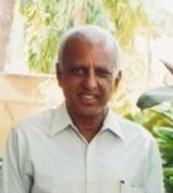 Bangalore based Satish Suri is an avid dance rasika besides being a life member of the Music and Arts Society. |
