
|     |
|
| |

 Thematic Bharatanatyam performances with contemporary flavour- Satish Surie-mail: satishism@yahoo.co.in February 12, 2026 APAAM SWARUPAM: A POIGNANT BHARATANATYAM MEDITATION ON WATER'S SACRED ESSENCE On January 2, 2026, the auditorium of Indian Heritage Academy, Koramangala, Bengaluru, became a contemplative sanctuary as Bharatanatyam dancer-choreographer Dr Sahana Balasubrahmanya, disciple of Saroja Vaidyanathan, presented 'Apaam Swarupam - The Form of Water.' Conceived as a thematic margam, the evening unfolded as a thoughtful meditation on India's sacred rivers, interweaving mythology, ecological consciousness, and Vedantic philosophy into a seamless artistic arc. 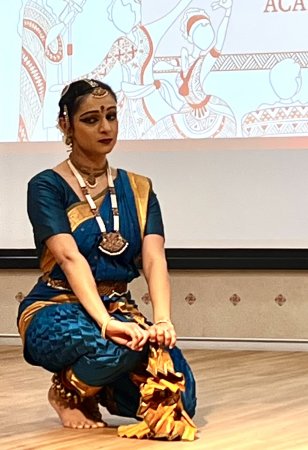 Sahana Balasubrahmanya (Photo: Soumya) The recital opened with an invocation to the Ganga through the evocative Jai Jai Gange. With measured araimandi, crystalline teermanams, and an inwardly focused abhinaya, Sahana established an atmosphere of reverence, evoking the river's celestial descent and purifying grace. The choreography resisted excess, allowing restraint and clarity to underscore the sanctity of the moment. A compelling shift in tone followed with the portrayal of the Yamuna. Drawing on the familiar Kaliya Mardana narrative, Sahana offered a striking contemporary re-reading: the many-hooded serpent became an allegory for modern pollution's suffocating grip. Especially poignant was her portrayal of the Yamuna's grief, voiced through Krishna's gentle assurance -"The colours of Yamuna are dark as mine. Your affection is true." The allusion to Shyam, Krishna's blue-black hue, deepened the sense of an inseparable bond, binding the river eternally to the deity who once played upon her banks in Vrindavan. Suffused with quiet dignity, the moment held anguish and endurance in delicate equipoise. Set in raga Desh and rupaka talam, the sequence unfurled the Yamuna's civilisational continuum, subtly invoking Indraprastha and the timeless emblem of the Taj Mahal, with a restraint that preserved its poetic integrity. The philosophical heart of the production emerged in a lively interlude featuring the sister rivers Thunga and Bhadra. Personified respectively as Vishnu's serene composure and Shiva's dynamic energy, their spirited debate unfolded with playful clarity. The eventual confluence of the Tungabhadra became a metaphor for the reconciliation of dualities. A vibrant ragamalika score animated this section, and Sahana's choreography sparkled with buoyant transitions, capturing synthesis not as abstraction but as lived joy. Rhythmic exuberance peaked in the Thillana dedicated to the Kaveri, set in raga Revati. Here, movement flowed with celebratory ease, tracing the river's generous passage through temple towns and across political boundaries. Intricate jatis, fluid torso work, and an unbroken kinetic momentum affirmed water's life sustaining vitality and its capacity to bind disparate landscapes into a shared cultural continuum. The Mangalam distilled the evening's philosophical core with quiet eloquence. As rivers inevitably merge into the ocean, so too does the human soul-"Apaam Swarupam", formed of water-yearn for dissolution in the divine. Eschewing grand finale gestures, Sahana chose inwardness, allowing stillness to speak as powerfully as movement. GURUGUHA - A DIVINE JOURNEY THROUGH DANCE Aditi Balasubramaniam's thematic Bharatanatyam on Muthuswami Dikshitar. On the evening of January 4, 2026, at the Seva Sadan, young Bharatanatyam dancer Aditi Balasubramaniam, disciple of Supriya Komandur, presented a thoughtfully conceived and spiritually resonant thematic production tracing the life, philosophy, and musical legacy of Muthuswami Dikshitar, one of the exalted Trinity of Carnatic music. Anchored around the unifying motif of "Guruguha"-Dikshitar's signature mudra invoking Lord Subrahmanya-the recital unfolded as a seamless confluence of biography, devotion, and compositional genius, revealing how Dikshitar's oeuvre spans raga, rasa, and metaphysical inquiry with rare integrity. 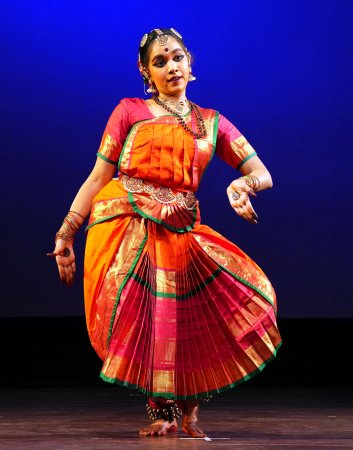 Aditi Balasubramaniam (Photo: Prof K.S.Krishnamurthy) The opening segment evoked Dikshitar's birth and early years in Tiruvarur, the sacred town centred around the Tyagarajaswamy temple. Through restrained yet eloquent abhinaya, Aditi suggested the divine grace surrounding a child born of intense parental penance. Subtle choreographic cues alluded to Dikshitar's prolific kriti clusters on Lord Tyagaraja, Goddess Nilotpalamba, and the many manifestations of Ganesha, establishing at the outset the composer's lifelong engagement with temple, theology, and sonic architecture. The tone was contemplative, inward looking, and firmly devotional. Aided by narrative clarity, the production then followed Dikshitar's formative journey northward, undertaken with his guru Chidambaranatha Yogi, to Kashi (Varanasi). Here, Aditi's choreography acquired a reflective stillness, mirroring the city's spiritual density and the composer's prolonged immersion-nearly five to six years-in Vedic learning, Sanskrit scholarship, and exposure to Hindustani melodic currents. The influence of this sojourn, which later found expression in Dikshitar's majestic kritis on Lord Vishwanatha and Goddess Annapurna, was suggested through measured pacing and meditative transitions rather than overt dramatics. The return south marked the beginning of Dikshitar's extensive kshetra yatra, a phase that formed the narrative and emotional backbone of the production. At Tiruttani, the Subrahmanya shrine near Chennai, Aditi compellingly mapped the genesis of the celebrated Guruguha vibhakti kritis, allowing the mudra to emerge as both devotional refrain and compositional fulcrum. This was followed by choreographic vignettes referencing Dikshitar's musical offerings at Tiruvannamalai (Arunachaleshwara), Chidambaram (Nataraja), Tirupati (Venkateshwara), Srirangam, Madurai (Minakshi), and sacred towns of the Cauvery delta such as Mayiladuthurai and Vaitheeswaran Koil. Together, these segments formed a lucid thematic arc-often attempted in dance narratives, but here articulated with commendable coherence-from divine birth and northern illumination to southern fulfilment. A significant strength of the production lay in its musical curation. The recorded musical score, drawing upon classic renditions vocalised by maestros such as Maharajapuram Santhanam and Sanjay Subrahmanyam, functioned as the work's sonic architecture-at once expansive and anchoring. It grounded the choreography in gravitas while allowing the narrative to unfold with measured clarity, emotional continuity, and stylistic authenticity. The judicious use of audio-visual elements enhanced comprehension and engagement without intruding upon the primacy of the dance, acting instead as a subtle scaffold for the unfolding journey. Particularly engaging was Aditi's exploration of Dikshitar's cosmopolitan imagination through the inclusion of Nottuswarams-Sanskrit texted adaptations of European melodies encountered during his Madras years. Rendered with crisp nritta and buoyant energy, these segments revealed a lighter, playful dimension of the composer, while simultaneously underscoring his openness to assimilating diverse musical idioms within a devotional framework. The emotional and aesthetic high point of the evening was the Todi raga varṇam "Rupamu juchi nanu". Here, Aditi's dancing rose to a new level of intensity and finesse. Her footwork aligned with the unfolding sancharis in assured dialogue with the music, while her abhinaya captured the nayika's yearning, vulnerability, and moments of transcendence with finely calibrated nuance. The teermanams burst forth with geometric precision, yet never lost the inward stillness and contemplative gravitas intrinsic to Dikshitar's musical language. The concluding segment turned to Dikshitar's later years in Ettayapuram, where, invited by the local ruler, he spent his final days. His foretold departure and attainment of samadhi on Deepavali day-October 21, 1835-was portrayed not as an ending, but as a natural consummation: the composer dissolving into the very divinity he had invoked throughout his life's work. Aditi Balasubramaniam's sustained portrayal of Guruguha-as personal deity, philosophical compass, and compositional anchor-lent the production its inner cohesion. As a thematic offering, the recital stood out for its narrative clarity, aesthetic restraint, and devotional depth, reaffirming that Muthuswami Dikshitar's kritis are not merely musical artefacts, but enduring pathways of spiritual ascent. 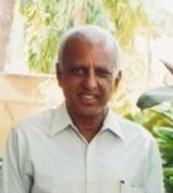 Bangalore based Satish Suri is an avid dance rasika besides being a life member of the Music and Arts Society. |
