
|     |
|
| |

 Variegated solo dance performances- Satish Surie-mail: satishism@yahoo.co.in February 2, 2026 A SACRED GROVE OF MOVEMENT AND MEMORY: DR TONY PIUS'S BHARATANATYAM SOLO MARGAM 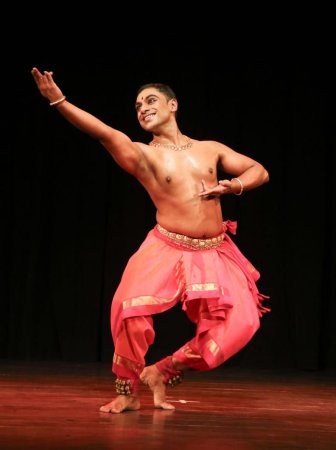 Dr. Tony Pius (Photo: V.B. Suresh) On December 10, 2025, Seva Sadan in Malleswaram, Bangalore, was the venue for a profoundly moving solo Bharatanatyam margam by Dr Tony Aloysius Pius - a dedicated physician and seasoned dancer whose long-cherished recital marked a significant milestone. Trained under the esteemed lineage of the late Prof. C.V. Chandrashekar and guided by Guru Chitra Chandrashekar Dasarathy, Pius delivered a performance of technical excellence, emotional depth, and spiritual resonance. The evening opened not with a movement, but with a verse. A resonant shloka by Sitaram Sarma, inspired by the Abhinaya Darpana, poetically framed the recital as the wish-fulfilling Kalpavriksha, its branches the Vedas, its blossoms the shastras, and the audience as bees drawn to divine nectar. This sacred metaphor found its first physical expression in a vibrant Alarippu in chaturashra eka tala. Dr Pius's nritta was crisp and confident, blooming from a rooted araimandi into precise lines and energetic teermanams, establishing a foundation of pure, geometric dynamism. The architectural beauty of pure dance deepened with the Jatiswaram in Yadukulakambhoji, a composition of his late guru, Prof. C.V. Chandrashekar. Here, Dr Pius displayed commendable stamina and grace, navigating complex jathis, swara patterns, and korvais with a fluidity that belied their underlying rhythmic complexity. The performance was a vibrant dialogue between the dancer's feet and the percussive guidance of his Guru's nattuvangam. The centrepiece of the evening was the monumental Pada Varnam, "Chalamela chesevayya" in Natakurinji. Choreographed by Prof. Chandrashekar and refined by Chitra Chandrashekar Dasarathy, it became the canvas for Dr Pius's artistic maturity. He masterfully balanced the dualities of bhakti (devotion) and virahotkanthita (the anguish of separation). The lyrical surrender of "kalakaalamu nee padamule nammiyunna" was rendered with touching sincerity, while the plaintive query "Nannu brova baarama neeku" (Am I a burden to You?) throbbed with poignant vulnerability. His abhinaya shone in the sanchari bhavas, where the narratives of Gajendra Moksham and Draupadi's rescue unfolded seamlessly, universalising the personal plea for divine intervention. Following this emotional tour de force, the atmosphere lightened devotionally with a Kannada Devaranama, "Baro Krishnayya" by Kanakadasa. Dr Pius's interpretation radiated a warm, inviting devotion. His expressive eyes and fluid hastas beautifully captured the saint's simple longing, describing Krishna's playful form and compassionate nature. This piece provided a soothing, melodic contrast to the varnam's intensity while seamlessly continuing the thread of heartfelt devotion. The recital concluded on a contemplative note with "Musings in Memory," featuring selected verses from the 11th-century Kashmiri poet Bilhana's Chaurapanchasika. As Guru Chitra Dasarathy mentioned in her introduction, these verses stood as independent vignettes of memory and separation. Opening with "Adyapi taṃ" (Even today I remember), Dr Pius's abhinaya conveyed the imprisoned poet's clinging to cherished memories. The second verse, oscillating between the bliss of union and the ceaseless agony of viraha, was delivered with intense focus, allowing the layered sringara rasa to be savoured in quiet profundity. The poignant composition by Eshwar Iyer and the sensitive vocalisation by Rajeev Rajagopalan elevated this concluding piece into a deeply moving experience of rasanubhava. The entire margam was elevated by an exceptional live musical ensemble, the true sonic architects of the evening. Rajeev Rajagopalan's emotive and nuanced vocals, particularly in the final piece, added profound layers of feeling. Srihari Rangaswamy on the mridangam provided dynamic, empathetic percussion that amplified the dancer's footwork with impeccable timing. Chitra Chandrashekar Dasarathy anchored the performance with precise and authoritative nattuvangam, her rhythmic conduction the very heartbeat of the recital. The melodic interludes of Narasimhamurthy on the flute infused the space with an ethereal beauty and emotional subtlety. 'DRISHTI BOMMAI: THE POWER OF THE UNBLINKING GAZE' BY SAKSHI ASHOK 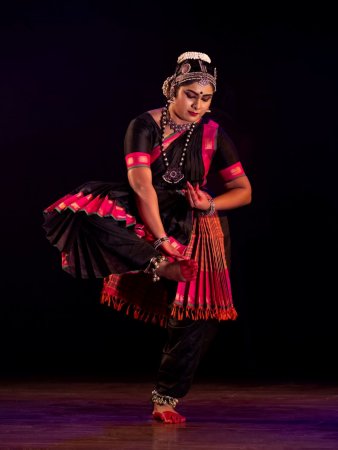 Sakshi Ashok (Photo: Sreeraj) The thematic Bharatanatyam presentation 'Drishti Bommai', conceived and performed by Sakshi Ashok, a disciple of Mithun Shyam, on the 13th of December at Seva Sadan, emerged as a work marked by thoughtful innovation and layered creativity. Drawing from mythology, folk belief, and lived ritual practice, the production explored the enduring Indian concept of the "unblinking gaze" as a potent force of protection against the evil eye (drishti dosha or dushta drishti), transforming a culturally familiar idea into a compelling choreographic inquiry. The opening sequence unfolded the powerful myth of Jalandhara, whose narrative formed the philosophical spine of the work. Granted a boon of invincibility by Lord Shiva, Jalandhara's pride knew no bounds. His arrogance culminated in the ultimate transgression - his audacious claim that Parvati rightfully belonged beside him. This act of hubris precipitated his downfall. As punishment, he was compelled to consume his own body, a stark and unsettling image that Sakshi rendered with controlled intensity and dramatic clarity. In a moment of surrender and remorse, Jalandhara sought forgiveness, and Shiva, in an act of cosmic transformation rather than annihilation, redeemed him as a guardian figure entrusted with warding off dushta shakti. Thus, Jalandhara was transfigured into Kirtimukha, the fierce "Face of Glory," an auspicious protector whose very presence repelled negativity. The evocative vachika rendered by Mahesha Swamy infused this sequence with narrative momentum and emotional dynamism, effectively anchoring the choreography's mythic arc. From this mythological foundation, the production expanded into a broader cultural exploration, drawing inspiration from two potent protective symbols: the grotesque folk drishti bommai, commonly seen across South India to ward off envy, and the formidable Kirtimukha motif embedded in temple architecture. The core theme - an ever-watchful, unblinking gaze that relentlessly followed - was further reinforced through an evocative Sanskrit shloka, lending classical gravitas to the visual and kinetic imagery on stage. One of the most striking aspects of Drishti Bommai was its sensitive incorporation of everyday ritual practices used to deflect the evil eye, grounding the abstract theme in relatable, lived experience. Through nuanced and understated abhinaya, Sakshi vividly portrayed familiar protective customs: the application of a black kajal dot (kaala ṭika) on a child's cheek or forehead to neutralise envy, and the tying of lemon and green chilli strings (nimbu-mirchi) at doorways, homes, shops, and vehicles to absorb negative energies. These sequences eloquently revealed how ordinary, almost unconscious acts mirrored the fierce gaze of the drishti bommai and Kirtimukha - redirecting malice through distraction, absorption, or intimidation. In doing so, the choreography rendered an esoteric belief system accessible and emotionally resonant. The choreography cleverly reversed the notion of the evil eye, transforming it into a guardian force. Pure dance sections were crisp and energetic, with intricate footwork and araimandi that showcased Sakshi's technical prowess, honed under Mithun Shyam's rigorous training. The live orchestra provided sensitive accompaniment, enhancing the mood shifts from ominous to auspicious. The nritta passages were executed with precision and vigour, revealing a secure command over rhythm and line, and were sensitively supported by a live orchestra that enhanced, rather than overwhelmed, the movement vocabulary. The music composition by Ajeesh Menon, vocalised by Jayadev Menon, provided a richly layered aural landscape for the dancer's execution. The ensemble was ably supported by Mahesha Swamy on the flute, Dhanush Natampalli on the mridangam, D. Arun Kumar on rhythm pads, Mithun Shyam on the nattuvangam, and Vibhuendra Simha on the violin, each contributing sensitively to the work's shifting emotional and dramatic textures. 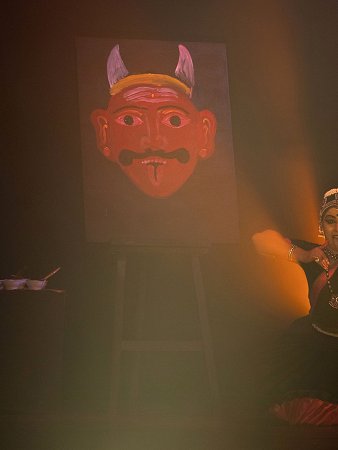 Drishti Bommai (Photo: Sreeraj) An arresting embellishment to the production was Sakshi's presence as a visual artist as well. During the course of the performance, she painted the image of Kirtimukha on a panel, transforming the stage into a site of simultaneous creation. This act dissolved the boundary between movement and image, reinforcing the central metaphor of the gaze - one that was formed, witnessed, and sustained through multiple artistic languages. In its totality, Drishti Bommai succeeded in bridging classical Bharatanatyam with folk symbolism and ritual practice, reaffirming a timeless Indian ethos: that protection lies not merely in force, but in watchfulness, symbolism, and the power of a gaze that never blinks. MADHURAGATI: A SOUL-STIRRING ODISSI RECITAL BY KAZI ANOUSHKA RAHMAN 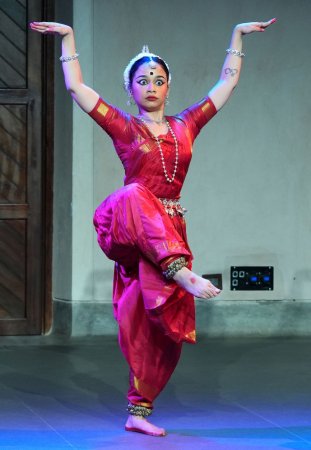 Anoushka Rahman (Photo: Prof. K.S. Krishnamurthy) On the evening of December 19, 2025, SABHA, Bangalore, was transformed into a sanctuary of classical grace as Kazi Anoushka Rahman presented her solo Odissi recital, 'Madhuragati.' A gifted disciple of Guru Surupa Sen of the illustrious Nrityagram Dance Ensemble, and rooted in the revered lineage of Guru Kelucharan Mohapatra, Anoushka wove a seamless tapestry of devotion, abstraction, playful bhakti, and cosmic power. The evening revealed an artiste of assured technique, emotional depth, and a luminous stage presence. The recital opened with "Namaskrithi", a poignant Ganesh Vandana that functioned as the traditional Mangalacharan. Through serene tribhangi postures, finely etched footwork, and eloquent hasta usage, Anoushka invoked the auspicious presence of the elephant-headed deity. The sequence distilled Ganapati's mythic benevolence into calm authority, establishing a sacred yet joyous foundation for what followed. Flowing effortlessly into pure nritta, 'Ritu Vasant' unfolded as a radiant Pallavi, celebrating the renewal and buoyancy of spring. This abstract composition foregrounded Odissi's architectural beauty: precise rhythmic patterns, dynamic turns, and fluid torso articulations shaped with both mathematical clarity and organic lyricism. Anoushka's unerring control allowed the geometry of the form to gleam, drawing the audience into the timeless pleasure of dance unburdened by narrative. A gentle tonal shift followed with a bhajan inspired by the poetry of Surdas, where Anoushka's abhinaya sparkled with wit and warmth. She animated Krishna's childhood pranks in Vrindavan - the butter thefts, the stolen garments, the impish tying of a gopi's braid to her husband's moustache, and the tell-tale scratches that betrayed his mischief. The gopis' animated complaints were met with Krishna's wide-eyed innocence, while Yashoda mediated with amused scepticism and tender protectiveness, reminding all that her son was barely five. With crisp character delineation and finely nuanced expressions, Anoushka balanced hasya and vatsalya rasas to elicit both laughter and devotion. The evening culminated in 'Sreedevi', a majestic abhinaya offering to the Supreme Mother through the "Aigiri Nandini" stotra. As Mahishasura Mardini, Anoushka embodied the ferocity and compassion of Divine Shakti - lion-mounted, weapon-wielding, and resplendent - vanquishing the buffalo demon Mahishasura and his cohorts, Chanda and Munda. The cosmic combat surged with veera and bhayanaka rasas before dissolving into serene benevolence, affirming an eternal truth: from the Mother all life emerges, and to her all must ultimately return. The final stillness held the hall in reverent awe. Madhuragati traced a finely judged arc that honoured Odissi's rich legacy while revealing Kazi Anoushka Rahman's artistry in full bloom - poised, profound, and deeply moving. It stood as a memorable celebration of a classical form's enduring magic, rendered with intelligence, sensitivity, and quiet authority. PALLAVI ANAND'S 'TALES OF LONGING: STORIES OF LOVE AND RESTRAINT' 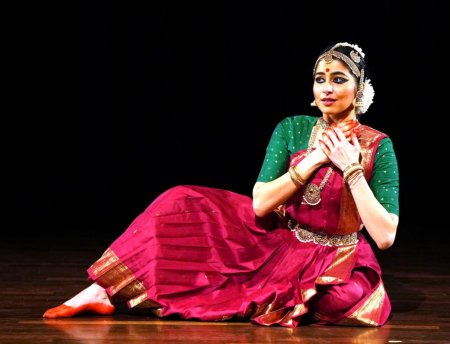 Pallavi Anand (Photo: Prof K.S. Krishnamurthy) On the evening of December 23, 2025, the auditorium at Bangalore International Centre resonated with focused anticipation as Pallavi Anand, disciple of Mavin Khoo, presented her solo Bharatanatyam recital, 'Tales of Longing: Stories of Love and Restraint'. Conceived as an exploration of desire, defiance, and devotional surrender, the evening unfolded with aesthetic coherence and emotional integrity, supported by a sensitive orchestra - Raghuram Rajagopalan (vocal), Sahana Sridhar (nattuvangam), Vinay Nagarajan (mridangam), and Mathur R. Srinidhi (violin). The recital opened with the invigorating Nandi Chollu, a pure nritta invocatory item that immediately established Pallavi's technical authority. Known to test stamina, rhythmic acuity, and structural clarity, the piece - depicting Nandi welcoming Lord Shiva - was delivered with compelling precision. Pallavi's araimandi remained unwavering, her heel strikes crisp and resonant, aligning seamlessly with the sollukattu. As the teermanams accelerated, her energy expanded rather than flagged, generating a palpable sense of joy and devotional fervour that drew the audience into the cosmic rhythm from the outset. The centrepiece of the evening was the classic pada varnam "Samiki sari evvare" in raga Shankarabharanam, composed by Kunnakkudi Krishna Iyer. A cornerstone of the Bharatanatyam repertoire, the varnam's expansive architecture - balancing nritta and nritya while plumbing the depths of sringara - was navigated with notable emotional intelligence. Pallavi entered with quiet poise, embodying the viraha laden nayika from the first phrase. Her opening abhinaya was restrained yet eloquent: downcast eyes that flickered with longing, a gently arched torso, and gestures that traced the beloved's presence in space, culminating in the aching question, "Who can equal my lord?" The anupallavi's praise of the patron king Bhaskara Sethupati allowed her to pivot smoothly into sringara's celebratory register. Teermanams were articulated with rhythmic exactitude, each phrase punctuated by clean heel strikes that mirrored the grandeur of Shankarabharanam. The charanam proved especially compelling, particularly the hunting metaphor ("Vemarudu vipinchuṇa baṇamu"). Here, Pallavi's imagination came sharply into focus: she became alternately hunter and hunted, bow-drawing gestures dissolving into delicate recoils as the arrow of love struck. Her progression from playful resistance to willing surrender unfolded with psychological clarity, supported by finely graded facial expression. In a departure from the customary format, Vinay Nagarajan presented a brief solo interlude on the mridangam. Rendered with delightful nuance and rhythmic imagination, the solo offered a moment of focused percussion artistry - its tonal modulations, subtle pauses, and crisp patterns providing both contrast and cohesion, while reaffirming the mridangam's role as an eloquent interlocutor rather than mere accompaniment. The ettugada pallavis provided rhythmic contrast and structural release. Pallavi's jathis revealed both stamina and geometric finesse - clear lines held in deep araimandi, assured transitions between korvais, and a buoyancy that rendered complexity seemingly effortless. What distinguished the varnam overall was emotional authenticity. Sanchari bhavas were neither generic nor overstated; the sakhi felt like a genuine confidante, the longing inward and lived-in rather than demonstrative. Despite the varnam's considerable length, Pallavi sustained intensity throughout, returning finally to the pallavi's quiet viraha with a poignancy that lingered well beyond the final phrase. A lighter, playful mood followed with the javali "Ni matale mayanura" in raga Purvikalyaṇi. Pallavi's nayika sparkled with coy charm, her abhinaya animated by wit and teasing irony. Mock wonder, blushing delight, and feigned annoyance flowed effortlessly into one another. In the sancharis, she vividly recalled past sweet words, oscillating between sulk and invitation with fluid transitions and an unforced naturalism. Minimal nritta passages were executed with clarity, complementing rather than interrupting the abhinaya's conversational ease. The evocative padam "Sundara srinu kantha" in raga Arabhi, composed by Irayimman Thampi, offered a nuanced shift into gentler sringara. Pallavi's portrayal of the sakhi was warm and persuasive, her gestures soft and insinuating, her gaze alternating between coaxing appeal and playful reassurance. Subtle torso sways, delicate hand movements, and finely calibrated expressions brought alive both the sakhi's role and the nayika's tender vulnerability. Though often associated with Mohiniyattam, Pallavi's Bharatanatyam interpretation preserved the padam's lasya while integrating precise geometry in restrained nritta transitions, creating an intimate, almost whispered dialogue on stage. The evening concluded with a scintillating Kriti, "Shankara sri giri natha prabho" in raga Hamsanandi. This exuberant finale shifted the mood decisively toward rhythmic celebration and buoyant bhakti. Pallavi attacked the opening jathis with electrifying clarity; her footwork razor sharp, each syllable landing in perfect synchrony with the mridangam and nattuvangam. Sweeping geometric pathways traversed the stage as violin phrases soared in tandem with her kinetic energy. Brief abhinaya interludes - trident mudras, fleeting references to Ganesha, upward glances of devotion - punctuated the rhythmic blaze without arresting momentum, infusing the piece with devotional warmth. The final crescendo was exhilarating. Pallavi spun through the concluding korvais with breathtaking control, resolving into a poised namaskar that radiated gratitude and fulfilment. 'Tales of Longing: Stories of Love and Restraint' emerged as a thoughtfully curated recital - technically robust, emotionally resonant, and marked by an artiste's ability to inhabit both restraint and surrender with equal conviction.  Bangalore based Satish Suri is an avid dance rasika besides being a life member of the Music and Arts Society. |
