|     |
|
| |

 The discipline of the embrace- Anurag Chauhane-mail: anuragchauhanoffice@gmail.com January 5, 2026 Tango has always resisted excess. Born in the late nineteenth century along the port cities of Buenos Aires and Montevideo, it emerged from crowded neighbourhoods shaped by migration, exile, and longing. African rhythms, European musical structures, and the emotional vocabulary of displaced communities converged to create a dance that privileges intimacy over display. Tango National Day, observed in remembrance of Carlos Gardel and Julio de Caro, honours two figures who transformed this social practice into a global cultural language without stripping it of its inwardness. Recognised as Intangible Cultural Heritage of Humanity, tango endures not because it adapts itself to spectacle, but because it insists on connection. The celebration of Tango National Day at the National Gallery of Modern Art, Mumbai, organised by the Consulate General and Promotion Centre of the Argentine Republic, approached this history with discernment rather than reverence. The evening did not attempt to dramatise tango's past or aestheticise its origins. Instead, it allowed the form to unfold as a living dance language shaped by listening bodies and shared intention. In a city accustomed to velocity and volume, tango chose precision. 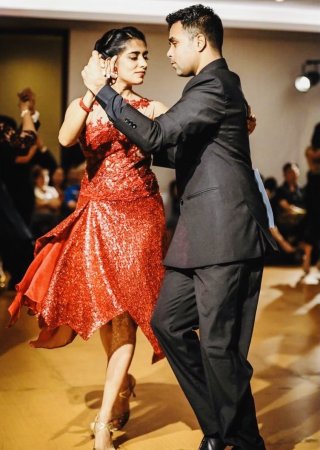 Kruti Gandhi and Ajinkya Deshpande At the centre of the evening were Kruti Gandhi and Ajinkya Deshpande, whose dancing reflected an understanding of tango that extends beyond execution into sensibility. Their embrace was secure yet responsive, allowing movement to arise organically rather than being imposed. What distinguished their dancing from the outset was the quality of their walking, grounded, musical, and unhurried. In tango, walking is never merely transitional. In their hands, it became expressive, reaffirming that the form's most articulate moments often reside in its simplest vocabulary. Equally compelling was their command over expression. Tango demands emotional intelligence rather than theatrical display, and both dancers understood this instinctively. Their facial expressions remained contained yet communicative, allowing feeling to surface without announcement. The gaze shifted with intention, responding to musical nuance and shared impulse. This restraint created intimacy rather than distance, drawing the viewer inward instead of projecting emotion outward. It was tango that trusted subtlety. Their handling of pauses revealed maturity. Silences were held with deliberation, not hesitation, generating tension without ornamentation. Lifts appeared sparingly and with remarkable swiftness, executed cleanly and released without lingering emphasis. What impressed was not height or bravado, but balance. Ajinkya's grounding was unwavering, providing a calm axis that allowed transitions to remain fluid, while Kruti responded with precision and trust, maintaining clarity of line and control even in suspension. These moments emerged naturally from momentum and musical logic, feeling inevitable rather than rehearsed. The swiftness of their transitions further underscored their technical assurance. Direction changes were crisp without abruptness, pivots settled decisively, and shifts of weight occurred almost imperceptibly. There was an ease to their movement that suggested dancers no longer preoccupied with correctness, but attentive to nuance. As finalists at the Asian Tango Championship Preliminaries earlier this year, their growth is evident not as ambition, but as assurance. Their tango does not seek approval. It listens. The programme also included performances by Mumbai based BTango Conscious and Pune based Tango Deseo, reflecting the presence of multiple tango communities currently active within the Indian context. 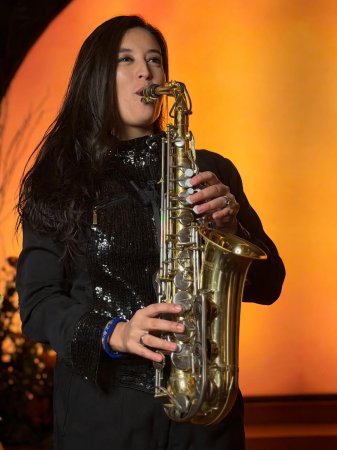 Gala Soler Live music by Argentine saxophonist Gala Soler anchored the evening with quiet authority. Her interpretations of canonical tango compositions carried warmth and restraint, reinforcing the essential dialogue between movement and music. The musicianship did not accompany the dance so much as converse with it, shaping the emotional architecture of the performances without overshadowing them. What remained after the evening was not the memory of steps or sequences, but of attention. Tango, in its truest form, demands patience, listening, and the courage to remain present within the embrace. Through dancers like Kruti Gandhi and Ajinkya Deshpande, the celebration reaffirmed that tango's future lies not in expansion or spectacle, but in depth. In the discipline to pause, to balance, to express without excess, and to move only when the moment asks for it. 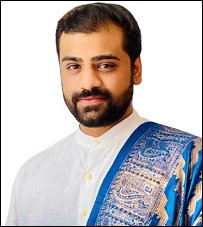 Anurag Chauhan, an award-winning social worker and arts impresario, combines literature and philanthropy to inspire positive change. His impactful storytelling and cultural events enrich lives and communities. |
