
|     |
|
| |

 Antarangam by Radhika KathalPhotos: Innee SinghDecember 29, 2025 Hopping from step one to step eight, a game of 'stapoo' unfolds, perhaps unintentionally, into a metaphor for a blooming friendship, emerging as both the crux of Antarangam as well as its most charming motifs. Antarangam refers to that which is internalised - the heart, the mind, the inner self. It is therefore fitting that the evening is conceptualised around the 'sakhi', for who is closer to us than our most cherished friend? A relationship so personal, so rooted in trust and intimacy, it often transcends the body itself. 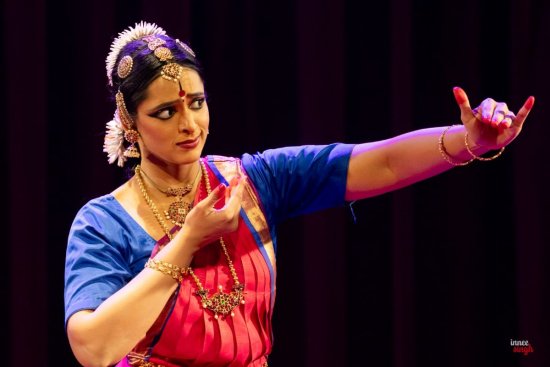 The evening, curated by Radhika Kathal with conceptual and choreographic inputs from Guru Geeta Chandran, opened with the first phase of this friendship, aptly titled 'Threads of Us'. From the moment Radhika stepped onto the stage, it was difficult to look away. Accompanied initially only by the violin, she introduced us to a friendship in the making, tentatively entering that much cherished beginning where bonds are still tender. Through her evocative abhinaya, we witnessed the friends sharing food, grooming each other, learning and growing together and even discovering men (love) as functions of their adolescent curiosity. The ragam suddenly shifted to Bhairavi, and with it comes the inevitable. The nayika has been struck by the infamous Manmatha. The tanums, sung with such remarkable sensitivity by vocalist K. Venkateshwaran and accompanied with precision by Raghavendra Prasath on violin, began to sound like two voices in dialogue. The vocals took on the voice of the love-struck nayika, while the violin assumed the role of the sakhi, listening, guiding. Enhanced by Rahul Chauhan's lighting design, warmer hues enveloped the sakhi, and purple-red cross lighting marked the nayika - this entire section emerges as a gem to watch. A tender closing to this first piece gently carried us into the next. Radhika turned to the structure of the Margam as a framework guiding the evening's conception. The following piece, the Sumasayaka varnam composed by Swati Tirunal, and choreographed by her Guru Geeta Chandran, represented a transition as the sakhi steps into the role of the messenger. The varnam truly embodied Radhika's ability to keep the audience as well as the musicians on their toes. Her innate sense of rhythm and precision as she performed the jathis were a treat to watch. The discomfort of the ebbs and flows of friendship are never easy to witness. Intimacy can just as quickly give way to an erosion of trust. The next segment essayed the fragile ground of friendship, thoughtfully navigating unpleasant themes like betrayal. Rendered through a traditional padam 'Unnai thoodhu anuppinen' steeped in pain, anger, and biting sarcasm, the piece reveals how precariously love can tip into mistrust. The sakhi returns after pleading the nayika's case before the hero, yet instead of relief, her return breeds an unease. The padam made the audience sit in this unease, reflecting on the fragments of friendships that were lost to deception. As the mist of betrayal lifts, the work moved towards the reunion. While the arc of the reconciliation was somewhat straightforward, it carried a subtle charm, allowing the friendship to settle back into itself without being excessively dramatic. This phase unfolded through a Hindustani bandish by the late Pandit Kumar Gandharva in raag Bageshree, re-imagined in raag Kedar by vocalist K. Venkateshwaran. The padam was also enriched by the inclusion of the tabla, played with finesse by Manohar Balatchandirane, whose shift from the mridangam allowed for a change in texture that was subtle yet effective. 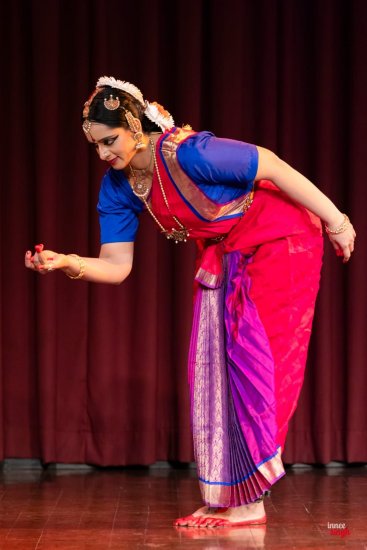 What was refreshing was that the sakhi motif was not abandoned in the closing Tillana in ragam Hamir Kalyani. Instead, the choreography sustained the sense of reunion through playful exchanges, looks and choreographic devices. It evoked the ease of two friends delighting in each other's presence through a sort of jugalbandhi. Anchored by the steady presence of her Guru on nattuvangam, the evening found rigor and generosity in her guidance. Radhika Kathal carried this inheritance with assurance, delivering a work that was thoughtful and exceptionally engaging. |
