
|     |
|
| |

 Nritya Parva 2025: Celebrating Silver Jubilee of Sattriya recognition- Dr. Jintu Sarmae-mail: drjintusarma@gmail.com Photos: Sattriya Kendra, SNA December 28, 2025 Jaya Guru Sankara / sarva-gunākara / yākeri nāhike upām: Tohāri caranaka / renu satakoti / bāreka karoho pranām. Darasita sundara / gaura kalewara / jaichana sura parakās:..." (Guru Bhatima, Sri Madhavdeva) The Sattriya tradition is a 500-year-old art form originating from Assam, India, that combines elements of dance, drama, and music. It is intrinsically linked to the neo-Vaishnavite movement started by the saint-scholar Srimanta Sankardeva in the 15th-16th century. After its recognition by the Ministry of Culture, Govt. of India in 2000, the Sangeet Natak Akademi is organizing a grand festival titled 'Nritya Parva'. After the establishment of Sattriya Kendra under SNA in 2008, the festival is organized by the centre under the support of SNA. This time, the 25th edition was held at Srimanta Sankaradeva International Auditorium and Conference Hall of Sattriya Kendra, Guwahati during 15-18 November 2025. The program started on 15th November with the gracious presence of Raju Das, Secretary, SNA, Guru Jatin Goswami, Dulal Roy, Manik Bora, Himanggshu Sekhar Das, Rtd IAS, SNA Member Dr Anil Saikia, Guru Ghanakanta Bora Borbayan and many other distinguished guests along with houseful audience. The whole program was dedicated in honor of Dr Bhupen Hazarika on the occasion of his birth centenary. 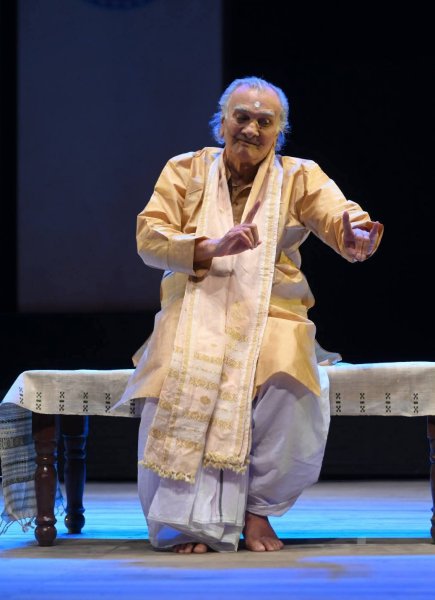 Guru Jatin Goswami 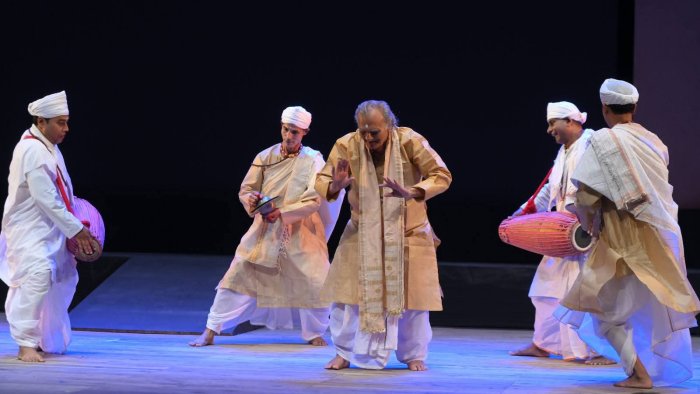 Guru Jatin Goswami's inspiring performance The program commenced with the entry of 93-year-old Guru Jatin Goswami's special appearance and performance titled Nrityashish. This was extraordinary in nature and everyone was captivated with his prowess at that age. It was purely magical. The item was followed by Gayan Bayan by Sri Sri Dhuwahat Beloguri Satra Kristi Kendra, Narayanpur. Performed by Bayan: Chandra Borah, Binod Neog, Dhurbajyoti Saikia, Parag Saikia, Santanu Dutta, Pragyan Dutta. Gayan: Prabhat Kakati, Pasanta Borah, Biku Lekharu, Kamal Sarmah. Next was a solo program performed by Mukunda Saikia from Majuli. He holds a Masters degree in Performing Arts from Mahapurusha Srimanta Sankardeva University and awarded Ustad Bismillah Khan Youth Award by the Government of India in 2023. He performed a Sutradhar Nritya based on the Nandi Sloka, Gotor nach of play Keligopal of Srimanta Sankardeva. He was accompanied on khol by Samudra Hazarika, on flute by Bitul Duweriya, on vocal by Debojit Dutta, on violin by Dijesh Khaund. 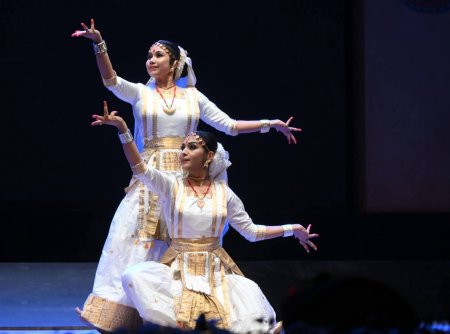 Jayamoni Gayan and Gitima Pathak Jayamoni Gayan from Nagaon and Gitima Pathak from Biswanath Chariali, performed a duet. Jayamoni Gayan is a disciple of Nrityacharya Jatin Goswami. She is a B-grade artiste of Doordarshan Kendra, Guwahati. Gitima Pathak received formal training under esteemed gurus such as Heman Burhabhokot, Nirmali Sutradhar, Pradip Bayan, and at present, Guru Jatin Goswami. They gracefully performed Bor-Ramdani of Suddha Chali nach in tal thukoni and suta followed by two abhinaya on the slokas from Krishna Karnamritam. Then Dr. Anwesa Mahanta performed a solo. She is an empanelled artiste of the ICCR and recipient of numbers of awards. She gracefully presented the Gururamdani of Chalinach followed by Gitarnach and she concluded with Mela. Accompanists were: khol: Debajit Saikia, vocal: Gautam Bayan and Nandita Das Bayan, flute: Nabajit Saikia, cymbals: Niki Bora. Mentored by Bayanacharya Ghanakanta Bora. Tarali Das, Aparajita Dawka Buragohain and Bobyrani Talukdar from Guwahati presented a neat trio. Das is a renowned Sattriya dancer, choreographer, and guru from Assam and the Founder-Director of 'Nrittyangan - A Centre for Dance Studies'. Buragohain, disciple of Ghanakanta Bora, is one of the 1st 'A' grade Sattriya artistes of 'Doordarshan Prasar Bharati. Talukdar is a renowned Sattriya artiste from Assam. They started with a Ghosha "Ami joto jibo tumaro palono...." composed by Madhavdeva followed by Chali nach and lastly abhinaya. It was a really eye catching performance. 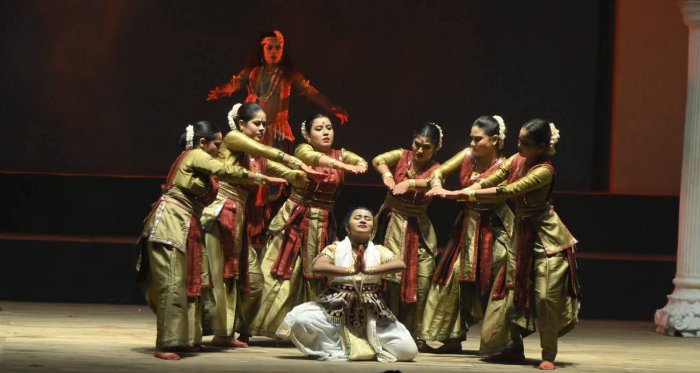 'Narasimha' by Manikanchan Kala Manjari The last event of day one was a production by Manikanchan Kala Manjari. It is a recognized cultural institute established by Dipjyoti Dipankar in 2008 at Krishnapur, Beltola, Guwahati. The title of the production was 'Narasimha', and was based on Narasimha Avatar, the fierce, half-man, half-lion incarnation of the Hindu god Vishnu, taken to destroy the evil demon king Hiranyakashipu and protect his young devotee, Prahlada, symbolizing divine justice, courage, and the ultimate triumph of good over evil, as Nara (man) and Simha (lion) represent nature and civilization combined to defeat tyranny. It was truly mesmerizing and everyone enjoyed the act. On 16th November morning a seminar cum lecture-demonstrations program was scheduled. Well-known scholar and Professor Pradip Jyoti Mahanta graced the event as keynote speaker. Dr. Mahesh Champaklal, Retd. Professor Emeritus and former Head, Dept. of Dramatics and Ex-Dean, Faculty of Performing Arts, The Maharaja Sayajirao University of Baroda delivered a lecture on 'Natyashastric concept of Nritta '. Prof. Champaklal justified the lecture with his brilliant oratory skills and explained the Nritta of Natyasastra in an extraordinary way. Shantana Saikia from Jorhat delivered a lecture on exploration of the Sattra legends and the possibility of their translation into the dance form. She explained the traditional rendition of Sattras and its current status.  Gayan-Bayan performed by Sri Kamalabari Sattra The evening program started with a traditional Gayan-Bayan performed by Sri Sri Kamalabari Sattra Kristi Prachar Samittee, Titabar. Then Seujpriya Borthakur from Guwahati, recipient of Ustad Bismillah Khan Yuva Puraskar performed a solo. She started her performance with 1 no. Chali nach followed by an abhinaya. After that, three young talents viz. Apurba Chutia from Saru Pathar, Manash Protim Bora from Sivasagar and Biswajit Gogoi, Jorhat, presented a trio. They executed a dance based on Bhojan Behar play of Mahapurusha Madhavdeva. They performed both Ramdani and Geetor Nach part which depicted the various acts of lord Krishna in Vrindavan. Duliajan Club Music Academy performed a group event. In 1963, under the guidance of Oil India Limited, the Duliajan Club was established. In 2005, a cultural institution was founded under the name Duliajan Club Music Academy and at present, more than 900 students are receiving training at this academy. Their performance started with a Nandi Sloka of Srimanta Sankardeva of Ram Vijay, depicting Lord Ram's story, especially his victory in Sita's swayamvar by stringing Lord Shiva's bow. It's a significant devotional work, performed in traditional Assamese theatre. It was followed by 2 no Rojaghoriya Chali and then abhinaya. 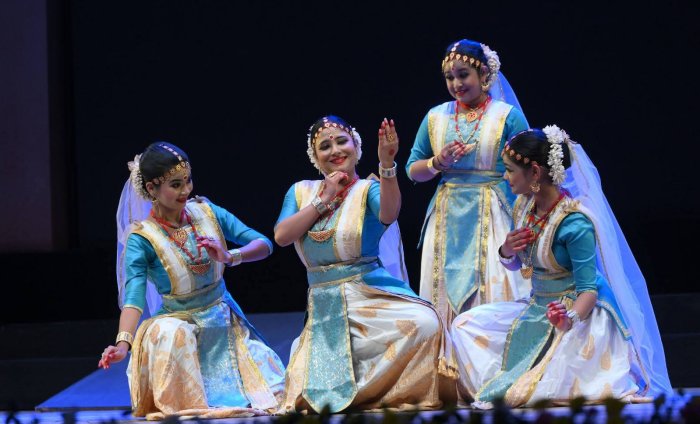 Duliajan Club Music Academy 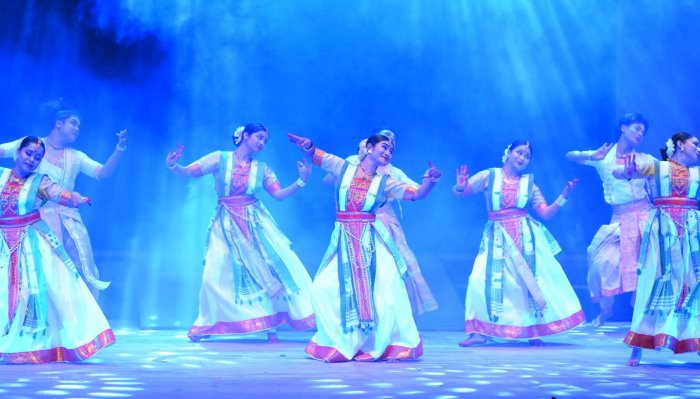 Tribute to Dr. Bhupen Hazarika by Sattriya Kendra, Guwahati The last piece of the evening was a brilliant choreographic presentation titled 'Jajabar Bhupen Hazarika' which was on the life and legacy of the icon Dr. Bhupen Hazarika by Sattriya Kendra, Guwahati. The performance was choreographed by Ramkrishna Talukdar and Anita Sharma of Guwahati. The presentation was majestic and the hundreds in the audience enjoyed it. The act portrayed the life and extraordinary works of Dr Bhupen Hazarika (1926 - 2011) who was known as the "Bard of Brahmaputra." His work connected Northeast India to the rest of the nation. He did this by combining local traditions with universal human themes. Hundreds of spectators enjoyed this special episode. On the third day, the seminar cum lec-dem started with a brainstorming lecture by Dr. Arshiya Sethi from Delhi (twice a recipient of the Fulbright Fellowship, who writes and speaks on cultural issues, in India and internationally) on her research and administrative experience with dance. Her topic was on '50 years of engagement with Sattriya'. After that Karuna Bora from Majuli explained the topic 'Sattriya Dance: Devotion and Aesthetic Expression'. Bora explained the importance of expressions in Sattriya in various ways which is a major part of the form. Lastly, Devika Borthakur from Pune delivered a talk on the monastic roots to modern academia: advancing Sattriya dance through education. She explained the ways of forwarding Sattriya through various academic tools. 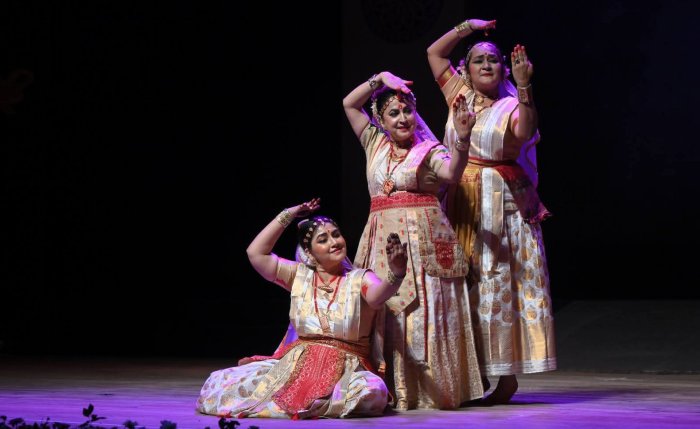 Mallika Kandali, Meernanda Borthakur and Gayatri Mahanta The third evening began with traditional Gayan-Bayan and was performed by Jhaji Moransiga Mridangiya Party, Sivasagar. The house acclaimed their soulful performance. This was followed by a trio staged by well-known artistes Mallika Kandali, Meernanda Borthakur and Gayatri Mahanta from Guwahati. They performed a Gopi nach. The item was well directed by Dr. Mallika Kandali and Bhupen Nath directed the music part. Their second segment was Nayika Varnan which is based on three Nayikas of Ashta-Nayika of Natya Sastra in Sattriya style. Music of this part was directed by Adhyapak Murari Mohan Sarma. Another upcoming young talent of Sattriya culture Ranjan Bora Borbayan hailing from Sri Sri Natun Kamalabari Sattra, Majuli, presented a solo. He started with Ramdani part of Bahar Nach followed by an abhinaya piece based on Kaliyadaman from Kirtan and Bhagawata. He soulfully portrayed the abhinaya and the audience appreciated. Dimpee Baishya from Guwahati performed a solo. She started with a small piece of Ramdani of Rajagharia Chali Nach. The next part of the item was abhinaya "Krishna Kathaamrit". It was a devotional dance composition based on the Leela of Lord Krishna which portrays the major episodes of Lord Krishna's life as described in the Srimad Bhagawat and in Kirtan Ghosha. The concept and choreography were by Guru Jatin Goswami, music composed by Nabajit Saikia and Ripunjeet Bora. Accompanied by: khol - Arunabh Jyoti Malakar, vocal - Ripunjeet Bora, flute - Nabajeet Saikia, violin- Dipraaj Deka, cymbals - Biswajit Bardoloi. This was followed by a duet performed by Krishna Tamuli and Sonica Hazarika. They started with Ojapali followed by a Shri Rama Shlokam. After that they performed Bar Ramdani 2 no. Chali nritya in Chuta Taal. In the abhinaya part, they performed the Borgeet "Xuno xuno re xuno," a masterpiece by Srimanta Sankardeva. The item was conceived and choreographed by Dr. Borish Dutta guided by Guru Tileswar Tamuli, music by Dr. Borish Dutta and Arunabh Jyoti Malakarm and accompanied in khol - Arunabh Jyoti Malakar, vocal - Jyotishman Moran, flute - Bhargav Jyoti Saikia, violin - Dwipendra Sarma, taal- Dr.Borish Dutta and Biswajit Bordoloi. 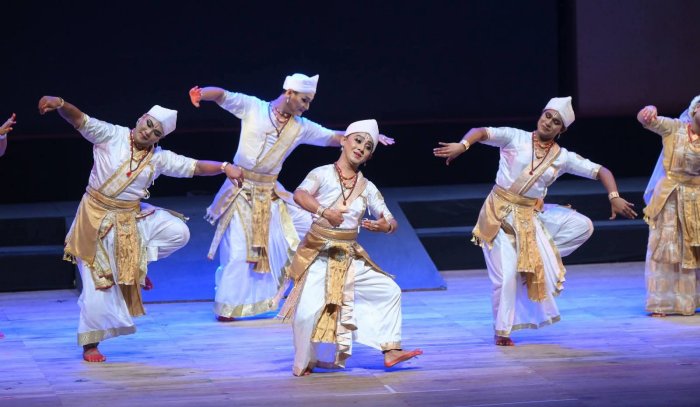 Jugalbandi Sattriya Academy Sreemoyee Borah from Dergaon performed a solo of Ramdani of 2 no. Rojaghoriya Chali nach with Kangsha Mukhyam part of Kirtana. The abhinaya part was absolutely enthralling. Sirushree Saikia, Dhemaji and Jechika Bhuyan, Narayanpur, presented a duet. They started the performance with a Krishna Vandana followed by Soru Ramdani and concluded with an abhinaya on Kaliyadaman where they depicted the story of Kangsha Badha. Kaliya Daman is a famous play where Lord Krishna subdues the venomous serpent Kaliya from the Yamuna River, purifying its waters and saving the villagers from its poison, symbolizing the triumph of good over evil and divine protection for devotees, often depicted in Indian art, dance, and literature like Srimanta Sankardeva's plays. The last item of this evening was a group program performed by the students of Jugalbandi Sattriya Academy, Guwahati, a decades old academy working for the practice and progress of Sattriya culture. The performance was divided into two parts. The pure dance part was played with Sutradhari nach. The second part was based on the Nam Ghosha and Keligopal play. The last day's seminar cum lec-dem was opened by Manik Bora Barbayan, Titabar and he delivered a lecture on the topic 'Ojapali ingredients in the Sattriya Dance: A brief study'. Ojapali is a vibrant, ancient Assamese folk performance art blending storytelling, dance, music, and drama, led by a chief performer (Oja) and a chorus (Pali), narrating Hindu epics and legends using cymbals. Arhee Kaushik of Guwahati delivered a lecture on 'Understanding emotional release through classical dance movements' which was followed by a special lecture by Pabitra Pegu from Dibrugarh who portrayed about the 'Missing dance tradition and Sattriya heritage.' 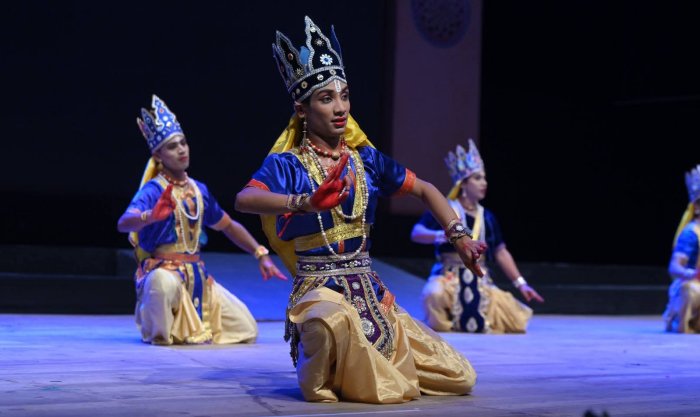 Soulful performance by artistes of Sri Natun Kamalabari Sattra, Sri Bhogpur Sattra, and Sri Badala Sattra 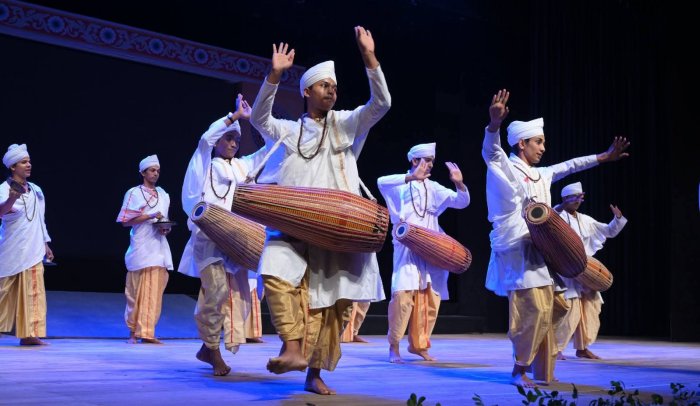 Gayan-Bayan performed by the trainees under Sattriya Kendra's Training Project, Majuli The evening started traditionally with a Gayan-Bayan performed by the trainees under Sattriya Kendra's Training Project, Majuli, under the guidance of Guru Haricharan Bhuyan Barbayan, a noted Sattriya exponent. The second item was a solo performed by acclaimed artiste Naren Ch. Baruah from Guwahati. He is also a recipient of the Bismillah Khan Yuva Puraskar. He started with Gosai Pravesh and then Nandi Sloka of Keligopal, concluding with the leelas of lord Krishna from Keligopal. This item was followed by a beautiful trio of Chandrama Saikia, Anwesa Borah and Ritwija Devi from Jorhat. The performance started with Nandi Shloka from the play Keligopal followed by pure dance segment which was portrayed with 1 no. Chali Nach. After this catchy item, Anurag Bhuyan, Hemanta Hazarika of Sri Sri Natun Kamalabari Sattra, Robin Boruah, Janardan Saikia of Sri Sri Bhogpur Sattra, Majuli and Bikash Neog of Sri Sri Badala Sattra, Narayanpur presented a group performance. They performed Nadubhangi dance of Ramdani and Geetor Nach composed by Madhavdeva. This dance is typically performed on the second day of the Guru Kirtan at Kamalabari Satra. After that Himashri Medhi Kalita from Guwahati performed a solo. She is a 'B' graded artiste of Sattriya dance recognized by Doordarshan Kendra, Guwahati, and also an empanelled artist of EZCC, Kolkata. Here she performed 2 no. Gopi Nach followed by an abhinaya on "Krishna kaita pao," depicting the conversation of lord Krishna with Gopis. This item was conceptualized by Nrityacharya Jatin Goswami. 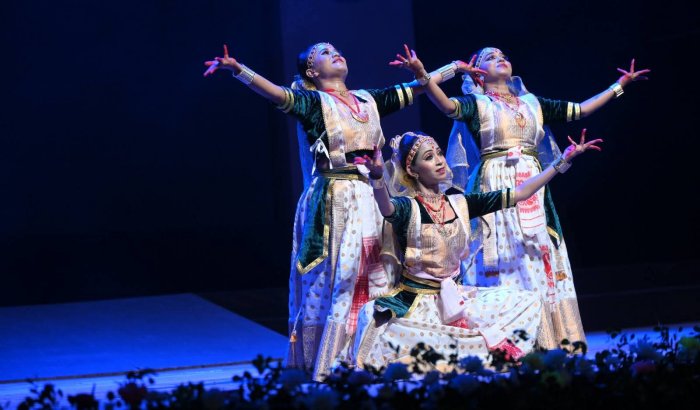 Chandrama Saikia, Anwesa Borah and Ritwija Devi 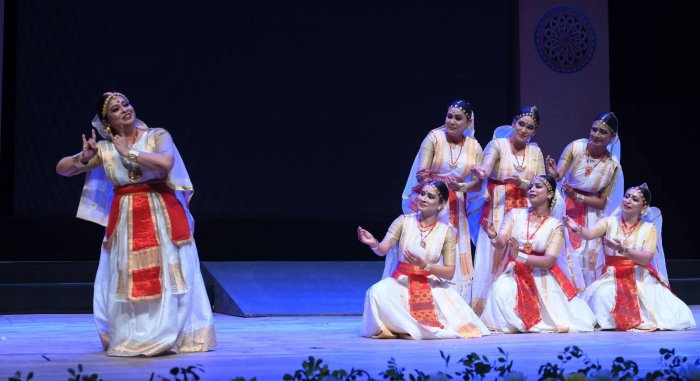 Group performance by Sangeet Sattra A group recital was presented by the students of Sangeet Sattra, Guwahati. Sangeet Sattra is the pioneer and premier institute of Sattriya culture established by maestro Raseshwar Saikia Barbayan in the heart of Guwahati city in the year 1968 and successfully celebrated its 50-year mark in 2018. At present Sangeet Sattra has more than 300 affiliated institutions all across the globe. The group started with a Krishna Vandana, followed by a pure lashya repertoire of Sattriya, the Chali Nach and ended with a Madhavdeva composed Borgeet abhinya "Dekho Re Nayana Duho Bhoriye....." where the Gopis were adorned in enlightenment to see the Mohan roop of Lord Krishna. The recital was conceptualized and choreographed by Ranjumoni Saikia and Rinjumoni Saikia and performed by Jollymoni Saikia, Juri Das, Elizi Ojah, Priyanka Bayan, Avantika Choudhury, Himakhi Kalita and Nimisha Baruah. 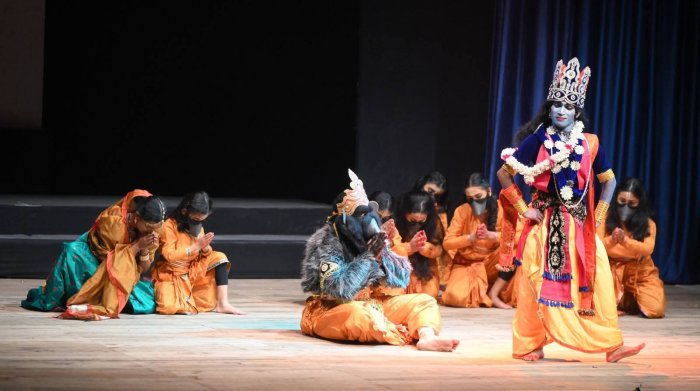 'Syamantak Haran' by Kashinath Krishnapriya Institute of Performing Art The concluding program was 'Syamantak Haran', a production by Kashinath Krishnapriya Institute of Performing Art, Tezpur. The KKIPA was founded in 1982 within the enchanting confines of the Triveni Chamber Theatre in Delhi. Today, it proudly stands as a beacon of cultural enrichment in the beautiful city of Tezpur, Assam. The institute aims to provide high quality training and education in the Indian classical dance forms of Odissi and Satriya. Syamantak Haran is a literary and performance work by the 15th - 16th century Assamese saint-scholar and polymath Srimanta Sankardeva. It is primarily recognized as a section or chapter within his magnum opus, the Kirtan Ghosha, which is a collection of poetical narratives for congregational singing. The story begins in Dwaraka, where King Satrajit receives from the Sun God a resplendent gem, the Syamantaka, said to bring prosperity and brilliance wherever it rests. But when the jewel mysteriously disappears, shadows of doubt spread across the kingdom. Whispers turn into accusations, and even Lord Krishna finds himself unjustly blamed. Syamantak Haran is more than a tale of a lost jewel - it is a reflection of humanity's eternal quest for truth. As the rhythm of the khol and the grace of the dancers brings this story to life, may every heart be reminded that truth, like light, can never be hidden - it always finds its way home. Team was comprised of; dance direction - Ranjan Bora Borbayan, Concept visualization - Dr. Madhurima Goswami, vocalists - Alimpon Chowdhury and Chandan Pratim Borah, khol - Ranjan Bora Borbayan, violin - Dr. Sonit Mahanta, flute - Hirakjyoti Nath, taal - Nabajit Borah. The cast includes: Krishna - Keshab Das, Satrajit - Ashmita Bharadwaj, Prasenjit - Prathama Roy, Jambavanta - Bishal Dawka Dhai - Sayoni Payra, Sutras - Madhusmriti Bishaya, Jyotishma Patangia, Tanisha Saha, Satabdi Borah Simha - Debarathi Saha, Bhallukavayan - Urja Das, Navya Borah, Akhayaa Bhuyan, Rudrakshi Das, Anvi Sharma, Afsa Maheen, Jerrin, Harshita Das, Aarna Baruah, Gargi Baruah, Dhrupad - Dhiman Borah. Sattriya is the cornerstone of Assamese cultural identity. It reflects the region's unique blend of local folk traditions (like Ojapali and Bihu) with classical Indian dramaturgy. Created during a time of rigid social hierarchies, the Neo-Vaishnavite movement used Sattriya to promote a message of equality and brotherhood, breaking caste barriers through community worship and performance. While it was traditionally an all-male monastic dance, the 20th century saw a revolutionary shift. Today, women are prominent performers, and the dance has moved from the "sacred" prayer halls (Namghars) to "secular" global stages. Nritya Parva is one of the most prestigious and leading programs of MoC, GoI celebrating this 500 years tradition and now it's moving towards global stage.  Dr. Jintu Sarma is an Asst. Prof. at Guwahati College and a critic. |
