
|     |
|
| |

 Anumarga: When dance becomes a living book- Dr. Sukhada Khandgee-mail: sukhada.khandge@gmail.com Photos: Vinit Ekbote December 21, 2025 The performance (Dec 13, Pune) unfolded like reading a book of interlinked short stories, each chapter complete in itself, yet all bound by a single, resonant idea. As the pages turned, characters emerged vividly, brought to life through the lyrical precision of Bharatanatyam and the kinetic force of Kalaripayattu. Project Samskriti, presented in Pune for the first time, offered not merely a dance recital but an experiential narrative celebrating the full spectrum of human emotion - bhakti, surrender, seeking, devotion, arrogance, sacrifice, and finally, dissolution into shunya. Radhe Jaggi very beautifully presented Anumarga, a choreographic presentation bringing two arts forms Bharatanatyam and Kalaripayattu together. While mythological narratives and Bharatanatyam interpretations are familiar terrain, what distinguished this production was the intelligent and sensitive use of Kalaripayattu, Kerala's forceful martial art to carry emotional and philosophical intent. Rather than functioning as a contrasting insert, Kalaripayattu was seamlessly juxtaposed with Bharatanatyam, expanding the emotional vocabulary of the performance. The grace of lasya and the intensity of martial movement merged, allowing emotion to be expressed not only through abhinaya but through strength, resistance, and dynamic stillness. 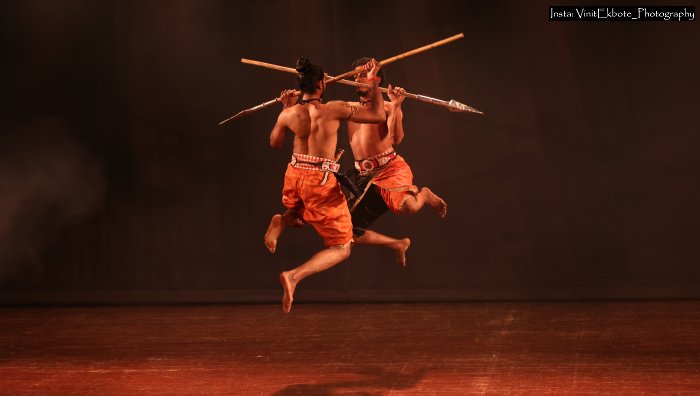 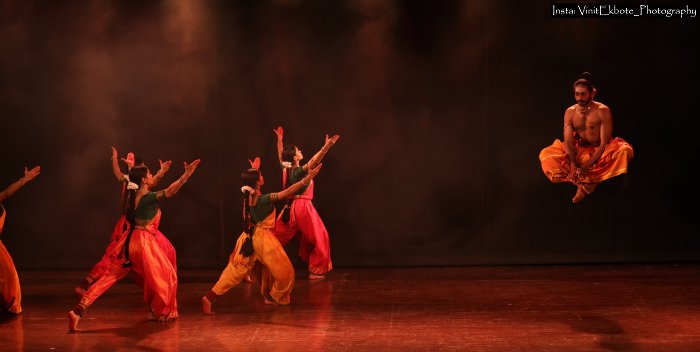 The evening opened with a celebration of Shri Krishna, viewed through the eyes of the gopis of Vrindavan. Bhakti flowed effortlessly as dance and song evoked Krishna's playful divinity, his youthful bravery in subduing the mad elephant, and the sensuous beauty of Vrindavan in bloom. The poet's yearning to experience both the joyous celebration of musicians and the inward silence of the yogi found articulate expression in Paramapurusha Anuyamavayam Sakhi, a composition by Shri Narayana Teertha. Choreographed by Radhe Jaggi, the piece stood out for its balanced articulation of devotion and inner inquiry, underscored by the collective excellence of the ensemble. From lyricism, the narrative moved into conflict and revelation with the story of Kirata. The episode of Arjuna confronting the boar Mukasura, only to realise he is battling Shiva himself in the form of the forest hunter, was presented primarily through Kalaripayattu. Here, the martial form proved especially effective in its grounded stances, leaps, and weapon vocabulary conveyed tension, ego, and eventual surrender with visceral clarity. The recognition of Pashupati was less dramatic revelation and more embodied realisation, achieved through movement rather than words. The portrayal of Parvati as a seeker offered one of the evening's most poignant moments. Moving beyond her identity as Shiva's consort, Parvati was presented as an archetype of relentless sadhana. Drawing from Kalidasa's evocative imagery, her tapasya amid fire, rain, sun, and snow was rendered with restraint and intensity. The choreography emphasised endurance and resolve rather than overt drama, allowing Parvati's inner fire to emerge quietly yet powerfully. 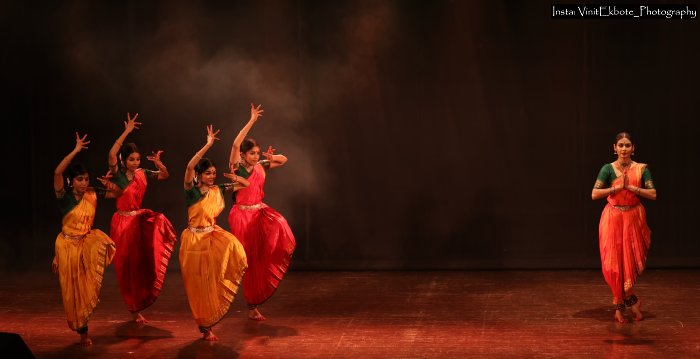 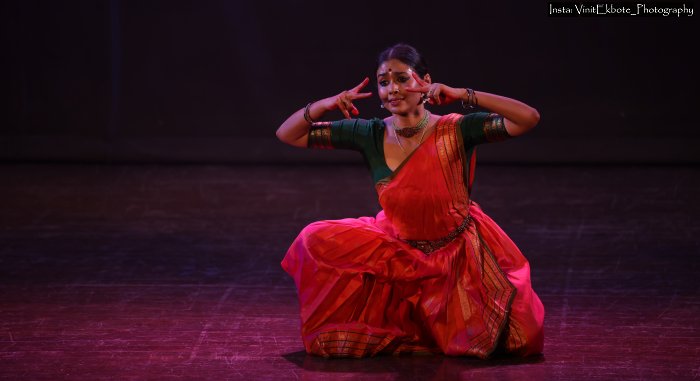 Surrender, as the most fundamental yet elusive aspect of seeking, formed the thematic core of the next segment. The juxtaposition between surrender to the beloved and surrender to the guru was explored with subtlety. Through repeated motifs and breath-led movement, the intoxication of devotion slowly accumulated, mirroring the gradual dissolution of ego that surrender demands. The character of Ravana, presented through Ahankarvadam, brought complexity and contradiction to the stage. Ravana's devotion to Shiva, inseparable from his towering arrogance, was portrayed with dramatic nuance. His attempt to lift Mount Kailash, the crushing of his arms, and the outpouring of devotional poetry revealed him not as a villain but as a tragic figure—one whose ego and bhakti coexist in uneasy tension. The narrative then shifted to devotion without discrimination, through the story of the Gorakh saint who offers his eyes to awaken another's inner vision. This episode stood out for its moral quietude. The dancer resisted melodrama, allowing the gravity of sacrifice and compassion to speak through minimalistic gesture and controlled abhinaya. The evening concluded with Shunya, a meditation on emptiness and creation. Drawing parallels between cosmic explosion and human existence, the choreography expanded into abstract movement, dissolving character and narrative. The poem woven into this finale where colours of emotion are ultimately revealed as expressions of the same black nothingness served as a philosophical culmination. Bharatanatyam and Kalaripayattu here transcended form, merging into a shared language of stillness, vibration, and release. Overall, Project Samskriti succeeded in transforming a performance into a contemplative journey. Like a well-written book, it invited the audience to move from story to story, emotion to emotion, until distinctions blurred and a single message emerged: the celebration of emotion as a pathway to awareness. Pune's first encounter with this project left behind not just aesthetic pleasure, but a lingering introspection, an affirmation that movement, when rooted in sadhana, can become a profound medium of knowing. Envisioned by Sadhguru and the Isha Foundation, Project Samskriti is rooted in the idea of nurturing harmony between mind, body, emotions, and energy. The workshops in Bharatanatyam, led by Radhe Jaggi, and Kalaripayattu and chanting by Samskriti instructors, culminated in this performance, organised by Meghna Sabade's Nrityayatri across Pune from 10 to 12 December 2025. In collaboration with Charanya Gurusathya, Natyashala Academy of Fine Arts, the workshops at Natyashala Studio, Balewadi, Pune, marked a significant cultural moment for the city. 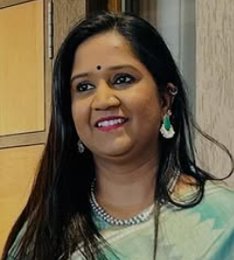 Dr. Sukhada Khandge, Ph.D. in Interdisciplinary Folk Media from the University of Mumbai, is a disciple of Dr. Manjiri Deo. She is the recipient of Junior research Fellowship from CCRT, Ministry of Culture. She is currently working as Associate Head of Academics - Journalism and Communication, at Seamedu Ajeenkya DY Patil University. She is a notable figure in journalism, academia, and research, contributing significantly to the understanding and preservation of Folk Arts. |
