|     |
|
| |

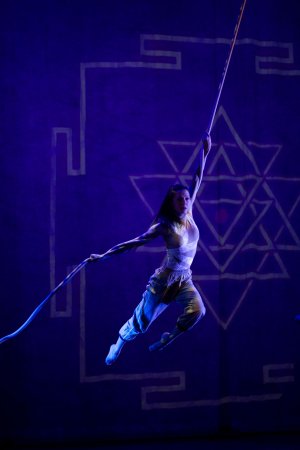
 Kin: A reflection on the eternal cycle of life- Bibin Balane-mail: punarjjaniculturalcentre@gmail.com Photos courtesy: Daksha Sheth Dance Company December 19, 2025 When I was born into this world, my mother came with the lamp of knowledge, held my hand, and guided me through life. When she finally left me and dissolved into eternity, as I was about to pass that light energy on to my son, I realized, "The light that my mother passed on was not just knowledge or experience, but the lifeblood of generations to pass on to my son." This is how the story Kin tells becomes our story. Daksha Sheth Dance Company, the pioneers in contemporary dance, took the stage with their new production and thrilled the audience in Delhi. Kin started talking to the audience with Isha Sharwani's graceful movements. Isha's performance begins with the movements of a baby in the mother's womb, expressed through her acrobatic movements on the rope. Mother Daksha Sheth, brother Tao, partner Russell Thorpe, and son Luca joined her on stage, while father Dev Issaro became a vital part of the show by controlling the overall direction backstage. 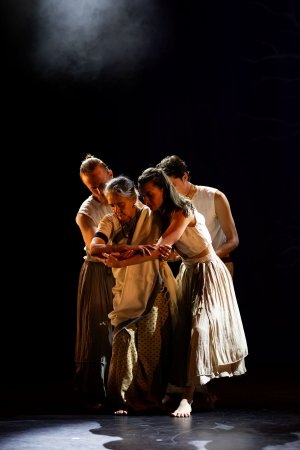
Isha Sharvani and Tao Issaro had a lot about the show to share with Narthaki. "Kin, which means family, is our own story. It is a complete and transparent representation of what our family is. It is a show that reflects the knowledge and experiences that my father and mother have passed on to Isha and me," said Tao. "This show is one that breaks the East–West boundaries. The story presented through a contemporary art form is a blend of our own arts and Western arts. It is a combination of art and technology. In every sense, it is a contemporary form of a multicultural world," added Isha. As mentioned earlier, Kin describes birth. Here, the characters present themselves. While the mother teaches the small and big things in life, the conflicts, tensions, separations, and then reunions are all transparently reflected through acting. Finally comes separation through death - inevitable! The audience must have realized how tense the final farewell was when their hearts stopped beating for at least a moment. The role of technology in the show is also an artistic approach by Daksha Sheth and Dev Issaro. They are particular about each light and where it should be placed in every scene. I realized the hard work behind the preparation when I visited the rehearsals. While Isha filled the show with marrow and flesh as the mainstay, Tao breathed life into it through music. As Daksha Sheth became the soul of the story, Russell controlled the pace of the show with his agile movements. The presence of little Luke made the scenes magical. 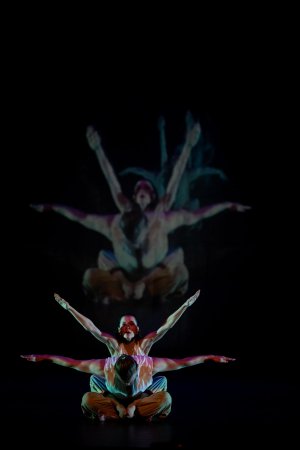
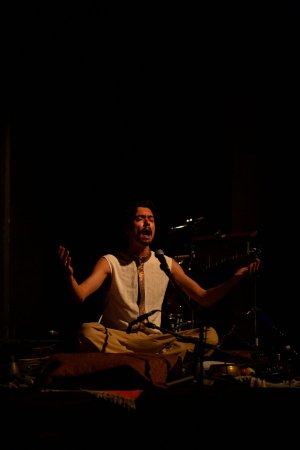
The show in Delhi was conducted by Natya Ballet Centre at Kamani Auditorium on 4th December 2025. Nandini Singla (DG, ICCR) was the chief guest, along with the distinguished presence of the Hon. High Commissioner of the Australian Embassy. After the show, Isha and Tao shared their experiences of art life in India and Australia. For Isha, Kin is an honest presentation of family. She shared that what their parents passed on was not limited to formal learning, but included everyday experiences and an understanding of relationships that continue to shape their art. Tao reflected on their upbringing and early struggles. Both were homeschooled and spent time in Thiruvananthapuram, where their parents never pushed them toward the arts. Once they chose that path, however, discipline and hard work became essential. He spoke about how young artistes in Australia often find small platforms that help them grow steadily, and how cultural surroundings strongly influence artistic development. Adding to this, Isha spoke about how access and environment shape an artiste's journey. Her desire to study ballet while living in Thiruvananthapuram was limited by availability, highlighting how geography plays a crucial role. On technology and AI, Tao felt that machines can never replace the emotional depth of live performance, while Isha emphasized that technology, when used wisely, can support an artiste's growth without diminishing the human essence of art. In the end, Kin stands as a reminder that art is not created in isolation but grows from lineage, memory, struggle, and love. What unfolds on stage is not merely choreography or music, but lived experience shaped by place, time, and relationships. Through their work, the Daksha Sheth Dance Company shows how personal histories can become universal stories, resonating across cultures and borders. As the lights fade, the audience is left not just with images and movement, but with a quiet understanding of continuity, of how life, art, and legacy are endlessly passed on from one generation to the next.  Bibin Balan, Managing Editor of Punarjjani Bharat, is working on cultural advancement based on digital media platforms. His area of focus is on promotion of performing arts and digital contents under this category. He is a Yoga Educator based in New Delhi since 2008. |
