
|     |
|
| |

 KNMA CenterStage 2025: A reorienting weekend retreat for Delhiites- Shilpa Sankare-mail: shilp.shankar@gmail.com Photos: Whistleman Films December 17, 2025 At: Triveni Kala Sangam Amphitheatre, Delhi November 29 & 30, 2025 Day 1 - Artist 1 - Rahul Vellal 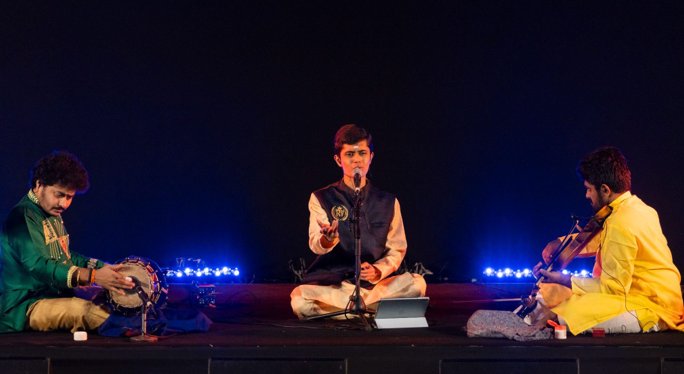 Rahul Vellal Picture a hazy, cold winter week in Delhi with everyone around going about mechanically, having little or nothing to inspire. Even the air we were breathing in seemed punishing. It was Saturday, 29th November. The Triveni Kala Sangam Amphitheatre, under the moonlit sky welcomed rasikas in the warm embrace of Rahul Vellal’s soulful music. The arena looked like an oasis of calm, for people seeking respite from the blaring of horns and the otherwise jarring crowd. Beginning the concert with Thyagaraja Swami’s “Teliyaleru Rama” in Dhenuka ragam seemed rather apt for us confused mortals, knowing not our real purpose and subjecting ourselves to the daily drudgery for Rama knows what! Rahul beautifully rendered the krithi with brief but catchy kalpana swarams. The next piece was the popular “Rangapura vihara,” which Rahul rendered with clarity and gusto. The audience too, engaged and connected with all the popular sangathis of the krithi. The violinist Keshav Mohankumar with Nagendraprasad SP on the mridangam offering solid support from the beginning, really picked pace with the Brindavana Saranga krithi. Then came a brief and catchy Shanmukhapriya aalaapanai with the singer weaving together a beautiful garland using the trademark prayogams of the ragam. Embellishing the aalaapanai further with dhurita kaala prayogams in his signature style, Rahul reminded the audience of his flawless felicity and firm grip on the art. Keshav Mohankumar followed with a crisp but pleasing brief of the Shanmukhapriya raagam.” Marivere dikkevarayya” was rendered soulfully with brigha laden sangathis. The swift and captivating kalpana swaram exchange between the vocalist and violinist was engaging and made complete with a vibrant thani avartanam. The best piece was the abhang “Vithoba chala mandira” - in the classic RaGa style - brimming with the spirit of namasankirtanam and the audience chanting “Vithala Vithala” with full involvement and fervour. He concluded with a brisk mangalam – “Bhagyada Lakshmi baarammaa”, already having recharged the minds of the audience, setting us up for the following, somewhat unique experience. Day 1 - Artist 2 - Uthara Unnikrishnan 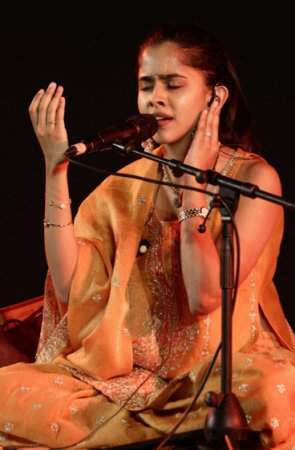 Uthara Unnikrishnan With our minds less foggier (the air not so much), we geared up for the next concert. The ensemble was exciting - Uthara on the vocals, Ravi G on the keyboard, Sayee Rakshith on the electric violin and Sumesh Narayanan on a curiously assembled group of percussion instruments. They started off with a Ganesha vandanam, “Gananaayakaya ganadaivataya” made popular by Shankar Mahadevan. The familiar melody was cleverly repackaged and rendered with flair followed by “Raghuvamsha Sudha” in Kathanakuthoohalam. The violinist Sayee Rakshith started out with the ragam’s aarohanam “Sa Ri Ma Dha Ni Ga Pa Sa”, with Ravi G on the keys giving it a contemporary feel. With Sayee Rakshith’s buttery bowing of the digital violin and Uthara’s tinglingly sweet voice the song felt like a pleasant breeze. The brief shift to the second interlude of Kandukondein Kandukondein’s title track was wonderful with the violinist nailing it, once again. Sumesh on the percussion was simply brilliant in the final swaram. The mostly Delhi audience was delighted with the next piece (a medley of songs by sisters Lata Mangeshkar and Asha Bhonsle). Starting out with the classic “lag ja gale” making one feel wistful, they moved on to playing and singing “Jiya jale.” Ravi G was excellent on the keys and Sumesh knocked it out of the park with the first interlude of the song (an expected delight). Uthara went on to display her vocal range with the next piece from the Colonial Cousins – “Krishna nee begane,” doing a very good impression of Hariharan and Leslee Lewis, deftly switching between the two distinct styles of singing. The “Govinda bolo Hari Gopala bolo” was nice. Their take on the abhang “Bolava Vithala” was offbeat with Sumesh shining on the cajon. The R&B medley of the Tamil song “Adiyei” and Alicia Keys’ Fallin showcased Uthara’s versatility and Ravi G’s adept playing on the keys. The stand out number was the mashup of Uttara’s first song “Azhage” and Michael Jackson’s Billie Jean. It was wonderfully performed and the band ended the evening’s performance on a high note. Day 2 - Artist 1 - Raaginni Hindocha 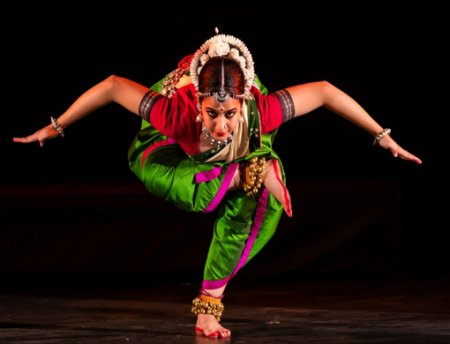 Raaginni Hindocha Having enjoyed two excellent musical performances the previous night, it was time for a couple of stunning dance performances. Raaginni Hindocha, a young Odissi dancer and disciple of Guru Sharmila Biswas, began her recital with Ramashtakam. The composition goes as ‘Kritarta Deva Vandanam’ , the music composed by Sukanta Kumar Kundu and rhythm composed by Bijaya Kumar Barik poetically describes the achievements of Lord Rama from his childhood to the battle of Lanka. Raaginni, with her very expressive face and eyes and perfectly symmetrical movements executed with poise throughout the performance, was impressive. Her playful expression of Ganesha, moving portrayal of Jatayu moksha were well done. She portrayed Rama’s quiet majesty well, while maintaining the graceful feminine posture of an Odissi dancer. Sthiti is a composition by guru Sharmila Biswas, inspired by Bandhya Nrutya of the Gotipua boys of Odisha. Bandhya Nrutya is an acrobatic dance form that honours Krishna and Radha, is considered to have folk origin, preserving ancient tradition. Choreographed beautifully with the guidance for Hatha Yoga provided by Smita Dutta, Raaginni ably carried along a graceful blend of yogic postures with simple nritta. Some of the postures were mind boggling and showcased the dancer’s immense sense of balance, focus, stability. The final piece Divine Puppeteer was a beautiful concept. Dancing to an Annamacharya Sankeertanam in Telugu, Raaginni with her beautiful expressions alternated between being the puppeteer (God) and the puppet (a devotee who begins swelling up with pride). The lighting design for this piece was particularly beautiful with shadows being cast on the screen behind, enhancing the dancer’s shifts across portraying the puppet and puppeteer. Overall, Raaginni displayed felicity and promise as an emerging Odissi dancer. Day 2 - Artist 2 - Pritam Das 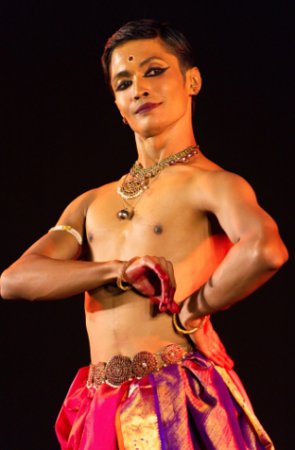 Pritam Das It was time for the final performance of the CenterStage Weekend. As we waited eagerly for the artistes to arrive on stage, I turned around to admire the ambience of the amphitheatre one more time. It was bustling with expectant rasikas who turned away from the stage briefly, to find the lights projecting ‘KNMA’ on the lattice work on one of the outer walls of the auditorium. It reminded one of how important light design and sound effects are for a music or dance performance. It takes the viewing and listening experience to a different level and they were exemplary on both days. The stage was set, musicians seated and Pritam gave a quick introduction about the night’s performance pieces. Pritam walked in with grace, conviction and began a mime dialogue with Sivaji Maharaja, the son of Sarabendra, as a courtesan. The varnam “Sarasa shikhamani” by Tanjore Sivanandam set to Kalyani ragam, adi talam, is a courtesan’s appeal to the king to join her, reminding him of their times together. The choreography (by Pritam Das), for the pallavi of the varnam, focussed on the courtesan employing a myriad expressions to cajole the king. Be it an all knowing look (chaala nammithi), intense admiration for the king, heaping praises on the king’s appearance, getting lost while reminiscing on happier times together, Pritam conveyed them all with his eyes and body language. His interpretation of the courtesan was that of a confident woman, fully aware of her beauty and capability to charm the king. As for the jathis in the pallavi, they were slower (by Pritam’s standards), flowing, serving as a warmup and also to size up the stage. Having carried out the nayika’s playful techniques, Pritam employed creative extrapolation to convey her attempts at making the king nostalgic. The use of a payal to recreate a scene from their past was brilliant and showed the artiste’s ability to impactfully convey his individual take on the composition. Very innovative and beautifully executed. The ensuing jathis seemed to establish the growing impatience in the nayika, delivered with exactness. Depicting the king’s majesty and the lady’s skittish temperament with seamless shifts was a treat to watch, with Bijeesh Krishna’s bhava filled singing. Picking up even more pace with the charanam Garada mela voddura in dhuritha kalam, the dancer employed lovely angika abhinaya to switch between angry impatience and imploration. The jathis and beautiful arudhis were executed with electrifying nritya and staggering precision in the symmetry of movements. The reverse execution of one of the theermana adavus was unique and brilliant. The choreography of the jathis in the muktayi swaram and chitta swarams seemed to have been driven by the arrangement of the swara patterns, which was again very innovative, unique and super effective. The varnam ended with Pritam walking away as an expectant and hopeful nayika. He came back in a more intense form of Shreemat Dakshina Kalika dancing with Bhuta, Pisacha and Bhairavas. Pritam’s unending energy seemed to rightly match Devi’s ferocity, in displaying her battles with demons to protect the world, the beauty in her aggression, grace in her disheveled appearance and the motherliness with which she listens to her devotee’s appeal. The song set to tune beautifully by Dr S. Vasudevan and ably supported by RLV Hemanth Lakshman (nattuvangam), Bijeesh Krishna (vocals), Kalamandalam Charu Dutt (mridangam) and Viswesh Swaminadhan (violin), Tribhangi was a short yet grand ending to a wonderful performance by the artiste. The evening and the entire KNMA CenterStage event ended with Pritam’s soaring finale, providing the audience with much needed energy and enthusiasm that quality music and dance performances never fail to do.  Shilpa Sankar is an avid Carnatic music and Bharatanatyam rasika with a passion for writing. A trained Carnatic vocalist, she holds an M.A. degree in Carnatic music from the University of Madras. An ex-software engineer, she is mother to 2 young children, currently residing in Noida. Instagram - s.sarangi88 |
